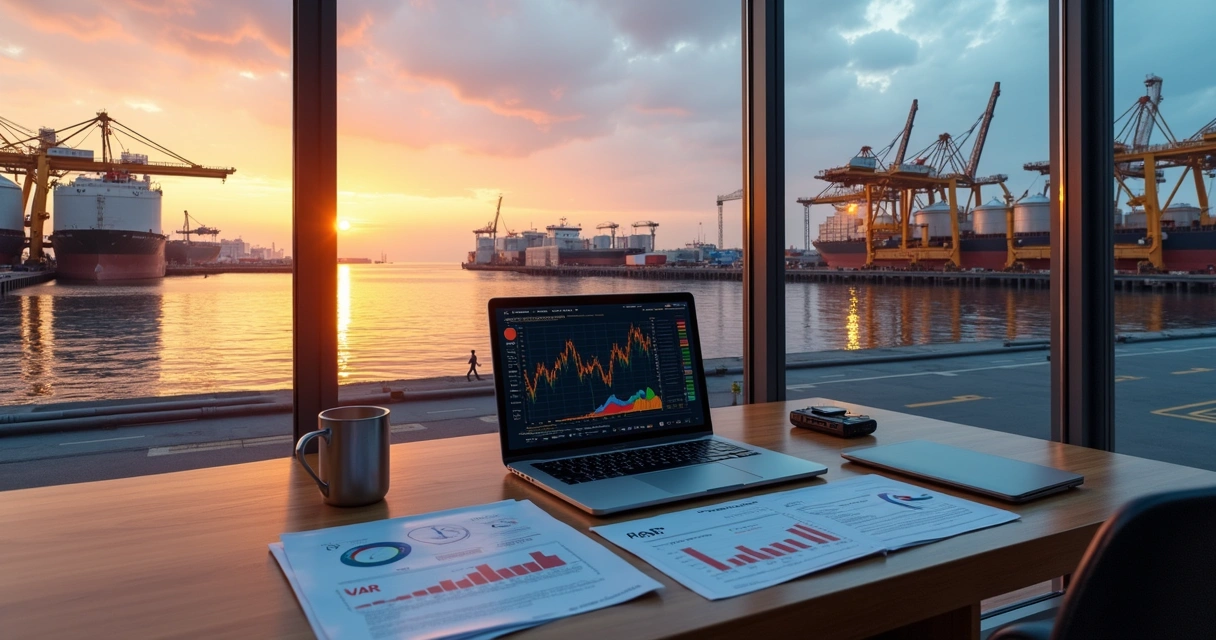
Market volatility is more than a headline—it's a reality that alters balance sheets overnight for companies tied to foreign exchange, interest rates, and, above all, the ever-changing cost of raw materials. Agribusinesses, energy players, and industrial giants know this well: Their results tilt with each market swing. Yet, many still manage risk using fragmented or outdated strategies, unwittingly stepping into danger zones.
Where others see chaos, the solution is precision driven by insight.
How market turbulence shapes treasury decisions
A single month can bring swings in oil, spikes in interest rates, or currency surprises. Studies on tail risk in energy and commodity markets show standard deviations for key assets like crude oil and natural gas well over 13%, with maximum daily falls matching these levels. For corporate treasuries, this risk isn’t academic—it's a matter of financial survival. When stock market uncertainty grows, research finds a direct link to pricier commodities, reinforcing the urgency for proactive defense as recent macroeconomic analysis confirms.
Traditional approaches—spread across Excel sheets, separated by department, and slow to react—just don't fit anymore. Companies using such setups often face delays in response and lack a full view of their risk exposure, which may result in costly missed opportunities or poorly timed hedges.
The limitations of conventional risk control
Typical solutions involve either expensive bank services or self-managed internal processes. The challenge is human: Combing through huge streams of data and reacting fast enough isn’t feasible without the right digital infrastructure.
- Scattered systems make real-time oversight impossible.
- Manual updates more often lag behind market moves.
- No unified risk environment means poor discipline and governance.
Statistics and practitioner feedback from sectors like agribusiness highlight a need for innovation: Legacy methods are slower and less effective than today’s market demands.
AI-driven, quantitative oversight: a new standard
UHEDGE, in alliance with STATERRA, proposes a radical break with the past. By deploying artificial intelligence and quantitative models, the Digital Treasury platform creates an integrated hub for managing both physical and paper exposures. This means instant pricing, automated risk suggestions, and actionable analytics are all available in one place.

This approach brings together every commercial and hedging operation, updating positions live and letting decision-makers see their risk metrics—such as mark-to-market values and volatility surfaces—on demand. The system incorporates advanced calculators for pricing complex structures like accumulators and fences, and offers algorithmic trading tools to access over-the-counter derivatives once reserved for major institutions.
The difference is clear: Companies are no longer forced to react to volatility after the fact; instead, they can anticipate, model, and act with agility.
Real-world use cases and sector focus
A cooperative managing coffee exposure or a fuel distributor protecting against oil shocks will see hands-on benefits:
- Automatic hedging recommendations calibrated by AI for timing and risk profile.
- Dynamic analytics to monitor curves for metals, grains, and energy.
- Consolidated management of physical contracts and derivatives in a central platform.
- Actionable, automated reports and scenario analysis for governance reviews.
These advancements are not hypothetical. Field testimonies confirm that deploying such integrated treasury tech leads to measurable boosts in margin, reduced costs, and improved cash-flow predictability. For companies wanting a deeper sector view or practical examples of pricing risk, in-depth resources like this curated commodities article collection or explanations on how commodity markets function and what risks they present can offer extra context.
For executives seeking robust hedging for interest rate movements, recent insights on interest rate strategies and metal market risk for 2025 spotlight modern tactics and possibilities.
UHEDGE and STATERRA blend scientific discipline, twenty years of expertise, and digital innovation to offer solutions that match the complexity of today’s markets. With cutting-edge statistical and econometric modeling, the alliance provides tools and know-how to turn price uncertainty into controlled value generation.
Conclusion: Take the next step toward risk mastery
Discipline, data, and speed are no longer optional. With UHEDGE’s digital risk system, treasuries become the strategic core of companies competing across volatile markets. Ready for a personalized risk and strategy assessment? UHEDGE invites you to discover how the Digital Treasury can add transparency, agility, and security to your market exposure—start your tailored consultation today.
Frequently asked questions
What is commodities price risk?
Commodities price risk is the exposure a company faces to unpredictable swings in the value of raw materials, which can impact cash flow, costs, and margins. This risk affects producers, consumers, and traders, especially in uncertain or crisis-driven markets.
How do treasuries manage price risk?
Corporate treasuries use tools such as derivatives, automated analytics, and real-time monitoring to protect against adverse price moves. Increasingly, AI-based platforms provide tailored hedging strategies and consolidate oversight, which enables decisions that are both quantitative and timely.
What are top quantitative strategies for commodities?
Leading quantitative approaches include AI-driven risk modeling, scenario analysis, automated calculators for complex structures (like accumulators or fences), and analytics of volatility surfaces. Integrated platforms allow for unified management and monitoring, which is key for rapid and informed decision-making.
Is it worth hedging commodities price risk?
Yes. Research on optimal hedging shows that, despite limitations, dynamic and option-based strategies can reduce the financial impact of price swings. Even imperfect hedges provide consistency and can protect against major disruptions, making them a worthwhile investment for most market-exposed firms.
How can I reduce exposure to price swings?
Begin with centralized, tech-driven risk systems that merge all types of exposures—physical and derivatives, currencies and commodities—into a single view. Use AI-driven analytics, automated hedging proposals, and rigorous scenario testing to shift from reaction to proactivity. For step-by-step strategies, sector insights at hedging commodity margins in unpredictable markets may be helpful.