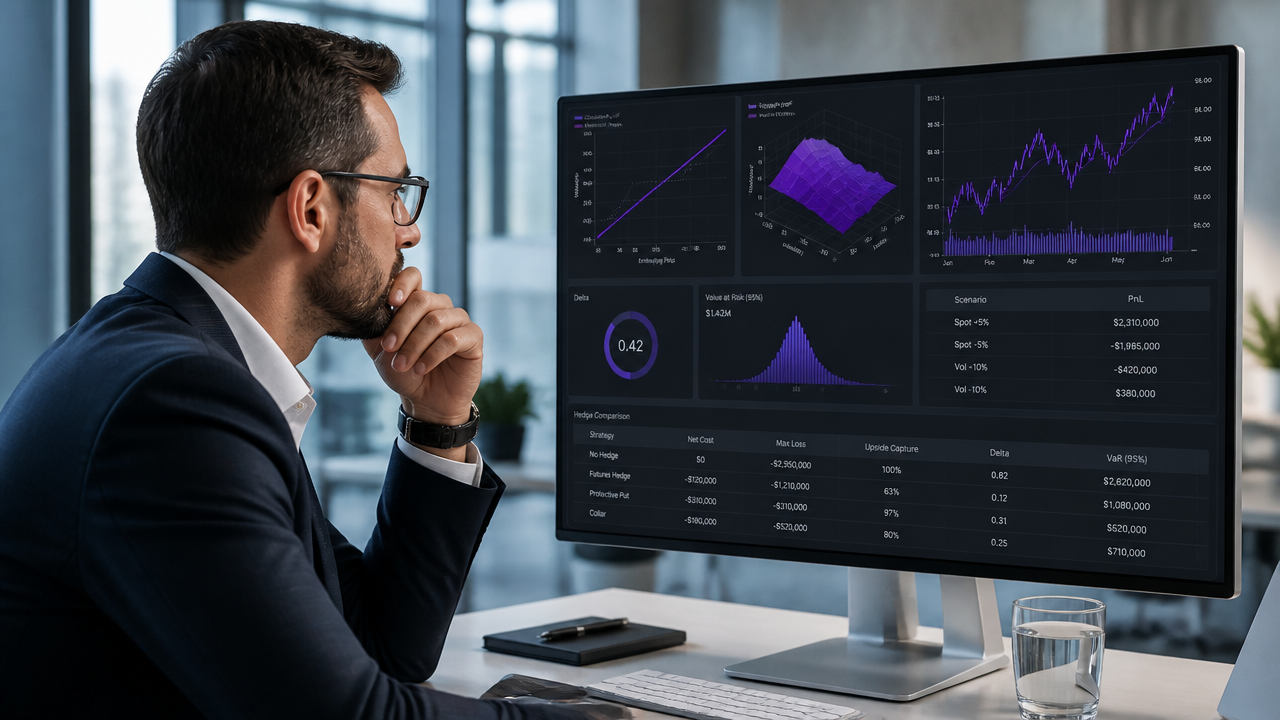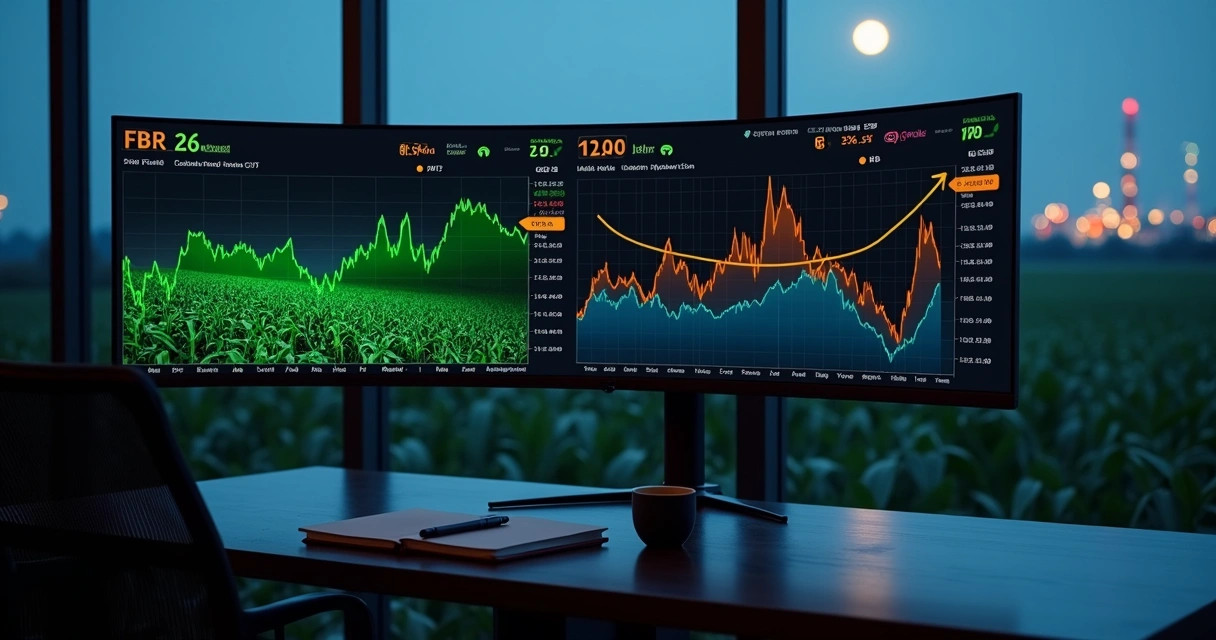
Farm income is not set in isolation. What’s earned on every bushel of corn, kilogram of soy, or every sack of coffee is built on forces much bigger than weather patterns or crop genetics. As 2026 approaches, the pricing structure facing global agriculture is being re-shaped by a fast-changing macroeconomic landscape.
The macroeconomic pulse: How big trends shape prices
In the world of agricultural production, it is common to focus planning around rainfall, temperature, and disease cycles. Yet, if one lesson stands out from recent years, it is that market risks demand an equally sharp focus on interest rates, foreign exchange, and energy prices. Geopolitical events, particularly the heightened uncertainty stemming from increased US-Iran tensions, have reignited risk aversion and pushed the volatility index (VIX) up. When VIX jumps, investors often flock to safe havens, such as gold and energy assets, leaving agricultural commodities exposed to sharper price swings.
Every decision in the field is shadowed by movements in Chicago and global capital flows.
Commodity prices—especially for grains and oilseeds—ride the waves of Chicago (CBOT) contracts, exchange rates, and port premiums (basis). In Brazil, the Selic rate has largely stayed high, attracting foreign capital, strengthening the local currency, and ultimately helping to push the US dollar lower. These shifts directly reshape the financial scenario for exporters, even before the first truck arrives at the port.
The pricing tripod: Where value is built
Farm revenue rests solidly on three interlinked legs:
- Chicago Board of Trade (CBOT) futures
- Exchange rate movements
- Port premium (basis) received
Each of these is deeply sensitive to the world's economic mood. For instance, the weakening of the US dollar can offset good news from stable or even rising Chicago prices, shrinking the final amount that lands in Brazilian reais or any non-dollar currency when contracts settle. Without a macroeconomic lens, this shortfall often catches rural businesses unprepared, eroding farm margins and creating planning headaches over time.
Dollar swings and the real impact for 2026
The phenomenon in Brazil offers a textbook example. When the Central Bank holds interest rates at elevated levels, as seen with Selic, money pours in from investors seeking yield. This doesn’t just keep inflation in check but acts to reinforce the Brazilian real. At the same time, it softens the global profile of the US dollar.
For those who export, a weaker dollar means the same cargo garners fewer local currency units at settlement, even if futures prices haven’t budged. The reality: more risk to margins even with steady production and stable weather. This calls for deeper analytics, as the interplay among rates, currency, and export premiums grows less predictable.
To see deeper discussions about currency and commodities trends, Uhedge provides ongoing content on currency and exchange and related implications.
Volatility, spreads, and sluggish trade
When global tensions mount and the VIX ticks up, the psychology of the market changes. Institutional investors often reduce exposure to “riskier” assets, which include most agricultural contracts, and move funds into assets perceived as safe. This rotation leads to:
- Wider spreads between bid and ask prices on CBOT contracts
- More erratic price charts, causing unpredictable day-to-day moves
- Hesitation in physical trading, slowing cash and delivery flows
The result? The fundamental relationship between futures pricing and farmgate returns grows blurred under volatility. Brokers, cooperatives, and trading desks become cautious. For large producers, this means planning sales and managing output with a wider range of possible final values.
Costs and shocks: Why oil and energy matter
Higher oil prices ripple across every aspect of agricultural production, particularly on the cost side. Diesel, logistics, and nitrogen fertilizer (like urea) all become dearer as oil climbs. The cost spike impacts not only the “expense” column but also the timeline and efficiency of moving crops from the interior to global ports. Higher logistics costs shrink the benefit of favorable prices—and can push entire operations into the red if not carefully managed.
What about biofuels? When oil is expensive, the world’s appetite for corn, soy, and even sugar-based ethanol increases. Renewable demand can floor-support agricultural prices to some extent, but the benefit is checked by something else: interest rates.
Interest rates: The double-edged sword for farmers
A global context of “higher for longer” rates, especially the US Federal Reserve’s signals on borrowing costs, changes the profit equation again. On one hand, high rates mean a stronger real in places like Brazil, which, as discussed, weakens the dollar. On the other hand, expensive borrowing eats into working capital for producers everywhere.
International finance for operations, pre-export credit, and rolling over seasonal loans gets more expensive when world rates rise. The result is downward pressure on the ability to invest, plant, and process. At the same time, global buyers facing more costly capital tighten their purchases, capping commodity prices despite any physical shortages.
Biofuel crops still get support from high energy prices, but the ceiling on demand rises no faster than credit costs can support. It is a sobering equation for those counting on macro trends to always buffer downside risk.
Why traditional sales structures may not hold up
In this climate, the old school sales routines—harvesting, pricing at spot, hoping for the best—expose producers to variables that simply cannot be controlled. Whether it’s the sudden dip in currency values, a swing in the VIX, or unexpected logistics costs due to fuel shocks, the risk landscape is just too wide.
The difference in 2026 is the magnitude of “unknown unknowns” embedded in each contract. Only through rigorous macroeconomic watch, supported by swift access to analytics and technical updates, can businesses build some degree of insurance into their operations.

This is where integrative digital systems and advanced market intelligence shine. Unified risk systems, like those deployed by Uhedge, merge analysis of currencies, rates, and commodity markets into a single, real-time dashboard. Such tools provide not just comfort, but real predictive and strategic value to decision-makers, helping them move from “reaction” to “preparation.”
For a deeper guide on how hedging protects farm value in this type of scenario, explore practical cases in agricultural hedging for price predictability and ways to protect margins in volatile markets.
The need for ongoing intelligence
Gone are the days when weather alone could ruin or rescue a season. Today’s farm income is a puzzle glued together by global currency strength, energy markets, and the tempo set by central bankers.
“Continuous vigilance. That’s what keeps today’s agricultural margins alive.”
Following platforms that integrate technical analysis of commodities, currency, and rates—such as Uhedge’s digital HUB—arms business leaders with the data they need to set hedge strategies and dial in exposure at critical moments. In a world defined by speed and macro volatility, information is everything.
Further reading on commodity trends and intelligence and interest rates hedging is always just a click away for those seeking real-time strategy.
Why this matters for robust operations and future resilience
Whether handling field operations or managing the books, farm companies in 2026 face headwinds that are both visible and hidden. Adopting rigorous, integrated market intelligence and risk management is no longer about outperforming the neighbor—it is about survival and generating disciplined, repeatable value.
The future belongs to those who see the whole playing field, not just their own crops. That’s why solutions like those pioneered by Uhedge stand out: they unite high-precision risk modeling, digital dashboards, and a team approach, always acting as a true extension of the client’s trading desk. The promise is as simple as it is powerful—to always protect, build, and sustain value through transparency, integrity, and relentless market monitoring.
Conclusion: Building next-generation margins with intelligence
Agricultural profitability in 2026 will not be determined by rain alone. It will be set at the intersection where currency, energy, and rates collide with every contract and shipping notice. Those who accept this reality—and act on it—will be equipped to weather the storm and capitalize on periods of opportunity.
The journey starts with strong analytics, clear market signals, and a strategic partner who sees risk as a doorway to better outcomes. Uhedge remains committed to providing exactly this edge—delivering market intelligence underpinned by fairness, science, and unwavering transparency.
All guidance in this article reflects best practices and should not be considered legal or financial advice. Commodity trading remains risky. For personal or corporate consulting, regulatory status and available services may differ by country—including Switzerland, the US, Dubai, Singapore, Brazil, and Uruguay. Contact Uhedge at contato@uhedge.com.br or team@staterra.com.br, or reach out by phone at (11) 98294-0419 or (11) 95578-3468 for tailored support. Communication should always be made through official channels, respecting trademark and brand usage policies. Uhedge operates with integrity, ethics, and a steadfast commitment to transparency.
To understand how Uhedge’s integrated solutions can make a measurable difference in your business’s bottom line, reach out and discover the power of ongoing intelligence for margin protection and growth.
Frequently asked questions
What affects farm profit margins in 2026?
Farm profit margins in 2026 are influenced by international futures markets, exchange rates, port premiums, oil prices, and global interest rates. Geopolitical instability and the pace of central bank decisions add new layers of complexity, affecting both revenues and costs at every step of the supply chain.
How does the dollar impact agricultural profits?
A weaker US dollar can reduce the local currency revenue received by exporters, shrinking profits even if global commodity prices hold steady. For countries like Brazil, the strength of their local currency versus the dollar becomes a decisive force in final settlement values.
Why do oil prices matter for agribusiness?
Oil prices are directly tied to diesel and logistics costs, and also boost the price of nitrogen fertilizers. Rising oil increases operating and transport expenses for producers, while supporting higher demand for biofuel crops—though the benefit is limited by prevailing interest rates.
How do interest rates change farm margins?
High global interest rates make borrowing more expensive and restrict working capital, both for producers and international buyers. This trend slows demand growth, caps commodity prices, and can tighten margins even when export prices seem favorable.
What are top tips to boost margins?
Continuous macroeconomic monitoring, advanced risk management, and the use of integrated digital systems help producers quickly adapt to shifts in currency, energy, and rates. Collaborative, data-driven strategies and access to reliable market intelligence—like Uhedge’s approach—improve financial resilience and boost overall returns.