
Every few years, a shift in the equatorial Pacific upends balance sheets and field plans across South America’s vast agro-industrial landscape. As the 2026 agricultural cycle approaches, conversations in family offices, cooperatives, and export terminals increasingly turn to one phrase: El Niño. Not just as weather, but as a force shaping yield projections, hedging strategies, and commodity flows across borders. As always, opportunity and risk walk side by side.
The nature of El Niño: Cycles of water and worry
El Niño is a naturally recurring ocean–atmosphere phenomenon that warms the central and eastern Pacific, creating widespread changes in weather patterns that ripple across continents. This warming typically lasts 9–12 months, yet the consequences—droughts, floods, unpredictable temperature swings—remain for seasons at a time. For South America, these shifts have a history written in every drought-parched field and every booming harvest.
As outlined by the Food and Agriculture Organization (FAO), these cycles pose risks and opportunities, especially for agriculture and food security.
Forecasts for the 2026 cycle: What is expected?
The latest runs from global climate models suggest an active El Niño pattern extending into the next southern hemisphere summer. While most predictions hover around moderate intensity, small changes in ocean temperature or jet stream patterns could quietly tip the system toward greater extremes—what some call a “Super El Niño,” with lasting and robust disruptions in rainfall, heat, and even cyclone activity explained by the World Resources Institute.
Tracking the strength, length, and precise timing of this phenomenon becomes not just smart, but necessary. As the impact of El Niño is determined by when it emerges, how long it persists, and which part of the crop cycle it affects, every grower, exporter, and commodity stakeholder finds value in disciplined, up-to-the-minute weather intelligence.
Split realities: Blessings for the south, risk for the north
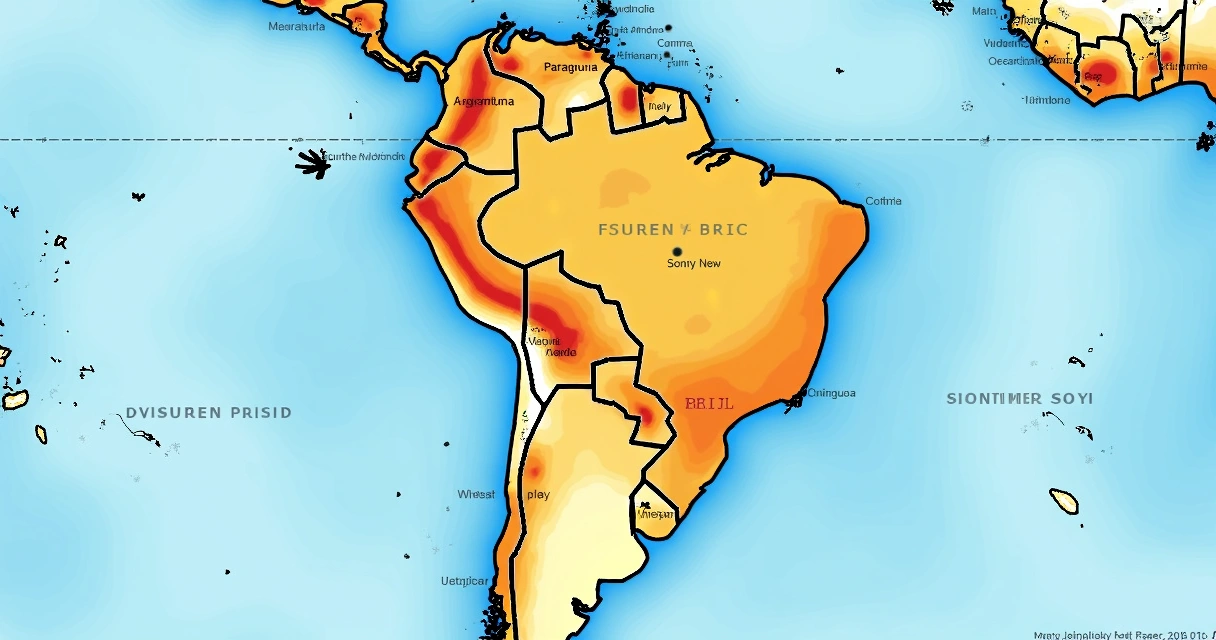
The story of an El Niño year is, in truth, many stories. For southern Brazil, Paraguay, Uruguay, and especially Argentina, the coming pattern generally brings reason for optimism. Rainfall often arrives on schedule in the spring and persists into summer, reducing the water stress that can haunt early soybean planting and wheat flowering. There’s a sense, on the southern Pampas or among cooperatives in Paraná, that nature is giving back after years of hardship.
Brazil’s Rio Grande do Sul, a leader in summer corn and a heavy hitter in soy, has seen top-tier yields when El Niño’s moisture lines up with critical crop stages. Argentina’s vast soybean and wheat systems, so recently rattled by drought, can thrive, with fields quickly recovering vigor where soils hold the extra rain at just the right moment. For both countries, this can mean more than just full silos—it can restore confidence and bring out export potential, especially for Argentine wheat moving across South America and North Africa.
But beneath the optimism—hidden dangers unveil
Where sunshine in the south becomes disappearance of rain in the north, risk quietly builds. The northern and central sections of Brazil—Mato Grosso, Goiás, Bahia, parts of the Centro-Oeste—carry the lion’s share of Brazil’s soybean output. Recent history underscores the threat: in the 2023/24 cycle, under similar climate signals, sparse rainfall and relentless heat stunted crops and brought substantial production losses. Fields in Mato Grosso, the largest soybean state, suffered particularly harsh outcomes.
As noted in FAO’s global satellite analysis of crop vulnerability, these regions land squarely in the drought risk zone during strong El Niño events—especially when high global temperatures amplify the pattern as discussed by FAO.
It doesn’t end with a single soy season. Late rains delay soybean sewing in the north, which in turn compresses the window for the second, or “safrinha”, corn crop—the heartbeat of Brazil’s corn exports. When this corn is forced into the ground later, it matures during drier, cooler months, further raising the odds of shortfalls. This cascading sequence can directly hit supply chains, international price formation, and contract reliability.
Argentina’s wheat: Recovery after the dry years
Not every crop in every country faces the same odds. Historical data from El Niño episodes shows striking results for Argentine wheat: as spring rains become more regular, fields establish more easily, grain fill succeeds, and yields climb. For Argentina, which exports wheat across Latin America and often to parts of North Africa, these cycles can help the entire region rebound from previous damage and support local and global food security as the FAO, IFAD and WFP warn.
Some harvests surge, while others silently slip away.
The global market focus: Why South America matters most
In the northern hemisphere—think US, Europe, Black Sea states—the same Pacific ocean drama rarely moves the needle for soy or corn production. Seasonal rains and temperature profiles remain more stable, and thus when El Niño emerges, commodity traders and analysts keep their eyes south. In years with this pattern, it is South America’s output that sets the tone for global prices—especially as Brazilian and Argentine exporters step up activity in response to yield signals and market cues.
For wheat, the equation is more complex. Losses in Australian production can be significant in “Super El Niño” years. Yet, should Argentina and North America produce well, balances can be restored. This delicate offset becomes a storyline in world wheat trade each cycle, with Argentina often positioned as a beneficiary among Latin American exporters.
Perspectives from the field: Experts weigh in
Luiz Fernando Gutierrez Roque of Hedgepoint has summed up the split outlook for 2026 as “a year of contrasts.” While southern regions prepare for steady, even generous rain that supports robust development in corn, wheat, and soy, the north braces for shortages. “Above-average rainfall likely to help southern crops; below-average rainfall can threaten northern soybeans and push the second corn harvest into drier periods,” he notes. It is this dichotomy—gain in one region, risk in another—that drives both hope and anxiety for those who must manage physical deliveries, trading books, and feed stocks for industry.
Risk and discipline: Why structure matters in hedging
With volatility as a constant threat, the ability to act on reliable, rapidly updated intelligence can determine who benefits when chaos strikes. The team at Uhedge has developed systems combining quantitative modeling with real-time integration of price, weather, and risk factors. Unified visibility and advanced risk frameworks help clients absorb shocks, manage liquidity, and maintain discipline even as forecasts shift and market noise increases.
By providing one environment for monitoring exposures, pricing complex hedge structures, and documenting actions for rigorous compliance, Uhedge operates as an extension of clients’ decision teams—turning fragmented views and slow reactions into clear, data-driven actions that better withstand surprises. This discipline is especially valuable for supply chains exposed to the dual risk of basis volatility and sudden weather swings.
Practical content related to commodity market risks and discipline further highlights this approach, detailing how systematic hedging practices address the inherent chaos of climate-driven years.
Mitigating unpredictability: What steps can be taken?
The most successful actors in 2026 will be those who treat weather intelligence, disciplined planning, and flexible hedge management as inseparable. Every hedge, especially under El Niño conditions, rests not just on one price or contract, but on a multi-factor view—accounting for rainfall odds, timing of planting and harvest, and the regional balance of supply and demand. Detailed guidance on this philosophy is outlined in resources such as hedging for soy and hedging for corn, as well as risk management discipline in agribusiness.
For those needing a deeper technical view, a complete report featuring climate scenarios, price and volatility projections for leading crops such as soy, corn, wheat, coffee, sugar, cocoa, and palm oil is available for download from Hedgepoint Global Markets, with regulatory and compliance notes provided for transparency. As always, past performance cannot guarantee future results, and trading in commodities should always be backed by independent advice.
Conclusion: Opportunity and caution walk together
El Niño creates opportunity where it rains and risk where it withholds, especially in divided regions of Brazil and Argentina. 2026 will reward those who bring data, discipline, and adaptability to their risk management. Uhedge’s quantitative, unified approach helps ensure that weather volatility need not equal financial volatility. Success in such a year will belong to those who prepare early, track developments closely, and respond with both speed and structure.
To discover more about how to transform climate risk into winning market moves, schedule a technical consult or explore the risk management solutions from Uhedge. Take the first step toward disciplined, data-driven decision-making and turn unpredictability into possibility.
Frequently asked questions
What is El Niño and how does it work?
El Niño is a climate pattern caused by warming of surface waters in the central and eastern Pacific, disrupting global weather from South America to Asia and Africa. These warm phases last 9–12 months and bring both increased rain to some regions and drought to others. The shifting heat and winds alter the usual patterns of storms, air currents, and precipitation, heavily influencing agricultural cycles and yields worldwide. For further details, the FAO provides a full explanation.
How will El Niño in 2026 affect crops?
For 2026, forecasts indicate that southern Brazil, Argentina, Uruguay, and Paraguay may benefit from improved rainfall during the planting and development periods of soy, corn, and wheat. Yields in these regions often rise when El Niño brings regular moisture. In contrast, northern and central Brazil—including major producers like Mato Grosso—face higher risks of drier conditions, which can damage early-planted soy and delay the crucial second corn crop. The impact depends on the event’s strength and timing.
What risks does El Niño pose to farmers?
Farmers in northern and central Brazil risk yield losses due to below-average rainfall and high heat during El Niño phases. These conditions can stunt crop development, delay sowing, and push harvests into riskier dry periods. This creates a domino effect, particularly for the second planting of corn. In southern areas, excess moisture can sometimes promote diseases or cause localized flooding. Overall, unpredictability and rapid shifts make financial and operational planning more complex.
Which South American regions benefit the most?
Southern Brazil (notably Rio Grande do Sul and Paraná), Argentina, Uruguay, and Paraguay typically benefit from El Niño’s increased rainfall during the spring and summer, allowing key crops to develop with less water stress. Argentine wheat, in particular, can rebound dramatically after dry years, increasing both domestic supply and exports.
How can growers prepare for El Niño?
Preparation begins with up-to-date weather intelligence and scenario modeling. Farmers and commodity businesses should plan for flexible sowing and harvesting times, diversify risk through hedges, and integrate data from market and climate sources. Unified risk management platforms like those from Uhedge can provide real-time visibility, technical support, and actionable recommendations so that operational strategies stay a step ahead of climate surprises.