Artificial intelligence has quietly become a powerful engine behind modern commodity trading, bringing new decision methods, sharper insights, and real-time risk visibility. In markets where milliseconds and small percentages define competitiveness, AI’s ability to process complexity has become indispensable. But the story of AI in this area is not just about faster machines. It’s about layered partnerships between people, data, and learning models—with everyone from the desk trader to the risk manager playing a vital role.
Understanding the landscape: Where does AI fit in commodity markets?
Commodity trading, from grains and coffee to energy, has always juggled global forces: weather, policy, logistics, economic cycles, wars, and shifting consumer tastes. Each day, thousands of variables move prices and exposures. Historically, gut feeling, experience, and spreadsheets held the industry together. But the scale and speed of market movements have stretched traditional tools past their limits.
That’s where AI steps in. Platforms like those offered by Uhedge now enable companies to integrate and automate decision-making processes that were previously “humanly impossible” to track entirely. These systems analyze vast datasets across physical and financial markets, run predictive models, and provide real-time updates on exposures, upcoming risks, and opportunities for tactical hedges.
In the words of a senior quant at Uhedge, “AI turns chaos into opportunity.” The point is not to bypass human expertise, but to augment it with constant, data-driven signals that allow much faster and more accurate tactical shifts—something legacy systems simply cannot offer.
For readers unfamiliar with the sector’s foundations, articles such as how commodities work: risks and opportunities in Brazil can provide valuable background.
The workflow: Market analysis, deal execution, and risk management
Machine learning in market analysis
Market analysis was once defined by reports, instincts, and fragmented news flows. Now, machine learning algorithms scan global news, weather patterns, macroeconomic signals, satellite data, and even social media in real time. These models learn correlations and quickly flag potential shocks or price distortions that conventional models might miss.
- Pattern recognition: By identifying patterns in massive, noisy datasets, AI models highlight price anomalies, detect early market shifts, and support advanced trading signals.
- Predictive analytics: Forecasting supply shocks (like droughts), price movements from geopolitical events, or the impact of regulatory changes, often faster than any human can process.
- Sentiment analysis: Natural language processing (NLP) engines digest millions of articles, tweets, and government announcements, scoring market sentiment and mapping probable price directions.
“Where human capacity ends, AI begins.” That’s a sentiment echoed by many who have witnessed the transformation of raw market data into actionable intelligence.
Deal execution: From pricing vanilla to exotic structures
Executing a commodity trade is far more than buying low and selling high. It’s about structuring contracts, managing derivatives, and balancing between physical and financial exposures. AI drives advantages here as well:
- Automated pricing engines: Modern platforms instantly calculate prices for both simple (vanilla) and complex (exotic) contracts, like accumulators or Asian options, synthesizing inputs such as volatility surfaces, real-time spot prices, seasonality, and basis risks.
- Algorithmic trading: Machine learning models can execute trades with precision at optimal moments, reacting to market movements in milliseconds based on probabilistic models rather than simple rule-sets.
- OTC replication: AI algorithms simulate over-the-counter derivative conditions within regulated environments, expanding access well beyond traditional banking relationships.
Uhedge’s software leverages proprietary methods to give traders “one environment for everything”—providing audit trails, real-time reporting, and clear separation between physical and paper positions. This unified approach cuts out confusion and delays from scattered spreadsheets and manual interventions, supporting risk management at the operational core.
Risk management: The nerve center
Risk management sits at the heart of commodity trading. With unpredictable price swings and the ever-present threat of macro shocks, platforms have evolved to deliver:
- Parametric value-at-risk (VaR): AI evaluates the potential losses on current exposures given market volatility and the correlation of movement across diverse commodities.
- The Greeks: Automated, real-time calculation of risk sensitivities—delta, gamma, vega, and theta—helps both traders and managers keep track of changing risk profiles.
- Stress testing: Machine learning models simulate thousands of “what-if” market scenarios, giving teams a window into how their positions might respond.
- IFRS 9 hedge accounting: Automated effectiveness testing and report generation remove guesswork from calculation-heavy compliance, making it easier to retain auditable records and pass regulatory scrutiny.
The real breakthrough? “Discipline and transparency at every step.”
Segments like agroindustry, exporters, and even mid-market banks benefit from these control systems, building consistency in cash flow predictions and defending profit margins.
Benefits for business: Speed, accuracy, and operational control
The case for AI-backed processes in commodity trading is not just about calculations. It’s about what happens to a business once speed, control, and robust data become the everyday standard:
- Quicker market entry: Data-driven signals and automated processes shrink the time between analysis and action.
- Sharpened decisions: With automatic recommendations from AI models, traders can act with increased confidence, knowing models have considered all available market, credit, and liquidity risks.
- Full visibility: Unified dashboards and metrics close information gaps, ensuring the front, middle, and back office move together in one rhythm.
- Reduced error and fraud: Less manual input means fewer mistakes and lower chances of operational “slippage.”
- Smoother compliance: Automation simplifies regulatory tasks like hedge designation, reporting, and performance documentation.
- Margin protection and enhancement: The end goal—converting uncertain market costs into predictable, defendable margins.
Uhedge’s philosophy is that “Disciplined risk management isn’t an overhead—it’s the path to higher margins.” Real-time, model-driven projections let businesses capture upside and shelter against the downside in volatile currencies, rates, and commodities.
Readers can learn more about price risk and hedging in-depth through the guide for commodity hedging or explore practical mistakes—and ways to avoid them—referenced in common hedge errors in commodity companies.
Consistency wins, when others are surprised.
The technical engine: Predictive models, NLP, and data ingestion
From raw data to actionable insight
Traders and risk managers are inundated by data: prices, weather, news, shipping logs, crop forecasts, and more. AI systems don’t just store this flood—they organize it, clean it, and learn from it, creating a “digital brain” for commodity operations.
- Predictive models: Collect historical and real-time data to estimate likely price movements, highlight emerging risks, and support position-taking.
- Natural language processing: Sifts through unstructured information to flag market sentiment, regulatory news, or hidden signals buried in text.
- Automated data ingestion: Connects to multiple data sources, structures them for statistical modeling, and quickly refreshes analyses.
This automation is critical. As Uhedge’s team points out, “No single human, or even a room full of them, can monitor all the necessary signals at global scale, all the time.” Automation makes the impossible routine.
Underlying science: Quantitative modeling and machine learning
AI in commodity spaces isn’t magic. It rests on foundations of statistics, econometrics, and advanced engineering. These disciplines underpin:
- Volatility surface analysis
- Basis intelligence (linking local physical prices with global benchmarks)
- Stress-testing of portfolios across different risk factors
The result: “Tactical agility based on real signal, not noise.” Uhedge’s quant approach relies on restricted risk modeling, algo-based recommendations, and scalability to meet the needs of clients with exposure to everything from green coffee and sugar to biofuel and metals.
Case stories: Practical AI applications in the field
From problem to solution, with measurable results
Let’s break the technical discussion with real examples:
- Grain cooperative risk management: By applying machine learning to real-time weather, yield, and logistics data, a cooperative can create “living” hedging portfolios, dynamically reallocating exposure as risks shift.
- Coffee desk tactical trading: With NLP-driven models monitoring weather disruptions and geopolitical chatter, managers can adjust positions as soon as signals appear, instead of waiting for end-of-day summaries. One Uhedge client cited a clear margin advantage from this fast signal.
- Energy firm margin stability: Model-driven optimization of margin calls and liquidity management for a biofuel producer meant fewer costly surprises and more stable cash flows, as automated alerts and capital optimization tools anticipated volatility and kept positions in line with targets.
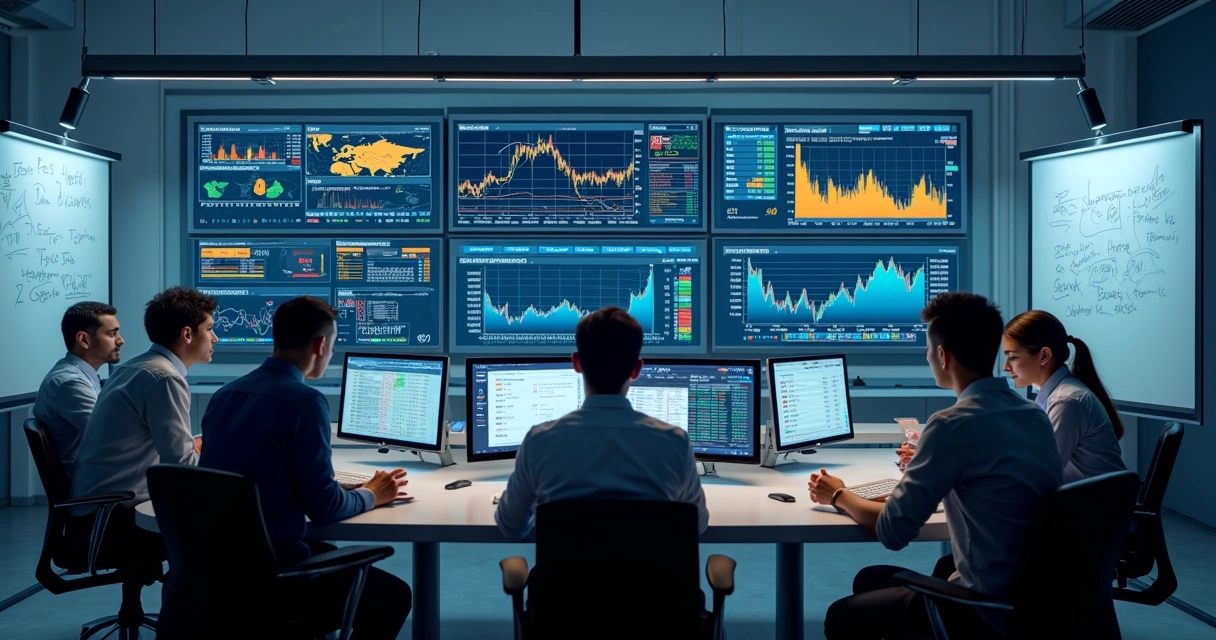
“Success is measurable—in saved margins and fewer bad surprises.”
AI integration: Practical challenges and lessons learned
Legacy systems and the data puzzle
AI adoption is rarely switch-and-play. Most commodity firms rely on a mix of old systems, spreadsheets, and manual workflows. The core hurdles include:
- Data fragmentation: Bringing exposures, prices, and contracts from many places into one cohesive environment.
- Legacy system inertia: Older tools may be closed, non-standard, and slow.
- Data quality: Inaccurate or incomplete data can poison even the smartest AI outputs.
- Training gaps: Moving from spreadsheet culture to model-driven thinking requires new habits and upskilling across teams.
Change management becomes as important as technology. Some firms start with small pilots or advisory partnerships before integrating AI into the main workflow, learning in steps rather than aiming for overnight reinvention.
Trader roles in the AI era: Augmentation, not replacement
There’s an urban myth that automation will sweep trading desks clean of humans. Reality is more balanced. AI makes processes faster and richer, but professionals still play irreplaceable roles:
- Interpreting model outputs, ensuring they fit unique business goals or sudden market shifts that models might not yet “know.”
- Combining model recommendations with macro intuition—especially during geopolitical disruptions or policy shocks.
- Designing new trading strategies that take the best of both human judgment and machine efficiency.
In practice, “AI is a partner, not a substitute,” as one risk manager described it. The best results are found on desks where traders use AI-generated recommendations to ask smarter questions, test more scenarios, and spot risk faster than before.
Building the foundation: Data infrastructure and ethical considerations
With AI’s hunger for data and scale, foundations matter. What does this look like in practice?
- Robust data infrastructure: Fast, secure, and high-quality data is vital. Systems need to be scalable, with automatic validation, storage, and backup to support ever-increasing volumes and sources.
- Ethical rules and transparency: Automated decision-making in trading must remain monitored. Teams are responsible for tracking biases, documenting logic, and ensuring the system does not make prohibited or unfair decisions. Regular auditing and “explainable AI” principles are essential.
The point: People are still accountable for every trade and risk signal, regardless of whether a machine or human makes the call.
Incremental adoption: Aligning AI projects with real business needs
Many organizations hesitate: “Where to start, and how to avoid expensive missteps?” The answer is clear—start small, solve a real business pain, and build out.
- Begin with one exposure (e.g., FX risk for a commodity export contract).
- Pilot AI-based models to create automatic alerts for price or risk shifts. Follow the results closely.
- As confidence grows, extend to other contracts, assets, or processes—while continuing to integrate legacy data into unified dashboards.
- Keep humans central—invite skepticism, judgment, and regular recalibration of models.
Platforms like Uhedge emphasize this prescriptive approach: AI works best when aligned with “the real knots and headaches of the business.” Over time, incremental benefits accumulate rapidly: tighter margins, fewer nasty surprises, and strategic breathing room.
Readers interested in the broader landscape can find more about commodity-specific topics on the commodities section of Uhedge’s blog. And for step-by-step guides, check practical strategy guides for hedging commodities.
Focus on one big challenge at a time—AI will scale with your needs.
Conclusion: Turning data and science into business resilience
Artificial intelligence is no longer an experiment in commodity trading. It’s a core pillar for organizations that want transparency, discipline, and tactical agility in fast-moving, high-risk markets. What matters most is not who has the flashiest tools, but who solves their business pain—whether margin erosion, cash flow swings, or operational blind spots—with science, rigor, and a commitment to learning.
Commodity trading is still a team sport—just with much sharper tactics. The best companies will be those that steadily align machine intelligence with their business priorities, always building upward from real needs and measurable wins. For readers seeking to transform their approach with these principles, Uhedge invites you to learn more, connect, and see how a disciplined scientific approach can turn risk into edge.
Frequently asked questions
What is AI in commodity trading?
AI in commodity trading refers to the use of advanced algorithms, machine learning, and data analysis tools to support decisions, monitor risks, and automate tasks related to buying, selling, and managing commodities. Instead of relying solely on manual reports and human intuition, AI platforms process massive datasets, run predictive models, and generate real-time recommendations, resulting in sharper and more reliable strategy for traders and managers.
How does AI predict commodity prices?
AI predicts commodity prices by collecting and analyzing a wide range of data—from market prices and economic indicators to weather reports and news. Machine learning models look for complex patterns and correlations that might signal price movement, while natural language processing scans market sentiment and breaking news for hidden risks or opportunities. These models are constantly updated as new data arrives, keeping predictions relevant and actionable.
Is AI reliable for trading commodities?
AI brings speed, accuracy, and control to commodity trading, supporting better decisions and reducing the likelihood of costly errors. However, no system is perfect. AI’s reliability depends on the quality of the data used and ongoing human oversight. It works best as a partner—helping traders handle complexity, but always within a framework of disciplined risk management and regular model checks.
What are the challenges of using AI?
Applying AI to commodity trading involves several challenges. Firms often face fragmented data, legacy IT infrastructure, and the need to retrain teams. Data quality is critical—poor input leads to unreliable output. Human expertise is also necessary to interpret results and keep models honest. Finally, companies must build strong ethical rules and ensure transparency around automated decisions.
How can I start using AI tools?
The best way to start is with a focused business problem, such as improving risk monitoring for a specific commodity exposure. Test AI tools on a small scale—using pilot projects or advisory partnerships. Monitor results closely, then scale successful practices to other areas. Training staff and integrating relevant data sources are also key. Platforms like Uhedge support firms step-by-step, making it possible to align technology with real business priorities for fast and lasting impact.