
In commodity and derivatives markets, structure matters. The story of every trade is shaped not just by price and timing, but by the discipline and oversight behind each transaction. The modern commodity hedge, whether by a grain producer, energy manager, or asset manager, depends on strong intermediaries who bridge the real world and the financial market. Among these, the role of a Futures Commission Merchant (FCM) is fundamental to the integrity, transparency, and safety of derivatives trading. This article unpacks the many dimensions of FCMs, blending technical details with real-world context to help commodity hedgers, risk managers, and institutional clients make sense of this crucial market participant.
What is a futures commission merchant?
Futures Commission Merchants are specialized firms or entities that accept orders to buy or sell futures contracts, options, or swaps on behalf of clients and, importantly, hold client margin and funds in regulated accounts. In other words, the FCM stands between the customer and the clearinghouse to execute orders, ensure regulatory compliance, manage collateral, and provide reporting and safeguards that support the entire chain of financial risk transfer. Without the FCM, the trade would risk becoming an unsecured handshake. For those exposed to major market swings, from a soybean cooperative to a biofuel producer, this reliability is a necessity, not a luxury.
The core functions of the FCM in modern markets
The most practical way to understand an FCM is to look at what they do daily, for both institutional and commercial clients. Their services break down into several main blocks:
- Order execution and transmission: Receiving, checking, and transmitting trading instructions to exchanges
- Clearing and settlement: Acting as the direct agent with exchange clearinghouses to ensure trades are settled
- Margin management: Collecting, holding, and transferring initial and variation margin to the clearinghouse
- Risk controls and compliance: Monitoring accounts, reporting exposures, and ensuring adherence to regulatory requirements
- Customer protection: Segregating customer assets from the FCM’s proprietary assets for safety
- Reporting and transparency: Delivering statements, confirmations, and margin notices in clear, auditable formats
At Uhedge, for instance, robust risk systems and quantitative models integrate with client margin protocols to provide end-to-end visibility across derivatives exposures, whether for coffee, corn, or currency hedges. By unifying these functions, such a platform makes complex markets accessible and protected for all participants.

How futures commission merchants handle order execution and clearing
Order execution is the starting point for any commodity trade. The FCM is the agent who takes a client’s instruction, whether to hedge a future grain sale or lock in diesel prices, and ensures that the transaction is properly submitted to the exchange in a compliant manner. Execution is not a simple pass-through; the FCM checks for credit, verifies the order’s conformity to exchange rules, and ensures enough margin or collateral is present. Once validated, the order is submitted for matching on the exchange.
Clearing, meanwhile, sees the FCM become the direct counterparty to the clearinghouse, guaranteeing performance for both the client and the exchange. This is a serious responsibility. If the client cannot meet obligations, the FCM is on the hook, and thus employs strict margining and risk controls to defend against defaults. By managing both execution and clearing, the FCM ensures every trade is matched, recorded, and credited or debited according to precise protocols.
Client margin management: The backbone of futures safety
Margin is the lifeblood of the entire futures ecosystem. Unlike buying stocks outright, futures and options are leveraged products, meaning small movements in price can greatly impact profits and losses. To protect the market, exchanges demand participants post “initial margin”, a good-faith deposit to back their positions, and adjust this daily with “variation margin” as prices change.
The FCM is responsible for assessing, holding, and transmitting all client margin to the clearinghouse. Only regulated entities, not brokers who merely introduce trades, are permitted to hold these funds. The FCM’s systems must accurately calculate margin requirements in real time, call for additional funds when needed (margin calls), and transfer any proceeds or deficits with meticulous transparency.
This activity is especially critical for commodity hedgers whose exposures can shift quickly due to weather, geopolitics, or currency shocks. Having robust, technology-driven margin models, as featured in Uhedge’s asset management and risk solutions, minimizes operational risk and avoids costly errors in a volatile environment.
Customer fund segregation: Why it matters
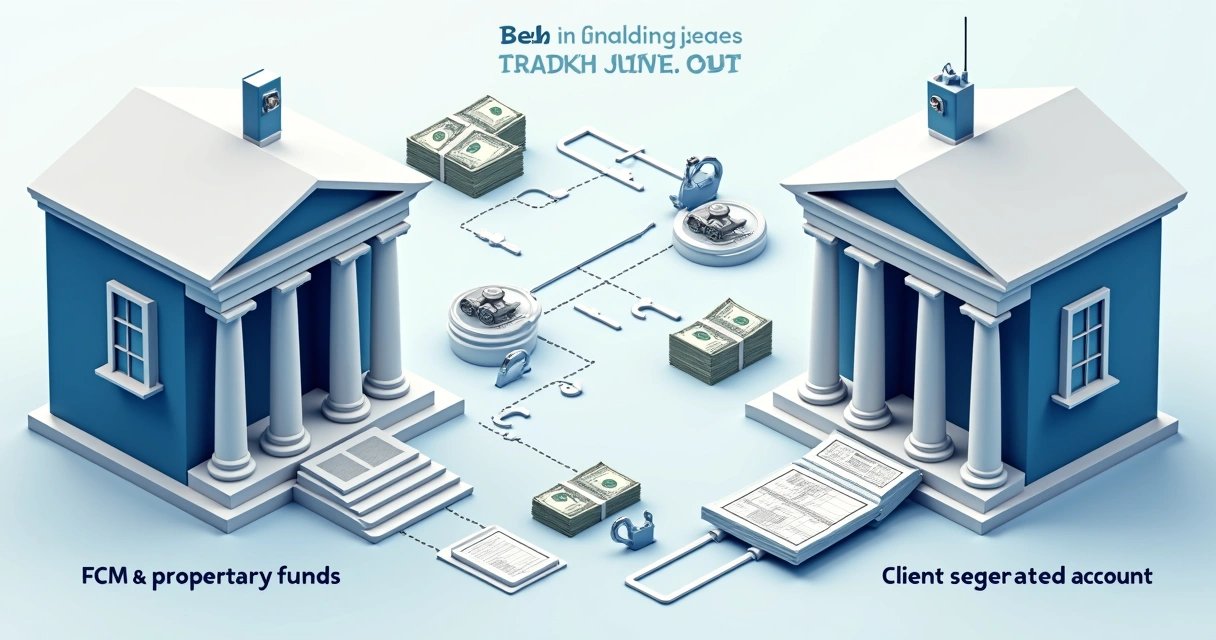
One of the most distinctive safeguards required of all FCMs, and perhaps the single most important customer protection, is the segregation of client funds. Regulation by the CFTC and NFA dictates that all customer margin deposits must be held in dedicated accounts, entirely separate from the FCM’s own operating or trading capital. These segregated accounts are designated solely for the benefit of customers.
Segregation turns a promise into a legal and operational guarantee that customer funds are, at all times, insulated from the risk profile of the FCM itself.
This means that if the FCM were to become insolvent, client funds could not legally be seized by creditors and must be returned to clients ahead of other obligations. The CFTC highlights that these rules confer not just a structural advantage but bestow bankruptcy preference, further insulating clients from potential losses due to an intermediary’s failure. Learn more on CFTC guidance on segregation of customer funds.
Regulatory requirements and oversight: CFTC and NFA directives
Oversight is a constant presence in the world of FCMs. Operating as an FCM requires continuous compliance with a broad array of regulations, primarily from the U.S. Commodity Futures Trading Commission (CFTC) and the National Futures Association (NFA). These requirements set high barriers for capital adequacy, record-keeping, supervision, and transparency.
As of the CFTC’s 2024 update, there are about 60 registered FCMs in the United States, divided between roughly 40 clearing and around 20 non-clearing firms. The financial bar is high: minimum adjusted net capital stands at $1,000,000 (or $20,000,000 for firms also registered as swap dealers), with a further provision that net capital must not be less than 8% of the risk margin for customer and noncustomer positions as detailed in Regulation 1.17. This ensures that only financially robust firms can undertake these obligations. For the full details, see the 2024 CFTC final rule updating FCM financial requirements.
Beyond financials, FCMs are strictly regulated regarding anti-money laundering, cybersecurity, reporting, and ongoing due diligence over both clients and their own operations. Audits, both routine and unannounced, check that risk practices, customer records, and segregated funds are as declared. All of this forms the foundation for trust in the futures market.
Comparison: Self-clearing versus intermediary FCMs
Within the world of FCMs, two main structures exist. Some firms act as full self-clearing agents, holding direct membership at exchanges and interfacing with clearinghouses themselves. Others serve as intermediaries, routing trades through larger clearing members but offering local, tailored service. Both models have their place, but differ in key respects:
- Speed of Execution: Self-clearing FCMs may execute settlement and margin transfers faster, as all flows happen within their own operations, beneficial for institutions needing split-second allocation of collateral.
- Transparency: Self-clearing agents offer heightened visibility into settlement and reconciliation, with in-house risks and margin flows directly linked to clients.
- Financial Security: For some participants, especially those dealing with large positions, the additional layer of oversight from intermediary FCMs can provide another checkpoint for systemic risks.
For commodity hedgers and asset managers, the choice between self-clearing and intermediary FCMs often comes down to the trade-off between operational simplicity and the desire for tailored service or additional layers of counterparty oversight.
Connecting clients to the exchange clearinghouse: The FCM’s irreplaceable role
No farmer, cooperative, or asset manager deals directly with a clearinghouse. That’s the province of the FCM. By holding direct membership and posting aggregate margin at the clearinghouse, the FCM creates a firewall protecting the customer from potential clearinghouse risk, and vice versa. The FCM is responsible for the integrity of every position it carries, it guarantees the trade for both the client and the market.
In practice, this means a sugar cooperative or exporter can access global futures, options, or swaps markets without having to post multi-million-dollar guarantees or negotiate compliance in every jurisdiction. The FCM packages this complexity into a single end-to-end relationship, sending trade and margin data seamlessly between client accounts and the central markets.

Responsibility in risk controls and margin calls
Why so many rules? The simple answer is risk, not just market risk, but systemic, operational, and credit risks as well. FCMs employ layered risk management practices including:
- Real-time margin calculations using advanced analytics and stress testing
- Strict adherence to regulatory capital requirements
- Comprehensive reporting with daily statements, end-of-day reconciliations, and compliance audits
- Automated alerts for margin deficits and policy violations
- Active surveillance for suspicious trades or sudden shifts in position
At Uhedge, such controls are powered by quantitative models and artificial intelligence tools that run continuous risk checks, ensuring that liquidity, margin calls, and operational exposures are never left to chance.
For more on best practices in derivatives and risk management, readers can visit resources such as our derivatives knowledge section and risk management articles.
Case examples: Practical use for hedgers and asset managers
The FCM’s value is best illustrated through real-world application. Consider:
- A grain cooperative hedging new crop sales months in advance, relying on its FCM to manage daily margin requirements, track account balances, and provide fast reporting so the cooperative’s CFO can plan for seasonal cash flows.
- An energy producer hedging diesel or ethanol sales, posting margin to cover exposures, and receiving specialist advice on optimal contract structures for minimizing cost.
- A family office or mid-market bank using FCM services to access commodity derivatives, trusting in strict fund segregation and NFA oversight for peace of mind when scaling exposures.
In all cases, an integrated FCM setup, with a system for unified risk control and margin management, such as the platform delivered by Uhedge, can lower the likelihood of operational mistakes, slow reporting, or costly oversights. Readers interested in practical hedging guides might enjoy this practical hedge guide or more on commodity risk protection.
Key FCM compliance duties: A closer look at CFTC and NFA roles
The CFTC’s rules continue to evolve, reflecting increased awareness of both market and operational risks. The CFTC’s minimum net capital framework, detailed in 17 CFR § 1.17, goes far beyond the technical floor: it obliges FCMs to maintain an ongoing buffer that grows with the risk profile of their customer base see the full provision for FCM capital and reports. For large FCMs involved in swaps, the adjusted net capital requirement jumps even higher, in recognition of the additional systemic risk. See complete summary at CFTC overview of minimum net capital requirements.
Alongside the CFTC, the NFA mandates comprehensive anti-fraud, reporting, and audit standards, requiring detailed risk assessments, background checks, and annual ethics training for staff. The takeaway for clients? Stronger defenses and greater reliability, even during periods of high volatility.
Technological advances: Quantitative and AI-driven risk controls
In the current landscape, digital tools and quantitative analysis are making FCM services more transparent, accurate, and responsive. Uhedge deploys AI-driven modeling and real-time analytics to ensure that margin calls, portfolio exposures, and compliance alerts remain fast and reliable, offering early warning and discipline where it matters most. These advances cut through operational complexity and make it possible for companies, even those without large accountancy teams, to gain deep insight into their exposures and risks.
This can translate into immediate bottom-line impact, reducing unnecessary costs and smoothing out cash flow volatility.
How FCM structure impacts speed, transparency, and security
Speed matters most when volatility spikes. Self-clearing FCMs typically offer the fastest response, which is vital during swift market moves, such as harvest-time price swings or sudden geopolitical announcements. Intermediary FCMs shine where a more serviced, hands-on structural approach is needed, especially in markets with local nuances or cross-commodity correlations.
Ultimately, it’s the accountability and transparency of the FCM that makes the structure effective. Whether servicing food manufacturers, commodity exporters, or family offices, having all exposures, cash flows, and risk metrics in one normalized system lets client treasurers react quickly and confidently.
For those managing metals risk, further reading is available at market metals and hedge strategies.
Conclusion: Making risk work for you
The role of the FCM is foundational for anyone hedging, speculating, or investing in the global commodity and derivatives markets. From basic margin calls to cutting-edge risk analytics, the FCM acts as both safeguard and guide. Proper selection and understanding of your FCM relationship means turning risk from a cost center into a driver of value and predictability.
With ongoing innovation, deeper compliance, and more readable analytics, the next generation of commodity clients will find themselves better equipped for both challenge and opportunity. The Uhedge platform, with its focus on discipline, quantitative rigor, and aligned interests, stands ready for that future, and so should you. Take the next step: schedule a consultation with Uhedge to discover how your treasury or risk team can gain from unified risk technology and expertise.
Frequently asked questions
What does a futures commission merchant do?
A Futures Commission Merchant acts as the key intermediary between clients and derivative exchanges, executing orders, holding client margin, ensuring regulatory compliance, and managing risk controls while connecting clients to clearinghouses. They provide daily statements, handle margin requirements, and keep client funds segregated from their own capital for safety.
How does margin work in futures trading?
Margin in futures is a collateral deposit required to open and maintain leveraged positions. It's dynamically adjusted by the FCM as markets move. If the market moves against the client's position, the FCM issues a margin call, requiring the client to add more funds to meet minimum thresholds. These funds are held in segregated accounts and tracked constantly to prevent defaults.
What risks do FCMs help manage?
FCMs shield clients from market, credit, operational, and systemic risk by enforcing margin rules, segregating client funds, running real-time risk analytics, and ensuring compliance with CFTC/NFA regulations. This protects both the client and the wider financial system from disruptions.
How do I choose a reliable FCM?
Key factors for selecting an FCM include regulatory registration and financial strength, a proven compliance record, robust margin and risk management technology, transparent reporting, and alignment of interests with your business goals. Uhedge, for example, prioritizes transparency, discipline, and advanced quantitative tools to deliver strong risk control for clients.
How much does it cost to open an account?
Opening an account with an FCM typically involves meeting minimum deposit and margin requirements, which vary by institution and type of derivatives traded. Regulatory minimums are set by the CFTC, but operational fees or commissions depend on the account structure, traded product, and service level. Reach out to Uhedge for a tailored risk and fee analysis based on your risk profile and objectives.