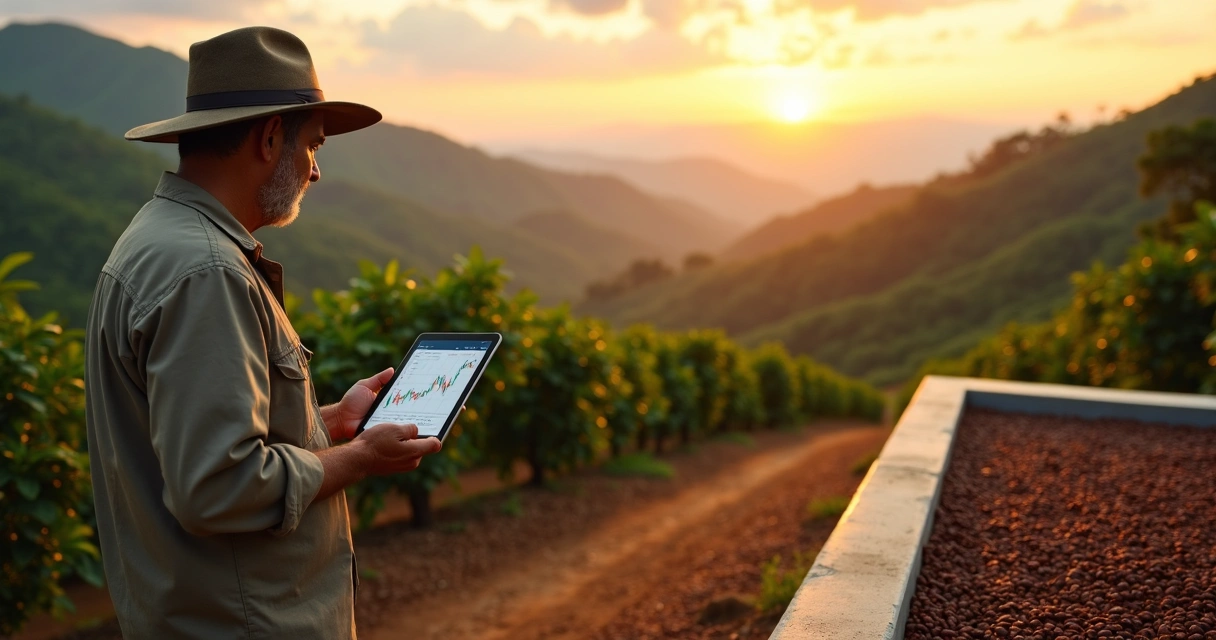
Coffee producers in Brazil wake up each day to a world that promises almost nothing about where prices will be tomorrow. Clouds gather fast—sometimes literally—and everyone in the industry knows how unpredictable things can get. Coffee pricing is a story of uncertainty, woven by a thousand hands: storms sweeping fields, global politics shifting suddenly, and logistics jams making export dreams shrink. Every small farmer or large exporter in Brazil feels these waves.
When it comes to protecting income or even just staying open for business, price risk is an issue on every desk. That's where hedge instruments—a mix of financial contracts and structured arrangements—enter the scene. These techniques never erase risk. They transform chaos into managed exposure and replace anxiety with the cold comfort of numbers. Think of hedge as “locking in a future price today”—trading away part of tomorrow’s surprise for today’s visibility. Know the difference:
- Spot market: Where coffee is sold at today’s open price, with no promises.
- Futures market: Where a price is set, in advance, for delivery down the road.
Why are coffee prices so volatile in Brazil?
There isn’t a single reason—there are dozens. Weather dominates headlines: a dry spell or frost in Minas Gerais can erase fortunes and spark global price rallies. Local politics affect rules and taxes, sometimes suddenly. Exchange rates flip the value for those selling in dollars. And world events—think trade sanctions, export barriers, or crashes in shipping capacity—change everything overnight.
In short, every coffee business in Brazil, small or large, faces randomness stacked high. Making it more predictable is what keeps producers in the game, from family farms in the hills to big exporters moving containers around the world.
Seven proven strategies for more predictable prices
No one approach suits all needs or all seasons. But these seven tools form the basic toolbelt of any risk-conscious coffee producer in Brazil. Used wisely, they turn wild price swings into a navigable path. Interspersed with examples, they show why mixing strategies and adjusting with the times is usually the path to survival.
- Futures contracts (BM&F and NY): The foundation of price protection
For many large producers and exporters, the starting line is the futures market. Through contracts on Brazil’s BM&F or the NY exchange, producers can fix a price for future delivery, usually for parcels of 100 or more bags. Large Minas Gerais growers often fix prices for a portion of their crop this way, sometimes covering up to one-third of planned output.
A well-timed contract near expiry can guarantee up to 95% of the market’s peak prices.
It sounds simple, but timing is a challenge. Price early, and you might miss a rally. Wait too long, and weather can wipe out your eligibility to deliver. Hedging only part of the crop is smart—never bet everything on a single contract.
- Put options: Insurance against loss, with room to gain
Producers who want to set a minimum price but keep the upside if the market jumps often choose put options. Think of it as a market insurance policy—pay a premium, and you gain the right (but not the obligation) to sell at the chosen price. If prices fall, you exercise the option. If they rise, you sell in the market, less the paid premium.
Options let growers sleep at night, even when prices dive.
The flip side is the premium: it’s a cost, and options may be too expensive when volatility spikes. Still, for high-value lots in risky years, many see it as a fair trade-off.
- Cross hedge: When direct contracts don’t exist
Sometimes, no futures contract matches a local crop’s specifics. Here, cross hedge comes in: use a related asset (like ICE Arabica contracts for certain robusta coffees or even currency contracts to offset dollar risk). Effectiveness depends on how closely the “proxy” asset tracks your real crop’s prices.
This makes ongoing tracking necessary—correlations can shift fast, so what worked last year might not today.
- Barter: Trading harvest for supplies
Small and medium-sized producers with limited access to credit often turn to barter deals. In these, a portion of future harvest is pledged in exchange for inputs—fertilizer, chemicals, even fuel. When prices rise, these trades look less attractive, but when cash is tight, and banks say no, they are sometimes the only option.
- Study every contract—terms and delivery windows can lock too much production, leaving little room to profit from rallies.
- Never pledge too much of your expected harvest, diversify suppliers when possible.
- Weather and financial derivatives: For the fearless and informed
Brazilian institutions, backed by UFMG research, have introduced contracts that pay out if rainfall or temperatures stray beyond set thresholds. These can soften the blow when extreme events—like frost or drought—threaten profits.
Expect to see more of these tools as climate unpredictability increases. But, they require careful calibration and expert help.
- Collective or cooperative hedging: Strength in numbers
Small producers, sometimes unable to meet minimum contract volumes alone, join cooperatives or commercial partnerships. Together, they spread risk, negotiate better terms, and can hedge collectively—taking advantage of scale even with small individual lots.
- Swaps and mixed strategies: A toolbox approach
Sophisticated exporters layer multiple tools—futures for one part of the crop, swaps to protect against currency swings (sometimes structuring contracts in dollars or euros), and use of bartering for basic inputs. Large trading houses often mix at least three approaches every year.
No single method is perfect. Flexibility is the secret weapon.

How hedge decisions get made
Every strategy sits within real limits. Here are the key factors in play when planning price protection:
- Operational costs: Both futures and options need margins or pay premiums. Some years, these costs eat deep into profits.
- Pitfalls of setting prices too soon: If you commit early, you may miss later price rallies. If you wait, you risk being forced to accept low prices post-harvest.
- Avoid hedging all production: Weather may shrink your crop unexpectedly. Many producers cover only 25% to 50% as a rule.
- Liquidity and contract volumes: Not every contract fits every region or harvest size—sometimes finding buyers is itself a challenge.
- Review frequency: Volatile years (think 2021 frost or 2020 logistics bottlenecks) demand rapid, ongoing reviews and reactions.

Brazil’s leadership: More exposure, more potential
Brazil is the world’s largest coffee producer by far. This global scale multiplies both risk and possibility. For local growers, it means being exposed to international trends but also being able to attract advanced risk solutions and consulting, like those offered through UHEDGE. Data-driven insights, algorithm-based pricing, and an experienced guiding hand make structured decisions far more reliable, especially for those who keep daily eyes on flows and margins.
For producers who want to understand more about how to match risk management to their cash flows, market timing, and internal balance, resources like UHEDGE are there to extend global best practices into local fields, with a clear technical base and a long track record. Readers seeking long-form practical examples or technical breakdowns will find further details at this specialized discussion and broader market concepts in global market analysis.
Challenges to wider adoption
Some obstacles are hard to ignore. Red tape and the need for guarantees to trade on exchanges put hedging out of reach for some. The Brazilian currency is known for its wild swings and puts another layer of complication over these tools. But the real stumbling block for many is technical: not every rural producer has access to fast financial advice or even full awareness of the benefits modern hedging brings.
Information and education open doors. Producers who seek tailored guidance or partner with technology platforms that aggregate data and automate decision-making—like those powered by stately, conflict-free models embraced by UHEDGE—are much more likely to sustain through low cycles and benefit during rallies.
For readers seeking actionable knowledge, resources on risk management methodologies and real-time margin protection are available. When the time comes to choose between stay-and-pray or actively monitoring your P&L, consider the paths outlined at margin management for commodities.
Hedging tools won’t make prices rise. But they can make sure falling markets don’t take your business with them.
Firms built on deep expertise and robust technology, like STATERRA and the algorithmic platform of UHEDGE, are ready to support local producers who want to face the unpredictable world of coffee with data, discipline, and confidence. Knowledge is the best hedge. Now is the time to use both.
Conclusion
Brazilian coffee producers don’t need magic. They need discipline, data, and a toolbox of financial strategies. Get the right information, choose the right mix, review it often, and ask for help when needed. Preparing for bad times is what lets everyone celebrate the good ones. UHEDGE is designed to serve this goal: risk under control, profits when possible, and real support for every stage of the market.
If you are serious about keeping your business safe from sudden price shocks, now is the moment to learn more and consider a technology-driven approach. Start with a consultation and see how customized solutions from UHEDGE can prepare your business for any market weather.
Frequently Asked Questions
What is coffee hedging and how does it work?
Coffee hedging refers to the use of financial strategies and tools that help producers lock in future prices to protect against big swings in coffee market values. This usually involves fixing prices in advance via special contracts or options, so even if the market price falls, losses are limited.
How can producers hedge against coffee price drops?
Producers can protect themselves by using solutions like futures contracts (fixing a future sale price), options for insurance-like coverage, cross hedges with correlated products, and barter deals to lock in input costs. Some join cooperatives for collective arrangements, or use weather-based derivatives to protect against climate shocks.
Is it worth it to use coffee hedging strategies?
Many Brazilian coffee producers and exporters find these strategies worthwhile—especially in years of high risk, or when well-timed. The value depends on the costs of contracts, the accuracy of price predictions, and how closely the approach matches the producer’s real volume and needs.
What are the most common coffee hedging tools?
The main tools include futures contracts, put and call options, cross hedge strategies using similar assets, barter deals (where harvest is exchanged for supplies), and more advanced financial or weather derivatives. Most success stories come from mixing these tools based on market and farm realities.
How much does coffee hedging cost in Brazil?
The cost varies depending on the tool: futures require margin deposits, options demand a premium, and barter contracts can involve opportunity costs if market prices rise. However, technology-based solutions and collective approaches can help bring these costs down and make them manageable, as seen in UHEDGE’s support for Brazilian producers.