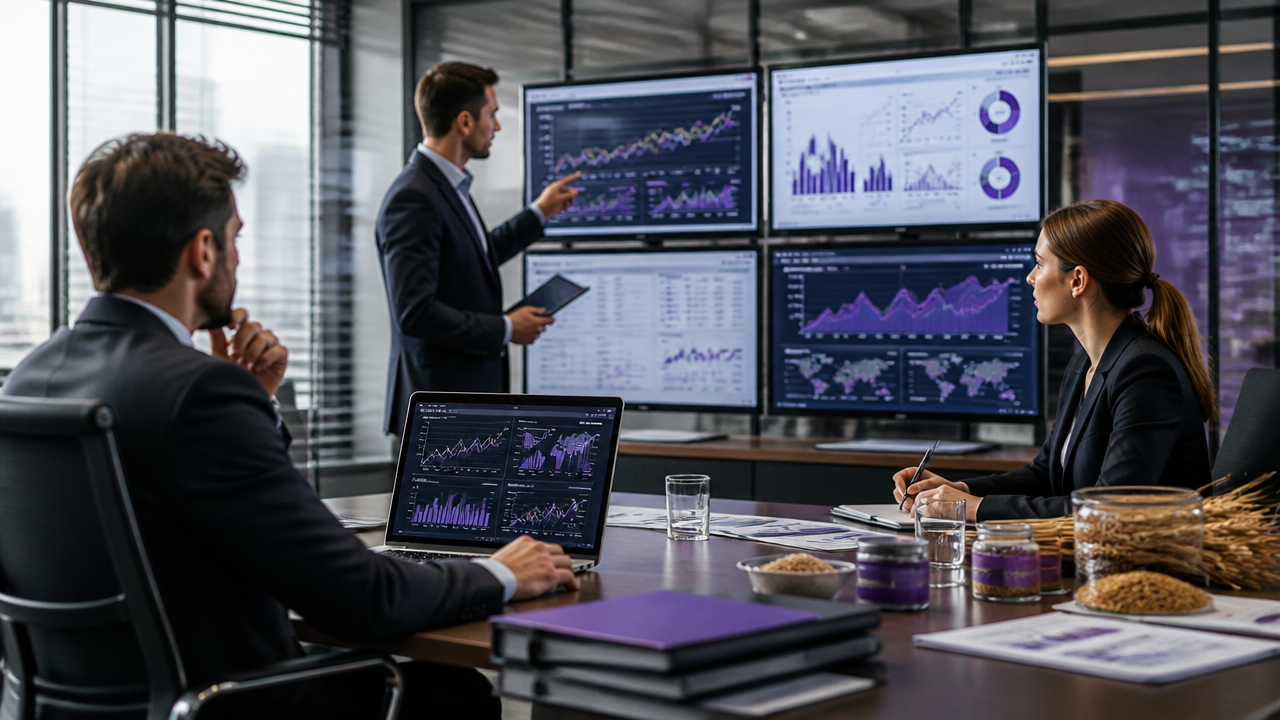
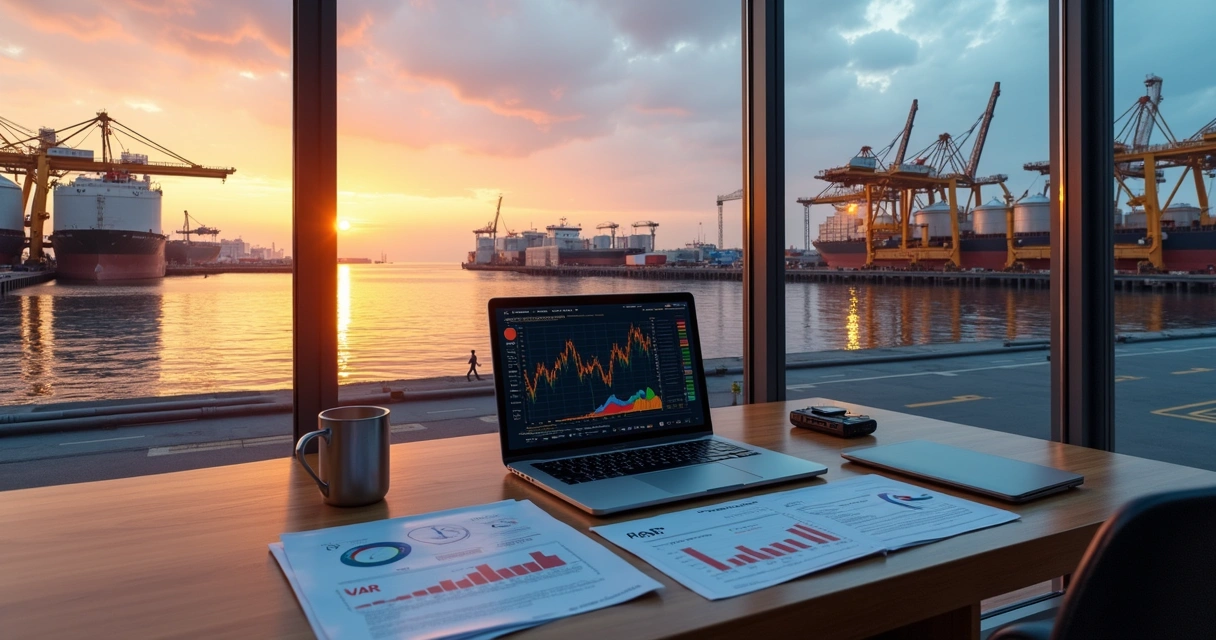
Commodities trading houses play a central role in physical and financial markets, shaping the pricing, movement, and risk structure of everything from coffee to fuels. Their models and risk strategies hold stories of discipline, incentive, and adaptability—stories that define corporate fortunes and the margins of producers, processors, and consumers worldwide.
The evolution of operating models in commodity trading
The operating models of trading organizations have evolved, becoming an intricate blend of physical logistics and financial acumen. Historically, major trading houses focused on the possession and movement of physical goods. Regional presence—such as deep roots in Brazil for sugar and coffee or in the U.S. Midwest for grains—enabled efficient origination, warehousing, and transportation.
Over the past two decades, two distinct models emerged:
- Vertically integrated enterprises that control both upstream production and downstream distribution
- Asset-light traders leveraging risk-bearing capacity, analytics, and relationships, often with minimal physical infrastructure
These differences shape risk management as much as market reach. Vertical integration can naturally hedge certain exposures, yet it may conceal risk and reduce hedging effectiveness. Studies of oil and gas firms illustrate that vertically integrated entities used derivatives far less (≈57%) than independent producers (≈89%), showing that integration lowers observable price risk but may make risk less visible and harder to manage proactively (see study on risk hedging in oil and gas).
Some risks disappear on the balance sheet, but not in reality.
Uhedge, for example, places clients into a unified environment where all market risks—from currency to commodity basis—are visible and disciplined, overcoming the fragmented management typical in siloed internal set-ups.
Risk management: Methods and discipline
Risk discipline is the signature of every professional trading office. It means more than just hedging, and extends to mark-to-market accounting, scenario testing, defining exposure limits, and monitoring liquidity. A robust risk system, like that of Uhedge, incorporates quantitative modeling, AI-driven recommendations, and real-time analytics for physical and financial positions alike.
Key elements of advanced risk management in trading firms include:
- Pricing and valuation of both vanilla and exotic derivatives (accumulators, Asians, fences, swaps)
- Structuring trades to align with client or house risk appetite
- Scenario and stress testing: measuring portfolio impact from tail events
- Basis risk quantification between local physical prices and futures
- VaR (value at risk) and the full spectrum of Greeks (delta, gamma, vega, theta)
Some trading houses have developed platforms to unify all accounting, documentation, pricing, and cash management—a “digital treasury.” With this, Uhedge helps transform uncertain risk costs into controlled sources of margin improvement, offering audit trails and robust hedge accounting for regulatory and “Big Four” oversight.
Integrated analytics do not just mitigate loss—they create new value.
Physical versus financial integration
To understand the full mechanics of trading firms, their degree of integration between physical and paper (financial) markets must be examined.
- Major asset-backed traders tend to focus on logistical control: silo capacity, vessel chartering, blending, and multi-origin arbitrage. Physical flows anchor their pricing power and ability to manage quality and timing.
- Financially oriented traders define success by speed of execution and capital efficiency. Their physical exposure may be transient or indirect, using derivative overlays to express directional or relative-value views. Their advantage is flexibility and the ability to scale positions up or down rapidly in response to shifting volatility.
Electronification—migration to limit order books and algorithmic execution—has accentuated these differences. As Commodity Financialization and Electronification finds, bid-ask spreads have narrowed significantly (down 3.5 bps), and pricing error volatility now hinges partly on the share of financial interest in the market. Strong volatility reduction is observed when financial speculators account for less than 11% of position, with diminishing incremental effect above that.
Technology removes friction. But not uncertainty.

Regional specialization and company culture
Differences in operating environment are not only structural, but deeply cultural and regional. A house focused on Brazilian agribusiness often prizes relationships with co-ops, exporters, and mid-market banks, favoring local intelligence and deep physical market knowledge. Another, native to oil and metals trading, may center its approach around global supply chains, energy balance modeling, and shipping optimization.
Company cultures vary greatly:
- Discipline and data are prized in quantitative and analytics-driven teams, where market calls are run through layers of statistical review before execution. This type of rigor is evident in the Uhedge philosophy of integrating scientific methodology, engineering finance, and AI across all levels of decision making.
- Relationship-driven approaches thrive where business is still done face-to-face—physical coffee or sugar trading in certain geographies. Here, success leans on long-built trust with growers, mills, and local logistic partners, with risk managed as much by reputation as by mathematics.
- Opportunistic, entrepreneurial cultures are most common in firms trading emerging markets, where sudden regulatory moves or crop failures can change the game overnight. Nimble, flat structures sometimes favor rapid response over process discipline.
For any model, practical expertise and strong networks will always outperform theoretical knowledge alone. That’s why, as the Uhedge blog on commodities regularly states, watching both the fundamentals and the narrative is what allows traders to convert volatility into profit.
Risk appetite and management style: Impact on strategy
Risk appetite determines not just what is traded, but how and when. Major houses often enforce risk budgets from the top down, with strict controls, daily P&L attribution, and scenario reporting. Mid-sized trading organizations may allow senior individual traders or desks more autonomy, so long as aggregated risk metrics remain within covenant.
Key management practices:
- Setting position limits and defining authorized instruments per market
- Real-time stress testing of multi-asset portfolios and correlation shifts
- Dynamic liquidity management for margin and settlement calls
- Automated and human oversight (dual controls for risk sign-off)
- Continuous onboarding and updating of counterparty and market risk assessments
With the fragmentation of risk across FX, rates, basis, and operational exposures, no individual can track all inputs. Here, platforms powered by automated analytics, like those offered by Uhedge, provide discipline and transparency unavailable with old-fashioned spreadsheets or divided systems.
Discipline is the only sustainable edge during volatility.
Trading strategies: From vanilla to exotic
Both major and mid-sized commodity traders utilize a spectrum of trading approaches:
- Vanilla structures: Simple forwards, swaps, and futures employed mainly for outright hedging of inventory or future purchases.
- Accumulators, Asians, and barrier products: More exotic structures for fine-tuned market engagement, often used to capture upside (or reduce premium spend) in volatile or range-bound environments.
- Bespoke “basis” trades: Exploiting geographical or quality differences between local and benchmark markets, sometimes managed with direct origin-futures hedges or cross-currency overlays.
- OTC replication: Algorithmic creation of custom structures that would otherwise be available only through bilateral or bespoke contracts. Uhedge’s digital platform examples include instant structuring and replication for their clients.
Trading strategies are increasingly informed by algorithmic tools, quantitative modeling, and even AI. These allow traders to move beyond gut feel toward systematic exploitation of volatility, seasonal shocks, and trend regimes.
For further insight into structuring and protecting margin in unpredictable markets, review the related discussion on how to structure hedges to protect margin.

Compensation, opportunity, and performance alignment
How houses compensate their people—traders, originators, risk staff—reveals their priorities.
- Major integrated firms typically provide base salaries plus short- and long-term bonuses tied to divisional or group P&L. Deferred compensation encourages alignment with firm risk appetite and discourages extreme risk-taking.
- Mid-sized or entrepreneurial shops often offer higher variable pay and the promise of rapid advancement or even profit-sharing. This incentivizes hunting for opportunity but may create volatility in both individual income and firm results.
Career opportunities in these organizations span physical logistics roles, market analysis, derivatives trading, structuring, and risk management—all increasingly data-driven and global. In both organizational types, performance assessment is not only about trading gains, but adherence to risk policy and contribution to resilient team culture.
Good business is a team sport—profit alone is not enough.
For further reading about common mistakes and how different trading houses avoid them, check the segment on errors in commodity hedging.
Practical expertise and business relationships
Success lives in practical knowledge and reliable partnerships. Those who understand both the statistical mechanics of risk and the human nature of negotiation excel.
A typical successful trader invests personally in maintaining:
- Wide and deep market contacts (across growers, shippers, processors, and banks)
- Dynamic awareness of changing regulatory, climate, and geopolitical backgrounds
- Disciplined routines for real-time monitoring and strategy adjustment
That blend of science and street sense—of which Uhedge is an advocate—is what shifts the odds in favor of those who choose data over dogma and transparency over guesswork.
Find more practical considerations in this review of commodity risk and opportunity in Brazil.
Conclusion: Building advantage in an uncertain world
Modern commodity trading organizations, whether large or mid-tier, operate at the intersection of technology, discipline, and trusted relationships. Their ability to combine physical flow, financial structure, data, and experience is what sets apart sustainable success stories from also-rans.
Uhedge stands for a new paradigm—placing intelligence, scientific rigor, and unbiased architecture at the service of margin growth and long-term safety. To break free from outdated, costly, and fragmented risk management, it is time for market participants to demand both visibility and discipline.
For those looking to transform risk from a source of anxiety into an engine of value, a practical next step is to explore how Uhedge unifies analytics, structure, and delivery for the full spectrum of commodity risk and opportunity.
Ready to see discipline and margin improvement in action? Schedule a strategy and risk diagnosis appointment through Uhedge—to clarify exactly where opportunity lies in your unique scenario and build your organization's next chapter on a foundation of evidence, science, and proven method.
Frequently asked questions
What are commodities trading houses?
Commodity trading houses are companies that specialize in buying, selling, transporting, and hedging physical and financial market exposures in raw goods such as grains, sugar, oil, and metals. They create value by providing liquidity, logistics, and risk transfer services to producers, processors, consumers, and financial players.
How do trading houses manage risk?
They typically manage risk through a mix of physical and financial strategies: using derivatives (futures, options, swaps), maintaining balanced positions between origination and sales, employing advanced analytics, currency management, and strict controls such as VaR, stress tests, and real-time position monitoring. Integrated platforms like Uhedge's offer end-to-end risk management and help firms control, document, and audit every step of the process.
Which trading house model is most popular?
There is no universal model. The two main types—vertically integrated asset-backed trading houses and asset-light, financially driven traders—each have their proponents. Popularity depends on market, region, and risk appetite. In recent years, there has been a trend toward increased electronification and integration of physical and financial trading, with many firms adopting hybrid features to stay competitive.
How do I start working in a trading house?
A career often begins with technical education in finance, engineering, economics, or logistics. Practical experience, analytical skills, and knowledge of commodity flows matter as much as academic background. Entry points range from junior analyst roles to positions in logistics, operations, or junior trader tracks, with rapid advancement tied to performance, market sense, and adaptability.
What are the main risks in commodity trading?
The primary risks include price volatility, basis risk between local and benchmark markets, counterparty risk, operational and logistical breakdowns, regulatory exposures, and liquidity squeezes. Effective trading houses identify, measure, and manage these risks systematically, often using advanced platforms and tools to maintain margin and avoid undesirable surprises.