
In the evolving world of commodities and derivatives, institutional and mid-market participants face a maze of risks, regulations, and complex decision-making demands. Few roles embody this intersection better than those providing professional commodity trading advisory services. In this article, the author clarifies what a Commodity Trading Advisor does, examines the regulatory landscape, technical strategies, and the vital importance of disciplined risk and technology-driven solutions. From there, the article uncovers how transparency, advanced analytics, and integrated tools are shaping the field for agro-financial and commodity-centric organizations, with a direct look at Uhedge Asset and Uhedge Trading Technologies in this context.
Introduction to Commodity Trading Advisors
Behind every hedge position, exotic derivative, or marked-to-market exposure lies a singular imperative: manage risk and seize informed opportunities. The role of the Commodity Trading Advisor—often shortened to CTA—sits at the heart of this process.
Uncertainty is a given; disciplined strategy is a choice.
A CTA is a professional, either an individual or an organization, that provides advice regarding buying and selling futures, options, swaps, and certain physical or financial commodity contracts. These advisors don’t just suggest trades—they architect multi-layered, data-driven strategies, execute on behalf of clients, or manage pooled funds that tap into global commodity and derivatives markets. Their expertise covers both agricultural and energy commodities, metals, currencies, and related instruments.
CTAs serve a critical function by marrying market intelligence with advanced analytics, ensuring that asset managers, cooperatives, mills, exporters, and banks have actionable insight, not guesswork.
Principal functions in modern markets
The Commodity Trading Advisor’s core duties have expanded with the digitization and globalization of commodity markets. Their responsibilities can be mapped as follows:
- Designing and implementing trading strategies—systematic, discretionary, or hybrid—across a range of derivative and spot instruments.
- Providing ongoing risk assessment, including stress testing, scenario analysis, and VaR estimation.
- Managing client accounts or collective investment vehicles in a conflict-free, transparent manner.
- Preparing detailed reporting for regulatory, audit, and hedge accounting purposes.
- Advising on structuring, pricing, and executing exotic and vanilla options, swaps, and OTC trades.
For participants in the crop, energy, or metals value chain, the real-world impact becomes obvious: these skills directly enable effective hedging, margin protection, and alignment with accounting and compliance frameworks. This opens the door not just to capital preservation, but to strategic positioning—amplifying opportunity amid volatility.
Understanding the regulatory environment
All activities performed by CTAs are subject to an intricate regulatory system, especially in derivatives markets. In the United States, regulatory oversight falls primarily on the Commodity Futures Trading Commission (CFTC) and the National Futures Association (NFA).
The CFTC, established by the Commodity Futures Trading Commission Act of 1974, is the federal agency that regulates U.S. derivatives markets, including futures, swaps, and certain options. Following the 2008 financial crisis, regulatory scrutiny intensified, most notably under the Dodd-Frank Wall Street Reform and Consumer Protection Act.
Dodd-Frank expanded the CFTC’s authority, requiring more swap transactions to be cleared through central counterparties and reported to trade repositories, thus promoting transparency and reducing systemic risk (CFTC summary of the Dodd-Frank Act’s impact on derivatives regulation).
- Registration: CTAs must register with the CFTC, barring certain exemptions for trading exclusively on behalf of specific types of clients.
- Ongoing compliance: Periodic disclosures, recordkeeping, and anti-fraud provisions are obligatory.
- Risk controls: Firms must maintain compliance systems to monitor derivative exposures and client suitability.
- Reporting: Full transparency in pricing, fee structures, and marked-to-market performance is expected.
For international practitioners and their clients, these regimes often interact with regional rules—especially when trades cross borders, involve cross-currency swaps, or trigger IFRS 9/CPC 38 accounting implications as required by international audit standards. The net result: modern CTAs are not just risk managers but compliance architects, too.
Key strategies deployed by trading advisors
Systematic and trend-following models
One of the hallmarks of CTA strategy is discipline—often delivered via systematic or trend-following methodologies. These models seek to capture major price movements by establishing positions in line with prevailing trends, cutting losses quickly, and riding profitable moves until clear reversal signals are detected.
Systematic trading removes human bias and relies on a strict set of rules based on technical indicators, past price action, liquidity, and volatility. Many of the world’s most resilient commodity programs rely on this concept, which can be adapted for grains, softs, metals, and energy contracts alike.
- Moving average crossovers and breakouts
- Volatility filter adjustments
- Momentum, reversal, and regime-switching triggers
Diversification and cross-asset allocation
Another key lever is the use of diversification. Rather than concentrating risk in a single market or instrument, professional CTAs structure portfolios that span different sectors and geographies. This can involve:
- Allocating capital among agricultural grains, coffee, sugar, energy, and foreign exchange derivatives (like USD/BRL)—often using a rules-driven method for rebalancing.
- Combining both long and short exposures across multiple timeframes to manage correlation risk.
- Incorporating less traditional structures, such as accumulators, Asians, and OTC replicants, to access additional sources of return or hedge non-linear exposures.

Risk management and quantitative discipline
Contemporary CTA solutions strongly emphasize robust quantitative risk management. The use of sophisticated models—such as Value-at-Risk (VaR), scenario simulation, basis analysis, stress tests, and the Greeks—helps organizations measure and adapt to exposure in real time.
Advisors employ proprietary algorithms that blend market forecasts with real-time price feeds, ensuring both day-to-day discipline and the capacity to respond to sudden macroeconomic shocks or changes in liquidity conditions. This technical underpinning distinguishes seasoned CTAs in the eyes of banks, mills, trading houses, and commodity producers.
For those interested in how these ideas intersect with real-world commodity and hedging operations, resources such as commodity sector analysis and descriptions of commodity market risks and opportunities in Brazil provide actionable context.
Technology, compliance, and trading platforms
CTAs today rely on native digital environments to integrate all aspects of advice, trading, exposure control, and reporting in a single, auditable system. This is not just an evolution—it is a necessity in a world where streams of market, basis, and client data converge every second.
Uhedge Asset and the suite of Uhedge Trading Technologies provide a practical demonstration of how digital treasury and commodity trading environments are revolutionizing the discipline of commodity advisory.
- Centralized management: All FX, interest rate, and commodity hedges—both physical and derivative—are run inside a unified platform, ensuring both governance and operational agility.
- Quantitative-driven processes: The backbone of these systems consists of advanced quantitative modeling and artificial intelligence algorithms, making it possible to process vast data volumes and synthesize actionable recommendations—something the human brain alone could never accomplish.
- Automatic documentation and compliance support: Full trade lifecycle reporting, hedge accounting (including IFRS 9/CPC 38 requirements), margin tracking, and risk attribution support big-four-ready audit processes.
- Custom strategy onboarding: The system enables detailed client risk profiling, so strategies fit not only the markets but the financial, operational, and liquidity constraints of each client.
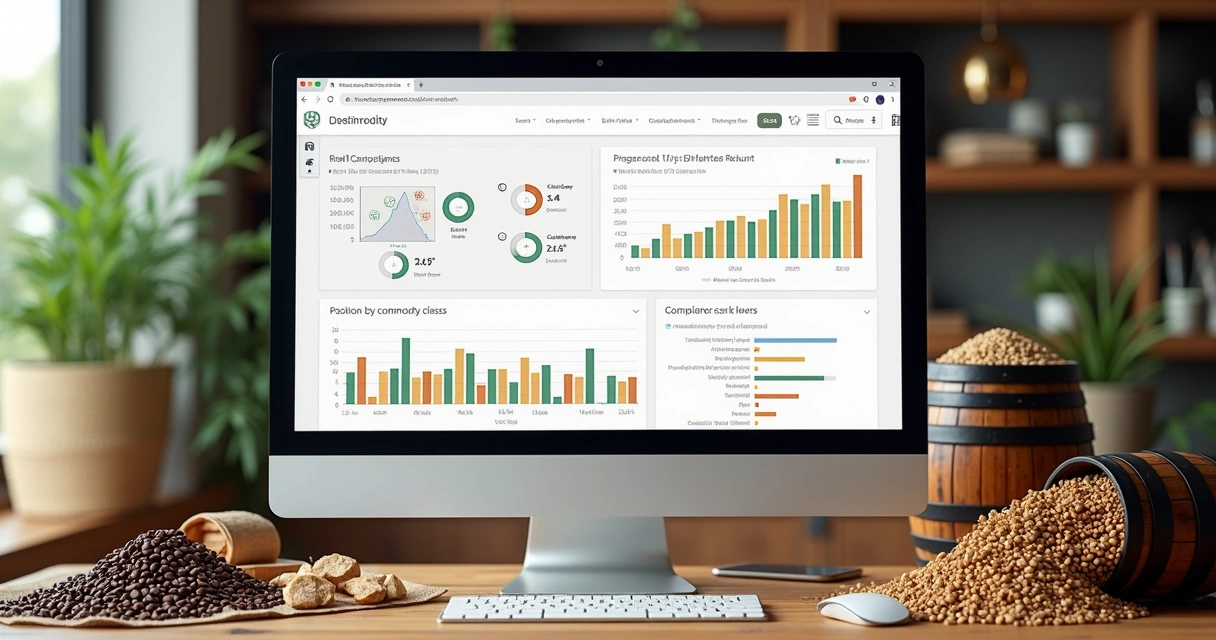
Automated trading platforms not only drive efficiency—they empower advisors to maintain discipline and transparency, even through periods of high volatility or regulatory change.
How technology shapes strategy development and execution
In Uhedge’s approach, clients benefit from the “digital treasury” concept—an environment that merges data analytics, liquidity management, and strategic execution for both financial and physical exposures. Features include:
- AI-driven recommendations for hedging and trading, considering market conditions, client goals, and optimal timing.
- Real-time monitoring and reporting on position exposure, margin calls, and asset allocations.
- Dynamic portfolio rebalancing and deployment of advanced derivative structures, including accumulators, fences, and Asian options.
- Detailed analytics on volatility surfaces, basis movements, and future curves.
This approach directly addresses the main challenges faced by commodity producers and industrials:
- Market risk: protection from unpredictable price swings in crops, energy, or metals.
- Liquidity swings: smoothing cash flow amid changing margin calls and evolving credit needs.
- Audit compliance: automating hedge effectiveness testing, designation reports, and documentation for formal accounting processes.
When risk is modeled, opportunity becomes visible.
Supporting content from practical hedge guides and material on diversification strategies demonstrates how integrated CTA services contribute not just to margin defense, but also to the expansion of margin in volatile commodity environments.
Technical details for institutional and mid-market clients
Commodity risk management is a technical endeavor. For agro-financial chains, cooperatives, and industry clients, key features of a robust CTA solution—like those provided through Uhedge—include:
- Complex pricing engines for derivatives (including exotics and OTC replicants) with continuous mark-to-market and the Greeks (delta, gamma, vega, theta).
- Basis risk intelligence to resolve discrepancies between local cash prices and reference futures.
- Multi-source price feeders for true price discovery and volatility insight.
- Tools for margin optimization across FX, rates, and commodity exposures.
- Automated hedge effectiveness and Dollar-Offset Ratio calculations per formal accounting standards.
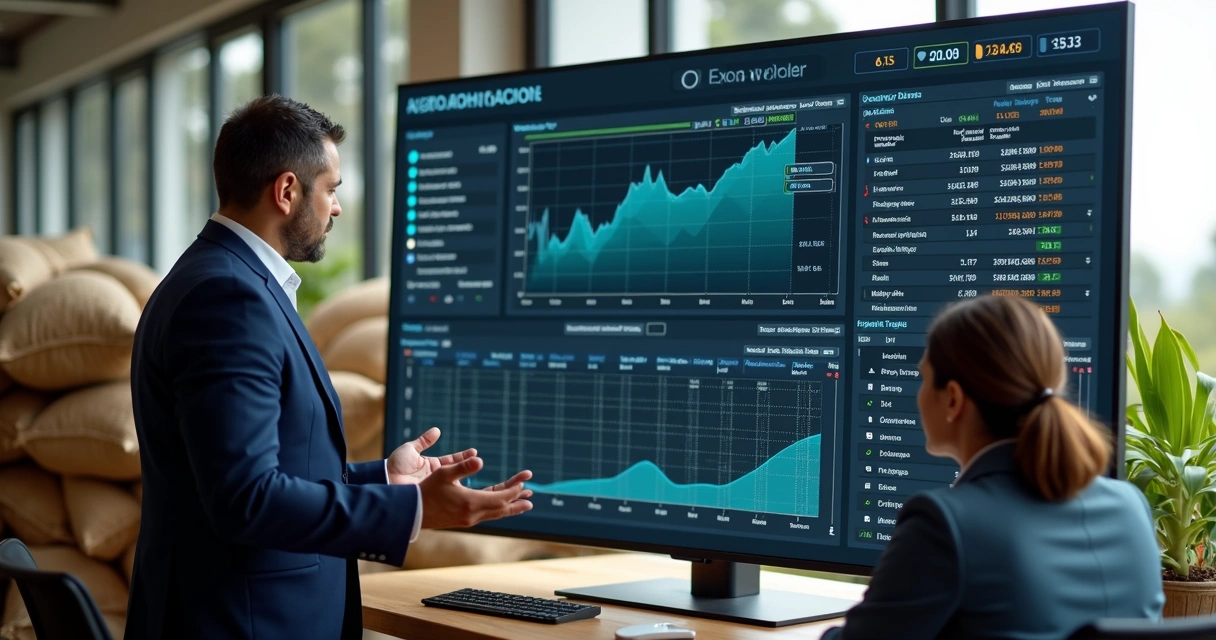
This blend of technology and quantitative analysis guarantees that strategies are grounded in evidence, not intuition, while delivering instant transparency and maintaining the rigor required for board-level and auditor oversight.
Transparent fee structures and conflict-free alignment
Trust remains a cornerstone of any advisory relationship. One hallmark of serious CTA and asset management providers is an unequivocal, fully disclosed fee arrangement. Hidden spreads and opaque commissions erode both trust and margin. Uhedge Asset, in particular, has structured its model so that success aligns with the client’s own results—a model starkly different from compensation structures that depend on transactional volume or hidden markups.
Success is shared, not sold.
The commitment to conflict-free operations, combined with evidence-led strategies, positions modern advisors as extensions of the client’s own trading team, rather than mere external vendors.
Real-world commodity strategy application
For those operating in coffee, soy, sugar, ethanol, or energy, the transition from theory to practice is all that matters. Real-world case studies show the benefits of cutting-edge solutions:
- A cooperative leverages AI-driven analytics to spot pricing distortions in futures and local basis, generating robust hedging results over multi-season cycles.
- A sugar mill uses algorithm-replicated OTC products—structures previously available only to large institutions—to institute cost-effective, flexible hedges and systematically enhance margins.
- Family offices and mid-market banks deploy hedge accounting modules that automate effectiveness reports and ensure adherence to IFRS 9 and CPC 38 compliance, providing peace of mind for all stakeholders (about margin defense for commodities in unpredictable markets).
- Real-time performance dashboards allow exporters to maintain visibility across local and international exposures with full breakdowns by market, asset class, and trading strategy.
How Uhedge empowers CTAs and institutional clients
Uhedge Asset acts as both a technical expert and an operational partner for those providing or using commodity trading advisory services. Its blend of technology and seasoned expertise creates notable advantages for commodity value chain participants:
- Automated, AI-based risk recommendations and tactical execution, including predictive market analytics and volatility surface modeling.
- Multi-asset position monitoring in real time, from the commodity field to the derivatives market.
- Complete hedge accounting workflows, ready for international Big Four audit standards.
- 360-degree integration: physical exposures unified with financial positions in a single, secure environment.
- Dedicated consultative onboarding, ensuring alignment on objectives, risk profile, and liquidity restrictions.
Uhedge Trading Technologies further supports CTAs in managing client books by automating portfolio administration, enabling seamless scenario and stress testing, and offering top-tier analytics for both clients and advisors. The result is both greater discipline and greater opportunity across all facets of commodity trading and asset management.
Conclusion: Next steps for risk-driven value creation
Commodity markets are full of noise, volatility, and opportunity—rarely in equal measure. For institutional and industrial organizations, a disciplined, quantitative, and technologically advanced approach is the clearest route to success.
CTAs, supported by robust platforms like those offered by Uhedge Asset and Uhedge Trading Technologies, ensure that every exposure is tracked, every risk is measured, and every opportunity is treated as a source of potential value.
By uniting market intelligence, analytics, and transparent engagement, these solutions transform uncertainty from a threat into an engine for growth.
Strategy is nothing without execution.
For those seeking to put rigour, science, and real-time decision support at the core of their commodity or risk management process, the next move is simple. Schedule a strategic risk and opportunity consultation with Uhedge, and discover the potential of a tailored, auditable, and fully digital CTA partnership.
Frequently asked questions
What is a Commodity Trading Advisor?
A Commodity Trading Advisor is a professional or firm authorized to provide guidance, manage portfolios, or execute trades for clients in derivatives and commodity markets, using specialized strategies to manage risk and seek returns in futures, options, and related instruments. They help companies, cooperatives, and asset managers build and oversee risk-mitigating strategies tailored to their exposures and financial goals.
How do CTAs manage trading risks?
They apply a blend of systematic rules, quantitative models, and technology—for example, value-at-risk, stress testing, and scenario analysis. By deploying strategies that adapt to market volatility and measure exposure in real time, CTAs help clients control cash flow risks, margin exposures, and compliance with hedge accounting standards. Automated platforms like those from Uhedge provide all-in-one management for real-time visibility and risk analytics.
Are Commodity Trading Advisors regulated?
Yes. In major financial markets, CTAs are subject to strict supervision, particularly by the CFTC and NFA in the United States. Regulations include registration, reporting, disclosure, and adherence to anti-fraud and operational controls. Expanded oversight through the Dodd-Frank Act means most swap and derivative advice must be auditable and fully documented (CFTC Dodd-Frank Act overview).
What strategies do CTAs commonly use?
Typical strategies include systematic trend following, diversification across asset classes, the use of exotics and OTC products, and real-time quantitative analysis. These may be backed by artificial intelligence and leverage multi-market price feeders, volatility analytics, and dynamic portfolio management.
How can I choose a reliable CTA?
Look for transparent fee structures, a documented track record, strong compliance processes, and the ability to explain and adapt strategies to your specific needs. The most trusted advisors, such as Uhedge Asset, align their own outcomes directly with client performance, provide advanced reporting, and embed conflict-free advisory practices.