
Picture this: It's 2026, and the daily pressures facing CFOs in agribusiness are only intensifying. Volatility, regulation, liquidity—all demand quick decisions and disciplined management. Yet, a surprising number still rely on spreadsheets to oversee price exposures and capital flows, even as the tools available have radically advanced.
Any CFO who has spent long nights reconciling market shocks, margin calls, and mismatched formulas knows: what seems “good enough” in Excel can hide critical dangers. This article reveals the seven blind spots most commonly found when comparing spreadsheet-based controls with a true digital treasury platform—like what is offered by Uhedge. Through practical cases and real industry experience, the hidden gaps are made clear, giving decision makers a roadmap for safer, stronger financial stewardship.
Comparing old habits to unified intelligence
Agribusinesses are no strangers to price instability or supply chain disruption. Their financial leaders often work under extreme time constraints, balancing dozens of exposures—foreign exchange, interest rates, commodity prices—sometimes using systems that haven’t changed since the early 2000s.
The traditional spreadsheet approach offers familiarity. Rows of numbers, formulas meticulously copied, colors highlighting risk. But what about the realities beneath the surface?
- Who last touched that formula?
- Where are the source data streams coming from?
- Can you guarantee a full audit trail?
- How quickly can a scenario response be simulated and acted upon?
Spreadsheets make sense only until reality roars—then their limits are revealed.
Here are the seven blind spots exposed in 2026.
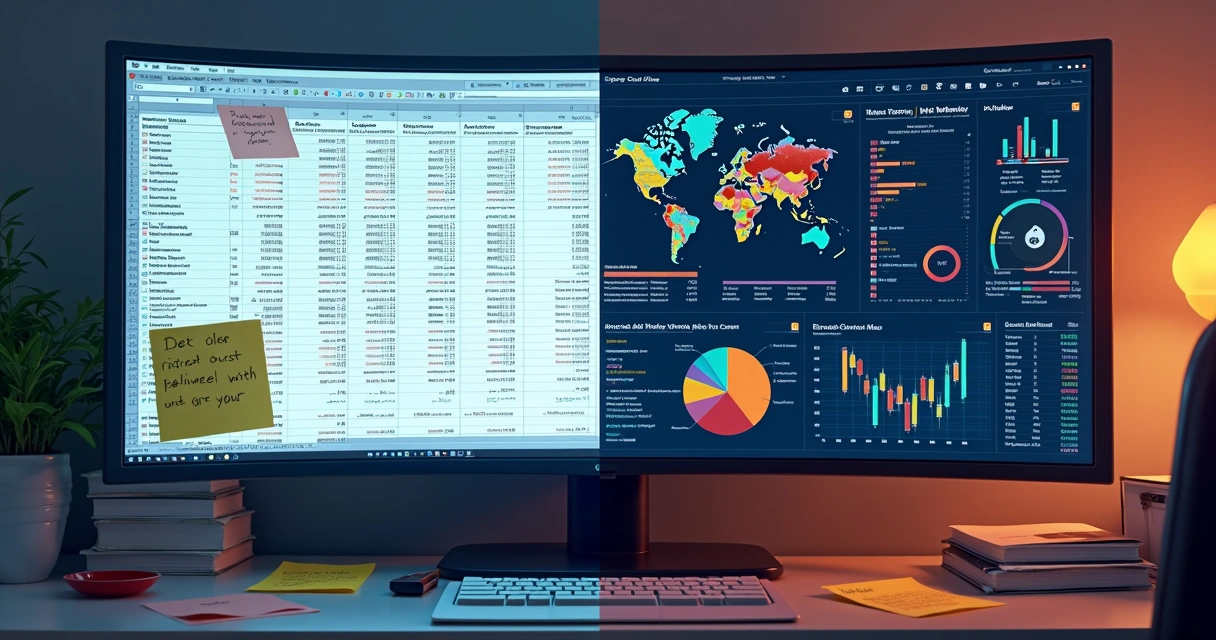
Error rates and hidden risks
Ask any financial controller: manual inputs breed silent chaos. Excel files often include hundreds—if not thousands—of underlying formulas. One misplaced reference, an accidental overwrite, or a copied cell from the wrong tab can quietly introduce errors that cascade through entire models.
One formula error can cost millions before it's even noticed.
Audit after audit has shown that spreadsheet-based controls cannot ensure the rigor required for financial operations under market stress. Without automated checks, error propagation is simply invisible until it's too late.
Digital treasury systems, such as those provided by Uhedge, eliminate ambiguity by locking down calculation engines, auto-recording every change, and embedding validation at each step. CFOs regain confidence knowing every input and output is tracked, checked, and compliant.
Data fragmentation and real-time gaps
A typical day for a CFO involves juggling exposures to foreign currencies, interest rate fluctuations, and commodity pricing. With spreadsheets, this often means separate files for each asset class, versioned copies across email threads, and data flowing in from multiple vendor platforms.
- Data silos emerge.
- Manual consolidation introduces lag and risk.
- Real-time monitoring vanishes in the process.
Fragmentation means opportunity and threat cannot be seen in one place.
The Uhedge digital treasury platform solves this by aggregating all transactions—FX, rates, and commodities—into a single, real-time dashboard. No more switching files, no more lost updates. The decision window shortens, and insights become immediate. For agribusiness CFOs who depend on timely, informed action, centralization is transformative.
No audit trail and compliance headaches
Regulatory requirements have increased dramatically, placing new burdens on traceability and disclosure. Excel-based controls lack structural audit trails. Questions like “who edited this cell?”, “when was this scenario tested?”, and “what changed that impacted our mark-to-market last month?” are almost impossible to answer reliably.
Digital treasury environments keep a time-stamped record of every action. Detailed logs and automated report generation allow compliance officers to reconstruct any sequence of decisions with clarity and speed. When audits arrive, time spent on forensic Excel work is replaced with transparent, instantly accessible data.
Human speed limits in market turbulence
In 2026, market shocks come without warning. Unexpected interest rate changes, commodity shortages, geopolitical tensions—CFOs must react in minutes, not hours.
Spreadsheets do not adapt to volatility; they endure it.
Manual processes are inherently slow. Consolidating, recalculating scenarios, and checking exposures can take too long to prevent real losses. By the time new market levels are priced in, competitive advantage might be lost forever.
Uhedge’s platform leverages AI-powered algorithms and advanced quantitative modeling to recommend and even execute optimal strategies as soon as new data emerges. Automated alerts flag exposures the instant they arise, giving CFOs the reaction window they need—especially in commodities where timing equals profit.

Lack of discipline and strategic alignment
Excel is only as good as its users’ discipline. In busy teams, small deviations accumulate. Over time, risk tolerance becomes unclear, exposures drift off-strategy, and decisions become reactive rather than planned. The lack of an enforced framework means discipline gives way to urgency.
A digital treasury system, like Uhedge’s, enforces predefined risk profiles and strategic rules. Onboarding includes setting detailed objectives and restrictions—these are mathematically baked into every recommendation and report. CFOs can check, at any time, whether the actual exposures mirror intended policy.
Discipline is not just a process. It is a system that checks, records, and aligns every decision with strategy.
Liquidity management and margin call stress
Anyone managing derivatives, FX, or commodities in 2026 knows the impact of a single margin call. Spreadsheets rarely predict when these will hit or whether enough liquidity exists to cover them with time to spare.
Uhedge’s digital treasury platform delivers margin call prediction and active liquidity optimization, alerting CFOs ahead of time and giving clear, actionable guidance before stress arises. Cash flow gains stability, and planning becomes proactive rather than emergent.
Regulatory readiness and future-proofing
As regulations move faster than ever, and ESG requirements intensify, spreadsheet risk systems struggle to keep up. Manual methods can’t scale, and updates lag behind new rules or required disclosures.
Digital treasury environments, powered by automation and ongoing software updates, ensure compliance with the latest standards. This future-proofs the function, giving CFOs peace of mind—a confidence that the next surprise in the regulatory landscape will not find them exposed.
Digital treasury: More than just automation
Uhedge is not just about faster reporting or pretty dashboards. Its roots lie in deep financial expertise and a scientific, quantitative methodology that has been stress-tested over decades in leading global banks and commodity trading firms.
With proprietary AI, transparent processes, and a team that stands as “an extension of the client’s trading desk”, Uhedge brings market intelligence, discipline, and full-spectrum visibility precisely when CFOs need it most. The shift from Excel to digital treasury is not just technological—it is a step toward strategic resilience in finance.
For those seeking to go deeper into the mechanics of risk management or develop efficient FX hedging strategies, in-depth resources can be found at Uhedge's own articles on risk management, or through detailed guides to hedging strategies in the market and FX risk protection.
Conclusion: A CFO’s call to lead with insight, not instinct
In 2026, organizations still running exposure management through spreadsheets face mounting blind spots—many invisible until a real crisis demands answers. The price of “good enough” can be steep when error rates, fragmented data, slow reactions, missing discipline, and growing compliance burdens meet volatile markets.
Real decisions require real control. Digital treasury is that control.
Uhedge stands at this intersection, offering the AI-enabled, real-time discipline and aggregated insight that modern CFOs in agribusiness need. The upgrade from spreadsheets to a unified digital treasury isn’t just an upgrade—it is a way to protect value, eliminate uncertainty, and empower true financial leadership.
For those ready to see what visibility and scientific control look like in practice, the next step is to get in touch for a tailored risk and strategy assessment—or to witness Uhedge’s treasury platform in action. It’s time to move from surviving uncertainty to mastering it.
For continued learning and thought leadership on market transformation and digital risk approaches, Uhedge also provides ongoing education and updates about how fintechs are transforming the hedge market and what to avoid in FX risk management when overlooking FX risk.
Frequently asked questions
What are risk controls in treasury management?
Risk controls in treasury management consist of a set of policies, mechanisms, and technologies designed to identify, measure, monitor, and manage exposures to financial uncertainty—such as market price shifts, liquidity shortages, and regulatory changes. These controls safeguard an organization’s cash flow and help ensure compliance, strategic alignment, and financial resilience.
How does digital treasury improve risk controls?
Digital treasury systems unify fragmented data, automate scenario simulation, and apply rigorous, scientific modeling to every exposure. They also record a full audit trail, produce automated compliance reports, and can react instantly to changing market conditions—features not possible with spreadsheets or manual methods. This results in a disciplined, real-time overview that supports better and faster decision-making.
Are Excel risk controls still effective?
While spreadsheets can assist with simple calculations, their effectiveness diminishes as complexity, transaction volume, and regulatory requirements grow. They are prone to manual errors, lack real-time integration, and fall short on compliance and traceability. For organizations exposed to multiple asset classes or fast-moving markets, Excel can inadvertently introduce new risks rather than solve them.
What are the main risks with Excel controls?
The principal risks of using Excel for financial risk management include unnoticed formula errors, data silos, the lack of a verifiable audit trail, and delays in responding to market events. Compliance is harder to demonstrate, and decision drift is common when multiple parties edit separate spreadsheet copies. These gaps can turn into significant financial losses, missed opportunities, or even regulatory penalties in turbulent market conditions.
Is it worth switching to digital treasury?
For organizations struggling with the limitations of spreadsheets and seeking greater control, transparency, and resilience, the transition to a digital treasury platform is not just worthwhile—it's a foundational step toward disciplined financial management. Benefits include better visibility, fewer errors, proactive risk management, and streamlined compliance, all grounded in real-time intelligence and decades of financial expertise as found in the Uhedge solution suite.