The story of cocoa for the 2025/26 season is anything but simple. On the surface, a projected global surplus of beans could suggest a climate of comfort and falling prices. Yet, as the months unfold, both long-time analysts and market newcomers remain on edge. Volatility, technical drivers, and the deep complexities of demand and supply still rule the conversation.
The forecast: Surplus and caution
According to projections, the 2025/26 global cocoa campaign will see production outpace consumption by roughly 365,000 tonnes. This upswing is credited to a 4.2% increase in supply coupled with demand that is forecasted to slip by 3%. However, as any seasoned professional would admit, these numbers alone hardly capture the market’s mood.
- The surplus, although notable, does not translate to an easy, slack market. One reason is the vulnerability to changes in core fundamentals. As seen time and time again, balance sheet surpluses may dissipate rapidly when shocks arise, whether from weather, logistics, or geopolitics.
- The cocoa market outlook for 2025/26 is a story of contrast: apparent global abundance but lurking fragility.
Troubles in west Africa: Production and prices
West Africa remains the beating heart of global cocoa, with Côte d’Ivoire and Ghana responsible for a majority of the supply. Both have weathered a series of marketing and policy disruptions impacting the entire supply chain:
- Côte d’Ivoire’s output is expected to hover near 1.78 million tonnes, assuming average rainfall conditions. However, if prolonged dry spells occur, harvest outcomes could be at risk.
- Ghana, meanwhile, is contending with frequent heavy rains and the spread of crop diseases. Its output may dip toward 650,000 tonnes, a figure that reflects ongoing structural challenges.
- Producer prices in both countries remain a focal point. Prior to 2025/26, Côte d’Ivoire and Ghana had set internal producer prices at values much higher than those seen on international markets. That gap stifled commercial flows, bottlenecked exports, and ultimately forced Côte d’Ivoire to slash its guaranteed producer price by 57% to 1,200 CFA francs per kilo. This sharp reduction came alongside an early start to the mid-crop, bumping it forward to March with possible ripple effects for the next season’s schedule and prospects.
Côte d’Ivoire and Ghana’s market interventions echo across the globe.
The accumulation of these factors means that, despite a surplus, West African supply remains vulnerable to swift and unexpected disruptions. How quickly a surplus turns into scarcity can surprise even seasoned traders.
Global demand: Weakness in Europe, resilience in the U.S.
Demand signals during 2025/26 are mixed at best. Within the European Union—a historic chocolate powerhouse—cocoa almond imports dropped by 12.1%, and grinding, which tracks actual usage in manufacturing, fell by 8.9%. These numbers reveal a sector still reeling from expensive raw material purchases and economic uncertainty. Cost pressures have not just slowed consumption, they have also made it difficult for the industry’s appetite to recover quickly.
Across the Atlantic, the United States has demonstrated slightly more robust demand. American buyers partially offset weaker supply from Africa by increasing their imports from Ecuador, whose beans come at more attractive price differentials. Still, even for U.S. consumers, persistently high prices reverberate down the chain, keeping recovery fragile.
Ecuador: Quiet growth, lingering risks
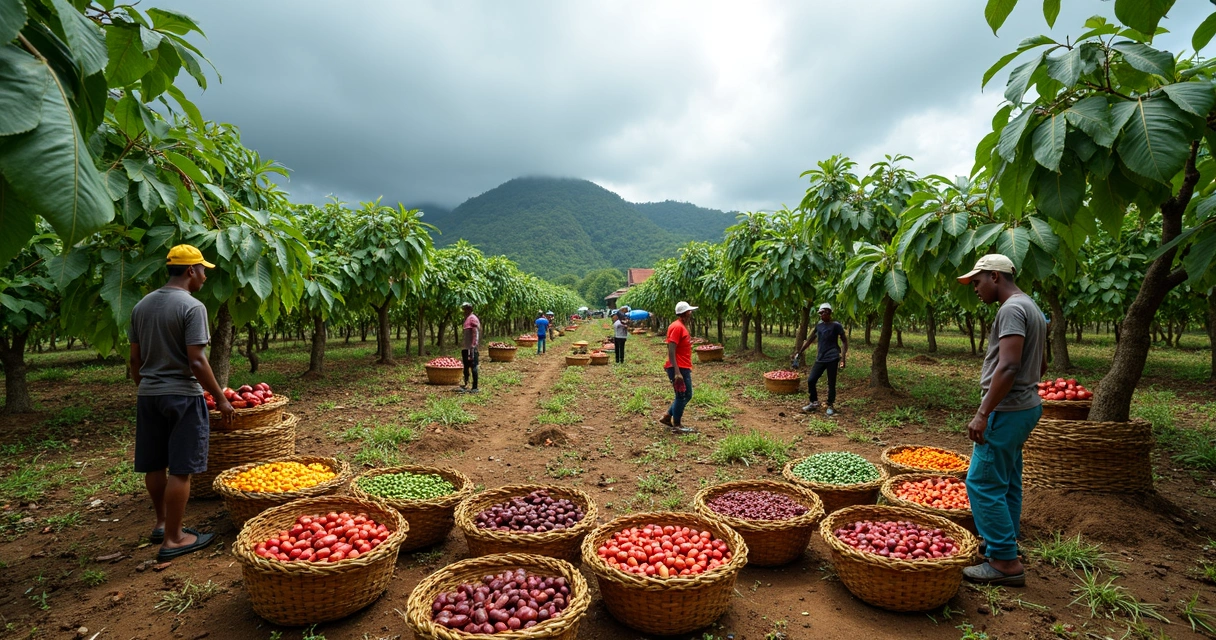
While Africa’s production may waver, Ecuador continues to chart a different path. The country is projected to increase output, aiming to hit 615,000 tonnes in 2025/26, despite facing below-normal rainfall. Ecuador’s consistent expansion is noteworthy, and its competitiveness on price has granted it a strategic edge in North American and international markets. Nevertheless, weather volatility, such as unexpected heavy rainfalls, could quickly place these forecasts at risk.
El Niño and the risk shadow
One of the most significant threats to the outlook ahead is the potential onset of El Niño toward late 2026. Historically, El Niño is notorious for creating uneven and extreme weather. Warmer and drier conditions in West Africa tend to reduce yields and jeopardize the critical main and mid-crops. Conversely, in Ecuador, this anomaly often brings periods of intense, damaging rainfall. The mere possibility of an El Niño event keeps the market tense, overshadowing what could otherwise be a comfortable supply buffer.
Technical market factors: Price swings and corrections
The technical landscape in cocoa futures has been wild. During recent weeks, New York cocoa prices surged by 11.8%, and those in London jumped 12.6%. Despite these rallying movements, technical indicators still point to an overall bearish bias. Relative Strength Index (RSI) levels hover near oversold territory, which means there is room for further price corrections if fundamentals shift even slightly.
Volatility is the only constant in cocoa futures right now.
Traders and analysts alike watch these signals for clues to possible short-term corrections or longer sweeps of directional change. With the shadow of a surplus and the reality of global risks, even technical trends deserve cautious interpretation.
Macroeconomic and geopolitical volatility
Adding fuel to the fire, recent escalations in the Middle East have contributed to global market volatility, affecting exchange rates and risk appetites. The macro backdrop is fraught with uncertainties, including persistent inflation, shifting trade tariffs, and the potential for broader economic shocks. These elements combine to make cocoa prices extra sensitive to headlines and international developments.Find more context about commodity volatility and protective strategies in articles like how to guard against commodity volatility andkey concepts about commodities in Brazil.
Industry takeaways: Risk, governance, and the role of tools
Institutions face a delicate environment. Despite a projected global surplus, the cocoa supply chain is anything but comfortable. Tight internal pricing policies, climate anxieties, technical trading patterns, and macro shocks mean surprises could always be around the corner.
- It’s not the numbers, but the market’s readiness for sudden change, that keeps analysts alert.
- Operations in the cocoa sector deal with uncertainty in every trade, every crop, and every shipment.
- Visibility, discipline, and the ability to read macro signals are vital for those who seek not just to survive the swings, but to create value and capture opportunity within them.

Projects such as Uhedge stand out for offering technological and analytical support that make rigorous monitoring and risk management possible. Their solutions help actors in commodities—whether producers, traders, or manufacturers—respond more quickly to changes in price, climate, and policy. Those interested in further deepening their approach to strategic commodity trading can refer to the internal discussion on how to protect margins in uncertain markets or learn about approaches for risk-modeling in portfolios via this outline of commodity diversification.
Conclusion: What to watch as the season unfolds
Even with expectations for a considerable cocoa surplus, all eyes are still on West Africa’s crop, demand trends in the world’s chocolate capitals, the uncertain weather, and every twist in technical movements at the world’s main trading desks. Strategic actors, from industry giants to local traders, cannot afford complacency. With so much at stake, the 2025/26 cocoa landscape remains a case study in how markets rarely reward certainty.
Surplus is not safety—vigilance remains the best response.
The Uhedge team encourages readers interested in smarter, data-driven risk management to connect for a strategic consultation or experience firsthand the value of a unified digital treasury platform. Staying ahead in commodities requires not only discipline, but also the right expertise and tools.
Frequently asked questions
What is the cocoa market outlook for 2025?
Analysts anticipate a global surplus of cocoa beans in the 2025/26 season, driven by an increase in supply from West Africa and Ecuador, paired with weaker global demand, especially in Europe. However, this surplus is not a guarantee of low prices or market calm, since significant risks remain from weather, policy interventions, and technical market shifts.
How will cocoa prices change in 2026?
While there is an outlook for a surplus, prices could remain unstable. Should El Niño intensify during the second half of 2026, yields in West Africa may drop while Ecuador could face heavy rainfall issues. These factors could sharply impact prices in either direction, so flexibility and caution are necessary for anyone tracking price changes.
What risks affect the cocoa market now?
Current risks include climate volatility, possible El Niño events, fragile demand (notably in the EU), and persistent technical market volatility. Producer price interventions in Côte d’Ivoire and Ghana and macroeconomic uncertainties like Middle Eastern conflicts also contribute to instability.
Is there a cocoa surplus expected soon?
Yes, a global surplus of approximately 365,000 tonnes is projected for 2025/26, but this “buffer” is not seen as excessive. Sudden changes in weather or market fundamentals could diminish it rapidly, so actors are urged to avoid complacency.
How can I invest in cocoa markets?
Direct investment approaches range from futures and options contracts to structured commodity funds. Those interested in disciplined, risk-aware approaches should consider working with expert teams leveraging advanced analytics, such as Uhedge’s combination of AI-driven and quantitative methodologies. Uhedge’s digital treasury systems and consulting are tailored for companies seeking rigorous, compliant, and actionable risk management in commodity markets.