
If risk is the shadow cast by opportunity, stress testing in trading serves as the flashlight. In a financial world shaped by volatility, uncertainty, and rapid moves in currencies, rates, and commodities, the ability to anticipate pain points in portfolios is transformative—and essential. This guide reveals how sophisticated scenario-based evaluation transforms risk management from guesswork to science, and how solutions like the ones developed by Uhedge can help change the outlook from fear to readiness.
Understanding the purpose of stress testing in trading
Stress testing in trading is a forward-looking exercise that evaluates how portfolios or trading positions might fare under severe market conditions, including both historical crises and hypothetical shocks. Unlike daily volatility measures, this method purposely puts strategies to the test under extreme, yet plausible, events. The goal? To show how much a firm or trading desk could lose, and to identify vulnerabilities before real-life shocks occur.
Major regulators and industry best practices, such as those outlined by the Bank for International Settlements, recognize stress tests as central to both governance and compliance, providing transparency that routine risk metrics like volatility or Value at Risk (VaR) may not always capture. Stress tests are most effective when relying on robust data and rigorous modeling approaches.
Stress testing shifts risk management from reaction to anticipation.
For Uhedge, integrating disciplined stress testing is foundational. It aligns with their mission: turning uncertainty into actionable insight and resilient performance for clients exposed to FX, interest rates, and commodity risks.
The framework: Building meaningful stress scenarios
No two crises are identical, yet history is full of instructive and painful lessons. Effective stress test trading requires constructing scenarios that can expose the weak spots of any trading, hedging, or asset management approach. There are two main types:
- Historical scenarios – Using data from actual market events such as the 2008 financial crisis, the COVID-19 pandemic crash, or abrupt policy changes that sparked moves in FX, rates, or oil prices.
- Hypothetical scenarios – Imagining what would happen if interest rates jump by 300 bps overnight, or if commodity prices collapse after a major geopolitical event. The scenario could also involve correlations breaking down or liquidity dry-ups.

The best stress scenarios are those that are relevant to your portfolio’s real exposures. For Uhedge, exercises often focus on:
- Currencies (spot swings, illiquidity, sharp devaluations)
- Interest rates (unexpected hikes or inverted curves)
- Commodity price moves (oil/emerging market agriculture/industrial metals shocks)
Researchers from Cambridge University Press describe how parameterized stress-test scenarios within a VaR framework—using conditional probability distributions—can create highly informative and realistic tests. These approaches allow for both the specificity need and comparability across portfolios in methodologies for stress testing within a Value‑at‑Risk framework.
Step by step: Applying stress testing to your trading strategy
The real advantage of stress testing lies in making the abstract concrete. Here is a typical stepwise approach, embedded in the risk culture at Uhedge:
- Define relevant risk factors: Identify the market drivers most likely to affect your positions—rates, FX, commodities, credit spreads, volatility surfaces.
- Choose the scenarios: Select historical, hypothetical, or a blend. Uhedge typically crafts scenarios tailored to clients and assets, combining black swans with more probable market shifts.
- Parameterize the magnitude and timing: Set the size of shocks (e.g., “Rates up 250 bps in one day; Oil falls 25% in a week”) and apply them over daily/weekly/monthly windows for realism.
- Apply to real portfolio data: Use the current book, all its positions (including derivatives or margin accounts), and run the scenario shock across the holdings.
- Simulate outcomes and aggregate impacts: Run Monte Carlo or path-dependent simulations if needed, summarizing impacts on P&L, liquidity, and other metrics.
- Analyze responses and sensitivity: Drill down into which trades, sectors, or instruments drive most of the stress loss.
- Review findings with clear visuals: Use risk maps, P&L attribution, and volatility charts, like those found in Uhedge’s dashboard, for communication with stakeholders and decision-makers.
This disciplined sequence is what moves teams from “hoping for the best” to “preparing for the plausible worst” and creating repeatable, transparent, and actionable risk decisions.
Metrics to measure: What to assess in a stress test
Metrics are the compass in the storm. When the numbers flash on the screen, here is what risk managers should zero in on:
- Maximum drawdown: The biggest peak-to-trough drop in value over the scenario horizon.
- Value at Risk (VaR): The statistical maximum expected loss over a specified time frame and confidence interval (often 95% or 99%).
- Expected Shortfall (ES) or Conditional VaR: How much you expect to lose in the worst tail percent of cases.
- Liquidity at risk: How much shortfall might occur if assets need to be unwound under stress prices.
- Margin call risk: What are the chances and sizes of additional collateral requirements?
- Sensitivities (“Greeks”): Delta, Gamma, Vega, Theta, and how they change under stress conditions.
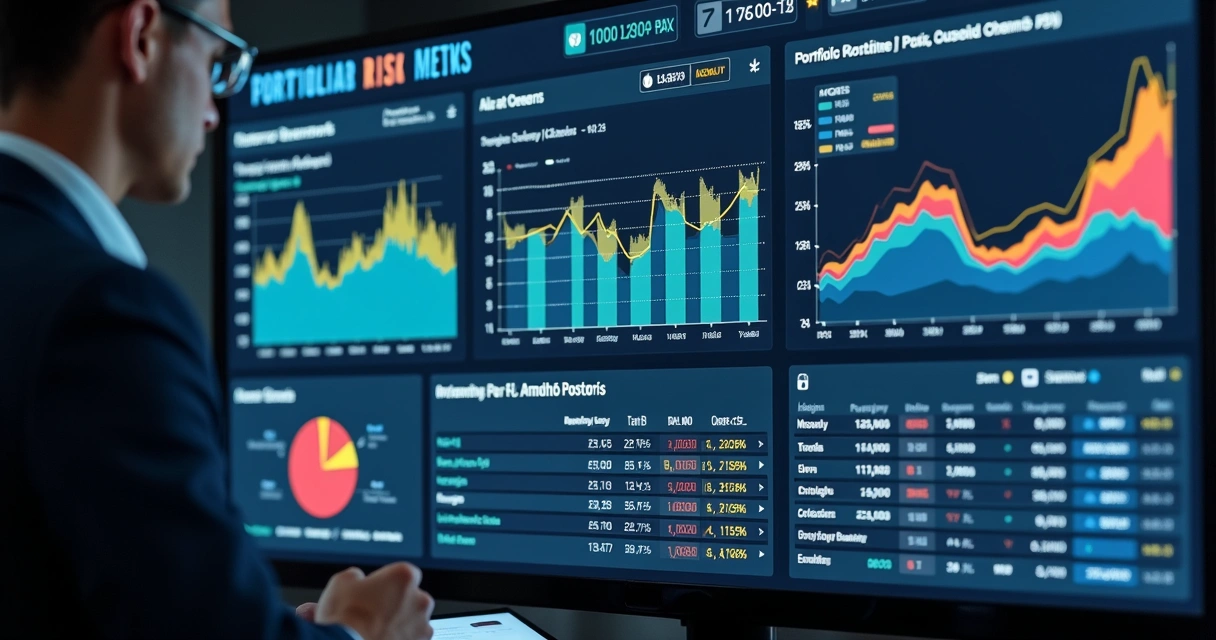
Interpreting the results is as much art as science. A good stress test result is not just about finding the biggest potential loss but understanding where, when, and why it may arise. As the Federal Reserve Bank of San Francisco outlines, these tests provide a crucial reality check on quant models and reveal the true impact of extreme events.
AI and quantitative modeling: New frontiers for scenario creation and response
Advanced AI methods now make it possible to not only automate scenario generation but also detect subtle market patterns missed by humans. Uhedge’s platform leverages proprietary algorithms and quantitative modeling—rooted in financial engineering, statistics, and econometrics—to analyze vast streams of data and simulate realistic, tailored shocks.
The integration includes:
- Pattern recognition—identifying correlations and hidden risks across instruments, sectors, and regions.
- Automatic scenario creation—feeding macro signals or real-time news into the stress testing engine for on-the-fly analysis.
- Algorithmic recommendations—proposing actionable hedges or tactical responses based on emerging stress fingerprints in the data.
Within Uhedge, these AI-driven tools empower clients to test more scenarios more frequently, without human bottlenecks. Every stress test becomes both a shield and a compass for trading desks and asset managers. Continuous improvements in models further refine accuracy and reduce false sense of security.
Studies by the Committee on the Global Financial System reinforce that stress testing, supported by dedicated technology, builds a culture of preparedness and learning across business lines. This is foundational to Uhedge’s approach, and ensures clients can translate ambiguity into strategy.
Embedding stress testing in portfolio-level decisions
Stress testing does not end with single trades or isolated risks. Modern risk governance requires a holistic, portfolio-wide view. Here’s why that matters:
- Capital allocation: How much capital is truly “at risk” under various shocks?
- Hedging program effectiveness: Do existing hedges hold up, or do they fail when tail risks occur?
- Diversification and correlation breakdowns: Are asset classes really offsetting each other, or is stress causing them to move together?
- Liquidity and funding: Would cumulative stressed cash outflows be manageable? Or is there a risk of forced unwinds?
Success means not only weathering isolated market events, but keeping enterprise risk within governance limits even when several risks hit at once. Uhedge embeds these principles in its Digital Treasury management, unifying FX, rates, and commodities in a single transparent environment while providing real-time risk dashboards (including stress path overlays, margin call simulators, and compliance checks).

For practical guidance, readers can find additional tips and case studies in the risk management blog section at Uhedge, with dedicated content for integrating stress testing and strategic hedging.
Practical examples: Stress test trading at work
It’s one thing to describe the process; it’s another to show results. Let’s look at how Uhedge applies these concepts in the field, especially in the world of commodity risk management and active trading strategies:
- Coffee market case: Uhedge’s software was used in a managed portfolio of NYBOT coffee futures, applying moderate-risk hedging. With clear targets and leverage restrictions, periodic stress tests showed that disciplined scenario-based strategies outperformed typical leveraged derivatives throughout shifts in global volatility. Instead of relying solely on past smooth returns, the portfolio was prepared for violent price drops or surges—cushioning P&L swings and providing real comparative advantage.
- AI-driven commodity hedging: Automated models monitored real-time signals for agricultural commodities, updating strategic recommendations before market shocks landed. Results displayed enhanced portfolio robustness, with AI not only tracking VaR and drawdown, but suggesting shifts when scenario risks increased.
- Global crisis navigation: The system enabled dynamic allocation among energy, metals, and agricultural baskets, using restricted-risk modeling and macro signal conversion to capture distortions, even while global tariffs and inflation produced highly unpredictable market swings.
Risk managers also benefited from full governance checks and continuous P&L attribution tracking, crucial for regulatory and compliance audits. More use case details can be explored in Uhedge’s practical guides on market protection strategies and hedging for commodity portfolios.
Continuous improvement: Why stress testing is an ongoing discipline
Markets evolve—so do the sources and patterns of stress. A once-in-20-years storm can arrive again in months. For trading desks and asset managers, the mindset must be cyclical evaluation, not a one-off report. The continuous cycle includes:
- Proactive adaptation to new market realities
- Testing the effectiveness of existing and new hedges
- Enhancing scenario libraries with lessons from both real and simulated events
- Documenting results for governance and compliance audits
- Better communication between trading, risk, and senior management
Continuous, technology-driven stress testing becomes not just a regulatory requirement but a strategic advantage, supporting full governance and setting top performers apart.
Uhedge embeds these cycles in its Trading Solutions, ensuring that clients “win when they win”—with a robust, repeatable approach that scales from a single asset to diversified global portfolios.
For portfolio managers interested in actionable steps to improve their risk posture, several signals and warning signs suggest when to reassess hedging strategy, as covered in detail in resources like the eight signs your portfolio needs a hedge strategy.
Conclusion: Turning stress into strategy
The difference between trading with hope and trading with discipline is the ability to visualize and respond to stress before it happens. As the studies from the Bank for International Settlements and global regulators emphasize, stress testing is not only a technical tool but a mindset and process that protects and empowers traders and investors.
Uhedge stands as a partner in this journey, offering advanced AI-powered digital treasury solutions and asset management for those who want to move beyond luck and be ready for whatever comes next. For leaders ready to future-proof their strategy, the next step is clear—learn how a data-driven, disciplined approach can turn risk into consistent results and guide your business toward robust performance, even in the most turbulent times.
Reach out for a strategic review and discover why Uhedge is the choice for businesses serious about risk management, advanced trading solutions, and a future where discipline creates value.
Frequently asked questions
What is stress test trading?
Stress test trading is the practice of applying simulated extreme market scenarios to trading portfolios or strategies to gauge their potential vulnerability and loss under adverse conditions. This process helps predict how assets or strategies might respond during real-life market stress and builds resilience by highlighting weaknesses before they are exposed in the market.
How does stress testing help in trading?
Stress testing helps traders and portfolio managers identify potential losses in different crisis scenarios, uncover hidden risks not visible in standard models, and make informed, proactive decisions. It fosters better capital allocation, ensures hedges hold up under fire, and improves governance and compliance. Regular stress testing supports discipline and preparation, which are not just technical requirements but key elements in a sustainable trading practice.
Why should traders use stress tests?
Traders should use stress tests to uncover risks that may not surface in normal market conditions, test the robustness of hedges, and prepare for rare but impactful events. This gives traders advance awareness and the chance to act before losses escalate, making stress testing an essential part of modern risk management and trading discipline.
What tools are best for stress testing trades?
The best tools are those that combine rigorous quantitative modeling, real-time data integration, and automated scenario generation. Uhedge’s platform is designed exactly for this purpose, with AI-powered analytics, custom scenario libraries, real-time risk dashboards, and detailed P&L attributions—providing the full spectrum of control, analysis, and governance needed for effective stress testing in trading.
How often should I run a trading stress test?
Stress testing should be conducted regularly, especially during periods of increased volatility or when market conditions, portfolio composition, or strategy assumptions change. Many firms perform at least quarterly tests, but faster-moving environments or portfolios with high leverage and complexity require monthly or even weekly evaluation. The more frequently and systematically stress tests are run, the more actionable and reliable the results become.