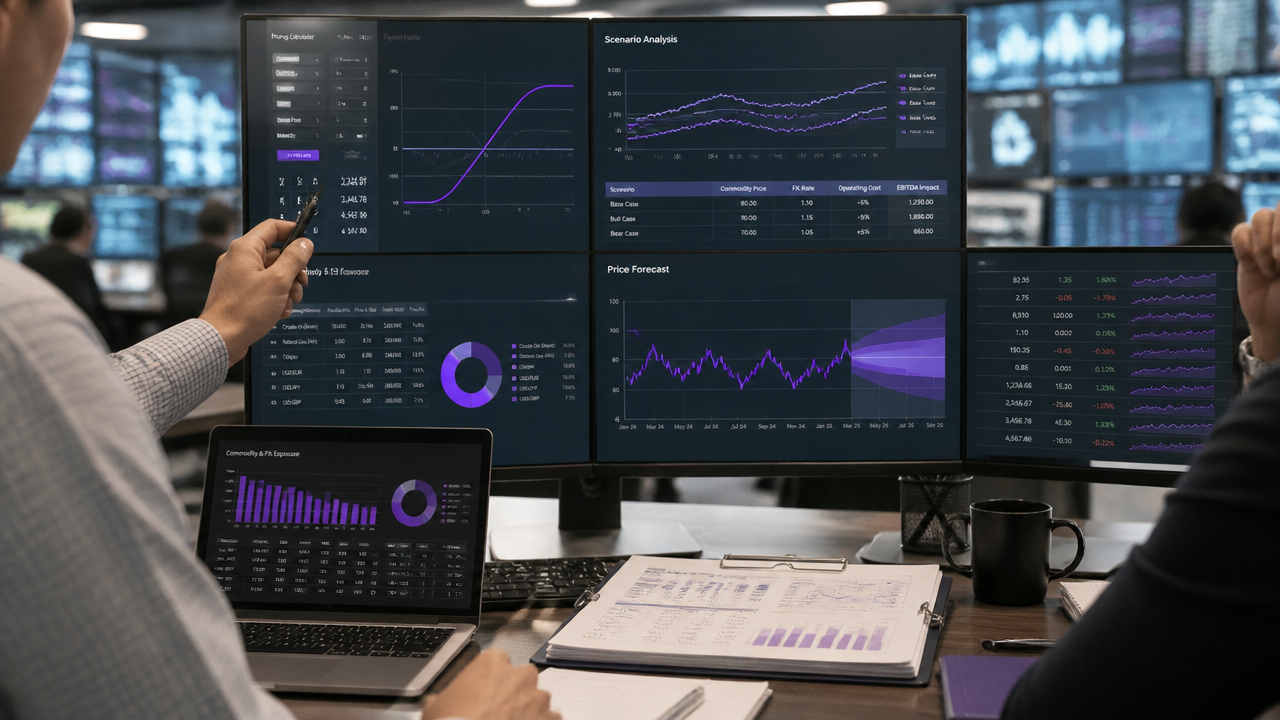
Asset management has changed in profound ways over the past decade. Technology, complexity, and the sheer velocity of modern markets continually reshape how leaders steward investment portfolios across FX, rates, and commodities. The Money Management Institute signals this trend: total managed account industry assets grew 19.1% in 2025, and net flows set new records, driven partly by growing sophistication in analytics, automation, and specialized program offerings (MMI advisory solutions data). But what really sets tomorrow’s asset managers apart? It isn’t just speed or access. It’s using data-driven insights at every decision point.
UHEDGE, built from the ground up as both an advanced risk management solution and an asset management advisor, shows that scientific rigor, deep market intelligence, and real-time technology combine to empower disciplined, high-impact decisions for institutional and corporate portfolios. This article will clarify what modern portfolio analytics mean, why data—not guesswork—must guide investment choices, and how transparency, automation, and next-generation dashboards move a portfolio manager from reactive to strategic.
Why analytics matter in modern portfolio management
For years, managing a portfolio was a blend of art, intuition, and spreadsheet math. Today, real value stems from using structured data, scenario analysis, and risk mapping to act ahead of the market, not just after it shifts. Studies from Shuang Chen, Clemens Sialm, and David X. Xu document how AI-enabled strategies spread rapidly among systematic managers and hedge funds starting in the early 2010s. Early adopters saw outperformance, but as adoption spread, the performance edge narrowed—making discipline and transparency essential.
Data-backed decisions replace guesswork with precision.
UHEDGE and its Staterra advisory arm operate on this principle, layering AI, financial engineering, and quantitative modeling to deliver not just performance, but clarity and discipline. The approach moves from gut-feeling to quantifiable strategy—all while keeping investment objectives, risk appetite, and liquidity restrictions at the forefront.
The backbone of data-driven portfolio decisions
Three pillars form the foundation of modern analytics in asset management: technology, scientific approach, and experience-driven discipline. At the core, software platforms like Uhedge’s bring together real-time pricing, risk monitoring, and scenario-testing environments that automate much of the heavy lifting, making it easier to keep up with the market’s pace and complexity.
- Complete risk dashboards aggregate FX, rates, and commodities, integrating Greek sensitivities (Delta, Gamma, Vega, Theta), volatility surfaces, futures curves, and scenario-based risk maps.
- AI-driven modules recommend optimal hedging strategies by matching market signals to a client's risk profiles and timing preferences.
- All trading activity is monitored on a unified platform, which means consistency, auditability, and clear attribution of performance to decisions—and no operational blind spots.
The practical result? Managers spend less time gathering data and more time analyzing, modeling, and executing focused strategy.
Understanding key analytics metrics
Risk-adjusted returns
Every portfolio manager is judged not just on raw returns, but on what had to be risked to achieve them. The Sharpe Ratio, for example, quantifies returns per unit of risk and is used extensively on UHEDGE platforms to assess whether a strategy adds value net of volatility. Risk-adjusted metrics put outcomes in context, rewarding methods that create value without reckless exposure.
Attribution and benchmarking
Performance attribution allows managers to unravel what strategies, asset classes, or market moves powered their gains—or losses. Was the outperformance due to skill, timing, or just a lucky break in commodities prices? Meanwhile, benchmarking ties each decision to a market standard (like FX spot or a commodity index), so managers can see if their choices actually exceed a logical alternative.
Attribution turns complex results into lessons—and better decisions.
By using clear benchmarks, asset managers are able to test new strategies, refine their approach, and communicate transparently with clients or stakeholders.
Aligning analytics with investment purpose
The best decisions start with clear investment objectives. Whether the goal is to outperform a commodity index, secure predictable cash flows, or minimize capital at risk, every analytic workflow must trace back to this point.
UHEDGE, for instance, supports clients through thorough onboarding assessments, in which financial goals, risk tolerance, and liquidity constraints are mapped in detail. That means the resulting analytics—allocation dashboards, risk exposures, scenario-based stress tests—aren’t generic, but tuned to deliver on the investor’s true purpose.
Asset allocation and portfolio positioning
Analytics tools now empower dynamic allocation. Instead of rebalancing by rote, managers use near real-time analysis to shift capital between FX, rates, agricultural commodities, or energy exposures, responding to the latest macroeconomic signals or risk, all while staying within target risk budgets.
- Position sizing isn’t guesswork: real-time data on volatility and correlation guide allocations to minimize drawdown risk.
- Allocation models adjust as liquidity, opportunity, and risk signals change—no more waiting for end-of-quarter reports to act.
- Managers can simulate the result of hypothetical trades before executing, using predictive analytics to map likely future P&L moves.
Interpreting performance and risk dashboards
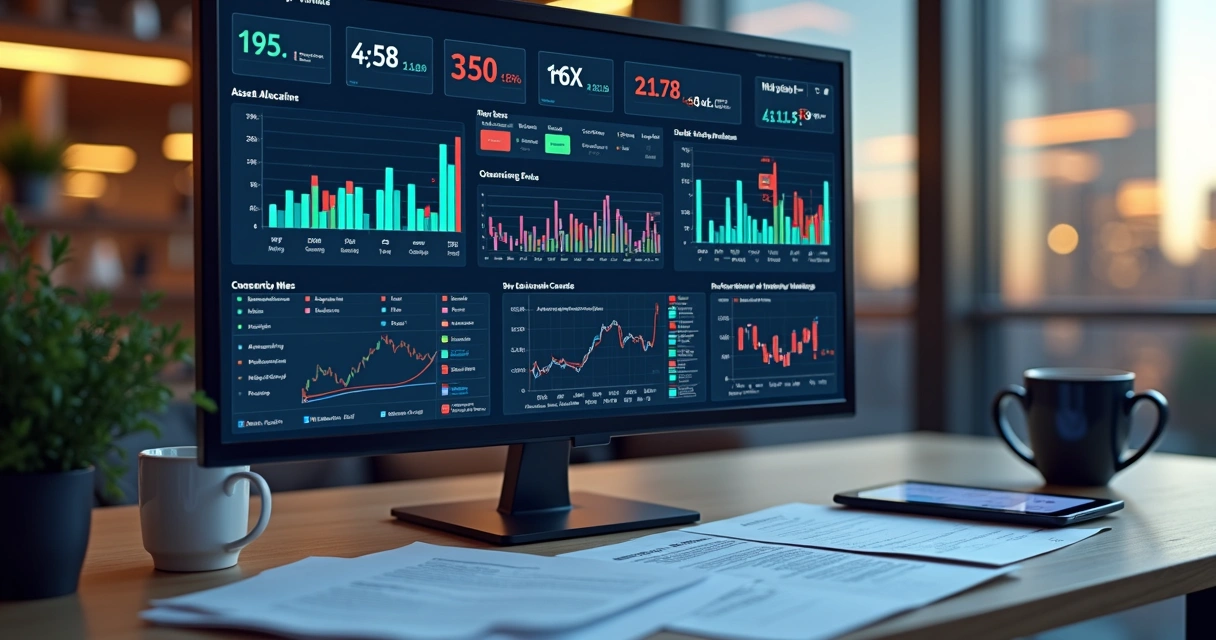
Modern portfolio oversight depends on technology that distills thousands of data points into actionable insights. What does a best-practice dashboard actually reveal?
- Current and historical mark-to-market (MTM) valuations, for an up-to-the-minute profit/loss view.
- Breakdown of portfolio exposures, by type (FX, rates, commodities), strategy, and even counterparty when relevant.
- Risk maps charting portfolio sensitivity to both price changes and market volatility, with clear signals when exposures breach defined thresholds.
- Automated end-of-day (EOD) reports, tracking changes and summarizing daily decision impacts for audit and compliance checks.
UHEDGE integrates all these data layers, so decision-makers can act on insights, rather than wade through cumbersome spreadsheets or scattered market feeds.
Real-world scenarios in FX and commodities portfolios
Imagine a Brazilian coffee exporter hedging NYBOT contracts. The objective might be—beat a rolling commodity price benchmark, with a cap on leverage and strict liquidity constraints. Predictive analytics in the platform track live price movements, calculate the optimal hedge ratio on the fly, and alert managers before market swings trigger margin calls or break risk limits.
Or take an energy trader using dynamic asset allocation: the dashboard shows stress test results under different global volatility spikes (say, from sudden oil supply shocks or geopolitical events), making real-time recommendations to shift into safer rate instruments or adjust positions in metals when the signals turn red.
This level of oversight and speed is only possible with advanced analytics. Data-driven platforms make sure managers aren’t just reacting—but preparing, adjusting, and capturing alpha in a disciplined way.

Examples of actionable analytics: From risk control to alpha
The practical benefits of analytics touch every stage of the portfolio lifecycle:
- Hedging decisions: Should the manager use a vanilla option, a swap, or an accumulator with barriers? The UHEDGE platform simulates the payoffs, risk, and cash flow under each scenario, helping the user pick the structure best aligned to their risk objectives.
- Liquidity planning: Automated tools forecast margin call probabilities, helping managers avoid cash flow shocks during stress periods.
- P&L explain: When returns deviate from plan, analytics map precisely which trades, market events, or risk factors were responsible, letting the manager report with confidence and tweak the strategy in real-time.
- Performance attribution: Every strategy, asset, or counterparty can be isolated and benchmarked, so wins (and losses) are never a black box.
With advanced tools, these capabilities are no longer reserved for the biggest global banks. Democratized access to sophisticated risk and performance analytics is a core aim for the UHEDGE platform and is also discussed in resources like risk management solutions at Uhedge and practical guides to hedging strategies.
Automation, AI, and the path to governance
A large majority of leading asset managers now rate AI and automation not just as a bonus, but as a strategic necessity. The MMI/Broadridge survey reveals that younger investors and large institutions alike see this transition as central to the new asset management culture, with AI driving product and service model change for a new generation of clients.
Automation isn’t about robots taking over; it’s about giving human experts more time for judgment, less for busywork.
In practice, UHEDGE platforms harness proprietary AI models to deliver:
- Automated recommendations for hedging and risk management tailored to risk profile, market regime, and liquidity constraints.
- Bias-free execution that aligns with stated objectives and compliance rules, making governance and auditing transparent.
- Actionable alerts and scenario analysis that catch emerging risks before they become losses.
This transparency keeps clients and stakeholders informed, making it easy to trace any decision back to the data and process that justified it. Robust governance isn’t optional in a high-stakes environment—it's built into every platform feature and workflow.

Best practices for interpreting analytics dashboards
- Prioritize clarity: Simplicity in dashboard layout helps managers find actionable insights fast—look for visualizations that map risk and performance directly to objectives.
- Track attribution at the granularity that matches strategy—by asset class, counterparty, or even algorithmic decision branch.
- Review stress-test results as part of the daily process, not just during periodic reviews.
- Use alerts wisely: Set risk limits and liquidity thresholds clearly, so managers know when to act, not just what happened.
- Keep a real-time link between analytics dashboards and operational teams—alignment lets decisions translate quickly into changes in strategy, positions, and risk coverage.
Real-world users, such as commodity producers and mid-sized financials, have seen results: benchmark outperformance, cost reductions in hedging of up to 70% compared to traditional models, and fewer surprises during periods of global turmoil (as evidenced by Staterra’s case histories with real clients).
Integrating analytics into the investment process
It doesn’t matter if the portfolio is discretionary, systematic, or hybrid—even the most sophisticated asset manager benefits from embedding analytics directly in their workflow. Assets exposed to global macro trends, like Brazilian agribusiness or metal producers, require not only diligent monitoring, but tactical execution informed by up-to-date scenario data.
Embedding a unified analytics solution enables:
- Consistent, rule-based allocations that can be adjusted instantly in changing markets
- Objective tracking against both internal KPIs and external benchmarks
- Root-cause analysis for performance deviations, reducing trial—and—error cycles
- Efficient oversight of compliance and governance mandates, with audit-ready histories
- Total visibility for decision-makers, whether at the trading desk or C-suite
Transparency and alignment: Delivering on client priorities
Modern portfolio management isn't just about chasing returns. It’s about trust, alignment, and transparent reporting. The Uhedge methodology builds confidence because it aligns interests—managers win when clients win—while avoiding conflicts and bias.
Clients receive more than dashboards; they participate in disciplined processes, benefit from detailed scenario planning, and gain real-time visibility into both risk and opportunity. As a result, uncertainty is replaced with robust, actionable strategies grounded in deep quantitative insight.
Resources such as UHEDGE’s signs your portfolio needs a hedge strategy and guidance regarding hedge efficiency indicators underline the importance of working within a framework where transparency and data discipline come first.
Conclusion: From complexity to clarity—acting with purpose
In an era of breakneck financial change and vast market information, asset managers succeed not by guessing where the market will go, but by applying the discipline of analytics, integrated technology, and robust risk management processes. Tools like the UHEDGE platform bring this clarity to the hands of real decision-makers. The result: actionable insights, greater transparency, improved returns, and peace of mind for every stakeholder.
Are you ready for a new level of portfolio clarity? To experience purposeful, data-driven management, schedule a risk and strategy diagnostic with UHEDGE today. Make informed decisions, maximize your portfolio’s potential, and discover what true transparency really means for your business.
Frequently asked questions
What is portfolio analytics?
Portfolio analytics refers to advanced methods and tools for analyzing, measuring, and visualizing risk, performance, and allocation across portfolios. It includes both quantitative and qualitative evaluations—often tracked in real-time—allowing managers to understand what drives returns, exposures, and outcomes for varied assets like FX, rates, and commodities.
How does portfolio analytics help managers?
Data analytics empowers managers to make faster, more accurate decisions, identify risks early, and track performance against clear benchmarks. By turning complex data into understandable dashboards, managers gain the confidence to adjust strategies quickly and to align their actions with client goals.
What are the key benefits of analytics?
Analytics delivers several key benefits: transparent risk and performance evaluation, real-time oversight, scenario simulation, clear attribution of outcomes, and greater confidence in compliance and governance. This optimizes both return and risk management while improving reporting and client trust.
How can I start using analytics tools?
Managers can begin by assessing current needs and selecting an analytics solution that matches their complexity level. For corporate, FX, or commodity-exposed portfolios, a unified platform like that from UHEDGE provides onboarding, customization to risk profiles, and rigorous governance features—making the transition smooth and impactful.
Is portfolio analytics worth the investment?
Yes—the improved ability to identify risks, optimize strategies, and transparently communicate results far outweighs the cost. With proven gains in margin, efficiency, and risk-adjusted performance, analytics platforms quickly prove their worth, especially for portfolios managing complex exposures.