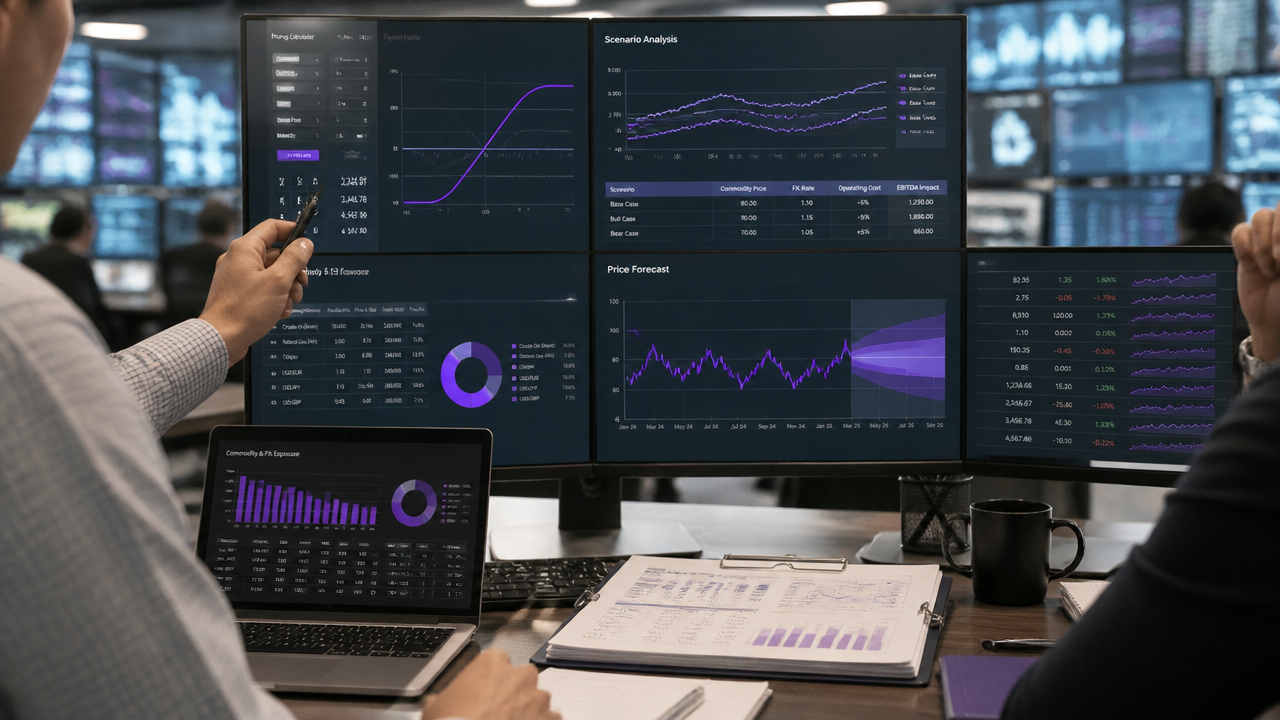
Risk comes in many shapes, but for options and other financial derivatives, risk has four faces: delta, gamma, vega, and theta. Veteran managers know that these four "greeks" act like a control panel, revealing how sensitive a position really is to moves in price, volatility, and time. For anyone working with a portfolio of derivatives, monitoring these metrics is not just a routine task—it is the gateway to transforming confusion into insight, and surprise P&L into predictable risk.
Understanding the four greeks: your portfolio’s risk dashboard
Every experienced risk manager has checked the greek values on a position before a key report or when news breaks. Imagine being able to see, at a glance, how every price tick, every change in implied volatility, or the simple passing of time impacts tomorrow’s profit and loss. Uhedge’s approach, blending human expertise with real-time AI, is rooted in the very foundations of quantitative risk management, where greeks are the common language of exposure.
- Delta: Measures the change in option value for each unit move in the underlying asset.High positive delta means exposure to rising prices; negative delta points to gains in falling markets.
- Gamma: Shows how much delta itself moves as prices change. Large gamma means delta shifts quickly—and risk can build up fast as the market moves.
- Vega: Captures sensitivity to implied volatility. Rising volatility often benefits holders of options (long vega), while sellers (short vega) feel the pain as premiums rise.
- Theta: Measures how much value a position loses as time passes, all else equal. Long option holders face negative theta, while option writers enjoy positive theta—at least until the unexpected occurs.
The greeks let risk be measured, managed, and turned into actionable numbers—risk stops being a surprise.
To understand how every trade stacks up, think of each greek as a piece of a story. Direction, speed of risk, volatility shifts, and the passing of the clock come together—with no surprises left for the diligent.
Profiles of the greeks for common trades
Setting up an options position? Each basic trade comes with its own greek “fingerprint.” Here is how they usually look:
- Long call: +delta, +gamma, +vega, -theta
- Short call: -delta, -gamma, -vega, +theta
- Long put: -delta, +gamma, +vega, -theta
- Short put: +delta, -gamma, -vega, +theta
More complex trades—like spreads, straddles, or hedged portfolios—simply add up or offset these values. These basic profiles make it clear: by adding or reducing option strikes and expiries, one adjusts not just direction, but every risk meter at once.
For example, a long straddle (buying both a call and a put) will have high vega and gamma, but net zero delta when first opened. This leaves the trade sensitive to volatility moves and large underlying price swings, but neutral to small shifts.
The practical meaning for daily risk
Why does tracking delta, gamma, vega, and theta matter so much in practice? Because every shift in these values shows where tomorrow's gains or losses can come from—even before they happen.
- High positive delta? The portfolio benefits if the underlying price rises.
- Big negative gamma? If prices change suddenly, exposure swings fast, and traders must act quickly to adjust.
- Long vega? More volatility can help offset static price losses. Short vega? Volatility spikes even during sideways markets can hurt badly.
- Negative theta? Options lose value as time passes. Positive theta? The clock works in your favor—until something unexpected impacts the price or volatility.
Managing greeks shows not just where you stand—but how to react before the market moves.
These measures unite risk management for calls, puts, spreads, and even futures, creating a shared language that works from the first contract to the largest portfolio. In busy markets, it provides calm clarity. Uhedge’s platform, for instance, helps institutional and business clients decode this risk numerically, so decisions rest on fact, not guesswork.
Tracking greeks by trade and by the whole portfolio
Each trade brings its own set of greek exposures, but successful oversight means adding up everything—trade-by-trade, then for the entire portfolio. Why track at both levels? Because what appears balanced in one trade may be overwhelmed by exposure elsewhere. The risk might be netted, or, just as easily, multiplied.
- Tracking at trade level exposes which part of the portfolio would suffer if, say, volatility rises or prices fall.
- Portfolio-level sums show if offsetting trades genuinely neutralize risk or if hidden exposures add up quietly.
- This separation helps identify which trade drives risk and what adjustments—hedges, offsets, or outright closures—best address potential problems.

Those who want to deepen their knowledge can see further discussion and practical guides in industry-specific reviews of derivatives and hedging in agribusiness.
A checklist for daily profit and loss control
Consistency in risk management relies on routine. Each morning—or before a key release—a solid checklist helps protect against surprises. Here’s a straightforward approach:
- Take a greek snapshot: Note current values at both the individual trade and full portfolio level.
- Run “shock” scenarios: Change underlying price, volatility, and time by set increments to spotlight P&L sensitivity. See what stands out.
- Check against internal limits: Each greek often has a soft or hard exposure limit. Review and ensure none are breached.
- Review event calendars: Economic, weather, or political events can sharply change underlying assets. Prepare if exposures are high ahead of such dates.
- Log decisions: Record not just what adjustments are made, but the thinking behind them. This helps build repeatable, rational processes—not just reaction.
Logging your actions makes it easier to learn what works—and what does not.
For companies integrating advanced advisory firms like Uhedge, documenting this step-by-step approach is second nature, supporting audit trails and team alignment.
The benefits of using greeks as a risk language
Delta, gamma, vega, and theta give managers a precise, shared “language” for risk. Why does this matter?
- The greeks translate risk into clear quantities, making it possible to compare and aggregate exposures across unrelated trades.
- This clarity supports limit setting, escalation, and regulator reporting.
- Teams can discuss possible market scenarios without confusion—everyone knows what a “vega spike” or “gamma risk” means.
- Trading decisions respond to actual P&L drivers, not just price speculation.
For those ready to advance further, the complete derivatives knowledge base at Uhedge BLOG covers broader topics beyond today’s risk management focus.
Risk: keep your eyes open
Working with options and other derivatives offers opportunities, but they bring sharp risk as well. Not every investor or business is suited to large swings in profit and loss—the losses can be substantial, even if the odds of gain seem attractive. Just as important, the information here is presented for general instruction only; it is not a proposal, nor does it carry legal, tax, or accounting advice.
Each individual, business, or institution should use independent judgment. Professional advisers, where needed, can help decide if these strategies fit. If you want practical tips to avoid common errors in managing commodity hedges, review this practical guide to frequent mistakes.
Detailed attention to integrity, ethics, and information security also matters. For those seeking to engage with Uhedge, the São Paulo head office is located at Avenida Brigadeiro Faria Lima, 3729, 7º andar, São Paulo, SP, Brazil. Operations are also established in Switzerland, the United States, Dubai, Singapore, Brazil, and Uruguay. The only authorized channels for questions or complaints about services are those officially listed on the company’s platform.
Protecting your capital is always the first step. Those uncertain if their assets need a risk management overhaul can review the warning signs that your portfolio may need better hedging. And, for a deeper dive, try the practical guide to hedge strategies as a next read.

Conclusion: mastering risk with discipline and facts
Risk is not a mystery—it is measurable and manageable. By tracking the four greeks at both trade and portfolio level, every move in price, volatility, or time becomes something that can be acted on, not just reacted to.
Anyone wishing to go further in mastering these concepts can join the new on-demand course at Hedgepoint HUB. The eight short modules cover everything from greek interpretation to risk control in derivative positions—practical, focused, and made for today’s decision makers. Take control: make risk work for you, not against you.
Frequently asked questions
What is delta in a derivatives portfolio?
Delta measures how much a derivative’s value changes for each unit move in the underlying asset’s price. High positive delta means the portfolio benefits as the underlying asset rises; negative delta means it gains value if the asset falls. This gives a direct sense of directionality and allows positions to be managed according to market goals.
How do I track gamma exposure?
Gamma shows how much delta changes as the underlying price shifts. To track gamma, sum all position gammas at both trade and portfolio level, observing where large numbers may require quick rebalancing—especially after large price moves. Many risk systems, like the Uhedge advisory platform, allow for detailed breakdown and scenario testing.
Why is vega important for risk management?
Vega measures sensitivity to changes in implied volatility. A long vega position benefits when implied volatility rises, while a short vega position suffers if volatility spikes. This is key for portfolios exposed to news, earnings, or political events, where sudden volatility shifts can impact profit and loss drastically even if prices remain stable.
How do I calculate theta for options?
Theta shows how much value an option loses each day as expiration approaches, all else equal. Most modern trading and risk systems provide theta as part of position analytics. To find it manually, use an options pricing model—such as Black-Scholes—inputting the trade details and reading the “theta” output. Negative theta hurts option buyers as time passes, while positive theta benefits option sellers.
What tools help monitor portfolio Greeks?
Risk managers rely on real-time trading systems and analytics platforms to monitor greeks across portfolios. Many use dashboards with live updating delta, gamma, vega, and theta values at both trade and aggregate level. Scenario analysis features can simulate price or volatility changes. For those seeking more automation and compliance, integrated advisory platforms like Uhedge combine these features with customizable alerts and reporting tools.