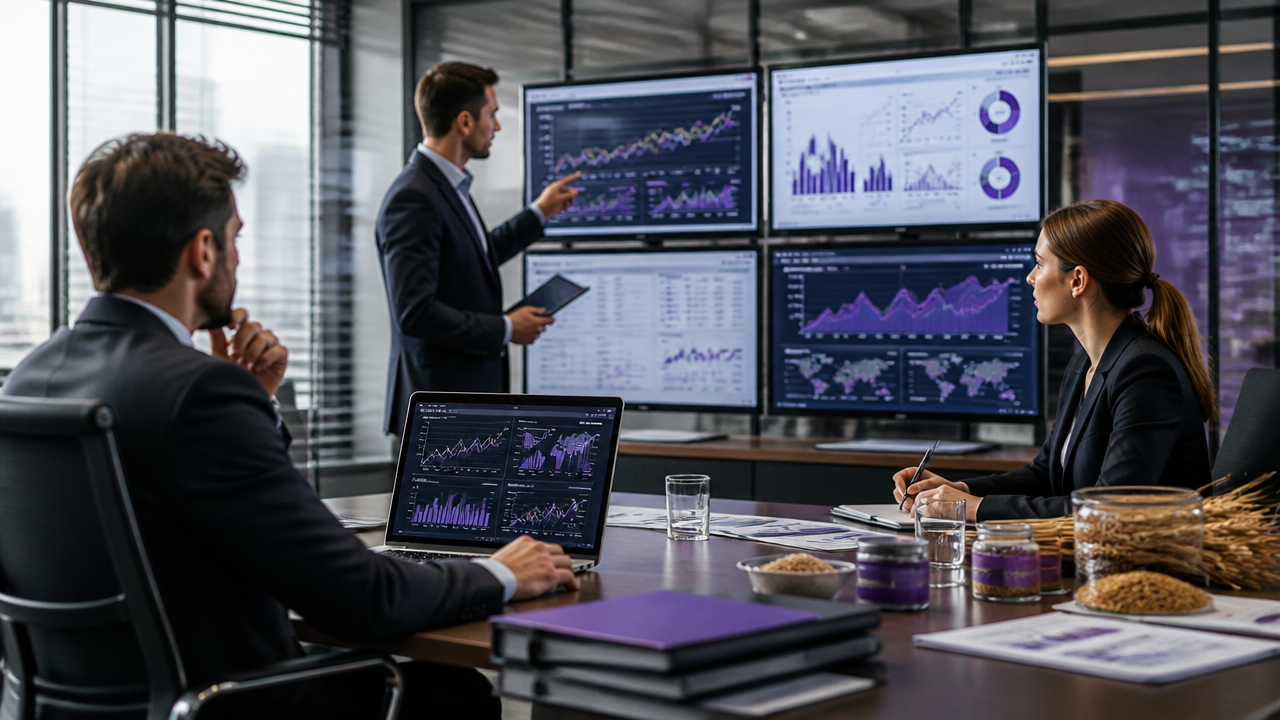
Managing uncertainty is the linchpin of thriving business in the modern world. Firms in agribusiness, energy, and industry face challenges that go beyond supply chains, logistics, or marketing. Markets are turbulent. Prices shift quickly, currencies swing, and the cost of risk can swallow profits before anyone notices.
The UHEDGE ecosystem, together with STATERRA, was purpose-built to tackle precisely these complexities, using rigorous quantitative modeling and proprietary Artificial Intelligence to transform risk management into a science. This article explains what hedging means in trading, its practical relevance, and how using advanced digital treasury systems is no longer just a luxury—it's a necessary tool for anyone serious about protection and growth.
Understanding hedge in trading: Core principles for risk management
At its heart, hedging is a proactive strategy to protect financial results against adverse market movements. Imagine a coffee producer who sells beans internationally. If the price of coffee plunges or the domestic currency strengthens overnight, months of hard work can be erased in moments. The solution? Building financial positions that move in the opposite direction of one’s core business exposure, so losses in the “real world” get offset by gains in the “financial world”.
Defining hedge: More than just insurance
Hedging in trading involves taking specific measures to reduce or remove the impact of price or currency volatility. It is not insurance in the sense of paying a premium and waiting for reimbursement, but rather a direct intervention that balances risks in real time. Enterprises engaged in commodities, fuel, or international contracts utilize hedging to stabilize revenues and costs, gaining a predictable environment amid unpredictable times.
Real-world example: Agribusiness
A soybean exporter signs a contract to deliver tons of beans in six months. However, the price can move dramatically in that window. By using futures contracts, the farmer locks in a selling price today. Should market prices drop by the delivery date, the gains from the futures contract offset the lower physical price, and vice versa. The same applies for energy distributors fixing input costs or industrial players exposed to steel or oil swings.

Changing the outcome: From passive loss to active control
Effective hedges transform volatility from a threat into an opportunity for disciplined firms. Instead of hoping that prices move favorably, leaders gain confidence, allowing for strategic planning of everything from hiring to expansion. UHEDGE, for instance, uses predictive analytics and quantitative frameworks to guide decision-makers in configuring hedges that match their actual exposures.
Instruments that make hedging possible: Futures, options, and forwards
Financial markets have developed many tools—called derivatives—to allow firms to hedge risk. The Bank for International Settlements reports that the notional value of outstanding OTC derivatives reached a record $846 trillion by June 2025, a testament to the global appetite for risk transfer and mitigation according to the Bank for International Settlements.
Futures contracts
A futures contract is a legally binding agreement to buy or sell a specified asset at a predetermined price on a future date. It is standardized, exchange-traded, and highly liquid for many commodities and currencies. For example, an energy company can use oil futures to lock in fuel prices months before purchase—shielding themselves from unexpected increases.
Options contracts
With an options contract, the trader obtains the right, but not the obligation, to buy or sell an asset at an agreed price. This flexibility allows firms to benefit from favorable moves while limiting downside. In practice, a food processor may purchase a call option on wheat. Should prices rise, she can exercise the option and pay the lower price; if prices fall, she lets the option expire, buying at the current, cheaper rates.
Forwards contracts
Unlike futures, forwards are private agreements between parties to exchange assets at a later date. They are customizable but less liquid and entail counterparty risk. Industrial manufacturers often use forwards to fix input costs, focusing on currencies or raw materials whose standard futures contracts may not fit their unique needs.
- Futures: Lock in prices; ideal for standardized, highly traded assets.
- Options: Gain flexibility, pay a premium, and protect against significant adverse moves.
- Forwards: Customize terms, especially useful for complex cross-border transactions.
It is this portfolio of instruments—alongside more complex structures like Accumulators or Fences, available via platforms such as UHEDGE—that enables companies to design a hedge strategy tailored to their actual exposures, not just generic market risk.
Hedging versus speculation: Drawing a clear line
Hedging is about protection. Speculation is about profit. It’s easy to confuse the two, since both use the same financial instruments and strategies. However, the mindset is completely different.
- Hedgers: Aim to reduce risk by offsetting their underlying business exposures. Their core activity is not buying or selling contracts but running a company, producing goods, or delivering services. For them, derivatives are a shield.
- Speculators: Have no actual exposure and enter trades hoping to profit from market movements. For them, derivatives are a bet.
Hedging saves what a business already owns. Speculation risks what a trader never had.
Distinguishing between these intentions is not just a matter of rules. It has legal, accounting, and risk management implications that are crucial for firms in regulated sectors. UHEDGE and STATERRA, by design, craft strategies only for those truly managing exposure, not chasing speculative gain.
Types of hedging: Natural, delta, and portfolio protection
Natural hedge
Sometimes, companies can reduce risk without financial products. This is called a natural hedge. For instance, a European automaker with revenue in US dollars and costs in US dollars partially offsets currency moves without using contracts. Similarly, Brazilian exporters who source raw inputs locally but sell abroad—having costs and revenues move in tandem with currency swings—achieve a buffer effect.
Delta hedging
This is a sophisticated strategy often used by firms managing large or complex portfolios of options. It involves continuously adjusting the position in the underlying asset (such as oil or corn) so that small price changes have minimal effect on the value of the overall position. In a practical sense, delta hedging is akin to a ship captain adjusting the rudder every few minutes to maintain a straight course, regardless of tiny waves or gusts.
Portfolio protection
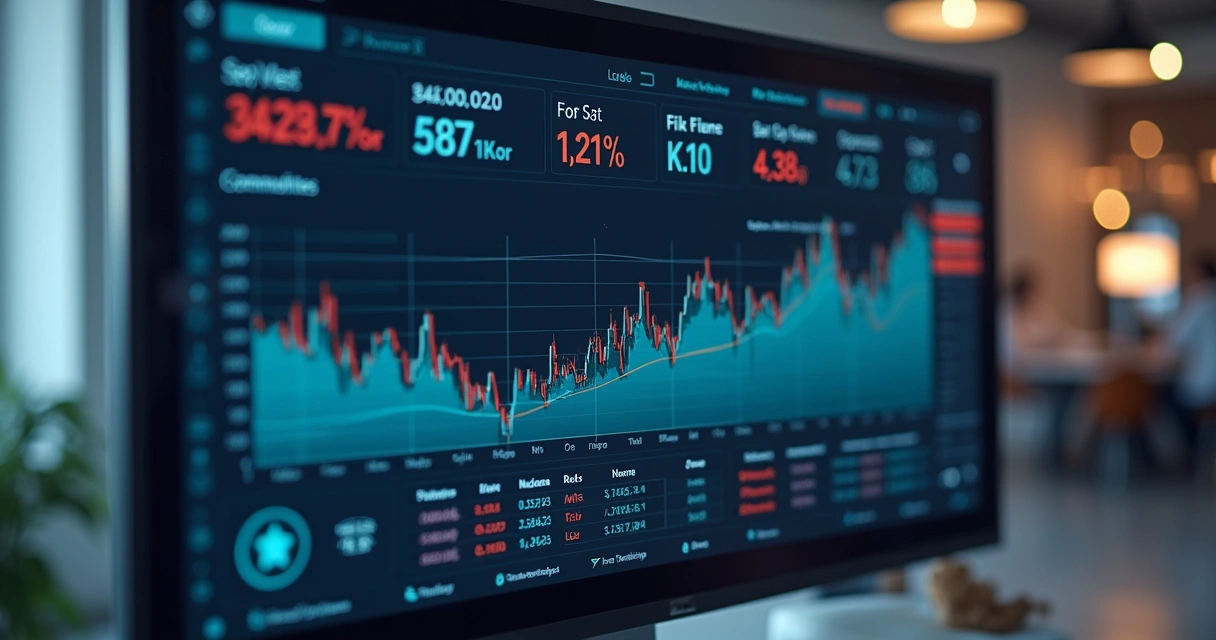
Many asset managers spread their risks across asset classes, sectors, or geographies. UHEDGE, through quantitative analytics and risk modeling, provides dashboards that monitor exposure across currencies, commodities, and interest rates—helping decision-makers actively protect their overall portfolio, not just individual contracts.
The pain of fragmented risk management: Shortcomings of traditional approaches
Before integrated and AI-driven treasury solutions, companies often tried to hedge exposures in disconnected systems, relying on spreadsheets, delayed reports, or outdated models. This resulted in:
- Lack of a unified view of all risks. Positions would be spread across different departments or banks, hiding the true net exposure.
- Slow reaction to market changes. It was nearly impossible for teams to adjust positions rapidly as news broke or volatility spiked.
- Expensive and inefficient pricing. Negotiating unique contracts for every transaction often led to high costs—sometimes up to 70% more than optimized hedging systems would achieve.
- Governance gaps and errors. Fragmentation fostered mistakes, made audit trails hard to maintain, and left room for miscalculations that could result in significant monetary loss.
Traditional methods turn risk management into guesswork. The consequences for business planning, cash flow stability, and strategic growth can be severe. This is especially true for companies exposed to commodities or currencies, where swings can erase profit margins overnight.
The edge of digital treasury: How UHEDGE and STATERRA drive risk discipline
Firms competing in globalized markets are starting to realize that relying on spreadsheets or generic financial institution offerings is no longer enough. The stakes are higher. Data volume is larger. The pace of change is relentless.
This is where advanced digital treasury solutions—such as those at the core of UHEDGE—transform everything. By integrating AI, quantitative algorithms, and real-time analytics, the digital treasury delivers:
- A centralized, real-time management platform: Every financial operation—whether paper or physical—flows into a single environment. Decision-makers see their whole risk landscape at a glance.
- Automated, data-driven recommendations: The system processes huge volumes of data, suggesting the most appropriate risk mitigation strategies instantly. This is a leap beyond human capacity.
- Customized hedging strategies: Not one-size-fits-all, but fully tailored based on the business goals, risk tolerance, and liquidity constraints of each individual firm.

UHEDGE and STATERRA don't merely provide technology; they act as an “extension of the operation desk,” transferring two decades of global financial expertise and market intelligence into actionable Real-Time insights for companies exposed to multiple sources of risk. This clarity brings relief, confidence, and competitive advantage. A digital treasury transforms risk management from a cost center into a margin booster.
Quantitative analytics: Making timing and protection smarter
Qualitative guesswork is not enough for managing millions in exposures. Quantitative analytics—using statistics, econometrics, and advanced modeling—detects patterns and signals invisible to the naked eye. This empowers decision-makers to react faster, allocate capital more intelligently, and avoid costly pitfalls.
UHEDGE’s software, for example, provides predictive graphics such as Volatility Surfaces, Futures Curves, and Volatility Smiles—enabling users to visualize potential threats and opportunities with a level of detail impossible with traditional approaches. Firms are no longer caught off guard by sudden volatility or market dislocations. Instead, they maneuver with calm purpose.
For further discussion on common tactical mistakes in commodity hedging and how advanced analytics can mitigate them, see the article on commodity hedging mistakes firms make and how to avoid them.
Real-life impact: Results seen in agribusiness, energy, and industry
Hedging transforms outcomes for companies of all sizes. Farmers who implement systematic price protection models can weather global shocks and keep operations running smoothly. Energy distributors lock in stable margins, free from the anxiety of unpredictable purchases. Industrial manufacturers budget in local currencies while protecting against the wild cards of global sourcing.
The UHEDGE ecosystem demonstrates its value through practical cases—like coffee producers selling on international exchanges or metal suppliers steering through commodity cycles. One managed portfolio example included a 10-lot hedge on NY coffee futures, with a clear outperformance of systematic, path-dependent hedging over typical leveraged approaches.
For those curious about deeper practical guides and strategic applications, the detailed guide on advanced hedging strategies and protection in the market is recommended.
Summary: Building resilience with disciplined, AI-driven hedging
Hedging in trading is more than technique; it is the architecture of certainty for risk-exposed firms. Price swings and currency shocks are part of today’s reality. But with the right tools and expert discipline, these forces can be redirected to support growth rather than threaten it.
UHEDGE and STATERRA do not merely deliver advanced pricing or analytics—they bring a disciplined, scientific, and tech-powered method for ongoing protection. For leaders in agribusiness, energy, and industry, the message is simple: risk will never vanish, but learning to control and capitalize on it is what separates average results from robust, lasting success.
For more tactics, signals your portfolio may need immediate protection, and practical approaches to commodity hedging, see the insights on protecting margins in unpredictable markets and recognizing when your portfolio needs a hedge at signs your portfolio needs a hedge strategy.
Conclusion: Take the first step toward strategic risk management
Businesses that embrace a unified, AI-driven treasury platform supported by proven industry expertise are no longer just surviving uncertainty—they are building new value from it. UHEDGE invites decision makers to reach out for a personalized risk assessment, and to see firsthand how digital treasury helps you move from reactive to proactive, from ambiguity to clarity, from exposure to protection. Now is the time to amplify your margin and set a new standard for disciplined, technology-driven risk management.
Frequently asked questions
What does hedging mean in trading?
Hedging in trading refers to the practice of taking financial positions that offset potential losses in another exposure, such as currency, interest rates, or commodity prices. The purpose is not to profit directly from market moves, but to reduce the adverse impact of those movements on a firm’s financial results. For example, a firm might lock in the price of steel using futures contracts to avoid unpredictable cost increases during a large infrastructure project.
How can firms use hedging strategies?
Firms can employ hedging strategies by first identifying exposures—from input costs to sales contracts—and then selecting financial instruments such as futures, options, or forwards to manage those risks. Using centralized digital treasury platforms like UHEDGE’s, companies can model potential market scenarios, determine the optimal hedge ratio, and automate much of the monitoring, adjustment, and reporting required for effective protection.
What are common hedging instruments?
The most commonly used instruments for corporate hedging are futures contracts (for standardized commodities or currencies), options (which provide flexibility and limited downside), and forward contracts (custom arrangements with banks or counterparties). Firms may also use swaps, accumulators, or other structured derivatives depending on the complexity of their risk profile and specific market exposures described in this guide and in studies by the Bank for International Settlements (see latest derivative market data).
Is hedging necessary for all traders?
Hedging is necessary for firms or individuals whose core activities are exposed to fluctuating market prices and who wish to protect themselves against those risks. Not all traders need to hedge; some are pure speculators, while others have naturally balanced exposures. The need for hedging arises when uncontrolled volatility threatens margin, planning, or solvency. In sectors exposed to global financial variables, advanced hedging is essential for resiliency.
What risks does hedging help manage?
Hedging helps manage market risks such as price swings in commodities, changes in interest rates, and currency fluctuations. The strategy may also support cash flow predictability, profit margin targets, balance sheet stability, and regulatory compliance. With rapid changes in global markets and increased volatility, disciplined hedging protects firms from surprise losses and turns uncertainty into measurable, actionable insights.