
Commodity markets are never static. Currency shocks, interest rate pivots, sudden jumps in agricultural yields, or a shipping crunch in the metals sector – each can trigger ripples that reach every financial statement line. Amid this volatility, firms exposed to commodities, FX, and rates increasingly look for methods that not only anticipate stress, but quantify it rigorously and govern their exposures with discipline. Commodity stress testing stands as a central pillar in this pursuit.
This article unpacks what commodity stress testing means, the models behind it, how scenarios are constructed, and the compliance implications in today’s regulated environment. Drawing on practical cases, scientific methods like Extreme Value Theory and copula models, and referencing Uhedge’s quantitative approach, this discussion brings to light how technology transforms risk management from a reactive afterthought into a source of value.
Why stress testing matters in commodity markets
Stress testing is the process of simulating extreme but plausible adverse conditions to evaluate how portfolios, trading books, and firm-wide risk exposures would react. The aim is not just to anticipate worst-case losses, but to spot hidden vulnerabilities, identify concentration risk, and support robust governance in line with regulatory demands.
For firms that depend on agricultural supply chains, energy inputs, or metals for manufacturing, material moves in prices or disruptions in delivery have impacts that go well beyond typical volatility. Financial institutions, corporates, and asset managers rely on stress testing to pressure-test balance sheets and capital plans, helping ensure stability not just for themselves, but often for the markets they help support.
A 2024 CFTC Supervisory Stress Test, which examined derivatives clearing organizations across asset classes, found all maintained enough resources to withstand extreme price shocks and multiple member defaults. In the most severe scenarios, the average cost to members was just 0.07% of parent entities’ Tier 1 capital, demonstrating both the resilience and quantifiability of risk when stress testing is applied rigorously (CFTC’s 2024 Supervisory Stress Test).
Commodity stress testing: definition and significance
Commodity stress testing is a structured process to measure how adverse market events influence the value, liquidity, and hedging effectiveness of exposures linked to commodities, currencies, and rates. It blends quantitative modeling with scenario analysis to create a complete picture of risk, supporting decision-makers from the trading desk to the board room. Not only does it flag tail risks – those low-probability but high-impact events – it offers evidence to investors, boards, and regulators that risk management goes beyond box ticking.
Uhedge, for example, harnesses a combination of financial engineering, econometrics, and artificial intelligence within its digital treasury system. Their solution integrates the full cycle, aggregating exposures in real time, deploying derivatives models, and computing volatility, risk mappings, and Greek sensitivities, all within unified dashboards. This means the stress test results aren't isolated from the daily business—they inform decisions and governance directly.
Key methodologies: beyond historical volatility
Conventional risk measures, like Value at Risk (VaR), serve as a starting point, but have notable limitations. VaR tends to underplay the effect of extreme events, especially in markets with fat-tailed returns (which is common in commodities). That’s why modern stress testing adopts a multi-method approach:
- Extreme Value Theory (EVT): EVT is used for quantifying tail risk, estimating the probability and magnitude of rare and outsized shocks. EVT doesn’t just extend historical scenarios—it models the frequency of events so rare, they may not appear in even a decade of data.
- Copula Models: Copulas allow for flexible modeling of dependencies between assets, crucial when stress propagates non-linearly across commodities, FX, and rates. These methods help reveal how “outlier” events in one market can drive losses in others, reflecting real-world shocks where everything moves at once.
- Scenario Analysis: Scenario-based stress testing covers a range of plausible adverse situations, constructed using either actual historical crises, hypothetical shocks, or hybrids of both.
A 2015 study on commodity futures portfolios highlighted that structural market breaks can suddenly disrupt asset correlations, making scenario-based methods essential—even when typical models show stability.

Types of stress scenarios: historical, hypothetical, and hybrid
Scenario construction is both art and science. It’s not enough to replay last year’s crisis; meaningful stress tests must be tailored to exposures, expected market conditions, and regulatory requirements such as those set out by Basel III.
Historical scenarios
Historical scenarios replay real market crisis events, such as the 2008 financial crisis, the commodity crash of 2014-2015, or the energy price spikes of 2022. They help benchmark current portfolios against real, observed drawdowns. However, these scenarios may not reflect future risks, especially as market structures evolve.
Hypothetical scenarios
Hypotheticals explore “what-if” situations beyond what’s been observed—like a 50% drop in copper prices alongside a USD rally and a global shipping bottleneck. These scenarios let risk teams test vulnerabilities to shocks that regulators, boards, or counterparties are concerned about, even if such events never happened before.
Hybrid scenarios
Hybrid scenarios blend historical and hypothetical elements, combining data-driven shocks with forward-looking assumptions. A May 2023 joint report by the BCBS, CPMI, and IOSCO encouraged the use of such dynamic scenario construction to account for the unique features of commodity markets and to test margin requirements and CCP robustness under diverse stress events (BCBS, CPMI, and IOSCO report).
Best practice, as noted by regulatory guidance and industry studies, is to align scenario granularity with portfolio materiality and risk tolerance, updating them frequently as markets and business exposures change.
Compliance, Basel III, and policy evolution
Stress testing is no longer a luxury, but a requirement for firms in regulated markets. Basel III, European regulations (EMIR), and local frameworks all call for transparent, repeatable, and governance-friendly stress testing practices.
The policy shift since the global financial crisis has reshaped expectations. Regulators insist that margin models, clearinghouse assessments, and internal risk processes reflect the true character of exposures—especially in the tail.
Compliance demands detailed records, clear scenario rationales, and independent validation of stress testing frameworks, as well as integration into capital planning and board reporting. The 2022 volatility in commodity markets led to margin spikes and policy debates, with supervisors promoting greater transparency in margin rules and the responsiveness of risk systems to stress events (BCBS, CPMI, and IOSCO report).

Real-time exposure monitoring and unified dashboards
Traditionally, exposure tracking was fragmented, leaving risk managers to stitch together data from operations, finance, and trading. Today, leading platforms—not least Uhedge’s solutions—enable real-time consolidation across all relevant exposures: from FX, IRS, and commodities, to physical trade positions and derivatives.
These unified dashboards don’t just show numbers. They translate abstract risks into actionable intelligence through:
- Live Mark-to-Market (MTM) and Greeks: All exposures, both physical and derivative, are marked and recalculated continuously, enabling instantaneous insight into profit/loss, delta, gamma, vega, and theta.
- Risk maps and end-of-day automation: Automated risk maps display how exposure concentrations shift with changing volatility or spot prices, while EOD reports deliver actionable summaries for treasury and management.
- Portfolio aggregation: Instead of piecemeal management, full portfolio risk is visible in a single view, promoting consistency and robust governance controls.
This isn’t a vision of the future—it’s the standard. As cited in Uhedge’s client cases, aggregating all operations, including FX, rates, and commodity positions, into one environment allows for discipline, auditing, and a tighter tolerance for key performance drivers.

Limitations of VaR and why dependence modeling matters
Value at Risk (VaR) remains ubiquitous for daily risk reporting, but it struggles in the tails. In times of market stress, correlations tend to spike—sometimes everything falls together. VaR models, which focus on typical volatility and historical dependencies, routinely miss these nonlinear risk cascades.
A 2005 paper from the Federal Reserve Bank of San Francisco noted that stress testing is indispensable for portfolios exposed to fast-changing prices, as it can reveal weak points left undiscovered by VaR alone.
Advanced models, like copulas and regime-switching frameworks, can represent asymmetric and shifting dependencies, letting risk managers simulate wider ranges of co-movement and joint losses—exactly what happens in crises. Uhedge’s quantitative risk models, often relying on these same mathematical foundations, help market participants move beyond the limits of historical simulation.
Automation and data integration: speeding up and securing the process
Manual stress testing—pulling figures from spreadsheets, updating models, and generating reports by hand—is slow, error-prone, and quickly outdated. Automated systems, powered by APIs and cloud data pipelines, have transformed the landscape. At Uhedge, for instance, the software dynamically recomputes exposures, signals, and stress projections as the market evolves.
Key benefits of automated, integrated risk systems include:
- Reduction of manual errors and time lags in reporting
- Instant reaction to breaking news or “fat finger” events
- Regulatory compliance through permanent recordkeeping and workflow auditability
- Scenario regeneration as portfolios or models evolve
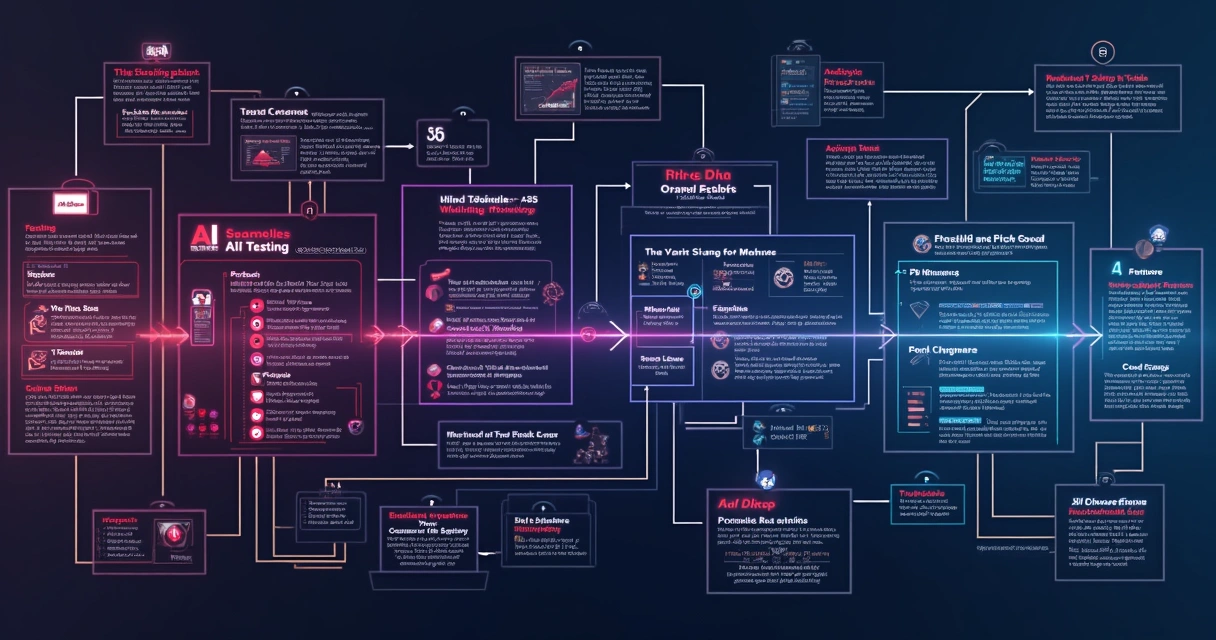
When flash points occur—like the rapid unwind of nickel exposures in 2022, or simultaneous agricultural and energy market swings—automated systems show portfolio resilience or weakness in real-time, arming executives and boards with the information needed to act, not react.
Learning from market disruptions: recent case studies
Every crisis—whether it’s the COVID-19 dislocation, the 2022 spike in natural gas and wheat, or disruptions from military conflicts—offers a laboratory for stress testing. The lesson is simple: bold events break old statistical assumptions.
Scenarios that seemed remote yesterday are mainstream today.
The increase in pricing dependencies during volatile periods was highlighted in the 2015 Economic Modelling study, where it was shown that stretches of calm can lull risk teams into complacency, only to be broken suddenly by structural market changes (2015 study in Economic Modelling).
Practical application at Uhedge, for example, includes modeling both the volatility surface and the full futures curve during real-time market shocks—a feature that has proven key for commodity clients riding out the post-pandemic turbulence.

The Uhedge approach: structured, scientific, and client-aligned
Uhedge applies scientific rigor and nearly two decades of market experience to stress testing portfolios. Their system brings together the sharpest tools from statistics, financial engineering, and AI, providing recommendations tailored to each client’s risk profile and portfolio objective. This evidence-based culture is reflected in the following workflow:
- Quantitative modeling: Advanced statistical and financial models process vast datasets to establish robust empirical foundations.
- Scenario analysis: Using both backward- and forward-looking scenarios for a full risk perspective.
- Unified dashboards: Aggregating exposures across all asset classes for real-time tracking and reporting.
- Governance integration: Automated compliance and audit support built in from the start.
- Personalized risk strategy: Every model and scenario is tailored to client’s specific goals, constraints, and liquidity needs.
By extending the client’s operational desk with a full suite of digital treasury and asset management solutions, Uhedge frees teams to focus on value creation, not firefighting.
To see this in action, a series of practical case studies are available on how Brazilian agribusinesses and industrials improve their margin protection and compliance through better hedging and risk control. For readers curious about structure and regulatory context across commodities, further background is provided in posts about risks and opportunities in the Brazilian commodity market and sector-specific commodity strategies.
Best practices for stress scenario construction
Sound scenario design underpins all meaningful stress test results. Consistent with Basel III and evolving regulatory standards, the following steps are recommended:
- Map exposures thoroughly, including off-balance sheet and contingent risks.
- Select scenarios based on portfolio vulnerabilities, not just what’s “popular” in the news cycle.
- Use both historical and theoretical data to calibrate scenario size and interdependencies.
- Layer in features such as market-wide illiquidity, counterparty failures, or regulatory regime shifts.
- Engage senior management and risk committees in scenario selection and results review, ensuring company-wide understanding and actionability.
The result is not just a compliance artifact, but a decision-making tool that supports business continuity and strategic growth.
For more on effective margin management and liquidity stress, the BCBS, CPMI, and IOSCO have produced guidelines examining CCP resilience and transparency during periods of market unrest (BCBS, CPMI, and IOSCO review).
Advanced software and AI-driven platforms: more than hype
There is no going back to the days when stress testing was a quarterly spreadsheet exercise. Modern systems match market speed and complexity, using artificial intelligence, predictive models, and cloud-based dashboards that support:
- Instant calculation and visualization of risk metrics
- Automated compliance reporting
- Dynamic, scenario-by-scenario result aggregation
- Collaboration across dispersed operational teams
- Continuous learning and model refinement as new data emerges
Uhedge’s digital treasury software operates as an extension of the client’s desk, aggregating and analyzing exposures in real-time. It computes mark-to-market values, Greeks, volatility surfaces, and stress impacts all in one place. Clients report gaining both operational simplicity and the confidence that their risk management meets modern standards for transparency and rigor.
To better understand automatic hedging recommendations and scenario analysis in practice, explore Uhedge’s further publications on volatility protection in commodities and effective hedge strategies in metals.

Conclusion: turning stress into opportunity
Commodity stress testing is more than a regulatory box to check. For firms exposed to the swings and disruptions of global markets, it’s a way to turn uncertainty into controlled opportunity. Using robust models, unified dashboards, scenario analysis, and AI-driven platforms, companies like Uhedge support not just compliance, but greater strategic confidence and financial results.
With strong governance, live monitoring, and scientific rigor, stress testing helps firms transform volatility from a threat into an engine for value creation. For those ready to strengthen risk management, now is the time to experience what a tailored, technology-driven approach can unlock.
Contact Uhedge today to schedule a personalized risk and strategy assessment. Discover how to embed world-class quantitative methods and real-time monitoring in your commodity management process—and see risk not as a danger, but as a new source of business advantage.
Frequently asked questions
What is commodity stress testing?
Commodity stress testing is a process used to simulate extreme but plausible market scenarios, measuring the effect on portfolios and risk exposures linked to commodities, currencies, and interest rates. By using advanced statistical, financial engineering, and scenario methods, it helps flag vulnerabilities that typical risk models can miss, supporting governance and decision-making for both compliance and value creation.
How do you perform commodity risk scenarios?
Performing commodity risk scenarios involves mapping exposures, selecting relevant historical or hypothetical events, and applying quantitative models such as Extreme Value Theory and copulas to calculate changes in the value of positions. Advanced software can automate this, running complex stress simulations across all positions and aggregating the results in unified dashboards for real-time review.
Which models are used for stress testing commodities?
The main models employed include Extreme Value Theory (EVT) for tail risk, copula models for capturing asset dependencies, scenario analysis frameworks for constructing plausible adverse conditions, and, in modern systems, AI-driven predictive and analytics models. This toolkit allows risk managers to quantify both the individual and joint impacts of rare events, improving the accuracy and completeness of the analysis.
Why is stress testing important for compliance?
Stress testing is vital for compliance as it demonstrates that a firm’s risk management systems can withstand regulatory scrutiny and real-world shocks. Regulatory frameworks (like Basel III) require documented stress testing processes that are rigorous, repeatable, and reflected in capital and margin requirements. It also provides evidence to boards and authorities that the company actively manages tail risks and is not relying solely on standard models.
How often should commodity portfolios be stress tested?
The frequency of stress testing depends on exposure materiality, regulatory requirements, and changes in market volatility. Best practices suggest at least monthly reviews for actively traded portfolios, but daily to weekly testing is recommended for high-risk environments or when significant changes occur in market structure, position sizes, or macroeconomic outlook. Automated systems make this process much faster and more reliable, allowing for continuous monitoring and rapid recalibration.