
The world of commodities is unruly. The price of oil can surge overnight, coffee futures tumble by lunchtime, and currency swings can erase a month of careful planning. In this environment, managing risks is not just a technical exercise, but a fundamental pillar for the survival and stability of any business operating with substantial exposure to commodities, FX, and interest rates. It is here that effective risk frameworks, informed by statistical rigor and adaptive technology, make the difference between sustainable growth and sudden losses.
Why risk matters in commodity trading
Commodities offer opportunity, but with it comes volatility. Producers, traders, industrial buyers, and financial institutions are all exposed. The consequences of poor risk discipline are immediate: unexpected cash demands, margin calls, and the threat of insolvency if positions move the wrong way. Beyond that, regulatory expectations and board-level scrutiny have grown. The need for actionable, real-time control of exposure is not up for negotiation. Robust risk management turns unpredictable costs into controlled, consistent gains while delivering real transparency. This principle underpins the philosophy of Uhedge, whose dual focus on quantitative rigor and AI-driven analytics supports disciplined and unified trading environments.
Main types of risks in commodity trading
Understanding the specific risks present in commodity markets is the first real step for any decision-maker or risk officer.
- Price risk – The most visible. Price swings in oil, grains, metals, and other raw materials can reshape profit and loss in a matter of hours.
- Currency risk – Global commodities are priced mostly in US dollars. For participants outside the US or with multi-currency operations, FX volatility can make a winning trade unprofitable.
- Interest rate risk – Financing costs, particularly in leveraged strategies or for companies that borrow to finance inventory, can impact margin with little warning.
- Operational risk – Not always front-of-mind, but failures in systems, controls, or human error can magnify direct market risks.
- Margin and liquidity risk – Requirement to post margin on futures and swaps can trigger cash shortfalls. Sudden moves can lead to forced liquidation, compounding losses.

These exposures rarely operate in isolation. Studies, including the National Agricultural Library review on multi-commodity risk management, reveal that risk drivers often correlate—making diversification more complex than it appears.
Risk management principles in real trading
Every robust system sits on a few core principles, rooted in both theory and practice. These are not academic recommendations—they are rules forged by years of real trades, market cycles, and the hard lessons of loss and recovery.
Risk limits and position sizing
No single trade should ever threaten the survival of a portfolio or firm. Setting clear risk limits and sizing positions accordingly is the frontline defense against catastrophic loss. At Uhedge, this principle is supported by disciplined modeling and continuous real-time recalculation of exposure. These actions prevent position bloat and encourage discipline, even in heated markets.
Stop-loss and exit rules
Drawdowns will happen. What matters is how quickly and decisively the response comes. Stop-loss protocols force the cutting of losses before hope becomes denial. These rules are not negotiable. They are best implemented with automated or semi-automated controls, reducing the influence of emotion when the heat is on.
Diversification and correlation monitoring
Not all risks can be hedged with a simple offsetting position. Tracking correlations, especially among commodity classes, currency, and rates, prevents “false diversification.” Modern software like Uhedge’s assesses these relationships within a unified dashboard, aggregating risk for meaningful oversight.
Effective tools: hedging with derivatives
Risk avoidance is not practical, but risk transfer and mitigation are. Derivatives—especially futures, options, and swaps—are essential instruments for managing and shaping exposures in commodities. The choice is never one-size-fits-all; it depends on risk profile, capital availability, and operational objectives.
Futures
Used to secure prices for future purchases or sales. They are highly liquid, standardized, and straightforward for immediate risk transfer, particularly for benchmark commodities. However, they require posted margins and expose users to daily mark-to-market volatility.
Options
Provide an “insurance-like” profile—protecting against extreme moves while preserving upside in many cases. Strategies such as collars or structured options (e.g., accumulators, fences) offer customized payoffs. Uhedge’s software makes these strategies actionable for clients who might otherwise not have access to complex over-the-counter (OTC) products, thanks to in-house quantitative models and replicating algorithms.
Swaps
Crucial for transforming the profile of cash flows—be it fixed to floating price conversions or cross-currency requirements. They work especially well when pricing certainty is needed for longer term contracts.
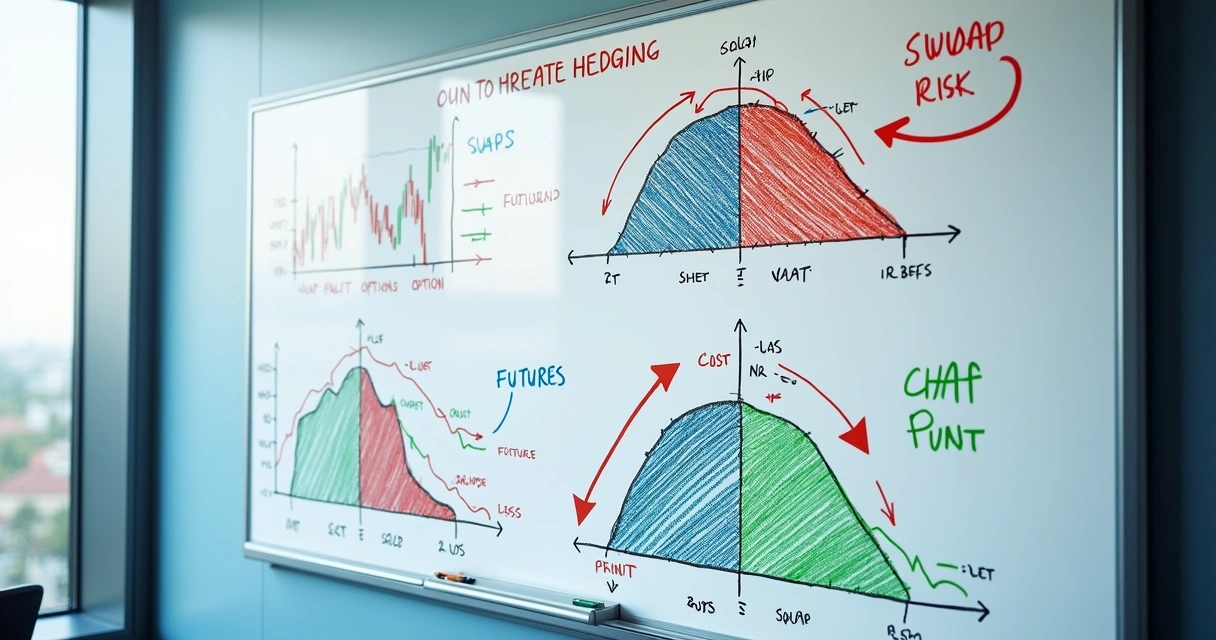
Frameworks and studies, as seen on the National Agricultural Library review, support the effectiveness of a sound derivative toolkit for tackling correlated input-output price risks in multi-commodity operations. For practical guidance on building and adapting hedging strategies to market cycles, the article Guia prático de proteção e estratégias no mercado de hedge offers insights tied to common market conditions.
Capital allocation and margin management
This area separates skilled risk managers from amateurs. Managing capital and margin is about survival, not speculation. Inadequate reserves risk forced liquidations at the very moment protection is needed most. Automated alerting and predictive margin calls, as implemented in Uhedge’s asset management approach, help ensure market stability and cash planning.
Monitoring the interplay between risk positions and available liquidity is essential. A margin call at an inopportune time can turn a minor loss into a major crisis.
- Set aside capital specifically for margin and buffer requirements.
- Use predictive analytics to forecast potential cash needs during volatile markets.
- Review risk exposures continuously as positions and market values shift.
Authoritative datasets on Federal Crop Insurance Program and margin requirements show that disciplined margin management correlates directly with resilience through market downturns.
Continuous monitoring and governance
If a risk strategy is just written on paper or locked in spreadsheets, it fails in the real world. True risk control requires active, real-time monitoring, discipline in reporting, and continuous adjustment. This is where modern platforms like Uhedge provide value: By unifying all FX, interest, and commodities exposures into a single, transparent dashboard, managers see the complete risk picture as it changes.
Key features in Uhedge’s system:
- Automated end-of-day and real-time reports for positions, P&L, and exposure by contract and counterparty.
- Risk maps that visualize the impact of different shocks on the portfolio.
- Integration of cash flow forecasts, margin levels, and scenario stress testing into one environment.
This approach ensures not only full governance, but actionable clarity that supports board-level and operational compliance. For an extended discussion of unified risk management in commodities, the detailed resource aborda estruturas de governança em risco introduces best practice frameworks.

The role of quantitative tools and AI in advanced risk control
Human decision-making will always have its place, but is no match for the rapid, multifaceted nature of today’s commodity markets. Advanced technology is now a prerequisite.
AI bridges the gap between data complexity and disciplined action.
Uhedge’s proprietary software integrates:
- AI algorithms for pattern recognition and automatic recommendation of risk controls based on market type and timing.
- Quantitative risk analytics for real-time pricing, derivatives valuation, and scenario-based stress testing.
- Automated governance checks enforcing risk limits and compliance without manual human review.
This “digital treasury” environment allows risk managers and executives to navigate market events proactively, not reactively. Importantly, these tools help democratize access to advanced hedging strategies, bringing what was once reserved for large banks or specialized funds inward to the operating businesses.
For more on the application of quantitative methods in commodities, the article explica fundamentos do trading quantitativo aplicado aos mercados brasileiros.
Building a practical risk management framework
Translating theory into daily practice requires a clear framework. Below is a sequenced approach observed in businesses with mature trading strategies:
- Identify exposures rigorously: Itemize every price, currency, and rate exposure—physical, financial, and operational.
- Define risk tolerances: Set hard limits for maximum exposure, drawdowns, acceptable volatility, and margin stress.
- Implement position sizing and stop-loss rules: Use software for precision and speed in adjusting to new risks.
- Hedge core risks: Use a tailored blend of futures, options, and swaps, weighted by exposure and liquidity.
- Aggregate exposure in a single dashboard: Visibility is power. The more fragmented your controls, the more risk leaks through the cracks.
- Automate reporting and monitoring: End-of-day, real-time, and stress scenario reports must arrive without delay or manual calculation.
- Regularly review, rebalance, and test: Market cycles, business needs, and external shocks change constantly. Your framework must adapt in real-time.
For companies looking to avoid the typical mistakes in hedging commodities—and for practical recommendations—the article Erros no hedge de commodities que empresas cometem e como evitar provides in-depth discussion.
Practical benefits of modern risk management
For Uhedge clients and others operating with disciplined, quantitative frameworks, the benefits are tangible:
- Lower and more predictable hedging costs, freeing capital for core business investments.
- Greater resilience in navigating price, currency, and margin shocks—both sudden and gradual.
- Improved decision speed and quality, powered by AI-driven, real-time data analytics.
- Strong compliance, with full reporting and governance supporting both internal policy and external regulatory needs. Regulatory overviews, such as those in the Commodity Futures Trading Commission overview of speculative position limits, reinforce how these structures underpin market integrity.
- A direct contribution to profitability through reduced error, optimized execution, and the conversion of uncertainty into opportunity.
See more about the risks and opportunities in trading agricultural, energy, and metals commodities in este artigo de referência.
Conclusion: Taking action for smarter, safer trading
Managing commodity risks is a serious business. A company, portfolio, or desk that sacrifices discipline for short-term gains stands one market event away from trouble. In contrast, a structure built on modern quantitative methods, real-time monitoring, and adaptive decision support is positioned for growth no matter the market’s turbulence. Uhedge’s blend of expertise, technology, and client alignment reflects the new benchmark for risk and profitability.
To know how your business can benefit, or to experience these solutions first-hand, start today by scheduling a risk diagnosis or a demonstration of Uhedge’s digital treasury. Move from uncertainty to control with quantitative excellence and find out what disciplined risk management really brings to your bottom line.
Frequently asked questions
What is commodity trading risk management?
Commodity trading risk management refers to the structured approach of identifying, assessing, and controlling potential losses linked to price fluctuations, currency effects, margin requirements, and operational failures in commodity markets. It combines theoretical models, real-time data, disciplined trading rules, and technology to manage and mitigate these risks, as found in leading practices such as those by Uhedge.
How to reduce risks in commodity trading?
To effectively reduce risks, businesses should define strict position limits, use derivatives like futures and options for targeted hedging, implement real-time monitoring dashboards, and automate stop-loss and risk alerts. Capital planning, constant exposure review, and data-driven governance frameworks help minimize unexpected losses and safeguard cash flow, as supported by industry standards and modern technology.
What are common risks in commodity trading?
Common risks include price volatility, unexpected shifts in currency exchange rates, liquidity and margin pressure from leveraged trading, and operational failures due to manual errors or inadequate controls. These are compounded when exposures are poorly identified or when real-time oversight is lacking.
Which strategies work best for risk management?
An effective mix includes disciplined position sizing, automated stop-losses, compensation for correlated risks, predictive margin planning, and the active use of derivative instruments adapted to the company’s exposure. Unified management platforms that integrate all risk factors deliver superior results compared to fragmented approaches. Tailoring strategies to business goals and updating them continuously is also key.
Is commodity trading risk management worth it?
Yes. Risk management in commodity trading delivers direct value through cost savings, improved liquidity, and greater resilience in volatile conditions. Firms that adopt rigorous, technology-driven systems consistently enjoy better financial outcomes and avoid the pitfalls seen in less structured operations. The benefits far outweigh the initial investment in process, technology, or education .