
Companies in agribusiness, industry, and energy wake up every day facing one recurring situation: price volatility remains a constant threat, yet teams still depend on scattered spreadsheets, various bank portals, and email threads just to see their overall market position. This broken picture slows decisions, multiplies errors, and leaves businesses exposed in moments that matter most. The difference between decentralized and unified risk management can mean millions on the balance sheet, and sleepless nights for CFOs.
How decentralized risk environments are born
For years, companies built their approach to risk monitoring as they grew. Perhaps a grain exporter first focused on currency swaps. Then, as operations expanded, added spreadsheets for commodities, or purchased basic platforms that hurriedly addressed one risk but ignored integration. What resulted was a tapestry of:
- Sheets tracking commodity purchases on local desktops
- Exchange rate exposures logged by treasury and updated weekly
- Interest rate risks calculated in custom templates, often missed during sudden market moves
This model is not unique. According to UHEDGE, it’s “humanly impossible” for even seasoned teams to keep perfect visibility across all shifting risk factors using such fragmented tools. Where does this leave the CFO? Often reacting after price shocks have already moved the markets, too late to act, often too late to protect margins.
Strong systems don’t just keep score, they change the way the game is played.
Why decentralization leads to data gaps
When data flows through many hands and tools, two things tend to happen: inconsistencies grow, and speed is lost. One team uses conservative assumptions; another models more aggressively. If those views ever meet, they do so days later, rarely in time for coordinated action.
The most serious failures aren’t always errors in math, but in timing and alignment. Without unified visibility, companies face:
- Inconsistent forecasts due to duplicated or missing positions
- Governance headaches, where compliance gaps emerge because risk policies are a patchwork of local rules
- Lost opportunities, the best hedging moments disappear in delays
- Higher vulnerability to operational mistakes, sometimes causing financial loss that far exceeds what any model could predict
From UHEDGE’s experience, these pain points result directly from poorly coordinated commodity risk monitoring and the lack of a single managerial environment.
When speed matters most: The cost of delayed reaction
Consider a company that missed a sharp move in FX markets because exposures were tracked in files updated only at week’s end. Or think of a soft commodity producer whose sales office hedged grain sales one day late, simply because portfolio data was not consolidated until after a public holiday delay.
Each missed window is real value lost. It’s not only about financial pain, but also frustration for finance teams left trying to explain to senior management why “the spreadsheet was out of date.”

Unified approaches – what changes for CFOs?
Moving to a single, consolidated risk view is not a trendy upgrade. It’s a structural transformation. Digital treasury platforms, like those provided by UHEDGE, aggregate all risk classes – from origin of physical contracts to complex derivative overlays – in a real-time, auditable environment.
- Complete position monitoring: Every exposure (FX, interest rates, commodities) seen at the same time.
- Instant creation and pricing: Tools that let teams instantly construct and price complex derivatives, like accumulators or fenced structures.
- Quantitative analytics at every step: Visualizations such as volatility surfaces, futures curves, and scenario analysis inform every discussion.
- Centralized governance checks: Automated logging and validation support control, making compliance far easier to prove and maintain.
With this structure, a CFO can react to price shocks at the moment they occur. Data gaps evaporate, not simply through speed, but through “discipline and rigorous control of exposure," as the STATERRA team explains. There’s no more need to debate which spreadsheet has the latest numbers.
Real-world illustration: unified control in crisis
During periods of global turbulence, for example, when market volatility spikes due to geopolitical events, teams with unified platforms can “read macro signals and translate them into tactical action,” a hallmark of the UHEDGE/STATERRA approach. Their models absorb market data, update exposures, and automate recommendations for risk strategies optimal for each profile.
In contrast, firms staying with decentralized methods may only become aware of exposure gaps after the event has already inflicted losses.
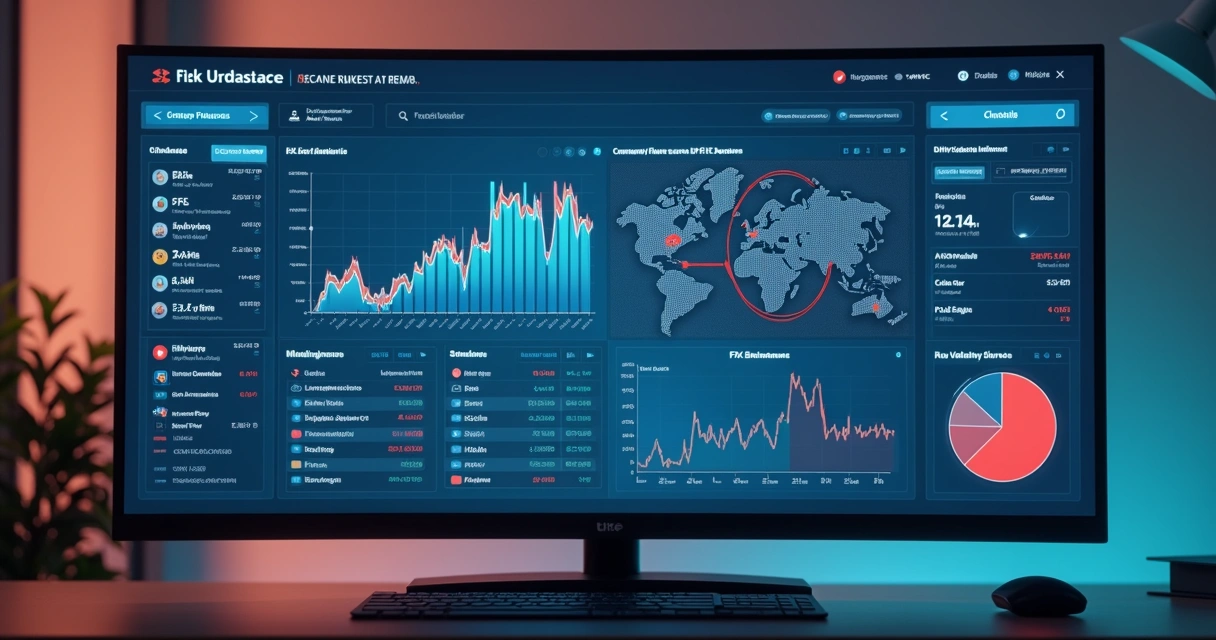
Unified control transforms uncertainty into managed opportunity, and moves the CFO away from firefighting to proactive leadership.
Better projections, fewer surprises: the link between cash flow and exposure
Unified risk tools aren’t just useful for market management; they directly enhance traditional treasury forecasting. When every risk position is logged and quantified with modern analytics, the finance office can align projected cash flows against real underlying exposures.
What follows is higher confidence in liquidity planning, stronger negotiations with counterparties, and fewer end-of-quarter surprises. According to the UHEDGE platform’s results, integrating control over market, credit, and liquidity risks helps to “minimize margin calls and reduce stress on cash accounts”, all while supporting accurate working capital management.
Governance and compliance: from patchwork to bulletproof
One system. One version of the truth. That’s the real power of unified risk control.
Decentralized environments force compliance teams to audit multiple sources, manually resolve discrepancies, and explain inconsistent histories. In unified environments, every action is tracked, mapped to policies, and available for audit at any time. This not only accelerates internal reviews but builds external trust for stakeholders.
UHEDGE systems help in verifying governance completeness, integrating risk thresholds and alerts, and delivering standardized end-of-day reports for full transparency.
Tips for CFOs thinking about moving to unified systems
Before migrating or integrating new risk technology, the smartest CFOs ask a few fundamental questions:
- How fragmented are current market risk monitoring processes?
- Where have timing and data gaps directly led to financial loss?
- Does the company have a process for end-to-end exposure mapping, or are positions simply “known” but never seen together?
- How fast can the office respond, and act, when a major price event hits any core market?
- Is there consistency between cash flow forecasting and true risk positions?
The best projects start by mapping out these gaps. Next steps include piloting a digital treasury environment with gradual onboarding, focus on process discipline, and ongoing team training.
Impact that goes beyond the bottom line
CFOs who move from patchwork approaches to unified risk management not only reduce operational friction, but also empower themselves and their teams. Decision cycles shrink from weeks to minutes. Internal debates shift, focusing on strategy rather than data integrity. Compliance burdens become process-driven, not personality-driven.
For those operating in volatile markets, these gains are felt every day. The journey demands more than technology, it’s about discipline, transparency, and a new kind of tactical intelligence.
UHEDGE is committed to this philosophy, offering analytics, predictive modeling, and governance—delivering value for every company facing the challenge of modern risk.
Conclusion: The new CFO mandate
The world isn’t slowing down. Price shocks, currency swings, and unexpected market moves will always exist. But CFOs who centralize risk monitoring, forecasting, and action into a single, quantitative system become leaders, not laggards, when it matters.
Unified risk technology, as proven by UHEDGE’s digital treasury and STATERRA’s advisory, helps transform operational chaos into transparency and strategic impact. Those still using fragmented methods are more likely to fill their days with crisis meetings, explanations, and missed opportunity. Those who commit to integrated control gain time, insights, and peace of mind.
For organizations ready to step forward, the next step is to seek a diagnostic consultation, see what unified management reveals, and experience how real-time analytics change decision quality forever. The UHEDGE ecosystem stands ready to help—learn more at our dedicated risk management section or reach out for a personalized demonstration.
Frequently asked questions
What is a decentralized risk management system?
A decentralized approach means exposures and risk positions are managed using separate systems, spreadsheets, or manual processes across different departments. This leads to uneven data quality, slow reaction, and visibility gaps, making timely decisions a challenge.
How does a unified risk system work?
Unified solutions aggregate every exposure—be it currency, commodity, or interest rate—into a single digital environment. These platforms use quantitative models and real-time data to deliver a consolidated view for monitoring, governance, and instant decision support, as promoted by the UHEDGE digital treasury.
Which risk system saves more time?
Unified platforms save more time because they prevent errors, avoid repeated manual updates, and allow for instant scenario analysis. Data is updated in real-time and ready for action, reducing lengthy reconciliation cycles.
What are the main risks of data gaps?
The biggest risks are missed opportunities due to delayed action, inconsistent decisions caused by conflicting data, and compliance issues from incomplete documentation. Over time, these gaps can erode both financial performance and management credibility.
Is it worth switching to a unified system?
Yes, for most companies with significant market exposure. The combination of higher speed, accuracy, stronger governance, and actionable insights means fewer surprises and stronger results. As UHEDGE’s clients have found, unified solutions generate “actions of immediate impact on profit and results” and raise confidence across the board.
Still curious? Expand your perspective with practical tips on commodity hedging from this comprehensive guide. Or challenge your assumptions about currency risk here: why ignoring FX exposure could be costly.