
There is a stubborn idea in the world of risk management. Some believe that unless a hedge is showing positive results on the books every quarter, it is a failed attempt at protection. This view is not only misleading—it can be damaging. It sets companies, commodity producers, and treasurers up to misunderstand what true protection means. The story of a smart, efficient hedge is richer, full of discipline, technology, and years of practical experience. Uhedge brings a clear vision on this, showing that true hedge performance evaluation is a story of risk-adjusted outperformance and not the pursuit of zero loss.
Where the myth begins: the hope for zero-loss hedging
Many companies look at their derivatives book and expect to see constant gains. The impression is simple: if nothing is lost, the hedge is doing its job. If there is an accounting loss, some worry the strategy has failed. But the real world doesn’t work that way.
Hedging is not about erasing loss—it’s about controlling risk.
In the world of commodities and financial markets, price swings are inevitable. What matters is not whether a hedge “wins” in every scenario, but whether it brings stable and higher net results through various cycles compared to simply riding the market unprotected—or using basic, naïve derivative strategies.
The proper lens: evaluating hedge performance beyond the bottom line
To check if a hedge is effective, one must move past the temptation to judge by short-term accounting results alone. True assessment means comparing the outcome of the chosen hedge against known alternatives. The question is: did the company achieve a better net result—called the equivalent price—by hedging, compared to just being exposed to the market? And how did this outcome stand against typical, leveraged derivatives approaches?
The equivalent price is the actual net gain or cost after applying hedge actions, removing the noise of interim price swings. This metric reflects the net impact of all purchases, sales, and associated hedge costs, providing a real measure of strategic value.
Companies such as Uhedge Asset Management, with portfolios targeting agricultural commodities, focus on maintaining a higher equivalent price than what would have been achieved by sitting on leveraged positions or staying exposed. This benchmark is what reveals the true effectiveness of advanced hedge operations.
Case in point: Uhedge Asset Management’s coffee portfolio performance
Let’s illustrate with a real example from Uhedge Asset Management—its AI-driven coffee hedging strategy. During a period marked by unstable geopolitics, inflation, and erratic tariffs in 2025, the temptation to focus on quick wins or short-term “profit” was strong. Yet, the AI-based approach kept sight of what mattered: outperforming both full exposure and static derivatives as measured by equivalent price.
Their method anchored decisions in data, not gut instinct. Hedge positions—whether to buy, hold, or sell—were executed with discipline, following signals from proprietary AI models. The coffee portfolio, constrained by risk limits (for example, never exceeding 30% leverage at any point), delivered a consistent pattern: the net result over months was higher than both the unhedged performance and simple, leveraged derivatives.
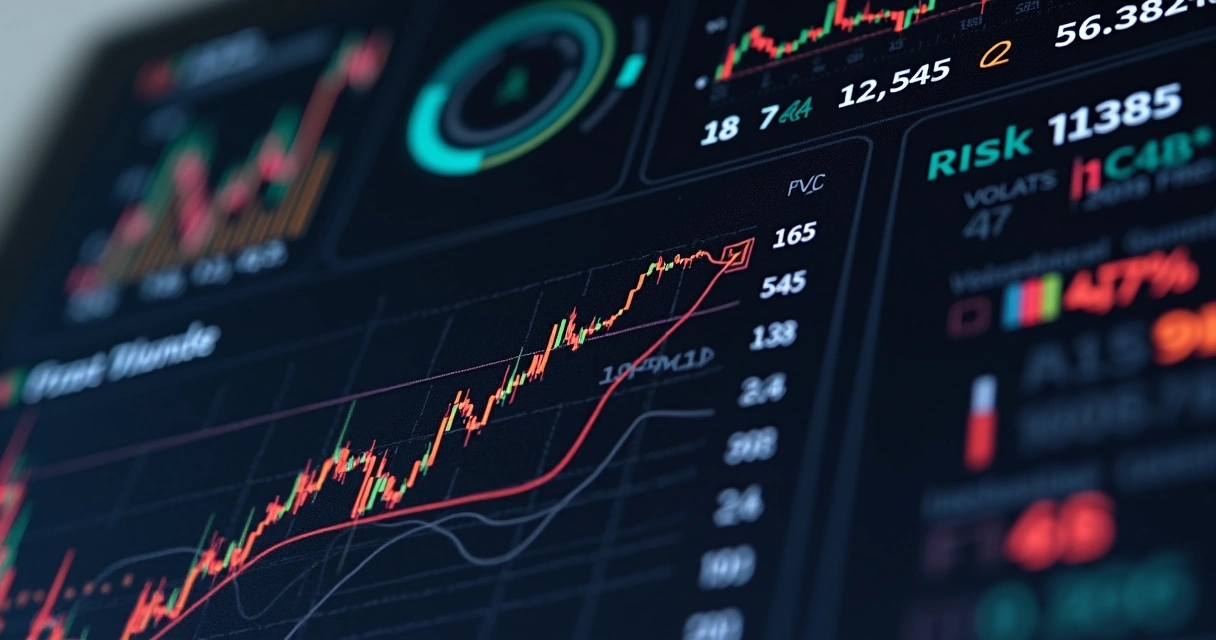
This was no flash in the pan. The approach tracked buy/neutral/sell signals, applying them with discipline while other players chased short-term market moves. Even when volatility spiked, or macro events knocked prices out of expected ranges, the coffee portfolio’s equivalent price stayed ahead—showing the edge that comes from combining rigorous science, AI modeling, and trading discipline.
Three pillars of smart risk management
A successful hedge stands on three foundations: technology, scientific rigor, and discipline. Uhedge’s model is not about guessing market directions or reacting emotionally to crises. Instead, each step is shaped by proven quantitative tools and a strict, rules-based framework:
- Technology: Real-time risk dashboards, powered by AI and quant models, continuously calculate prices and risk exposures for currencies, interest rates, and commodities. The unified platform aggregates market exposures and translates complex market information into instant, data-driven recommendations.
- Scientific rigor: Everything is backed by advanced tools from statistics, econometrics, and financial engineering. Risk is modeled carefully to ensure all positions stay within clearly defined parameters. This removes guesswork and sets realistic expectations.
- Discipline: Decision-making is automatic and free from emotional interference. AI-generated buy/sell/hold signals are executed strictly according to pre-set portfolio guidelines. No over-leveraging, no last-minute “hunches,” just methodical action.
This approach was especially effective through the price shocks of 2025. When world events rattled the markets, AI models adapted quickly, generating tactical signals and staying strict on execution—proving robust even through unpredictable events.

Why not aim for zero loss?
There is a natural appeal in the idea of never taking a loss. But in risk management, this is a false target. Markets will always surprise, and over-adjusting in search of perfect hedges usually leads to missed gains or unnecessary costs. The goal is not to achieve zero loss, but to achieve a consistently better outcome than the alternatives available in each market environment.
Hedging should be dynamic, always adjusting to new data but within well-understood guardrails. By focusing on long-term net benefit—as shown by a better equivalent price—teams can navigate the ups and downs without losing sight of their real objectives.
Those interested in practical ways to protect their operations—and avoid common missteps—can learn more in guides like the practical hedge protection guide and discover common hedging mistakes at errors companies make when hedging commodities.
Key benefits of the disciplined, AI-driven strategy
Looking deeper into the Uhedge approach, several important outcomes become clear:
- Consistent outperformance versus unhedged or naïve leveraged alternatives, measured through net equivalent price over time.
- Predictable cash flows and better control of margins, even when global volatility hits unexpectedly.
- Full compliance and transparency, with every position and risk metric visible in a unified digital environment.
- Alignment of interests—since Uhedge only wins when the client wins, strategies are always constructed for robust, long-term impact.
A practical, process-driven methodology also means less reactivity during crises. When markets turn unpredictable, it pays to rely on AI-based models and data-driven decision making, rather than emotional responses.
Setting proper expectations: what a good hedge really delivers
No tool or system can promise to completely erase all market impacts. But, as seen in Uhedge’s real-world cases, the goal is clear: outperform by maintaining a robust, disciplined, and data-driven process over time.
A good hedge wins for the client by consistently outperforming the alternatives, not by avoiding every single loss.
Expecting a “perfect” outcome misleads teams and can cause them to give up sound strategies or trigger harmful shifts in approach when a single event disrupts results.
For readers wishing to develop a risk culture built on robust analysis and discipline, helpful content can be found in materials like risk management resources and insights on the next gen hedge effectiveness indicators.
Conclusion
The narrative that surrounds hedging often tells of quick wins and zero losses. But in a complex, unpredictable world, true protection comes from measured, intelligent action rooted in sound data and unwavering discipline. Uhedge’s approach—using advanced AI, strict scientific principles, and human trading expertise—demonstrates that real success comes from achieving solid, risk-adjusted results over time. Proper hedge performance evaluation is about achieving better net outcomes than the basic alternatives, not chasing the illusion of being “right” every time.
If you are ready to bring robust science, technology, and practical insight to your risk management, it’s time to connect with Uhedge and start reshaping how your business approaches protection and performance in the markets.
Frequently asked questions
What is hedge performance evaluation?
Hedge performance evaluation is the process of measuring whether a risk protection strategy actually succeeds compared to realistic alternatives. It usually means checking the net result—the equivalent price—after applying hedges, versus what would have happened without any hedge or with a basic leveraged derivatives position.
How do I measure hedge effectiveness?
Effectiveness is best judged by comparing the actual outcomes of a hedged approach with those of being unexposed or using naive derivative strategies, focusing on net equivalent price over time. This assessment moves beyond simple profit and loss to reveal true strategic value.
What are good indicators of hedge success?
Key indicators include: higher equivalent price compared to benchmarks, consistent performance in volatile conditions, predictability of cash flow, and full visibility in a unified system. These markers show when a hedge does more than just reduce loss—it adds measurable value.
Is a perfect hedge always zero loss?
No, a perfect hedge does not mean zero loss. Attempting to avoid all loss can result in missed opportunities or unnecessary cost. The aim is consistent, risk-adjusted outperformance against realistic market alternatives, not chasing impossible “zero loss” targets.
How can I improve my hedge performance?
Improvement comes from combining technology, disciplined processes, and scientific modeling—such as using a risk system with real-time analytics, AI-based recommendations, and clear, customized rules for each portfolio. Learning from experts and reviewing successful case studies, like those of Uhedge, also provides practical insight for stronger risk management strategies. You can find more on setting and maintaining robust strategies in signs your portfolio needs a hedge.