In a world where financial landscapes shift without warning and volatility is a daily reality, companies exposed to FX, interest rate, and commodity risks find themselves seeking not just safety, but an edge. They crave discipline, scientific rigor, and real-time clarity. The answer many have found is a robust portfolio risk management platform—one that fuses Mark-to-Market (MtM) calculation with advanced stress testing. Where traditional controls falter under complexity, the new era of solutions, such as those championed by Uhedge, turn risk into a measurable, manageable, and even profitable variable.
Visibility and control in real time are not optional—they are the difference between resilience and surprise.
Understanding portfolio risk management and its necessity
Portfolio risk management is the science—and art—of controlling unwanted swings in value due to unpredictable market movements. For companies active in FX, debt, or commodities, these risks are not mere line items. They drive cash flow, strategy, and even survival. A sophisticated risk platform does more than monitor numbers; it supplies a complete environment that aggregates risk exposures, calculates real-time MtM, and orchestrates stress tests and scenario analyses on demand.
A study published by the British Actuarial Journal notes the value of market-based assessments for both assets and liabilities, especially in times of stress, highlighting the need for continuous valuation and risk oversight. Companies unable to precisely measure and anticipate risk events may suffer from unexpected cash flow disruptions and missed opportunities for defensive action.
Portfolio risk management is fundamentally about transforming uncertainty into a pathway for disciplined decision-making. And when stress testing is integrated, it moves from being reactive to truly proactive.
The power of MtM calculation in risk management
MtM calculations—marking every position to its real, current value—are the heartbeat of modern platform-based risk management. When implemented correctly, they allow organizations to:
- React instantly to market turbulence, seeing the financial impact as it unfolds
- Aggregate exposures across FX, interest rates, and commodities, breaking down silos
- Fulfill regulatory and internal governance with daily accuracy
Research by the National Bureau of Economic Research points out an interesting side effect: while continuous MtM can increase transparency, it can sometimes introduce herding behavior among traders. This observation underlines the necessity of combining MtM metrics with robust scenario analysis—helping organizations stay rational when markets become irrational.
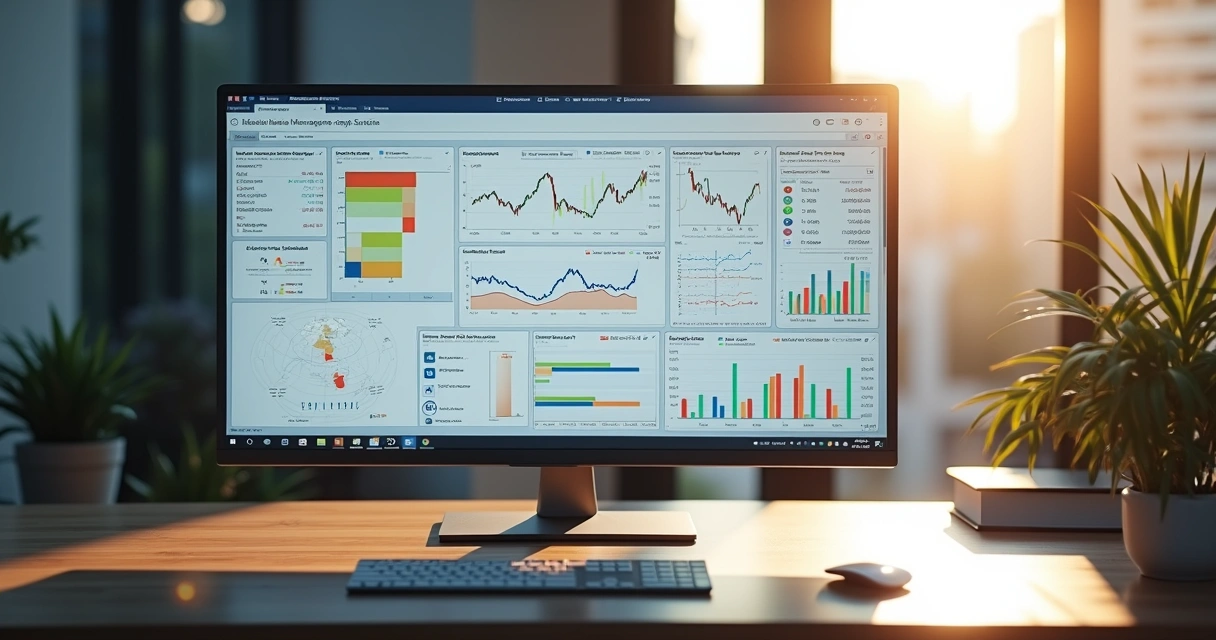
On a daily basis, platforms such as the one provided by Uhedge apply advanced quantitative methodologies, utilizing state-of-the-art statistics, econometrics, and financial engineering. Their unified risk dashboards allow for automated end-of-day reports, clear audit trails, and the ability to view Greeks (Delta, Gamma, Vega, Theta), volatile market surfaces, and futures curves, all in synchrony.
Why companies need stress testing in volatile markets
When the unexpected strikes—a surprise rate cut, geopolitical crisis, or commodity supply shock—the damage is often not in the event itself but in the failure to anticipate its impact. This is where stress testing becomes invaluable.
Stress testing is the process of simulating adverse market scenarios to reveal portfolio vulnerabilities long before crises materialize. It forces a portfolio to answer tough questions: What happens if the dollar plunges 10% overnight? If interest rates jump by 300 basis points? If commodity prices double within a month?
A Federal Reserve Bank of San Francisco research note confirms that more than 80% of institutional stress tests target traded portfolios, and the most common scenario revolves around major interest rate changes. This practice is not theoretical; it is central to both regulatory compliance and prudent risk culture.
Within the Uhedge platform, stress-testing tools allow users to see in seconds how mark-to-market positions, margin requirements, and P&L would shift under tailored shock scenarios for FX, rates, or commodities.
Stress testing is the radar—seeing through the fog of market events before they hit the balance sheet.
How unified platforms bring MtM and stress testing together
Many companies still manage FX, interest rate, and commodity exposures as separate silos, relying on spreadsheets, outdated internal tools, or fragmented vendor solutions. This fragmentation causes discipline to leak—and often, risks go unseen until it is too late.
Unified risk management environments bring all exposures under a single, audited lens. At the core is the integration of MtM with scenario analysis and AI-powered automation. Platforms like Uhedge’s unify pricing, risk aggregation, compliance monitoring, and real-time updates in one place.
- All positions—currency, rates, commodities—are visible in a unified dashboard
- Risk mapping and scenario impacts are calculated instantly, with P&L attribution for each shock
- Clients can set parameters for restricted-risk modeling, enforcing discipline across portfolio strategies
- Real-time governance and audit logs ensure that compliance gaps are closed
This orchestration ensures that even in the face of volatility, decision-makers can rely on up-to-date, actionable data—backed by AI algorithms trained to recognize patterns, timing, and risk profiles that match the company’s unique needs.
Key benefits of dashboard-driven risk control
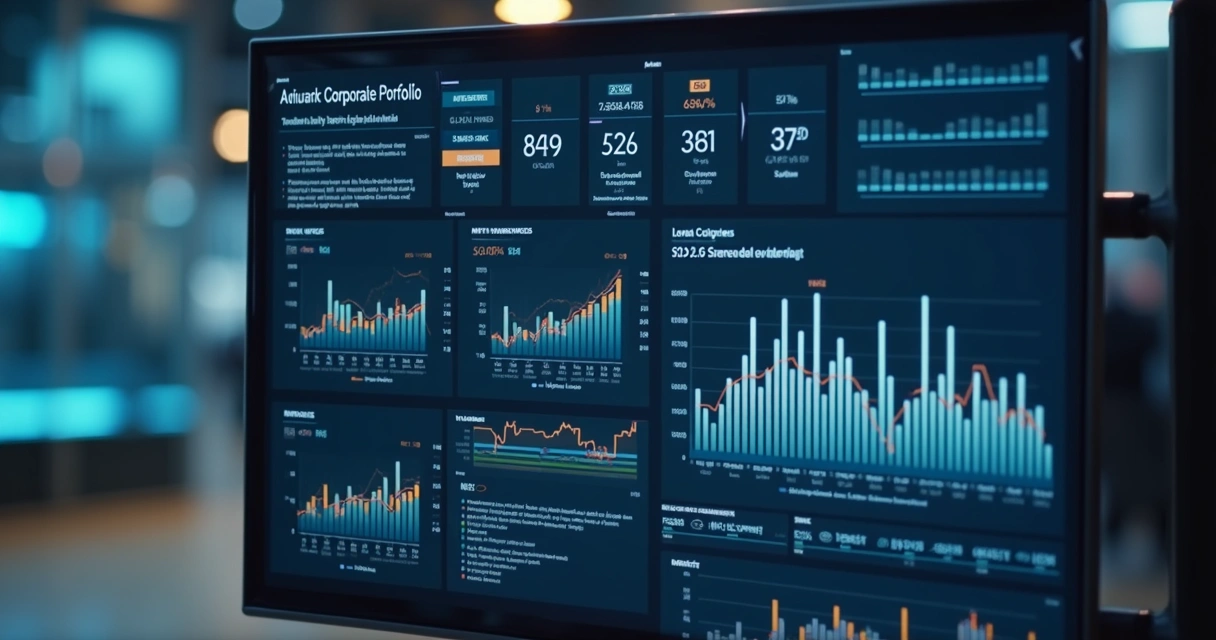
The real magic of a platform like Uhedge’s comes alive in its unified dashboard. But what does this mean in concrete terms for the companies who use it?
- Instant risk aggregation: Consolidate all exposures and view their aggregate effect, including worst-case shifts, through intuitive risk maps.
- Automated reporting: Generate end-of-day (EOD) and ad hoc reports with a single click, meeting both compliance requirements and internal governance needs.
- Vulnerability identification: Visualize potential breakpoints across multiple risk factors, such as currency shocks or commodity price volatility.
- Advanced scenario analysis: Test how portfolios respond to varied market disruptions, ensuring allocations and liquidity can weather the unknown.
The dashboard is not just a convenience—it is the central nervous system for disciplined portfolio oversight and preemptive risk defense.
AI-driven platforms and automation: The leap to the future
Human intuition, while invaluable, is often overwhelmed by the speed and breadth of modern market data. Algorithms powered by artificial intelligence can process vast datasets, test thousands of market permutations, and deliver actionable, optimal hedging recommendations in seconds.
A typical example from Uhedge: The AI-driven platform not only replicates bespoke derivatives structures but does so instantly for over-the-counter instruments, aligning every recommendation to the company's profile, risk appetite, and market timing.
- The system produces real-time analytics, showing metrics like Greeks, volatility surfaces, and futures curves.
- It runs continuous scenario testing, compressing days of manual analysis into seconds.
- AI-generated alerts guide decision-makers whenever exposures drift beyond set boundaries.
The edge here is not speed alone, but scientific rigor—modeling restricted risk, amortizing market shocks, and keeping the focus on disciplined, data-driven action.
Where human limits end, algorithmic discipline begins.
Compliance and regulatory alignment in modern risk platforms
Risk management platforms today stand at the intersection of necessity and obligation. Regulatory frameworks demand transparency in risk measurement, full audit trails, and proof that companies can withstand plausible adverse events.
Recent research by the Federal Reserve stresses the significance of measuring undiversified risks accurately within MtM credit models. Regulatory agencies expect organizations to show not only that they can measure value-at-risk (VaR) but also demonstrate robust scenario and stress testing.
Uhedge, for example, incorporates automated compliance checks, end-of-day (EOD) reporting, and scenario-based governance verification into its core functionalities. By capturing every aspect of a company’s exposures, and documenting all model outputs, the platform simplifies the audit process and ensures peace of mind under scrutiny.
For readers looking to deepen their knowledge of how risk management strategies evolve in response to compliance demands, the risk management content section on the Uhedge blog offers valuable insights.
Stress testing, asset allocation, and capital planning: Real-world impacts
How does stress testing align with daily decisions? The true value emerges when stress scenarios translate to robust asset allocation, smarter capital planning, and well-timed hedges. For example, if a stress test reveals that a 20% fall in oil prices exposes a company to unacceptable losses, the treasury desk may shift allocation, add layers of hedges, or renegotiate contracts immediately.
AI-powered platforms make this process continuous. Users receive not only scenario-by-scenario impacts but also automated suggestions for portfolio rebalancing. In liquid markets, this supports near-instant adjustment; in private, illiquid contexts, it guides negotiation priorities and insurance overlays. Platforms such as Uhedge constantly analyze, predict, and respond on behalf of portfolio managers, acting as an extension of the decision-making team.
The difference between manual and AI-powered approaches
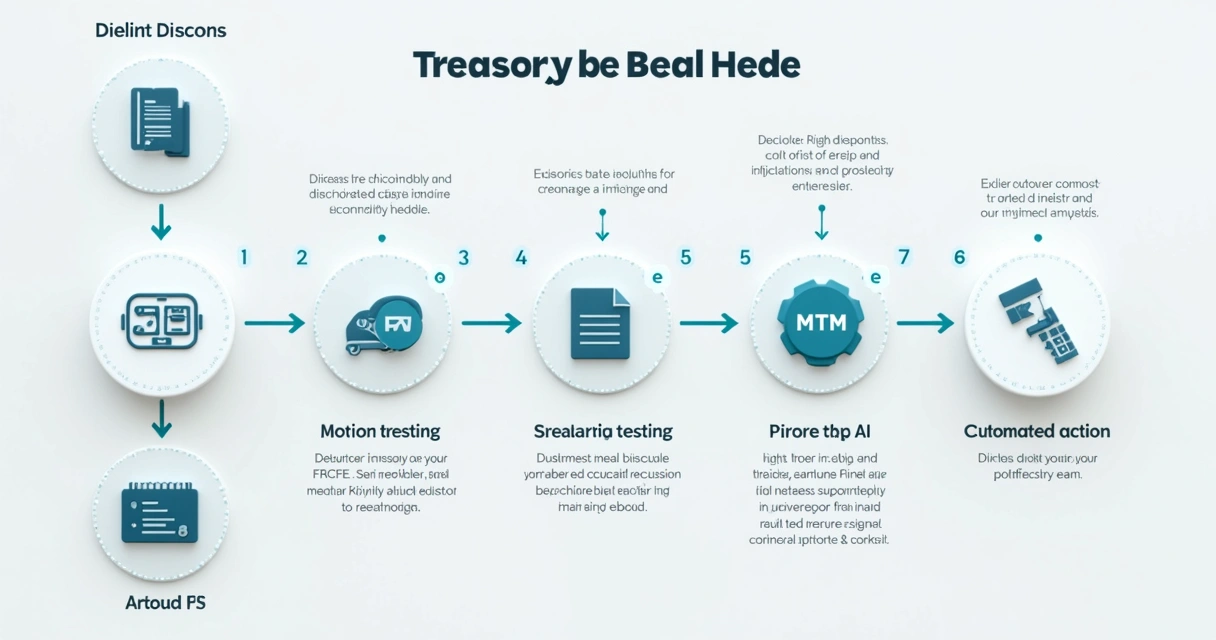
Many organizations still attempt to manage risk through spreadsheets, human intuition, or fragmented tools—a method proven both slow and fraught with error. Manual processes break down in complexity: mistakes multiply, governance gaps widen, and timing opportunities vanish. Traditional risk control is reactive; automation enables proactive, even predictive, risk management.
Integrated solutions—especially those focused on AI and quantitative rigor, like Uhedge—provide:
- Discipline through automation: Continuous compliance, instant scenario calculation, and automatic margin optimization.
- Clarity in a unified dashboard: Every risk metric in one place, across all asset classes, with governance built-in.
- Performance consistency: Algorithms reduce outlier errors and keep execution aligned with the latest market conditions.
- Aligned incentives: Business models where the service provider wins only when the client wins, eliminating conflicts of interest.
For those interested in avoiding the most common pitfalls of manual risk processes in commodity management, the article on hedging mistakes and how to avoid them offers practical lessons.
Case studies: Where stress testing and MtM change the outcome
Real-life applications bring these principles into sharp relief.
- Moderate risk hedging in coffee: By designating precise lots to hedge on NYBOT and restricting maximum leverage, Uhedge’s strategies have consistently outperformed typical leveraged derivatives through a combination of scenario insight and tactical reallocation.
- AI-based trading tactics: AI models in the platform suggest buy, hold, or sell signals in real time, adapting to new data the moment it arrives. The result is not just hedging—but disciplined, intelligent, and timely action.
- Dynamic reallocation during crises: During complex environments like 2025’s global commercial turmoil, Uhedge’s restricted-risk modeling allowed clients to balance across agriculture, energy, and metals dynamically, cushioning shocks that would have otherwise cascaded through P&L.
The empirical and academic evidence aligns: stress testing and MtM, especially when powered by AI and unified risk dashboards, are not luxury items. They are the new minimum standard for firms committed to disciplined, resilient financial decision-making.
For strategies and insights on deciding when a hedge is needed, see these eight indicators that your portfolio needs a hedge.
Conclusion: Taking the next step in portfolio risk management
The transition from manual, slow, or fragmented risk processes to an integrated platform driven by AI and scientific models is not about following fashion. It is about survival, efficiency, and turning risk into a source of value—rather than a source of fear. Tools that unite Mark-to-Market calculation, advanced scenario analysis, real-time dashboards, and automated reporting are changing how organizations see the future: not as a fog of unknowns, but as a map with clear signals, turning chaos into opportunity.
Uhedge’s clients have found in these solutions not just a way to meet regulatory demands, but to gain a real-time edge, reduce operational drag, and add discipline to every decision. Whether in asset management or full treasury outsourcing, the aligned business model ensures that value creation is mutual and quantifiable.
If your organization is ready to transform its relationship with risk, to turn volatility from a threat into a tool, now is the time to connect. Dive deeper into practical risk management advice at the hedge strategies guide or start the journey toward a smarter, data-driven treasury by reaching out for a consultation or demonstration. The future belongs to firms who treat risk not as a hazard, but as an opportunity—and Uhedge is ready to be your partner on that path.
Frequently asked questions
What is a portfolio risk management platform?
A portfolio risk management platform is a comprehensive system that allows companies to monitor, evaluate, and control their risk exposures across currencies, interest rates, commodities, and other asset classes in real time. These platforms aggregate all relevant data, automate risk calculations, perform stress tests, and generate actionable reports—enabling organizations to anticipate market shocks, fulfill compliance, and allocate capital with greater precision.
How does MtM work in risk management?
Mark-to-Market (MtM) in risk management means updating the value of every position to reflect current market prices, at least daily. This approach provides a truthful, up-to-date picture of portfolio value and risk, ensuring decisions are made on today’s reality—not on stale cost bases. By connecting MtM to scenario analysis, managers visualize immediately how portfolio value would shift under different market events, making risk management not just precise but actionable.
What is stress testing in portfolio management?
Stress testing in portfolio management involves simulating adverse events or extreme market conditions to gauge the vulnerability of a portfolio before real-world crises occur. This practice helps identify weaknesses that regular risk models might miss and guides decision-makers toward timely adjustments. For example, platforms like Uhedge automate this process, generating forecasts and recommendations based on real-time market data and carefully chosen scenarios.
Are there free portfolio risk tools available?
Some basic risk tools can be found for free online, often limited to historical data analysis or simple scenario calculators. However, for companies seriously exposed to market volatility, professional platforms deliver incomparable depth—offering unified dashboards, MtM integration, stress testing, and compliance-ready reporting, features that free tools usually lack. When the goal is reliability, scale, and disciplined control, investing in a dedicated solution is almost always justified.
How to choose the best platform for stress testing?
Choosing the best platform for stress testing starts with evaluating the complexity of your exposures, the granularity and flexibility of scenario analysis, and the ability to integrate with MtM calculations. Look for platforms with advanced analytics, machine learning capabilities, automated reporting, and proven governance functions—qualities found in offerings like the Uhedge Digital Treasury system. Always consider whether the business model is aligned with your success, openness to custom strategy onboarding, and demonstrable performance in real market conditions.