
The business landscape for companies exposed to price volatility—especially in agribusiness, energy, and industry—has never been more complex. Every day, CFOs and risk managers shoulder a growing mountain of tasks just to keep commercial decisions in line with ever-fluctuating market prices. Manual processes, often centered on spreadsheets, still dominate many companies’ approaches, especially when it comes to pricing, exposure monitoring, and decision timing. However, as seen in projects like UHEDGE and its digital treasury ecosystem, advanced AI-powered tools provide new ways to simplify, unify, and strengthen financial risk strategy.
This article examines seven frequent pitfalls found in manual risk strategies and contrasts them with what AI-driven approaches offer. For those interested in deepening their understanding, the risk management section of our blog provides several practical guides and case studies.
1. Fragmented data and the loss of the big picture
It is common to hear that “the information is somewhere, just not together.” Companies in commodity-linked sectors often manage a patchwork of physical contracts, futures, options, FX exposures, and counterparties. Manual processes demand careful entry and reconciliation, often across countless disconnected spreadsheets and reports. This fragmentation means operational, market, and credit risk data remain scattered, never presenting the full scope to decision makers.
- Operations tracked in different files for trade types (e.g., one for grains, another for fuel hedges).
- Emails and phone calls fill gaps, leading to inconsistent records.
- Physical positions and derivatives are handled in entirely separate workflows.
The absence of a centralized control point increases the risk of missing hidden exposures. In comparison, platforms like that from UHEDGE provide a single environment that aggregates both paper and physical trades, allowing managers to actually see and measure their total risk in real time.
One view. One version of the truth.
2. Slowness in reporting and missed timing
Timing matters. In trading or procurement, even a few hours of delay could mean the difference between a strategic win and a costly oversight. Manual workflows—collecting data, consolidating it, running Excel macros, emailing summaries—often require hours or days. The pace of global price changes and events does not stop for spreadsheets to catch up.
Recent events have shown the pressure CFOs feel. Market shocks or currency swings demand immediate action. When teams prepare and review numbers only monthly, or worse, once a quarter, the lag means reacting rather than anticipating.
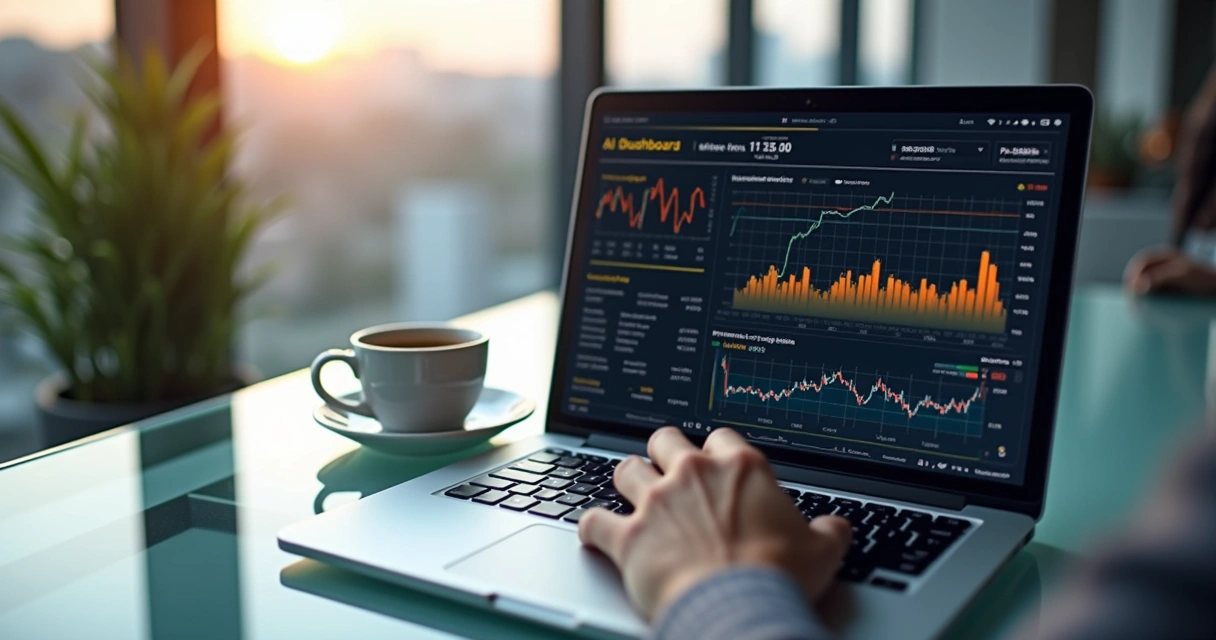
Automated platforms equipped with AI can process real-time market data, update exposures instantly, and alert for key thresholds right when they matter. With these systems, strategies can be adjusted at the exact pace of the market, supporting a more dynamic approach.
3. Human error and the cost of manual calculation
A keystroke in the wrong column. A missed formula reference. Even the most diligent team is not immune to mistakes. Manual risk management, by nature, relies on individuals for accuracy, and the complexity of commodities-linked contracts exacerbates the odds of costly errors.
- Fatigue and pressure multiply risk during busy periods.
- Formula links break, causing silent data errors.
- Pricing models are not easily reviewed or updated across all historical deals.
Incorrect data entry is more than an inconvenience. History is filled with examples where one clerical error snowballed into reports missing millions. By comparison, an automated AI solution applies the same calculation rigor every time, using proven models tested against live market data. UHEDGE, for example, applies quantitative rigor so portfolios reflect real exposures, not just a best guess.

4. Outdated risk models and limited scenario planning
The world changes. Yet many manual methods rely on old Excel files first built years ago, only mildly updated since then. As new instruments enter the market, or regulatory guidance shifts, internal teams can struggle to keep risk models up to date. One risk manager recently admitted that “the scenario table hasn’t changed in three years,” even though their company’s exposure profile tripled in complexity.
AI-driven systems constantly learn from the latest data and adapt, running advanced simulations like stress testing and scenario analysis almost instantly. In contrast, spreadsheet-based strategies often limit the company to a handful of basic ‘what ifs’—leaving many new risks hidden, unmeasured, and uncontrolled.
5. Limited transparency and weak controls
When information lives in personal folders or localized files, transparency is lost. This causes serious concerns not only at the CFO level but also for auditors, compliance officers, and even potential business partners. Manual methods cannot easily track every change, access, or authorization related to a position or trade.
- Version control problems—no one knows which is the “final” spreadsheet.
- Manual approvals open the door to unauthorized deals slipping through.
- Audit trails are patchy at best, reconstructed retroactively.
Centralized digital treasury platforms, like the one offered by UHEDGE, register every adjustment, keep user access traceable, and allow the creation of reliable audit trails that meet modern corporate governance requirements. This support not only helps with security but also allows managers to trust the numbers in front of them—knowing exactly where data came from and who approved each step.
6. Reactive, not strategic: Why timing matters more than ever
Manual risk management tends to foster a reactive mindset. With data slow to collect and difficult to consolidate, commercial decisions are made after volatility strikes—not before. Companies find themselves forced to react instead of acting on opportunities or early warnings.
Forward-thinking companies today desire to become more “proactive.” As covered in this analysis of commodity hedging mistakes, timing is the single most valuable advantage available. That is what distinguishes companies making steady gains from those only reacting to crises.
AI-powered risk tools help managers spot changes in trends, volatility surfaces, and pricing relationships as they happen, not just after the fact. This capability shortens decision cycles and encourages true strategic agility.
7. Higher costs and reduced competitiveness
It may feel less expensive in the short term to continue using manual tools, but hidden costs add up quickly. These include:
- Additional staff time spent on data entry and reconciliation
- Consulting hours fixing broken models or patching up audit issues
- Money left on the table from missed hedge opportunities or delayed execution
Moreover, as teams grow and exposure types multiply, scaling up manual processes only multiplies errors and stress.
Adopting a digital treasury approach as in the case of UHEDGE allows companies to contain operational costs by automating routine work and concentrating human effort on insight and strategy. Quantitative, algorithmic tools once reserved for major banks now empower companies across size brackets, offering advanced analysis and risk pricing in-house.
For those looking to build effective protection strategies, the practical hedge guide provides more detail on creating efficient layered strategies for volatile markets.
When does manual risk management still make sense?
In rare situations, such as a very small business with minimal exposure, or when transactions are few and infrequent, a simple manual process could still suffice. The same applies for one-off or pilot projects, where the cost of a full solution outweighs benefits. However, as soon as exposures rise, counterparties multiply, or timing grows important, a manual approach can no longer keep pace.
For most businesses, the strategic and financial case for switching to automated, AI-driven platforms is clear. They enable real control, speed, and predictive intelligence. As described in this perspective on fintech and modern hedge technology, the direction of risk management is toward greater integration, not less.
Conclusion
Managing commodity price risk in today’s world is not just about putting numbers in a spreadsheet. It is about staying ahead. Manual methods slow response, increase errors, and often mask the true picture. AI-driven platforms, like those championed by UHEDGE, unify data, speed up reporting, cut mistakes, and encourage proactive strategy. For organizations hoping to succeed in volatile markets, the move to digital risk processes is not just a technical choice but a strategic necessity.
Companies interested in learning how UHEDGE’s scientific approach and proprietary technology can support their treasury and risk decisions are invited to discover more about our full service ecosystem. Book a demonstration or explore our in-depth resources to see how the modern approach can transform your commercial planning.
Frequently asked questions
What is commodities risk management?
Commodities risk management is the practice of identifying, measuring, and controlling the impact of price fluctuations on a company’s operations and profits. This can include managing exposures to physical goods such as grains, energy, or metals, as well as financial contracts like futures and options. Successful risk oversight combines timely data, reliable models, and well-defined processes to protect against unwanted losses.
How does AI improve risk analysis?
AI helps risk managers see changes in the market immediately, process huge amounts of information, and run simulations that test many scenarios at once. Instead of waiting for reports or relying on slow manual calculations, AI provides alerts, forecasts, and deep analytics almost instantly. This helps managers act in time, refine pricing, and make smarter decisions in complex markets.
What are common manual risk mistakes?
Common manual errors include mis-entered data, formula mistakes in spreadsheets, using outdated risk models, missing important exposures, and failing to update reports on time. These errors can lead to incomplete risk views and delayed or poor decisions, especially in fast-moving environments.
Is AI risk management worth the cost?
The investment in AI-powered risk systems usually pays off quickly as companies reduce manual workload, heighten control, and avoid heavy losses linked to late or incorrect actions. While up-front costs exist, ongoing savings from less staff time, fewer errors, and faster decision cycles are significant—especially as exposures grow.
How can I automate my risk processes?
To automate risk processes, start by mapping all current workflows, identifying manual bottlenecks, and assessing data sources. Then review AI-enabled platforms such as UHEDGE’s digital treasury, which can centralize information and apply advanced analytics. Work step by step—migrating core reports, integrating data feeds, and connecting pricing tools—until daily risk monitoring, scenario analysis, and reporting are all automated.