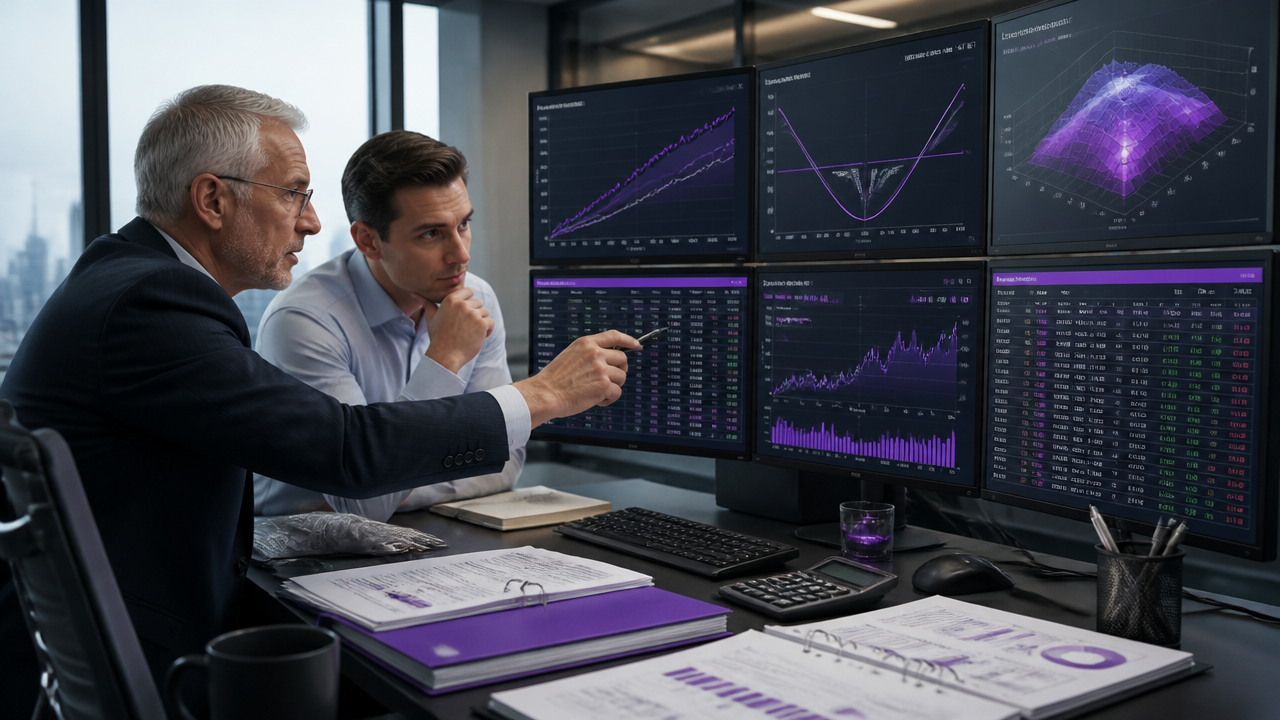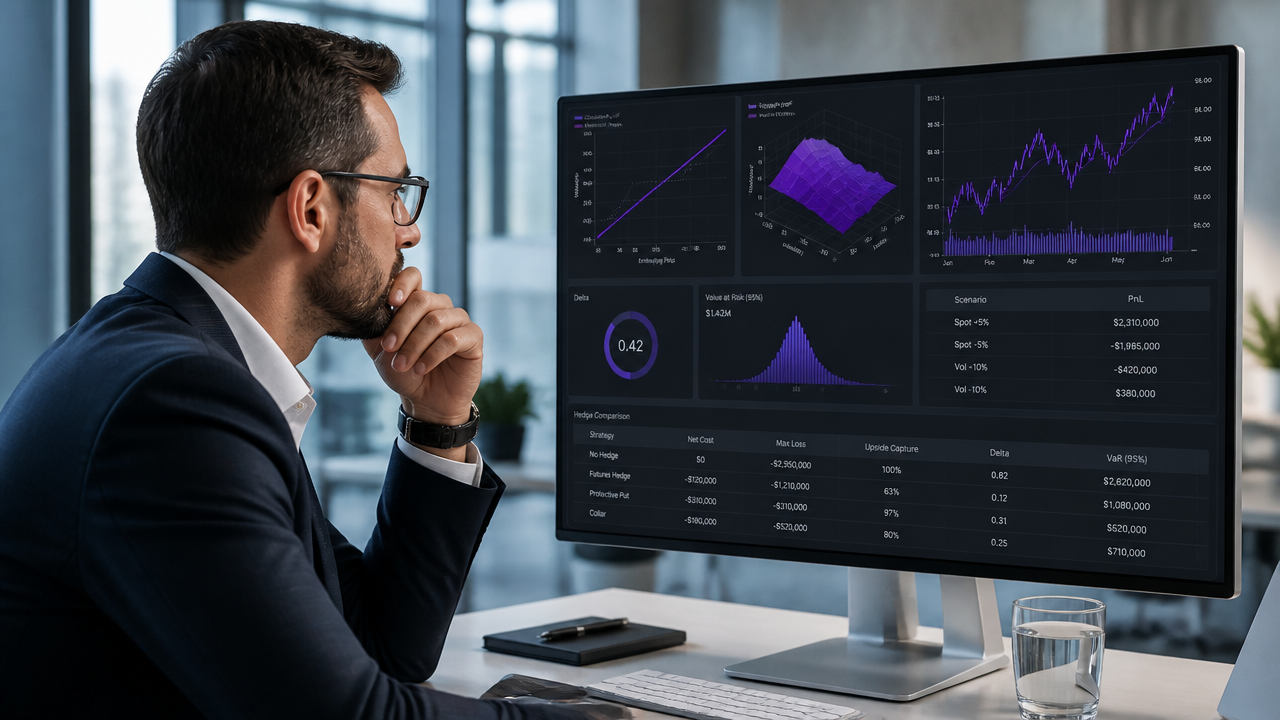
Commodity price predictions are at the heart of strategic decisions for many businesses. The smallest forecasting error can ripple through supply chains, impact cash flow, and disrupt entire financial plans—especially in sectors like agribusiness, energy, and industry. Yet even the most seasoned CFOs often overlook the subtle clues that their predictions are off track. This article brings these clues to the surface, highlighting the subtle—and sometimes not so subtle—warning signs that price projections may be steering a business in the wrong direction.
When the numbers don’t add up
Modern pricing environments demand more than intuition and spreadsheets. Many organizations still operate with outdated tools, fractured data, or overly simplistic models. As a result, their forecasts diverge from real-world prices again and again. What are the red flags? Anyone responsible for managing commodity exposure should watch for:
- Consistently lagging realized prices
- Big surprises after market shifts
- Unexplained P&L volatility
- Persistent “timing” mistakes
- Overdependence on historical data or manual processes
- Poor integration between physical and paper operations
- Infrequent updates in rapidly changing markets
Any of these can undermine risk controls and erode competitive position.
1. Your predictions consistently “chase” the market
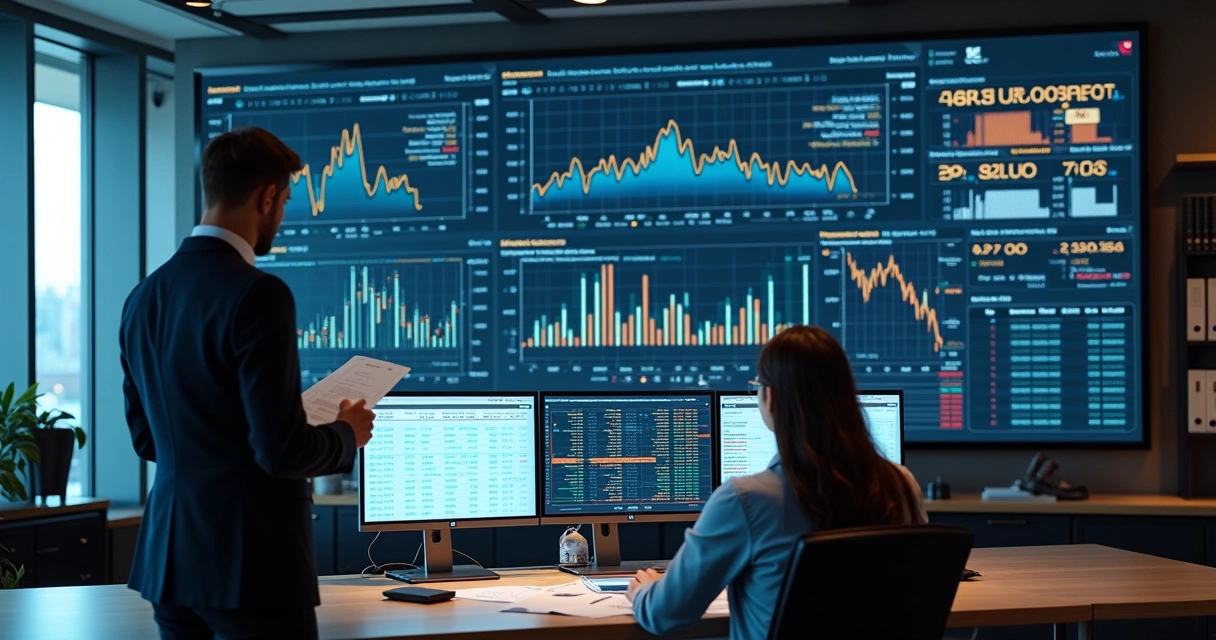
A familiar pattern hits many financial professionals: prices shift, and the company responds too late. Blame “chasing the market”—a tendency where forecasts change only after real movements have already happened. This creates a never-ending cycle of catch-up, erasing the ability to anticipate. In agribusiness, a missed season or misjudged weather pattern can rapidly destroy margins.
If updated projections always follow—not precede—market shifts, something fundamental is broken.
UHEDGE’s experience in trading and advisory highlights this issue for a wide client base, especially those relying on basic risk models. Firms that lack timely integration between big-picture intelligence and granular price triggers are especially vulnerable. For insights into how advanced methods can shift this dynamic, readers may find value in strategies protecting margins in unpredictable markets.
2. Frequent, unexplained profit and loss swings
No business expects absolute price certainty. But frequent P&L volatility—unmoored from any real news or supply-demand change—signals unreliability in price calls. When companies see bigger cash surprises than anticipated, it erodes confidence and complicates daily operations.
The root cause? Most often, fragmented risk monitoring, siloed data, or assumptions that fail to adapt to changing volatility regimes. UHEDGE’s digital treasury platform, for example, identifies and responds to these swings in real time, enabling users to recalibrate before losses spiral out of control. This is particularly relevant in commodities, where physical inventory and financial transactions require unified management.
Sudden, unexplained loss? That’s a signal. Don’t ignore it.
3. Outdated or oversimplified forecasting models
Yesterday’s tools don’t capture today’s complexity. Many CFOs still rely on basic regression models or static spreadsheets. In volatile environments—where climate, politics, and global trade can render past relationships obsolete—historic averages and hand-crafted projections quickly lose relevance.
UHEDGE and STATERRA avoid these pitfalls by applying modern quantitative techniques, like restricted risk modeling, volatility surface analysis, and algorithmic access to derivative structures. These approaches process massive streams of real-time data and use artificial intelligence to catch patterns human eyes will miss.
The world is complex. Forecasting tools must be, too.
4. Blind spots in scenario and stress analysis
When forecasts are built without incorporating robust scenario or stress testing, they become little more than optimistic guesses. Rare but impactful events—drought, war, regulatory shock—devastate unprepared businesses. Typical warning signs include lack of structured contingency planning or “worst-case scenario” modeling.
UHEDGE’s approach focuses on testing portfolios against a wide range of shocks, not just the average outcome. This is especially urgent for firms operating in Brazil or emerging markets, where commodity cycles and external shocks hit hardest. More practical insights into handling turbulent conditions can be seen in this guide on volatility protection.
5. Disconnected or fragmented data sources
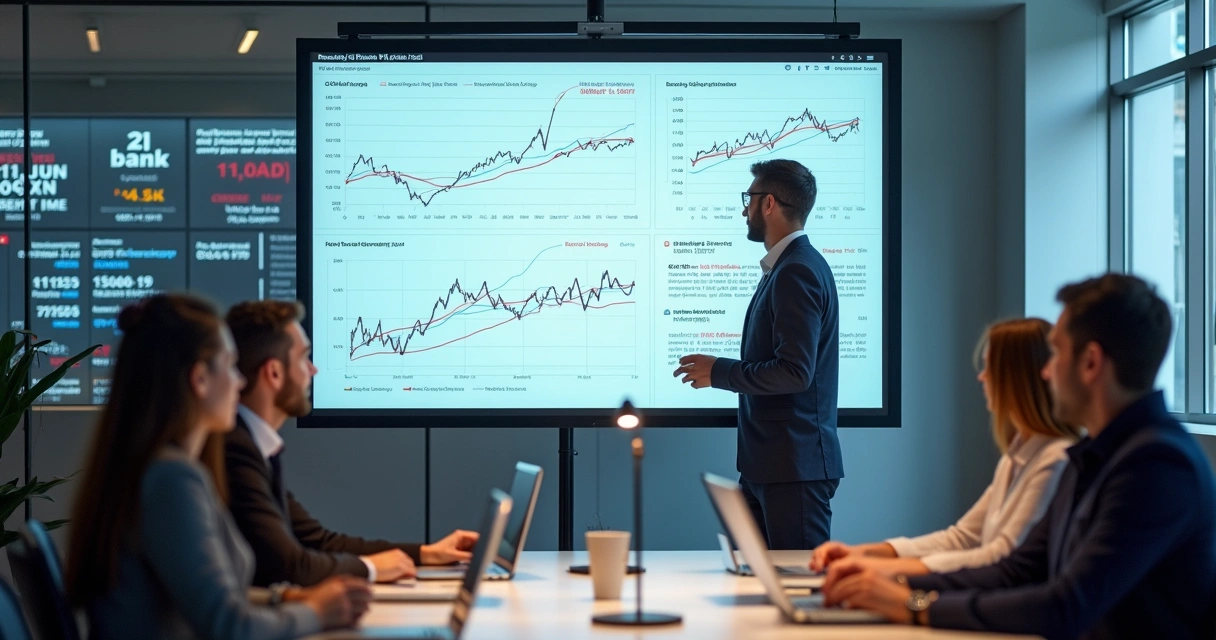
One of the most understated yet damaging signs is fractured information. Many companies keep their physical inventories, derivatives, cash flows, and supplier contracts in separate silos. When systems can’t “see” the whole picture, forecasts almost inevitably go astray.
The digital treasury model championed by UHEDGE aggregates all positions—physical and financial—into one management interface, revealing correlations and risks often hidden in isolated spreadsheets. Businesses that fail to unify their data are forced into reactive decision-making, unable to spot opportunities or risks.
Fragmented data is the enemy of prediction. Unify or risk costly surprises.
6. Ignoring real-time insights for static schedules
Commodities are dynamic. A forecast set at the start of the quarter and ignored until the next meeting is a recipe for pain. Companies stuck with legacy routines may update their outlook only monthly—sometimes even less.
As market conditions evolve rapidly, regularly revisiting price assumptions is necessary. UHEDGE’s software integrates real-time analytics and ensures that position monitoring and scenario analysis are continuous activities, not merely quarterly chores.
- Review assumptions after any significant news or market move
- Make use of Mark-to-Market and volume evolution for fast alerts
- Revise forecasts when volatility surfaces shift or when daily P&L deviates from trend
7. Lack of advanced quantitative or AI-driven methods
One of the clearest signs that predictions are missing the mark is neglecting modern technological advances. Manual modeling can’t keep pace with today's myriad influences: weather, policy, geopolitics, and supply disruptions. True visibility comes with the application of statistical and econometric tools combined with proprietary AI—methods that have proven their worth inside the UHEDGE and STATERRA ecosystem.
Analytical sophistication is not a luxury; it’s foundational for robust pricing, early error detection, and market advantage. Firms that avoid AI and advanced analytics place themselves at continual risk of being blindsided by unpredictable market moves.
Manual methods miss what AI spots in seconds.
Conclusion: Turn warning signs into a smarter future
Commodity price forecasts aren’t just numbers—they’re the compass guiding strategic moves. Recognizing when projections are veering off course is the first step to fixing the underlying processes. Modern frameworks, such as those integrated into UHEDGE solutions, provide faster, clearer, and more accurate insights, unifying commercial and financial perspectives for better decisions.
For businesses ready to end guesswork and bring scientific rigor to price risk, now is the time to discover the UHEDGE Digital Treasury and Risk System. To identify the subtle warning signs in your own process—and to put advanced protection in place—consider taking the next step with a diagnostic strategy session. See how quantitative intelligence can be your advantage. Know more about how science-driven solutions are changing risk management in volatile markets by learning the mistakes companies make and how to avoid them or discover the key risks and opportunities from a local perspective at this resource.
Frequently asked questions
What are common mistakes in price forecasts?
Common mistakes include relying on outdated historical data, neglecting scenario analysis, failing to update forecasts frequently, and keeping data sources in silos. These habits distort price predictions and can lead to sudden losses or missed opportunities.
How can I improve my commodity predictions?
Strong improvements come from using advanced analytics, integrating real-time market data, and unifying physical and paper positions. Methods like volatility surface analysis and AI-driven scenario modeling mark a significant leap in accuracy.
What affects commodity price forecast accuracy?
Accuracy depends on the timeliness, scope, and sophistication of the models used. Unexpected global events, fragmented data, or manual processes can all contribute to prediction errors. AI-based and quantitative systems are proven to adapt much faster to market changes.
When should I update my forecasts?
Forecasts should be updated after any significant market-driven event, changes in supply or demand, or when underlying assumptions no longer match reality. Automation and real-time monitoring in risk platforms, like the UHEDGE solution, help spot the need for change earlier and more reliably.
How to spot unreliable price forecasts?
Unreliable forecasts are easy to identify by checking for persistent gaps between forecasted and realized prices, frequent P&L surprises, and if your processes lack integration or depend on outdated models. Adopting a unified, quantitative, and AI-powered system helps eliminate these pitfalls.