As 2026 begins, international energy markets stand at a crossroad. Fundamentals appear stable on the surface, but a delicate balance runs beneath. Production is set to grow faster than consumption, pointing to a moderate risk of oversupply—an environment requiring careful and continuous risk management. Volatility, often driven by breaking news, overshadows underlying supply-demand signals. In this climate, only organizations with integrated strategies and advanced tools, such as those developed by UHEDGE, can expect to navigate change with confidence.
2025 in review: Headlines over fundamentals
Last year, price movements were less about real shortages or excess. Instead, world events captured the market’s attention—pulling prices up briefly, then settling back down. The US strike on Iran’s nuclear facilities in June sent a jolt through global exchanges. Ongoing tensions like the Gaza conflict kept risk premiums elevated, yet did not result in any persistent disruption to the physical flow of oil. Market inventories remained adequate, with supply proving resilient even under political stress. These dynamics taught analysts and treasuries alike that overreacting to headlines can be costly, while structural changes often emerge quietly.
Supply, OPEC strategy, and Saudi Arabia’s new direction
One of the keystones in the current balance is the position of OPEC, with Saudi Arabia continuing as the main stabilizer. After years of voluntary supply cuts, some market share was lost to non-OPEC producers in 2025. In response, Saudi Arabia adopted a more flexible approach, paring back some of those cuts but holding onto significant spare capacity. This balancing act means OPEC+ can gradually bring barrels back to the market, but reserves the right to step in should prices slide too far. Base scenario forecasts see Brent crude somewhere between $50 and $60 per barrel for 2026, consistent with projections by the U.S. Energy Information Administration and World Bank reports on expected oversupply and inventory growth.
- OPEC’s primary challenge is deciding how much capacity to return without jeopardizing either market stability or its own influence.
- Saudi Arabia’s flexibility acts as a check on sharp downturns—but prevents runaway price rallies when fundamentals are solid.
- This ongoing strategic tug-of-war puts the group in the unique position of both market defender and price-setter.
OPEC+’s overall caution tempers the impact of returning supply, suggesting a mild bearish tendency unless new shocks arrive. Some regional exposures, especially in emerging economies, remain tied to OPEC decisions, emphasizing the need for advanced monitoring such as that provided by quantitative analytics platforms within the UHEDGE digital treasury.
Non-OPEC supply: Americas in focus
On the supply side, the United States holds onto its position as the world's top producer, but with slower output expansion than previous cycles. U.S. producers now focus on maintaining returns and free cash flow, rather than chasing aggressive growth. Productivity improvements and cost discipline are the new norm. At around $60 for WTI, core shale plays remain profitable, yet investor demands for responsible capital allocation dampen expansion.
Latin America offers a mixed landscape. Brazil’s pre-salt fields keep pushing higher, Guyana’s new offshore reserves fuel growth, while Argentina’s recovery is still slow due to infrastructural constraints. One pressing issue stands out: domestic production outpaces refining capacity, resulting in recurring shortfalls for fuels like gasoline, diesel, and at times, natural gas. This exposes these nations to the volatility of international refined product markets—even as their crude exports climb. For those specializing in advanced market analysis, the interplay between regional production surpluses and product deficits is a key area of opportunity for risk-aware strategies, as discussed in UHEDGE's approach to commodity risks and opportunities in Brazil.
Distillates: The sector remains tight
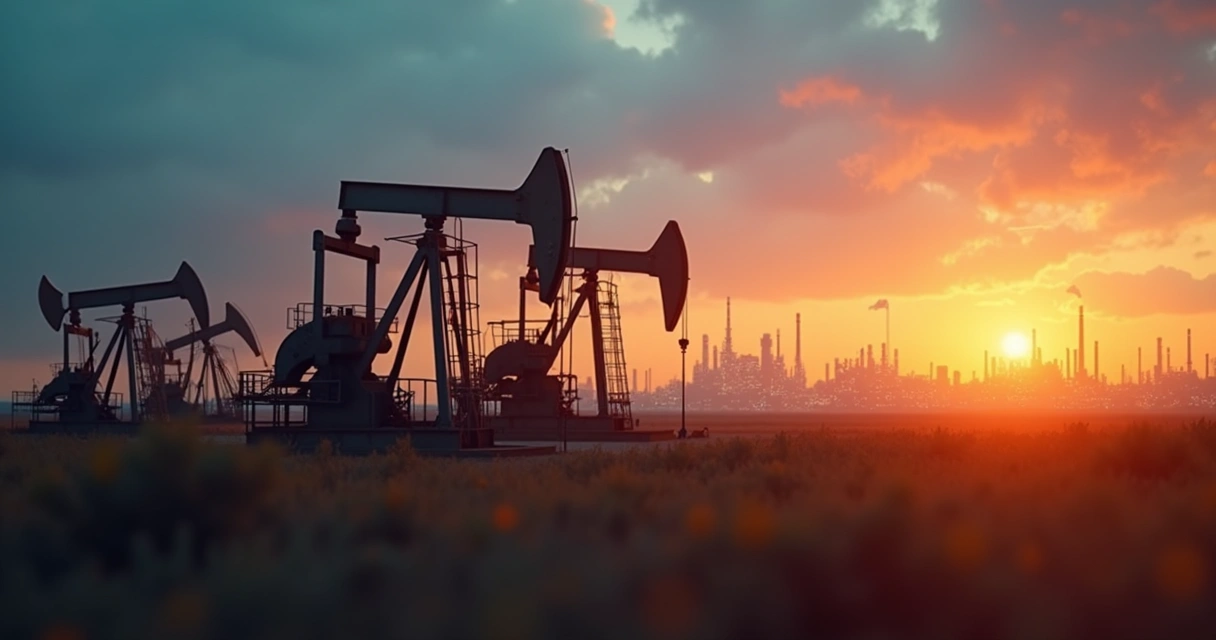
While crude oil appears amply supplied, the refined products market tells a different story. Distillates in particular—diesel and jet fuel—remain challenging. Years of underinvestment, widespread plant closures in Europe and North America, and strict environmental policies have left these regions vulnerable. Even as Asian refineries add new capacity, it is not enough to fully cover the Atlantic basin's needs. This means price spreads for diesel and related fuels are likely to stay wide across Europe and the Americas.
Russian diesel exports still play a stabilizing role in the global balance, but any additional restrictions or disruptions to this trade are quickly felt as jumps in distillate spreads. For risk managers and treasury leaders, understanding these bottlenecks is critical for real-time risk monitoring and decision-making—something the UHEDGE solution delivers with deep market visibility and algorithmic analytics.
The seven forces driving oil in 2026
The direction of the market in 2026 will not be set by just one or two variables. Instead, a mix of global factors, many of them volatile or hard to predict, will decide the year’s winners and losers.
- OPEC’s strategy: Will OPEC focus on defending prices or regaining market share? The choice will directly affect spare capacity and how fast “extra” barrels return.
- Russia-Ukraine negotiations: If restrictions on Russian exports ease, more crude could reach markets, pushing prices lower. Yet a fast or full normalization remains unlikely this year.
- Venezuelan politics and sanctions: Any major political breakthrough could unleash new investment and production. Yet most experts agree that meaningful gains need time and billions in capital.
- Iranian instability: Domestic unrest plus regional standoffs—especially those threatening the Strait of Hormuz—keep the risk of price spikes real and ever-present.
- Demand uncertainty: Base-case outlook is for demand growth of 0.7 to 0.9 million barrels per day. If locomotive economies like China or AI-fueled tech globally surprise on the upside, growth could reach 1.2 million barrels daily. But slowing real estate and manufacturing in China, as discussed in World Bank estimates, mean risk is to the downside.
- Global financial volatility: Interest rate moves, currency swings, and inflation all tie directly to affordability and consumption. Unexpected spikes or credit squeezes will test even the most stable of treasuries.
- Regulatory and ESG policies: The continued advance of environmental standards in major markets reduces demand for some refined products but increases uncertainty around investments, capacity, and trade routes.
Expectations for price: Tight, but not tense
Both the EIA and World Bank put their 2026 Brent projections near $59–$60 a barrel, well down from earlier years, driven largely by anticipated supply surpluses and weakening demand growth. That said, most risk models suggest a wide band for potential deviations. Political flare-ups, unexpected outages, or sudden swings in emerging market demand could send brief, sharp shocks through global markets.
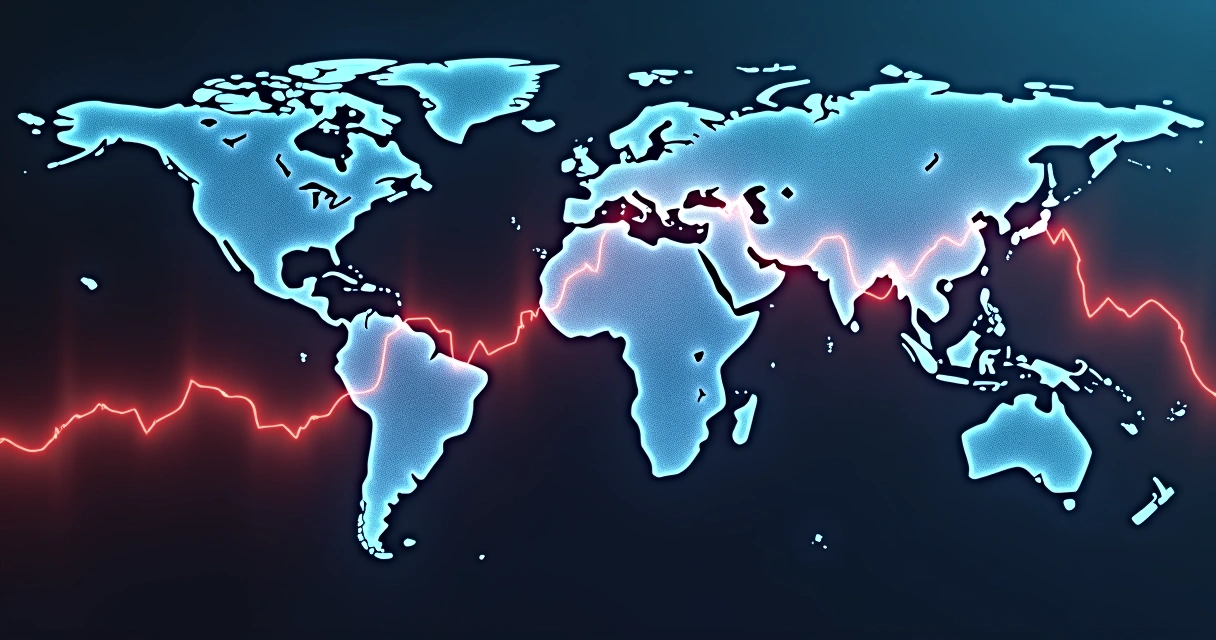
What stands out is how dependent the trajectory of the year is on a handful of political and macroeconomic “wild cards.” Most likely, the market will remain oversupplied but manageable, with enough slack in the system to cushion most physical disruptions. Where tightness continues is in the distillates sector, putting a premium on reliable suppliers and flexible trade routes.
For those in the business of active market analysis—such as readers of the UHEDGE insights on global markets and commodity trends—the conclusion is clear:
Smart risk management is not about reacting to headlines, but about reading the links between crude, refined products, geopolitics, and macro data.
Conclusion: The imperative of strategic agility
2026’s oil market story is not one of shortages, but rather of a fragile balance—modest oversupply and ongoing uncertainty. Crude appears plentiful in most base-case forecasts, while distillates stay structurally tighter in Western markets. Real risk—both upside and downside—will originate from Russia, Venezuela, Iran, and China. The organizations best positioned to thrive are those using integrated tools and scientific rigor to anticipate movement rather than chase it.
Treasuries equipped with advanced AI-driven risk systems, like those built by UHEDGE, will be best placed to capture opportunities, dampen shocks, and preserve financial consistency in an unpredictable time. Readers who want exclusive research, market intelligence, or tailored risk solutions can explore further by subscribing to the UHEDGE newsroom or contacting the team directly. Companies seeking deep commodity strategies can reference related research, such as strategies for commodity margin protection or hedging metals market risk. Take the next step toward robust performance and predictable outcomes, and make UHEDGE or STATERRA partners for a disciplined future.
Frequently asked questions
What factors influence oil prices most?
Oil prices are mainly influenced by supply-demand balance, geopolitical risks, economic growth, OPEC and major producer strategies, and the costs or disruptions related to logistics and refining. Currency fluctuations, global inventory levels, and changes in policy—such as sanctions—also play significant roles.
How is global supply affecting the oil market?
Global supply is growing faster than demand, resulting in moderate oversupply risk for 2026. OPEC+ and U.S. producers both contribute, but disciplined output management, inventory buffers, and flexible response capability act as stabilizers. Refined product bottlenecks, especially in distillates, create regional stress even when overall crude supply looks comfortable as shown in World Bank market analysis.
What are the top risks for oil in 2026?
Major risks include a breakdown in Russia-Ukraine talks, political instability in Venezuela and Iran—with a focus on maritime choke points like the Strait of Hormuz—and the economic performance of large consumers such as China. Regulatory changes and unexpected supply chain disruptions can also flip market dynamics rapidly.
How can I invest in oil markets?
Investment options span direct exposure to energy stocks, futures, options, or commodity funds, as well as contracts tied to benchmark crude. Hedging platforms, often tailored for treasuries and corporations, allow for structured price protection and portfolio balance. For smart, model-driven participation, consulting tools like UHEDGE provide advanced digital treasury features and analytics for improved visibility and risk strategy.
Is oil demand expected to rise by 2026?
Base-case projections for 2026 suggest demand will grow modestly—roughly 0.7 to 0.9 million barrels per day—but the pace is slower compared to previous years. Upside risks stem from emerging economies and global technology expansion, while downside risks include weaker industrial recovery, especially in China, persistent financial uncertainty, and evolving policy on energy transitions.