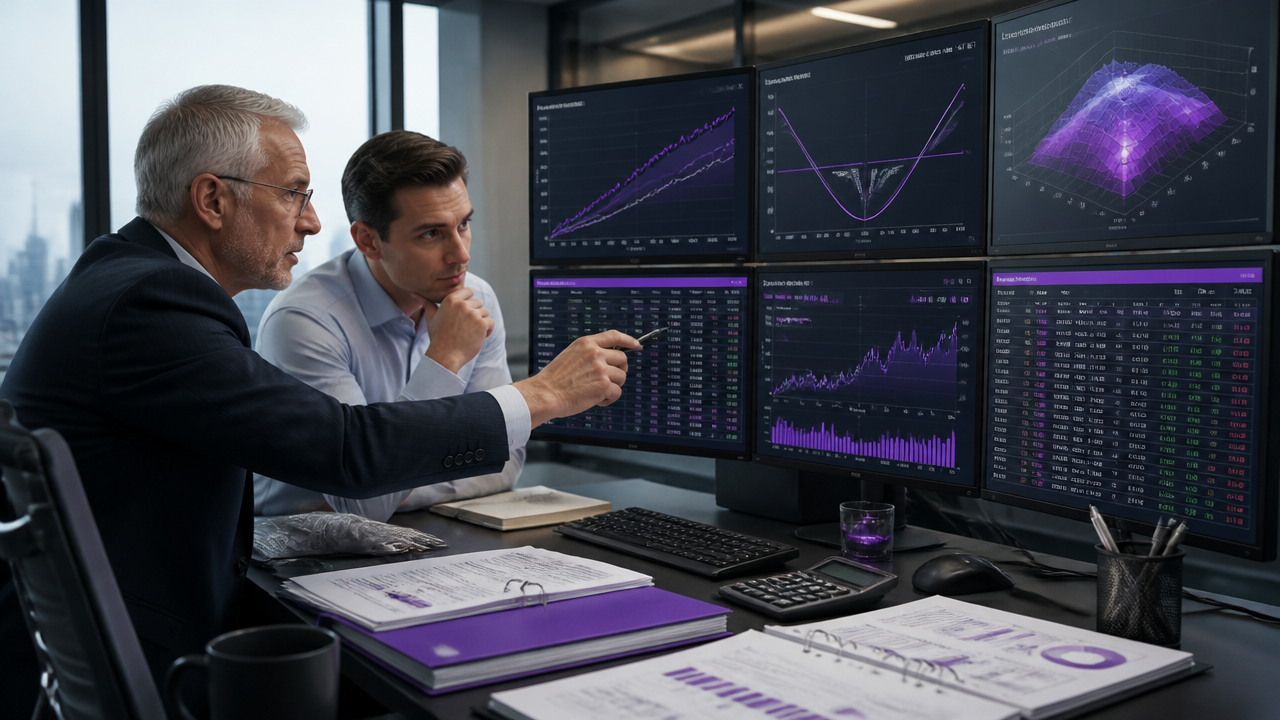
Modern financial markets demand more than just quick reaction—they require clarity, resilience, and strategic rigor, all delivered in real time. What sits at the heart of this disciplined environment? The pricing engine. Today, trading solutions, like those developed by Uhedge, have redefined how organizations manage risk, automate price determination, and keep pace with the relentless fluctuations of FX, commodities, and rates.
This guide clarifies the concept of the pricing engine, its evolving architecture, and how it transforms commercial strategy for asset managers and enterprises alike, responding not only to economic complexity but to the call for a unified, intelligent digital treasury solution.
Understanding the pricing engine: The brain behind automation
A pricing engine, at its core, is a sophisticated computational system that determines the fair value of financial instruments. While the traditional outlook saw it as a simple calculator for spot prices, the new generation takes things further. It ingests streaming market data, applies quantitative financial models, incorporates risk parameters, and delivers actionable results—automatically, consistently, and without emotional bias.
Uhedge, with its dual commitment to proprietary AI and quantitative rigor, delivers an integrated environment where risk modeling and pricing logic are both transparent and adaptable. This is more than software—it's the architecture for a complete digital treasury and the foundation for corporate decision-making under uncertainty. The engine supports a vast suite of products: from FX spot and forwards to derivatives like swaps, average price options, accumulators, and structured strategies such as fences (combined option positions).
How real-time market data powers accurate price discovery
Financial prices are ephemeral—what’s true at one millisecond may be obsolete the next. This reality makes real-time data ingestion not just desirable but essential. The best pricing engines monitor live feeds from exchanges, OTC data providers, and news sources, capturing every tick in FX rates, commodities benchmarks, interest rates, and even volatility curves.
In the Uhedge system, the pricing engine parses these feeds, running advanced statistical and econometric routines. Proprietary algorithms, honed by nearly two decades of market experience, convert raw market signals into actionable pricing, using models that integrate observed and forecasted volatility, forward curves, and scenario weights for stress testing. This integrated real-time approach ensures every price produced reflects the latest realities and risk factors.
Automation, risk management, and recommendation: The modern engine’s core features
From price calculation to dynamic recommendation
Today, a pricing engine no longer just spits out a number—it actively guides risk decisions. In Uhedge’s platform, after market data is converted into preliminary values, an internal logic—rooted in quantitative modeling—applies boundary conditions and risk tolerances. This step integrates individual account or desk preferences, maximizing hedging effectiveness while reducing unwanted exposure.
What happens next is what sets a system like Uhedge apart: the AI layer generates strategy recommendations. Should a trading desk execute a vanilla option or a fence? Should exposure be maintained, rolled, or partially closed? The engine not only computes all pricing scenarios but, based on client profiles, market structure, and historical analytics, proposes the optimal action, backed up by transparent rationale.
Key features that take automation further
- Dynamic pricing logic: Continuously recalculates derivative and spot values using the latest market information and underlying risk metrics (Greeks—Delta, Gamma, Vega, Theta).
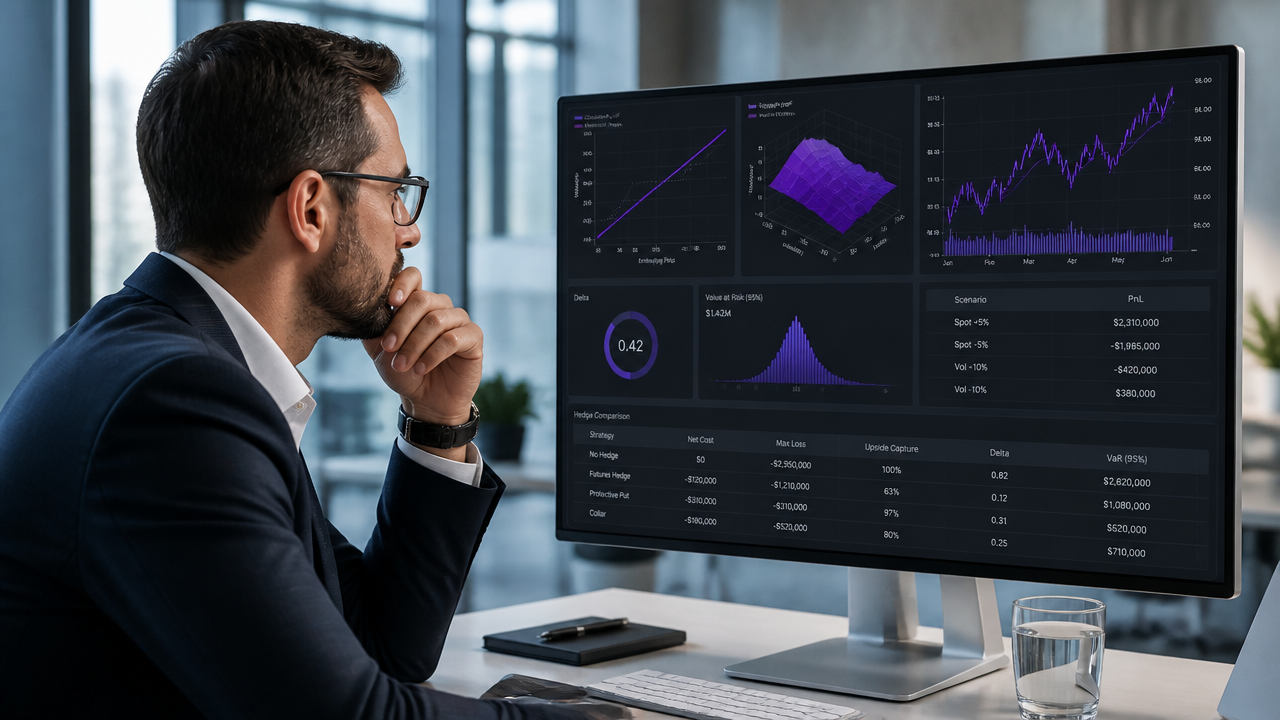
- Scenario testing and stress analysis: Users can simulate shifts in underlying prices, volatility, or interest rates, with dashboard visualizations showing P&L impacts.
- Margin and liquidity management: Automated margin call projections track current and incoming requirements, optimizing treasury reserves and cash flows.
- Analytics suite: Delivers interactive risk maps, P&L attribution by instrument or portfolio, and end-of-day (EOD) automated reports for compliance and governance reviews.
- Workflow automation: Bridges front, middle, and back office requirements, with toolsets for reporting, exception alerting, and audit trails—all in a unified, intuitive interface.
This collective ecosystem offers not just efficiency, but measurable performance in both risk reduction and revenue consistency.
The right engine brings discipline to every market decision.
Integration with ERP, CRM, and digital governance
Pricing machines cannot live in isolation anymore. The demands of audit, reporting, and enterprise-wide governance have forced systems like Uhedge’s to open up, tying into ERP (Enterprise Resource Planning) suites, CRM (Customer Relationship Management) tools, and broader digital treasury ecosystems.
Through API-driven connections, the platform connects trading desks, finance teams, and risk managers under a single view—so offers and exposures are visible and auditable, from front office negotiation to back office clearing. Integration ensures consistency: When new hedging trades are booked, all documentation, pricing validation, and governance checks are automatically triggered and archived for compliance.

This approach meets the most current standards for financial control, helping firms tackle both regulatory expectations and internal governance mandates, reducing human error while boosting transparency.
Benefits for asset managers and corporates alike
The quest for accuracy, clarity, and security in pricing and risk management touches all market participants. Both asset managers and corporate treasurers face constant tests of judgment and resilience. Here’s where platforms like Uhedge deliver unique advantages:
- Decision quality: Automated recommendations, grounded in quant techniques, reduce the noise around pricing, allowing teams to focus on strategy, not process.
- Consistent compliance: The unification of pricing, booking, and documentation ensures every operation passes governance and regulatory checks.
- Fewer errors, less rework: By removing manual intervention, automated systems shrink risk stemming from operational lapses or missed market opportunities.
- Scalability: As business complexity grows, the engine flexes—adding more instruments, new currencies, or changing risk preferences—without scaling headcount or manual overhead.
- Aligned incentives: Particularly in Uhedge’s case, the business model is “win-win”: client success is directly tied to platform performance, with no hidden conflicts of interest.
According to the Federal Reserve’s November 2025 Financial Stability Report, advancements in AI-powered trading tools, while promising for risk reduction and market insight, also require close monitoring to prevent unwanted systemic effects. This underscores the role of robust, transparent systems that track every parameter and keep controls in human hands—a standard the Uhedge platform fully embodies.
Features and dashboard views: What users actually see
When users log into a sophisticated pricing system, what do they find?
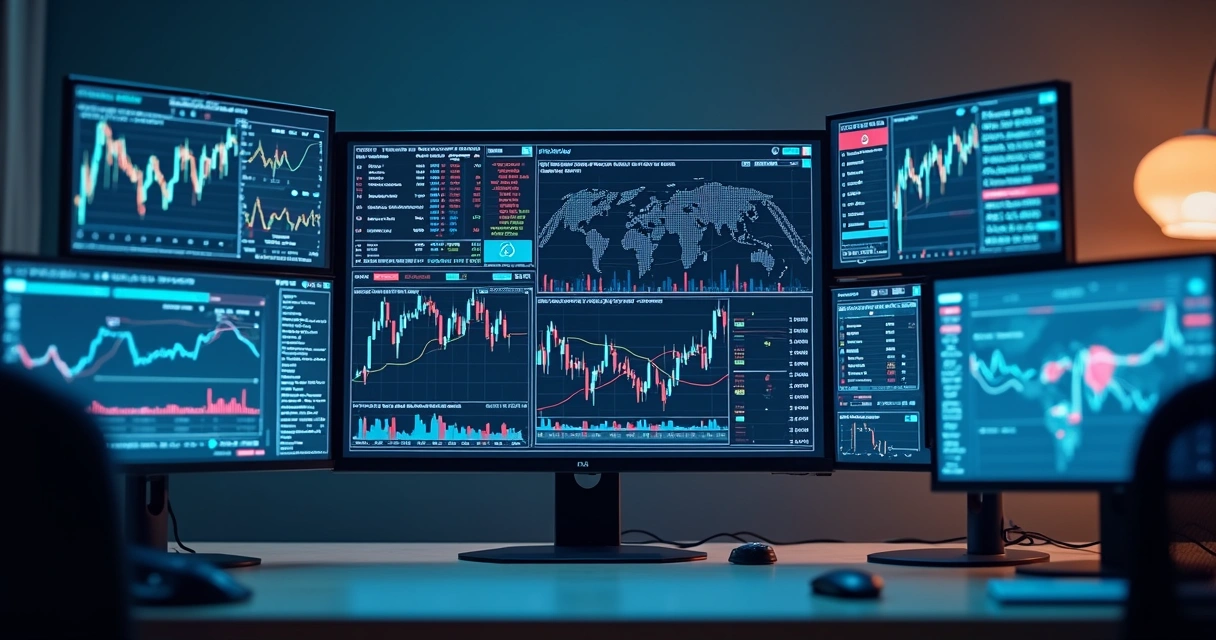
- Unified dashboard: FX, rates, and commodities exposures, all side by side, synced to real-time market curves and news.
- Position monitoring: Color-coded tables showing hedged book, exposure by desk or instrument, at both spot and forward value.
- Analytical modules: Drill-down panels with interactive volatility surfaces, risk maps, and scenario sliders (what would a 3% drop in EUR/USD do to margin calls?).
- Deal lifecycle tracking: Status of pending, matched, and settled trades, with electronic audit trails linking every action to responsible parties.
- Automated reports: End-of-day files for finance, compliance, and external auditors, all templated and error-checked.
Visibility breeds trust and mitigates operational risk.
Real-world use cases: Commodities, FX, and rates
The practical impact of a pricing engine is best seen in its use across different asset classes. Uhedge’s client stories illustrate how an integrated approach supports a strategic edge—and delivers robust results even in turbulent markets.
Commodities: Structured hedging in volatile markets
Let’s consider a portfolio manager overseeing agricultural commodities such as coffee or grains. By configuring the engine for specific risk limits and margin tolerances, the system automatically recommends and prices structures suitable for hedging—say, an average price option strategy for coffee exports. Quant models run performance scenarios and output not just a price, but the expected risk-reward profile and suggested contract sizing.
As detailed in our practical commodities hedge guide, such a systematic approach enables users to keep ahead of volatility, proactively capturing opportunities and maintaining robust protection through market shocks.
FX and rates: Integrating data, models, and compliance
For corporates exposed to currency swings or rate shifts, real-time pricing of spot, forward, and swap structures is enabled via the same agile platform. The system pulls live FX curves, calculates implied forwards, and lets treasurers run “what if” simulations: How does a sudden move in EUR/USD or US interest rates affect the bottom line? The platform instantly displays dashboard analytics, enabling instant reaction and portfolio adjustment.
Actual client experiences have revealed substantial cost savings and productivity benefits—sometimes up to 70% reduction in hedge costs—through automated margin optimization and strict discipline in risk management, as shared in testimonials and use cases published by Uhedge.
And for portfolio managers aiming to apply AI for tactical execution, technologies like deep reinforcement learning, as summarized in a recent review of algorithmic trading research, open even more potential, especially when guided by institutional-grade oversight as seen in Uhedge’s approach.
Expert-led onboarding and strategic extension
Adopting advanced pricing automation isn’t just a plug-and-play decision—it requires careful onboarding and alignment with each client’s risk appetite, liquidity profile, and operational context. Uhedge’s process starts with a detailed risk diagnosis, tailoring every facet to the specific financial objectives of each portfolio or business line. This expert guidance ensures operational continuity and upholds the “win when you win” philosophy that defines the Uhedge experience.
The onboarding journey delivers more than mere technical integration; it means inheriting two decades of global financial intelligence, continuous monitoring, and full transparency, supporting clients in times of both calm and crisis—precisely when robust decisions and measurable outcomes matter most.
What makes a pricing engine effective in the real world?
As business and regulatory requirements grow, only platforms built on scientific, quantitative foundations and transparent processes will stand the test. Not all systems are equal: the real test comes in how the engine adapts to market dislocations, crisis episodes, and shifting compliance environments.
By offering a single managerial environment, discipline in every step, AI-driven recommendations, and full audit trails, firms like Uhedge deliver not just comfort, but confidence—turning the challenges of pricing and risk management into an opportunity for margin growth and sustainable performance. Organizations using advanced engines will shape tomorrow’s markets: their results will reflect not only speed, but clarity, accuracy, and strategic resolve.
For those who want to deepen their knowledge of risk management practices and the practical use of derivatives, numerous insights can be found throughout the Uhedge blog—see, for instance, the categories on risk management and derivatives, as well as practical examples in guides such as strategic hedge guides and glimpses into hedging in metal markets.
Conclusion: Transforming complexity into clarity and results
Modern pricing engines, like the one at the heart of Uhedge, have become the undisputed standard in pricing, risk oversight, and decision support for trading platforms in all sectors. By uniting real-time data, advanced analytics, strict controls, and seamless integration, they lift risk management from a defensive function to a potent driver of margin and corporate advantage. Those who harness these tools are better placed to thrive—deciding faster, more clearly, and always with discipline.
For any treasury, trading desk, or asset manager ready to transform complexity into clarity, the right step is to partner with teams that combine quantitative depth, advanced automation, and decades of applied expertise. Uhedge invites forward-thinking organizations to start with a personalized diagnosis and join the move toward truly intelligent, result-driven trading solutions.
Frequently asked questions
What is a pricing engine?
A pricing engine is a computational system that calculates the value of financial contracts such as trades, derivatives, or asset exposures, using current market data, quant models, and risk preferences. Unlike manual calculations, it automates pricing, risk assessment, and even suggests tactical decisions for hedging or trading. The modern variant serves as the “brain” of digital treasury management, monitoring real-time changes and keeping operations both swift and compliant.
How does a pricing engine work?
A pricing engine works by collecting real-time data from financial markets, such as FX, commodities, or rates, and applying mathematical models and AI algorithms to determine fair prices of instruments. It considers both external conditions (volatility, curve shifts, external news) and internal policies (risk limits, asset allocation rules). Advanced engines, such as Uhedge's, then make automatic recommendations—proposing the most appropriate hedging or trading action—while also generating the compliance reports and governance checks businesses require.
What are the benefits of advanced pricing engines?
The main benefits include constant accuracy, reduced error, and greater agility in decision-making. Advanced pricing platforms let organizations minimize manual intervention, boost transparency, and act faster on market shifts. They also unify risk, pricing, and operational workflows—supporting compliance, audit-readiness, and scalable performance as business grows.
How to choose a pricing engine for trading?
Choosing a pricing engine depends on the complexity of assets traded, the need for AI-driven recommendations, compliance standards, and integration with existing ERP, CRM, or treasury systems. Consider platforms that deliver real-time analytics, robust scenario testing, automated documentation, and proven expertise. Uhedge stands out for its focus on quantitative depth, AI-driven automation, and client-aligned incentives—representing a strong option for organizations prioritizing risk discipline, transparency, and measurable results.
Are pricing engines worth the investment?
Yes, for firms exposed to volatile financial markets, pricing engines pay for themselves through better risk control, fewer errors, time savings, and measurable improvements in financial outcomes. They also bring best-in-class governance and compliance benefits, reducing costs linked to external errors, regulatory breaches, or missed market opportunities. Studies have consistently shown that automated pricing and risk tools yield both operational and strategic advantages—especially when complexity grows and market speed intensifies.