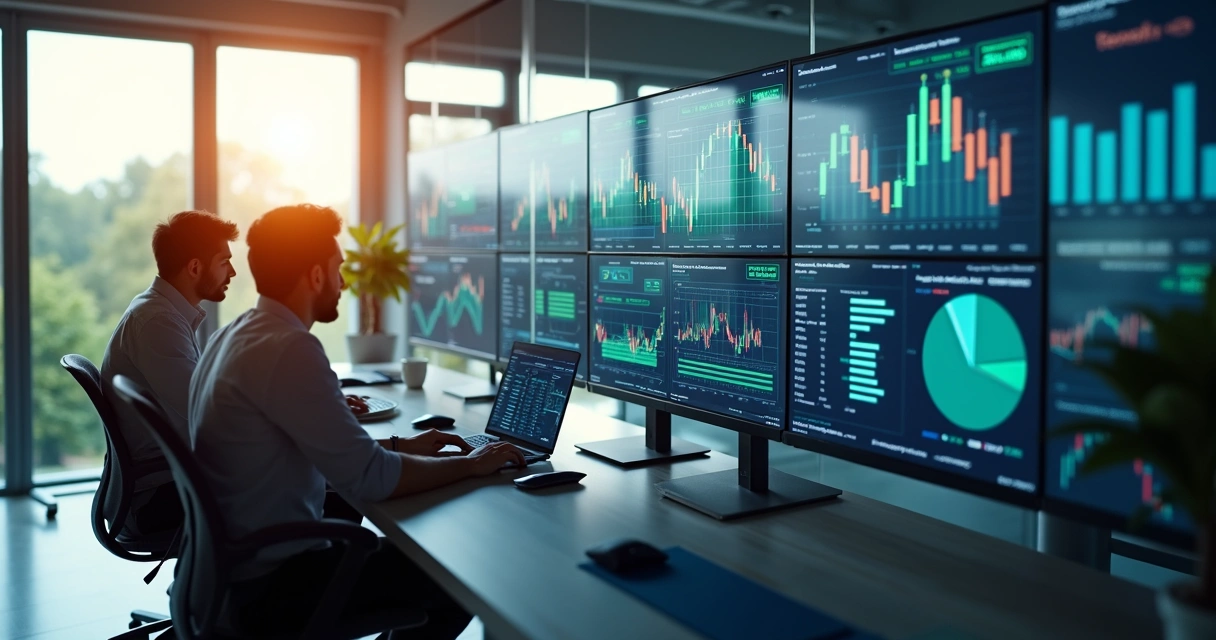
For decades, only the largest corporations could afford to blend financial technology, data science, and risk systems. The landscape is changing fast. By 2026, digital treasury isn’t just a boardroom tool for world-spanning conglomerates. Instead, regional operators in agribusiness, energy, and the industrial sector are taking real steps towards proactive risk control and digital financial management.
Challenging the myth: Is digital treasury only for multinationals?
A common story repeats among many regional CFOs: “Our operation is too small for advanced financial management software.” This belief, while comforting, is giving way to data.
Recent studies reveal that nearly 40% of mid-sized agribusinesses in emerging markets now use, or plan to use, digital tools for exposure management by 2026. The benchmark is shifting. Cases from Latin America and Eastern Europe, especially in grain trading and food processing companies with annual turnovers between $50 million and $500 million, show adoption rates doubling in three years.
As UHEDGE demonstrates through its ecosystem, the sophistication offered by automated solutions is no longer reserved for the Fortune 500. AI-driven pricing engines and portfolio analytics are now built to scale—so much so that even firms with modest export volumes can gain from them without heavy upfront investment.
Digital treasury is no longer big business property.
When is a company ‘ready’ for automated hedge systems?
There isn’t a universal rule, but real-world patterns have emerged. Companies tempted by the advantages of a digital treasury often recognize three clear factors.
- Exposure to at least two sources of market risk (for example, currency plus commodity price, or interest rate plus energy price)
- Unpredictable working capital swings caused by market shocks or weather events
- Need for recurring reports on risk, mark-to-market, and cash flow projections
These factors aren’t confined to global enterprises. In practice, even those with 50,000 tons of yearly soybean trades, or logistics operations with multi-currency imports, feel these pressures. Internal finance teams hit the ceiling of spreadsheets and ad-hoc dashboards fast. At that threshold, integrated and automated tools become not just helpful but almost unavoidable.
UHEDGE has tailored its solution to bridge exactly this gap, merging technical depth with interfaces that speak to regular finance professionals and not just quant specialists. To clarify some differences and best-practice scenarios, the efficient currency protection strategies guide is a reference point on the progressive adoption curve.
Real-world case scenarios: Not too big, not too small
Consider these scenarios, built from actual cases in companies that, a decade ago, managed everything in Excel.
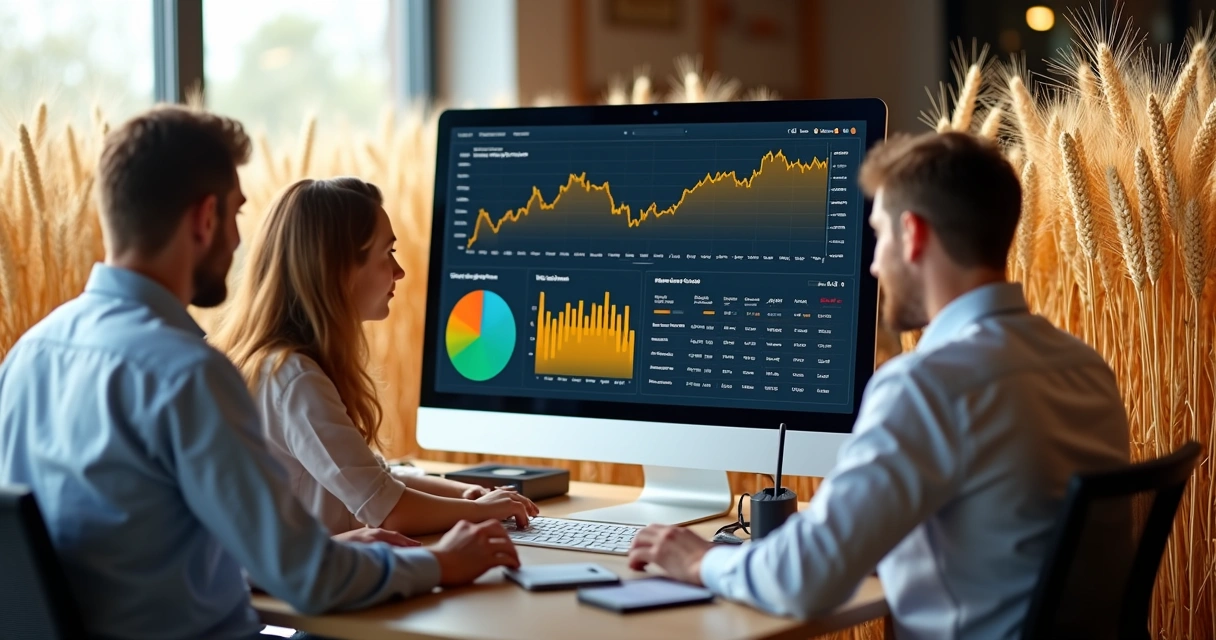
Mid-tier agribusiness: A company with $130 million turnover, moving soybeans from farm to port. Changing climate patterns sparked huge pricing swings in futures. They adopted automated deal recording, integrated live market feeds, and portfolio risk reporting. As a result, finance meetings shifted from daily panic-mode over missed signals to confident decisions. A small treasury team could finally match timing of contracts with hedge actions, improving cash flow predictability across the seasons.
Regional food processor: This business, sourcing grains, juice, and packaging, used to quote deals off a five-day-old price sheet. By adding algorithmic access to up-to-date OTC prices via UHEDGE’s Digital Treasury, pricing is now instant, less error-prone, and defensible. The CFO states, “Now, our bankers no longer warn us that we’re catching the wrong end of market swings.”
Many have read about how practical hedge strategies change risk management for large firms. These same strategies now drive gains for companies with a hundred employees or less.
Measuring the impact: Cost, scale, and improved operations
What prompts a small or mid-sized player to invest? The answer is not technology for its own sake, but measurable benefits:
- Cost containment: Automated reporting cuts the time for analysis by up to 80%. Teams can track multiple exposures without hiring additional analysts.
- Transparency: Full visibility across exposures—from FX to grain to energy—is achieved without needing a sprawling IT department.
- Timing gains: AI-driven calculators, as provided by UHEDGE, remove guesswork and late reactions. The ability to simulate Accumulators and Fences on the spot enables faster decision cycles.
- Audit readiness: Trades and hedges are tracked with easy retrieval for both internal and external compliance checks.
A common refrain after implementation: “Our banker can finally understand our reasoning. Our audit feels smooth, not rushed.” For many, these are accelerators, not just problem-solvers.
Objections and size barriers: Breaking the old way of thinking
Even in 2026, myths linger. “We’re not big enough for this.” “Digital platforms are meant for the giants.” Data says otherwise.
Ground-level stories, not just surveys, make the case. A mid-sized exporter in Brazil once managed all his contracts on scattered files. After switching to digital position monitoring—and using UHEDGE analytics—he spotted costly mismatches in seasonal exposures that paper processing would have missed. By the next cycle, less cash was tied up in emergency backstops, and hedge costs dropped by a quarter.

Cost was a concern for many. In reality, platforms such as UHEDGE spread out investment, often on a subscription or usage basis. Regional CFOs now find that what once required a six-figure infrastructure can start with a monthly outlay matching that of a junior hire.
For those hesitant, sector-specific guidance, like topics featured in the digital assets blog category or global market articles, make a difference. Detailed walkthroughs and case reports turn skepticism into informed curiosity.
Modern risk control starts with the next business decision, not the next billion dollars.
Building pathways: From spreadsheets to AI-powered treasury
Transitioning to an automated treasury is often less a leap than a series of small, manageable steps. Here is how companies are bridging the technological gap:
- Mapping exposure to market risks—what’s traded, in what currency, at what frequency
- Reviewing where spreadsheet tracking fails: delays, errors, missed contracts
- Piloting one aspect first—perhaps pricing or position tracking—rather than “big bang” change
- As routines become familiar, expanding to forecasting, reporting, and then integrating physical with paper trades
The right solution does not add layers of complexity—instead, it absorbs complexity, letting internal teams focus on decision-making, not data-wrangling. Companies adopting this approach report less time in meetings about “what happened,” and more dialogue about “what comes next.”
UHEDGE’s alliance with STATERRA reinforces this point. With advanced statistics and econometrics brought down to earth in daily dashboards, managerial environments are unified instead of fragmented. Finance teams describe their environments as predictable, not just deterministic.
Conclusion: Why waiting is no longer an option for mid-market firms
In 2026, technical progress means digital treasury is not only open to multinationals. Preparedness has overtaken absolute size as the top driver for adopting risk management tech.
Digital risk platforms are for the ready, not just the large.
UHEDGE supports companies who want to harness the power of integrated risk solutions, regardless of shape or size. If your team handles the uncertainty of global markets, or your board asks about market swings, it's time to look forward.
Discover how your business can achieve better risk control and pricing power—explore the UHEDGE ecosystem further and see how technology can serve you, not just the giants.
Frequently asked questions
What is advanced risk management in treasury?
Advanced risk management in treasury describes systems and tools that help businesses predict, analyze, and respond to financial risks across currencies, interest rates, and commodities, often using quantitative models or AI-powered insights rather than manual tracking. These approaches centralize exposure data and allow real-time monitoring, scenario analysis, and automated decision support.
How can small businesses benefit from it?
Smaller firms can use digital treasury solutions to gain quick visibility on exposures, react faster to market swings, and avoid losses due to data fragmentation or manual errors. Automated calculators and analytics reduce workload, providing clarity so small finance teams can focus on strategy, not busywork.
Is advanced risk management expensive to implement?
No, not anymore. Modern treasury tools often come in flexible, scalable packages—subscription or modular—so companies can start small and add features as needed. Many solutions, including those by UHEDGE, have cost models that fit both mid-market players and larger firms.
What tools support digital risk management?
Key tools include real-time position dashboards, AI-powered pricing calculators, algorithmic access to market data, and automated reporting for mark-to-market and cash flow projections. UHEDGE’s Digital Treasury unifies these features to smooth the onboarding and decision-making process.
How does it improve financial decision-making?
With centralized data, live market insights, and scenario modeling, companies reduce delays and guesswork in their treasury activities. This supports more timely contract execution, better rate negotiations, and more effective protection against market volatility.