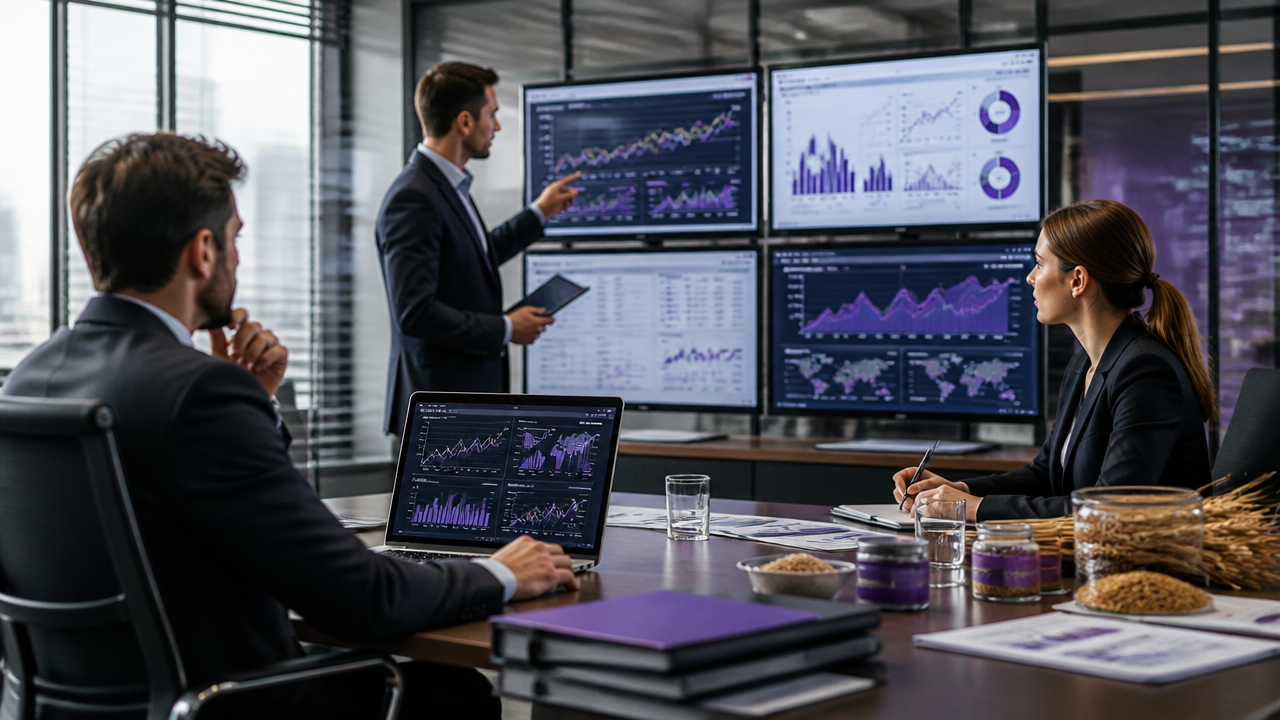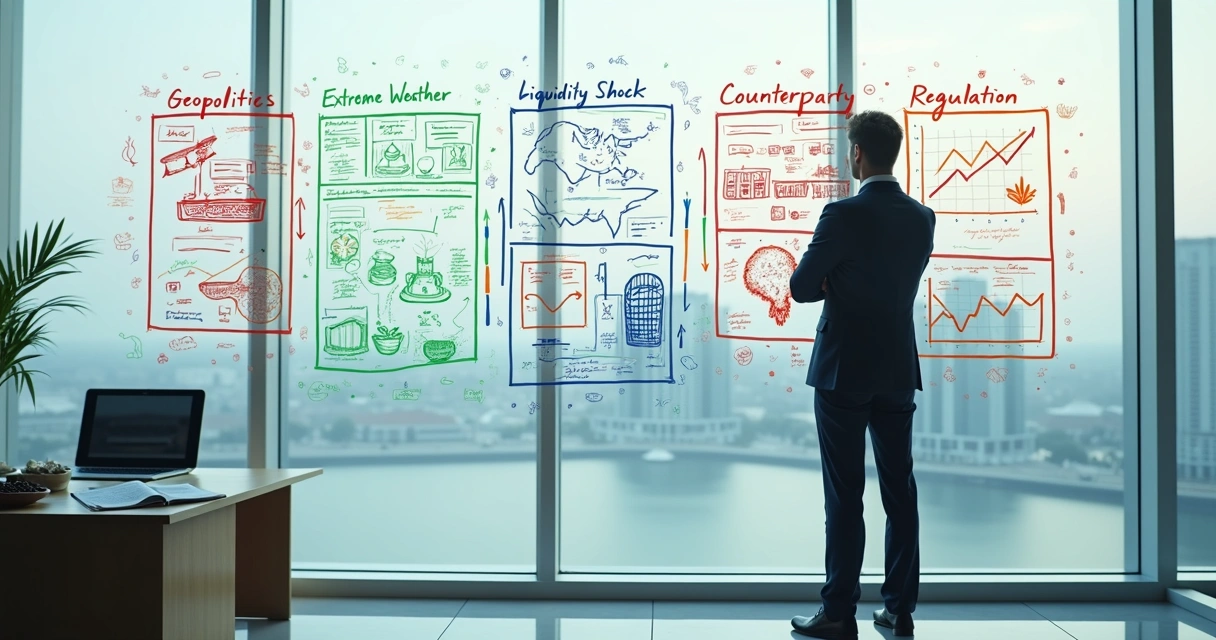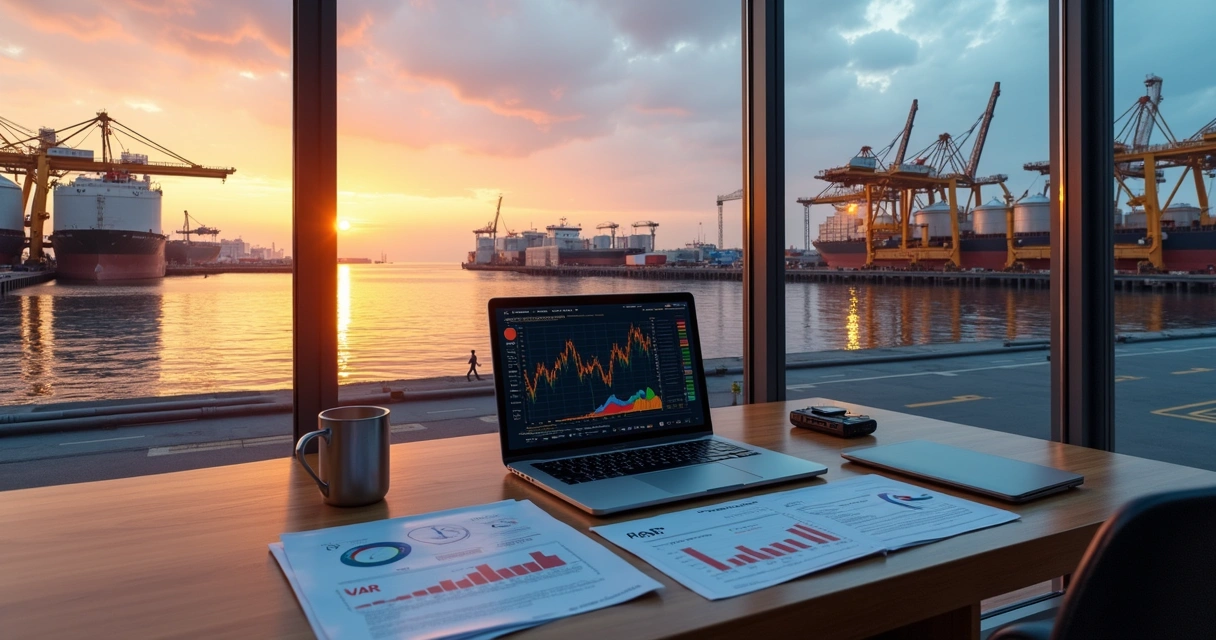
Managing risk in today's markets is a never-ending race. In sectors exposed to currency, interest, and commodity price shifts, the question has become sharper than ever: Does artificial intelligence now outperform human experience in building and executing hedge strategies?
On one side stand veteran traders and risk managers whose intuition has been honed by market cycles and negotiations in agri-business, energy, and industry. On the other, dynamic algorithms—driven by AI and quantitative analysis—emerge as powerful allies, synthesizing huge volumes of data and extracting patterns invisible to the human eye.
To understand which prevails, or whether the real answer lies in partnership, one can look at practical cases, benchmark results, real-world stress tests, and the evolving landscape where projects such as UHEDGE now play a central role.
The legacy of experience: What humans bring to hedging
For decades, hedging decisions rested heavily on gut feeling, industry experience, and “market color.” Hedge managers tracked crop cycles, political news, weather, or the body language of producers and brokers. Many became adept at reading thin signals—the overheard comment at a conference, the shift in a supplier’s tone.
Human risk professionals typically excel in:
- Interpreting ambiguous soft data, like rumors or non-quantitative factors
- Negotiating and managing stakeholder fears in volatile moments
- Blending historical memory with cultural cues
- Reacting to one-off, unexpected shocks where no precedent exists
During episodes of abrupt volatility—a geopolitical crisis, a regulatory surprise, or a pandemic—some seasoned managers recall, with pride, having “steered the ship” based on their judgement. These stories still shape the psychology of risk committees in many sectors.
“The value of human experience in risk management is the ability to ‘read the room’ when markets get anxious.”
AI enters the scene: What algorithms and models deliver
AI-powered solutions like those developed within UHEDGE Trading Solutions, by contrast, do not tire, forget, or become emotionally involved. Today’s advanced platforms bring together machine learning, quantitative modeling, and vast data integration to automate and improve many core tasks in risk management:
- Aggregating all market data—physical trades, financial derivatives, global news—onto one digital dashboard
- Identifying complex patterns and volatility clusters in real time
- Testing many possible hedge strategies far faster than a human could simulate by hand
- Adjusting pricing, mark-to-market calculations, and risk exposure minute by minute as new data comes in
Projects like the UHEDGE digital treasury system enable companies to monitor portfolios, visualize risk metrics, and instantly assess the impact of changing variables. With algorithmic pricing for complex structures such as accumulators and fences, and the ability to visualize volatility surfaces, these tools greatly reduce the chance of human error or oversight due to information overload.
When experience falls short: The limits of human judgment
While experienced risk managers still excel in managing nuanced negotiations or reading non-quantitative risk, there are moments when their toolkit hits a ceiling. Commodities markets—including grains, energy, and metals—now move at speeds and on data volumes that surpass human ability to manually process.
Some key hurdles faced by traditional teams are:
- Information fragmentation—data trapped in spreadsheets, emails, and siloed systems
- Human bias—anchoring decisions on outdated models or repeating past mistakes
- Difficulty in tracking the combined impact of dozens of parallel variables across currencies, rates, and physical goods
Consider the 2020 oil price crash. Many companies using old playbooks could not respond to the overnight negative pricing shock in oil futures, missing the optimal moment to rebalance their exposure. Meanwhile, AI-driven treasuries spotted the speed and extent of divergence, allowing for faster tactical reactions.
As described in more depth in UHEDGE articles such as common commodity hedging mistakes, the challenge of keeping up with market shifts grows every year—and the margin for error shrinks accordingly.
When AI has blind spots: What humans still manage best
AI’s promises are impressive. Yet, even the smartest models face blind spots. Machine learning needs large, clean datasets to “learn” from, and it can struggle with:
- Sudden shifts with no historical precedent—like the outbreak of new conflicts or regulatory bans
- Soft signals that are hard to encode, such as informal information from supply chain partners
- Overfitting—mistaking coincidence for causation in limited datasets
- Managing the corporate “politics” of hedging, such as explaining strategy to a skeptical board
There are stories from risk managers who, catching a sudden change in government policy before news wires reported it, adapted their company’s hedge just in time. These cases highlight a clear point:
“No algorithm can replace the nuance of human communication and judgment when entering uncharted territory.”
In fact, as described in resources about practical hedge strategies, it is the blend of technical skills and applied wisdom that builds lasting resilience.
Practical case study: AI and human experience, side by side
Imagine a mid-sized agribusiness with major exposure to soybean pricing. Historically, their treasury manager uses a spreadsheet to monitor positions and relies on a close supplier network to anticipate shifts.
Recently, the company integrated an AI-based risk system, similar to what UHEDGE offers, to automate risk calculations, flag outlier price moves, and run stress-test scenarios. During a period of extreme weather in Brazil, the following results emerged:
- The AI flagged a pattern of volatility spikes matching a rare combination of rainfall and currency devaluation—drawing on both historical records and real-time satellite inputs
- The treasury manager, recognizing a sudden trade delay in a key port (something not in the datasets), decided to pause execution on a hedge order. This nuance, learned in years of port negotiation, avoided an unplanned cash crunch.
The outcome? The AI system made it possible to react faster and with clear risk visibility. Human intervention provided the last-mile judgment, adjusting the plan in response to new, less quantifiable information. Neither outperformed the other; both complemented one another.
For more examples and benchmarking benchmarks, readers can consult the guide to hedge analytics and indicators on the UHEDGE blog.
Does AI outperform human experience in all contexts?
In stress periods—think of the grain supply shocks of 2022 or the energy price surges—AI displayed clear value.
- It processed more relevant variables without fatigue
- It ran thousands of scenario analyses in minutes
- It adjusted pricing and margin calls instantly as new futures quotes came in
Yet, even these advanced systems needed human direction to contextualize their output, deciding when to act, when to wait, and how to navigate regulatory limits or client relationships.
Skepticism toward AI in hedging is still present in some quarters. However, empirical data and benchmarking consistently show improved mitigation of risk events when both AI tools and expert humans are combined, instead of relying on only one or the other.
For a deeper dive on how innovation is transforming market risk practices, see the discussion on fintechs reshaping the hedge market and check case studies focused on risk management on the UHEDGE content portal.
How AI augments, not replaces, the expert
Modern AI techniques now supplement rather than replace the skill set of risk managers—especially during volatile, high-impact market events. What AI brings is speed, scope, and data integration. What the professional brings is context, judgment, negotiation, and the ability to react to unquantifiable events.
Tasks where AI shines include:
- Real-time monitoring of portfolios across currencies, rates, and commodities
- Automated risk measurement and stress testing
- Pattern discovery across large and fast-changing datasets
- Execution of well-defined, rule-based hedge strategies
Tasks only people can handle:
- Communicating risk to boards and executives in non-technical terms
- Interpreting “soft” signals not easily put into models
- Adjusting to changes with no historical parallel
The winning approach? Technology for the numbers, people for the story.
Conclusion: The future of hedging is a combined path
The question is not whether AI for hedging will replace human judgment, but how both can work together, with platforms like UHEDGE, to build stronger, more responsive risk strategies. Experience in market timing, trusted networks, and decision-making continues to carry weight. Meanwhile, digital treasury and AI-powered analytics now serve as the essential companions to handle increased complexity and scale. Companies that balance these two skill sets—technology and expertise—are best positioned to handle the turbulence of both today and tomorrow’s markets.
For those seeking to understand how the next generation of risk management can benefit their business, getting to know the UHEDGE ecosystem is the natural first step. Discover the new horizon in digital treasury and see how your team can combine the power of AI with the wisdom of experience.
Frequently asked questions
What is AI for hedging?
AI for hedging refers to the use of artificial intelligence algorithms and quantitative models to automate or support risk management decisions in financial markets. These systems process large amounts of market and internal data, monitor exposures, analyze volatility, and recommend or execute hedging strategies in real time.
How does AI compare to human experience?
AI brings speed, breadth, and data integration, while human experience delivers context, intuition, and judgment. In practice, the strongest results come when both work together—AI does the heavy number-crunching and fast alerts, while people apply judgment, communicate with stakeholders, and handle surprises that fall outside historical patterns.
Is AI more accurate in hedging?
Accuracy in hedging depends on context. AI can detect patterns and manage data volume faster than humans, reducing typical errors from information overload or bias. However, accuracy also relies on the quality of data and proper use by skilled managers. The best outcomes occur when AI solutions are paired with professional guidance.
Should I trust AI over experience?
Trust is not about choosing one over the other, but about knowing when to rely on each. AI-driven systems offer transparency and support fast, data-backed decisions, but complex or unfamiliar situations still require human analysis. A balanced approach delivers the best protection and results in unpredictable markets.
How can I start using AI for hedging?
The simplest way to start is by exploring digital treasury platforms that bring AI and quantitative tools into your risk workflow, like those offered by UHEDGE. Teams should map out their exposures, define objectives, and look for integrated systems that provide both advanced analytics and intuitive interfaces. Starting small, monitoring results, and building digitally savvy teams is a proven path to greater security and performance in risk management.