Coffee price volatility challenges both large-scale producers and smaller farmers every season. The global market for coffee, traded in vast quantities across exchanges and physical markets, faces constant swings triggered by weather shocks, geopolitical tension, and ever-changing consumer demand. As a result, producers, exporters, and trading houses must shield themselves from the risk of disruptive price movements using structured hedging practices—a field where scientific rigor and technology make all the difference.
The essentials of coffee price risk
Volatility is more than a buzzword in the world of coffee. For those who live off harvests and international sales contracts, it has tangible effects on financial stability. Coffee growers, cooperatives, and trading companies often find profit margins squeezed by unpredictable price drops or surges.
Managing these shocks requires far more than market intuition—a thorough, objective approach is needed. With so many variables in play, from foreign exchange rates to climate impact, only discipline and dedicated tools can deliver the control that modern agribusiness demands.
Spot versus futures: Understanding the market environment
The coffee trade operates in two core markets: spot and futures. In the spot market, physical coffee changes hands at the prevailing price, with deliveries often made promptly. Here, buyers and sellers are fully exposed to daily price swings.
Futures markets, in contrast, provide a means to lock in buy or sell prices ahead of time. In these markets, a contract obligates one party to deliver (or receive) a specific quantity of coffee at a set date and price in the future.
Locking in prices through futures contracts is the foundation of every robust coffee hedge.
For commercial operators—those whose business depends on predictable costs or revenues—futures contracts serve as insurance against adverse price movements. But implementing them correctly is both art and science. Success depends on aligning the contract type, size, and timing with each producer’s financial goals and operational realities.
Why hedging matters in commodity trading
Hedging is the deliberate use of the futures and options markets to offset risk present in the physical trade. In commodity trading, especially in coffee, this is not simply an advanced financial tactic—it is the difference between surviving a tough season and succumbing to market forces.A well-structured coffee hedge safeguards companies from losses that could otherwise destabilize operations, payrolls, and long-term growth.
Beyond protection, hedging enhances credit access and working capital efficiency. Banks and investors favor businesses with prudent risk management, making it easier to finance crops or expansion plans.
Traditional approaches and their limits
Historically, many coffee companies have relied on basic earmarked contracts or informal price agreements. Some attempt to time the market based purely on experience or basic spreadsheets. These practices often lead to fragmented data, inefficiencies, and reactive strategies.
Without technology, internal teams cannot monitor the countless factors impacting market decisions. This fragmentation leaves producers exposed just when strategy is needed most.
As outlined by UHEDGE and STATERRA, the traditional approach falls short—especially when facing the variability of global commodity prices. Producers are left without a unified system, disciplined processes, or timely data for decision-making. This prevents optimal market timing and undermines efforts to maximize margins. UHEDGE addresses this through an innovative digital treasury solution, centralizing commodity, FX, and interest rate exposures into a rigorous, real-time control environment.
Modern coffee hedging strategies in action
Futures contracts as the core of risk management
The backbone of most coffee price protection is the use of futures contracts, such as those traded on New York’s ICE exchange. The process is straightforward: a grower or exporter sells coffee futures contracts that match their expected output. If the market price drops at harvest, losses in the physical coffee sales are offset by gains on the futures contracts. Conversely, if prices rise, the contract’s financial loss is compensated by higher revenues from physical sales.
- Sell futures to lock in a minimum price for upcoming harvests.
- Buy futures (rare for coffee, but relevant in inventory coverage) to secure supply pricing.
- Manage “basis risk”—the difference between local cash prices and global futures—using market knowledge and analytics.
Advanced hedging structures, like accumulators and options fences, can further refine the protective layer. For example, accumulators allow sellers to commit incremental amounts of coffee at defined thresholds, while options fences create a price corridor, capping both downside and upside. These require calculation and tracking that only specialized platforms can manage efficiently.
AI and quantitative analytics: The new standard
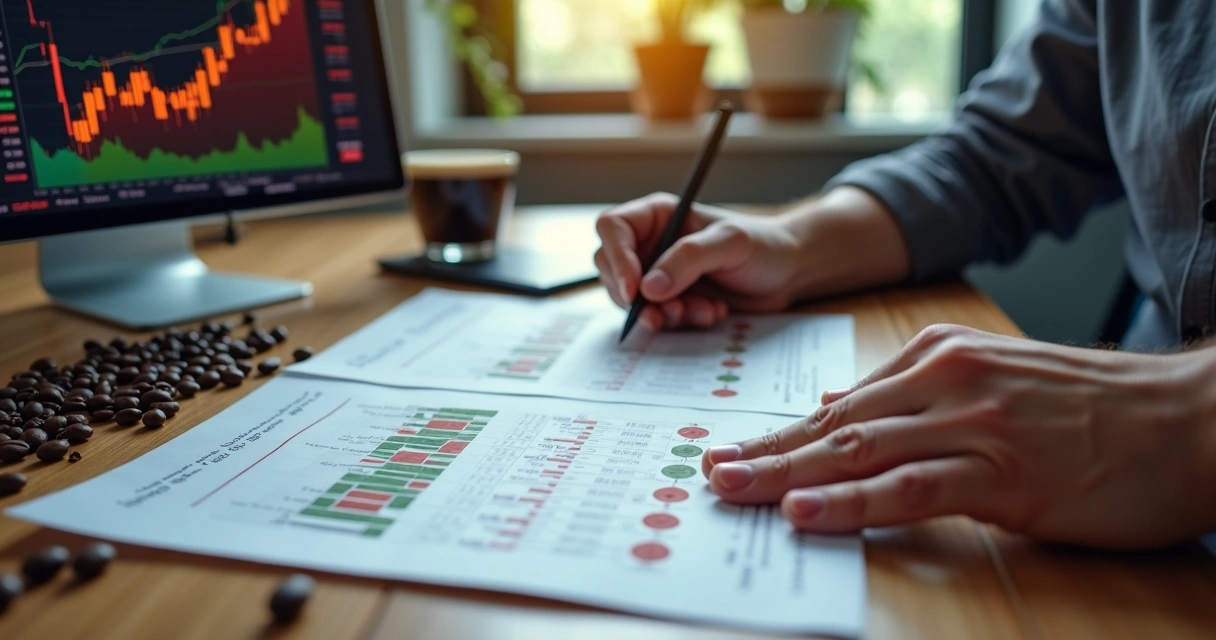
Today, sophisticated producers and traders use technology to take hedging from routine to scientific precision. UHEDGE’s digital treasury leverages artificial intelligence (AI) and advanced quantitative modeling to distill massive market data sets into precise recommendations:
- Algorithms evaluate macroeconomic signals, volatility, and futures curves, proposing the best moments and methods for execution.
- Customizable trading-oriented calculators enable the rapid creation of pricing structures like accumulators and fences, respecting unique operational constraints and targets.
- Comprehensive dashboards show the portfolio’s evolution, highlighting mark-to-market values and exposure in real time.
With these tools, companies achieve consistent, robust results—far beyond what can be delivered by traditional, manual hedging operations.
Digital treasury: Transforming coffee price management
Digital treasury platforms, like those developed by UHEDGE, unify all risk exposures and operations into a single environment. This includes both physical and “paper” (derivative) transactions. By centralizing management and providing visibility over positions, the platform eliminates data silos and delivers real-time control.
- Instant, consolidated view of all currency, interest rate, and commodity positions.
- Automated monitoring and performance reporting for easier compliance and stakeholder communication.
- AI-generated alerts and scenario analysis for proactive hedging decisions.
This kind of integrated system empowers coffee companies to make decisions that are both disciplined and agile—adapting instantly to market shocks while always aligned with the company’s risk profile and liquidity needs.
The impact across the value chain
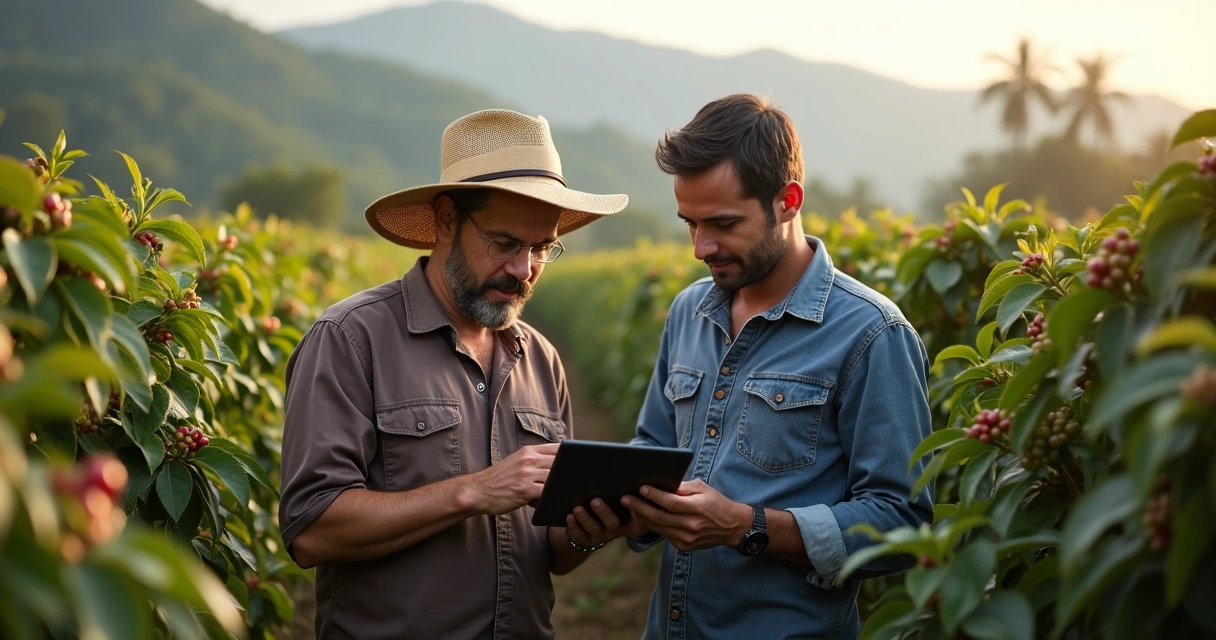
Hedging is not just for global commodity giants—it’s accessible at every scale. Large exporters can optimize multi-origin portfolios, while cooperatives and smallholder groups can pool volumes to structure efficient hedge programs, improving their bargaining power upstream. For smaller farmers or cooperative members, joining a professionally managed hedging program is often the best route to stability without weathering complexity alone.
Enhanced risk management leads to higher liquidity, more predictable income, and the ability to grow sustainably. The digital treasury approach, especially as designed by UHEDGE, provides customizable, cost-effective protection—opening coverage opportunities previously reserved only for large, institutional players.
Addressing data fragmentation and market instability
The twin enemies of effective price management are information gaps and market unpredictability. When data is spread across multiple platforms or driven by manual logbooks, errors and delays creep in.
UHEDGE’s platform counteracts this by aggregating all exposure data, applying market analytics, and offering a transparent managerial interface. The discipline enforced by a digital treasury system ensures continuous alignment with the company’s financial targets and regulatory requirements.
For deeper insights and practical strategies, readers may consult specialized resources on hedging for coffee, best practices in commodity risk management, and organizational margin protection. Examples include dedicated articles on hedging coffee price volatility, commodity trading techniques, protection against volatility in commodities, and how to protect organizational margins in unpredictable markets.
How UHEDGE software delivers clarity and control
The UHEDGE ecosystem offers features shaped by direct experience in global commodity markets and years spent refining financial modeling:
- A complete digital treasury with unified control and instant risk visibility across currencies, interest rates, and coffee contracts.
- Smart algorithms to recommend optimal hedging structures and execution schedules based on evolving market conditions.
- Automatic aggregation and reporting for compliance, audit, and management oversight.
- Customizable dashboards showing mark-to-market, origin volumes, and performance against benchmarks.
- Pioneering use of AI and quantitative analytics to deliver actionable insights for every coffee hedge operation.
Real-world users, including established Brazilian cooperatives and trading companies, have noted a vital transformation in their risk management. Operations once bound by traditional limits have embraced transparent, unified, and disciplined processes—a leap that creates new financial stability and growth potential.
Conclusion: Moving forward with confidence
Coffee companies cannot change the market’s movements, but they can define how exposed they are to risk. The move from fragmented, manual management to integrated, digital risk tools marks a new era in commodity trading—one where AI and quantitative analytics offer a distinct operational edge.
UHEDGE’s platform equips producers, exporters, and cooperatives with all they need to move from reactivity to control. As risk management becomes central to profitability, those who adopt advanced, transparent hedging solutions will ensure that every harvest is a step toward greater resilience and success.
For companies seeking to safeguard their future in the volatile coffee market, the best action is to embrace innovation. To see how rigorous, AI-driven expertise can create value in risk management, the next step is consulting with UHEDGE and experiencing their digital treasury in action.
Frequently asked questions
What is coffee hedging in trading?
Coffee hedging refers to using financial contracts, such as futures and options, to protect against unwanted price movements in the coffee market. Producers, exporters, and buyers routinely use these instruments to lock in future prices, ensuring more predictable revenues or costs regardless of daily market volatility.
How does coffee hedging reduce risk?
Coffee hedging reduces risk by offsetting potential losses in the physical coffee market with gains from financial contracts. For example, if a grower sells a futures contract and prices later fall, gains from the futures position compensate for lower sales revenues, supporting consistent cash flow.
What are the main coffee hedge strategies?
Main strategies include selling futures contracts to secure minimum prices, using options to build protective price ranges (fences), and deploying structured products like accumulators. Advanced methods increasingly use AI and data analytics to dynamically adjust positions in response to changing market signals.
Is coffee hedging suitable for small farmers?
Yes, small farmers benefit by joining cooperatives or group programs that pool volumes and access professional hedge management. Digital platforms now provide access to strategies and analytics once reserved only for larger players, making protection both practical and cost-effective for every scale.
How to start with coffee hedging?
Start by defining risk exposures and financial objectives. Then, engage with experienced advisors or digital risk platforms like UHEDGE, which offer tailored strategies and real-time control. Modern systems streamline onboarding, calculation, and monitoring, setting the foundation for disciplined risk management in the coffee market.