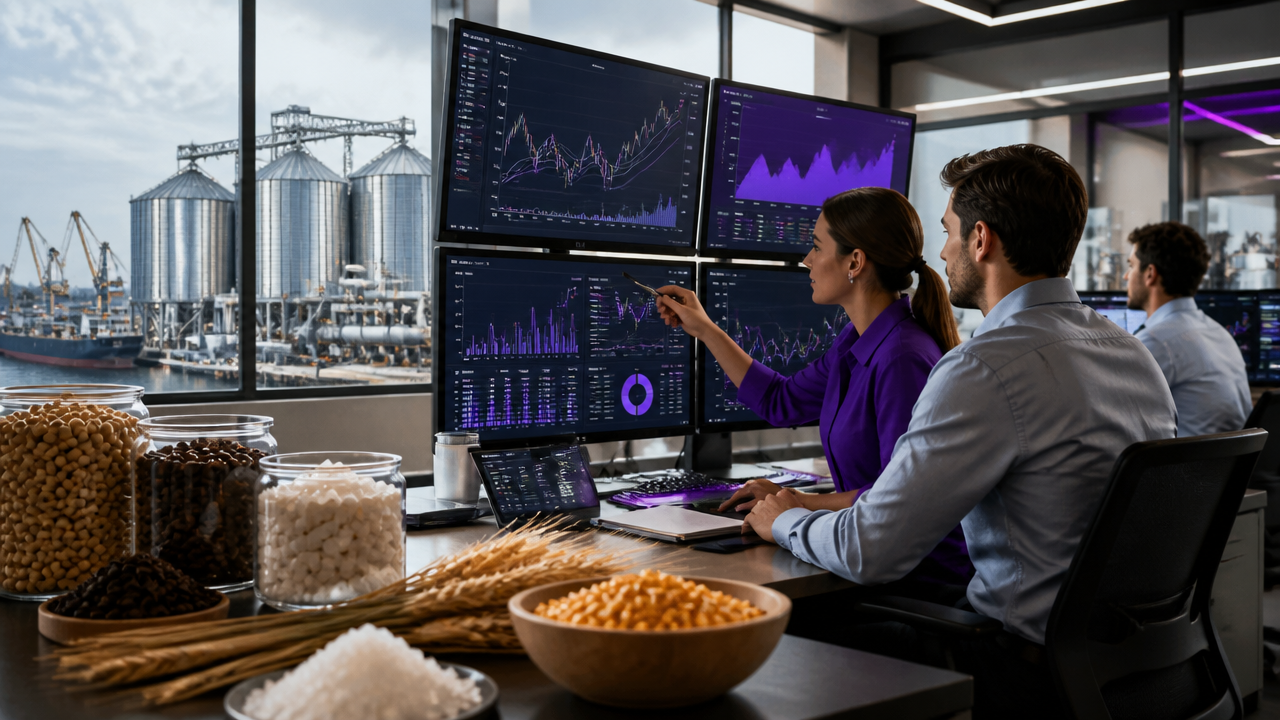
The commodities market matters because it sets the price of what feeds factories, fuel systems, and food chains. For producers, cooperatives, mills, exporters, and industrial buyers, the real question is not only where prices are going, but how to survive volatility without losing margin. That is where a market view, basis discipline, and a workable hedge process come together.
For companies exposed to grains, coffee, sugar, oils, energy products, or FX-linked imports and exports, price risk is operational risk. A strong process links physical positions, derivatives, cash flow, and accounting, which is exactly the gap many spreadsheets fail to close.
Key takeaways for decision-makers
- The market is both physical and financial. Spot cargoes, inventories, freight, futures, options, and FX all shape the final margin.
- Direction is only part of the story. Basis, volatility, timing, and liquidity often matter as much as the headline price.
- Hedging is not speculation. Good hedging protects a commercial objective, instead of chasing short-term market calls.
- Local exposure rarely matches the benchmark perfectly. Basis risk is often the hidden source of earnings surprises.
- Technology changes execution quality. Uhedge connects physical and financial books in one auditable environment, reducing fragmentation and improving decision speed.
What is the commodities market?
The commodities market is the system where raw materials and primary goods are priced, traded, financed, and hedged. It includes the physical market, where grain, sugar, coffee, fuel, and metals change hands, and the derivatives market, where futures, options, swaps, and structured hedges transfer price risk.
That definition sounds simple, but the real market is layered. A soybean crusher, a sugar and ethanol mill, a coffee cooperative, and a fuel distributor can all look at the same benchmark and still face different economics because freight, quality, local supply, taxes, and FX alter the net price. This is why a useful explanation must go beyond the headline and include pricing risk and market dynamics.
In practice, participants fall into three broad groups: producers, commercial users, and financial traders. The first two need price protection to preserve margins. The third group provides liquidity, but may also amplify short-term swings.
How do spot, futures, and options markets work together?
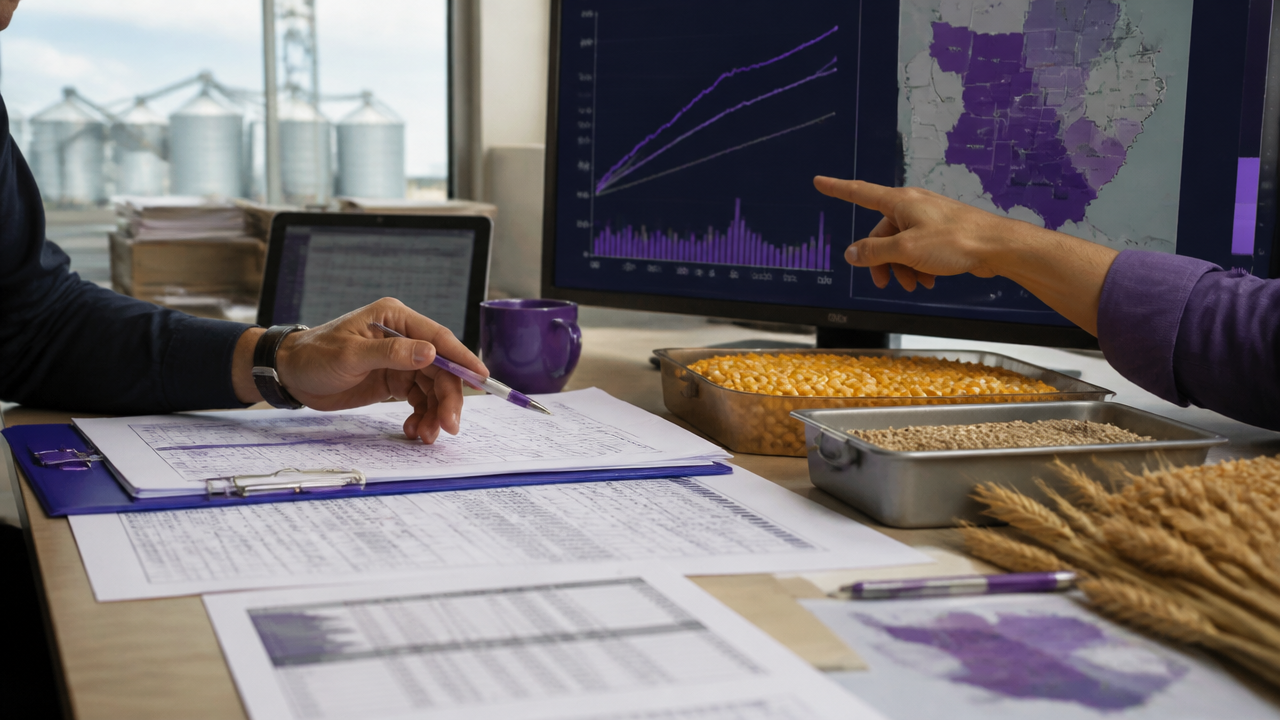
The answer is that they solve different parts of the same problem. The spot market handles immediate or near-term delivery, while futures standardize price discovery across delivery months. Options then add flexibility, letting firms protect against adverse moves while keeping some upside.
A grain producer may sell futures to lock in a board price, then manage local basis separately. A food manufacturer may buy call options to cap input costs without fixing the full purchase price too early. A fuel distributor may blend futures, swaps, and FX forwards when procurement is linked to imported benchmarks.
What matters is fit, not complexity. A simple hedge often beats an elegant but poorly timed structure. Still, companies with recurring exposure should understand when futures or options are the better fit, and when more advanced structures can lower hedge cost or improve payoff symmetry.
Which commodity groups matter most in real operations?
The most important commodity groups are agriculturals, energy, metals, and livestock, but relevance depends on the business model. For the agro-financial chain, grains, soybean oil, coffee, sugar, ethanol, and biofuel inputs often dominate risk because they affect procurement, working capital, export revenue, and inventory value at the same time.
Hard commodities such as oil, gas, gold, and copper usually react strongly to geopolitics, industrial demand, and macro policy. Soft commodities such as coffee, sugar, corn, soybeans, and wheat react more directly to weather, yield, seasonality, logistics, and regional crop conditions. The market backdrop also shifts with monetary policy, which is why many readers pair commodity analysis with a broader global market view.
| Group | Typical examples | Main drivers | Common commercial concern |
|---|---|---|---|
| Agriculturals | Corn, soybeans, wheat, coffee, sugar | Weather, acreage, yields, freight, basis | Input cost, harvest margin, export parity |
| Energy | Crude oil, diesel, ethanol, natural gas | Geopolitics, refining, inventories, policy | Procurement cost, crack spreads, cash flow |
| Metals | Gold, copper, aluminum | Industrial demand, rates, supply disruptions | Raw material cost, inventory valuation |
| Livestock | Cattle, hogs | Feed costs, herd cycles, disease events | Feed margin, processing economics |
Why is basis risk often more important than the benchmark price?
Because companies do not trade abstract benchmarks, they trade local reality. Basis risk is the gap between the reference futures price and the actual price a firm receives or pays after location, quality, freight, taxes, and timing are considered.
This is where many hedges disappoint. A business can be correct on the futures direction and still miss its margin target because local cash prices moved differently from the board. Regional shortages, port congestion, quality discounts, or shifting export demand can all widen or tighten basis quickly.
For that reason, serious risk management tracks both components together. Uhedge was built around this physical-plus-financial logic, including basis intelligence, separate audit-ready books, and pricing curves that incorporate local variables. For treasury teams trying to tighten governance, this is closely related to commodity price risk governance.
Is the market only about price direction? No, margin structure matters more
The best commercial decisions focus on margin structure, not heroic forecasts. A processor, exporter, or cooperative needs to understand how the whole chain behaves: purchase price, sales commitment, FX exposure, storage, funding cost, and hedge carry.
That is why sophisticated risk teams monitor more than mark-to-market. They also watch volatility, scenario shocks, option sensitivities, concentration by book, and liquidity usage. According to Uhedge's company materials, its platform supports vanilla and exotic structures, OTC replication, daily mark-to-market, parametric VaR by risk factor, stress testing, Greeks, volatility surface analysis, FCM cash and margin management, and IFRS 9 or CPC 38 hedge accounting workflows.
In plain terms, the objective is control. When exposures are split across broker statements, spreadsheets, and ERP exports, teams lose timing and auditability. Uhedge positions its platform as a single environment that records, monitors, and reports physical and financial positions from exposure planning to accounting documentation.

What is the difference between hedging and speculation?
Hedging exists to protect an underlying business exposure. Speculation exists to profit from expected market moves. The two may use similar instruments, but the intention, sizing, and success criteria are completely different.
A coffee cooperative hedges when it offsets part of its expected sales exposure. A food company hedges when it protects future input cost. A speculative trade, by contrast, does not need a linked commercial transaction. That distinction matters because governance, limits, and reporting should reflect the purpose of the position.
For agribusinesses and industrial buyers, the best framework is usually policy-based: define what can be hedged, who approves structures, how basis is monitored, and what happens when markets move sharply. Teams building that discipline often benefit from a more detailed look at commodity trading and risk management in an operational setting.
Why firms are moving from spreadsheets to integrated CTRM workflows
They move because fragmented visibility is expensive. When price exposure sits in one spreadsheet, derivatives in broker files, basis assumptions in emails, and accounting support in separate folders, the company cannot see its real risk fast enough.
Uhedge addresses this with a CTRM platform designed for companies exposed to commodities, FX, and rates, plus a CVM-regulated asset management practice for clients that need specialized hedge support. In its materials, the firm highlights service across grain producers, coffee and sugar cooperatives, crushers, mills, biofuel plants, fuel distributors, food industries, exporters, mid-market banks, and family offices. It also emphasizes an alignment model with no hidden spreads or commissions, and claims potential hedge-cost savings of up to 70 percent versus traditional bank-led structures.
The broader point is simple: the commodities market rewards disciplined process. Firms that connect physical exposure, derivatives pricing, scenario analysis, and accounting support tend to make calmer decisions when volatility rises.
Perguntas frequentes
What is the commodities market?
A commodities market is where raw materials and primary goods are bought, sold, priced, and hedged. It includes physical trade, where goods are delivered, and financial trade, where futures, options, and swaps help producers, processors, exporters, and investors manage price exposure.
What are the top 5 commodities?
The best-known groups are energy, metals, grains, soft commodities, and livestock. In practice, the most influential contracts globally often include crude oil, gold, corn, wheat, and soybeans, because they affect food, transport, industry, inflation, and trade flows.
Why can the commodity market fall sharply?
A market selloff can happen when traders expect weaker demand, better supply, slower global growth, stronger inventories, or tighter financial conditions. In agricultural markets, fast changes in weather, harvest expectations, freight, and currency can also push prices sharply lower in a short period.
Is this a good time to buy commodities?
It can be, but only if your thesis, time horizon, and risk controls are clear. Commodities can protect margins, diversify portfolios, or express macro views, yet they are volatile and cyclical. For businesses with physical exposure, disciplined hedging is usually more important than trying to guess direction.
What is the difference between hedging and speculation?
Hedging reduces risk from a real business exposure, while speculation tries to profit from price moves without needing the physical commodity. A producer, mill, or food company hedges to protect margins; a trader without commercial exposure is usually taking a speculative position.