The landscape of commodity risk management is far from static. While futures exchanges set the public stage, much of the real risk—along with flexibility and innovation—resides in the quieter corridors of over-the-counter (OTC) transactions. For those operating within grains, coffee, sugar, biofuels, or energy, the ability to tailor risk management is not just useful; it defines competitive advantage. This article breaks down what a commodities OTC desk does, who it serves, and why it remains indispensable for modern commodity businesses navigating cyclicality, volatility, and constant market change.
Why the scale of OTC matters
Take a step back and think globally. As of mid-2025, the Bank for International Settlements (BIS) reports that the notional value of all OTC derivatives reached a stunning US$846 trillion, with a gross market value around US$21.8 trillion. The commodity portion of this ecosystem is smaller—especially compared to OTC interest rate swaps or FX—but the very scale illustrates the centrality of OTC in managing risk, smoothing liquidity, and enabling both physical and financial players to craft strategies not possible in exchange-only environments.
Where others see chaos, disciplined desks find opportunity.
What defines a commodities OTC desk?
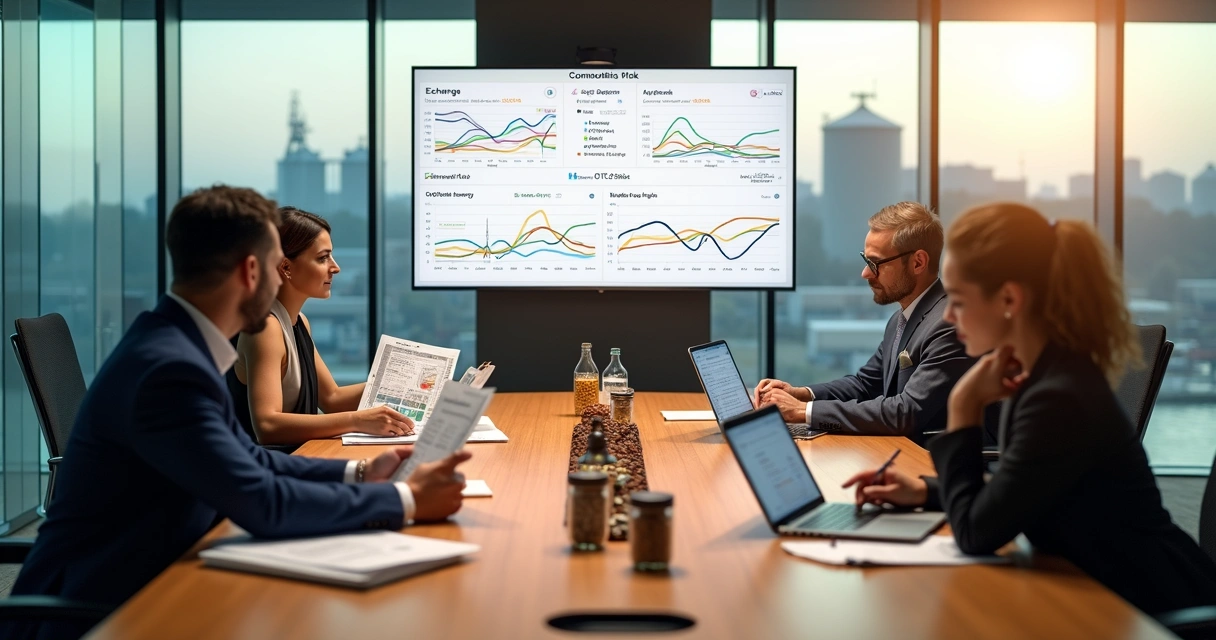
An OTC commodities desk is a dedicated unit within a financial institution or asset management platform that customizes derivative contracts, manages bilateral risk relationships, and serves clients whose hedging and trading needs cannot be met by standard exchange-traded instruments. Unlike futures trading, where contracts are standardized and anonymous, every OTC transaction is bilateral—with bespoke terms, negotiated pricing, and an often higher degree of complexity.
- Agri-businesses protecting future production or consumption
- Cooperatives seeking group solutions that fit their crop cycles
- Asset managers and family offices needing to hedge multiple risk factors simultaneously
- Commodity exporters, mid-market banks, and energy plants integrating physical and financial risks
This is where a platform like Uhedge operates: unifying physical and financial exposures, offering pricing from vanilla options to complex exotics, and embedding robust governance for audit readiness and management reporting
Exchange-traded vs. OTC: The real differences
On regulated commodity exchanges—think grains, coffee, or ethanol—contracts are standardized by quantity, quality, delivery dates, and locations. Participants benefit from centralized clearing, transparency, and liquidity. But this structure has limits:
- No customization beyond the listed tenors or strikes
- A single reference price, possibly ignoring local basis risk
- Anonymous pools, limited ability to structure multi-layered or portfolio-based risk management
In contrast, a commodities OTC desk:
- Negotiates terms bilaterally (strike price, calendar, physical features, basis differential)
- Builds hybrids (accumulators, average price, fences, Asians, etc.) to match unique exposures
- Connects global participants—producers, buyers, and investors—with differing objectives and risk tolerances
- Enables risk management for exposures that can’t (or shouldn’t) be offset through exchange contracts
For a grain producer facing non-standard harvest timing, or a biofuel plant exposed to a complex margin between agricultural input and energy output, OTC desks make risk management possible where exchanges fall short.
The structure and benefits of this approach are explored in detail.The advantages of customized OTC risk management
Blockchains and instant messaging are fast, but commodity production and consumption cycles are not. Weather, geopolitics, local logistics, and even the regulatory landscape make every risk story unique. The messaging from the USDA Economic Research Service shows that 60–70% of larger U.S. corn and soybean producers use a mix of futures, options, and other contracts—many of which are OTC—to protect against adverse price shocks. They do this to control margin, reassure lenders, and anchor investment planning.
- Flexibility: OTC desks tailor deals to match crop cycles, energy plant feedstock needs, or new trading strategies.
- Customization: Choose payout structures (accumulators, target redemption forwards, Asian options) that match precise risk/reward goals.
- Integrated risk: Cover multiple factors (commodity, FX, rates) in one deal, something exchanges find difficult.
- Basis intelligence: Address local basis risk, bridging the gap between global benchmarks and real-world prices.
Uhedge puts these principles into action, combining quantitative modeling, real-time analytics, and a conflict-free alignment with clients’ interests: “We earn when the client earns.” That focus fosters trust, audit readiness, and strategic results—not just technical execution.

Key risk considerations in OTC structures
The design of OTC solutions offers flexibility, but also requires rigorous risk management:
- Counterparty risk: Because every deal is bilateral, traders are exposed if the counterparty defaults. This makes due diligence and credit lines central to OTC desk operations.
- Margin and collateral: Unlike exchanges, margining is not always mark-to-market or daily. Instead, requirements are negotiated, potentially subject to thresholds, regular reviews, and independent valuation.
- Legal and regulatory oversight: OTC trades are subject to bespoke governing contracts (ISDA, local master agreements) and—depending on jurisdiction—can trigger margin or reporting requirements under local and global financial reform.
- Basis risk: Managing the spread between local physical prices and exchange benchmarks, a key issue especially in emerging market supply chains.
Transparency, tracking, and documentation become nonnegotiable in this context, both for internal controls and external audits. Failure means not only financial loss, but potentially breaches of governance and risk reporting protocols.
Who uses OTC commodity desks—and how?
The client base for OTC solutions is broader than many realize. Typical users include:
- Grain producers, coffee and sugar cooperatives
- Commodity exporters and agri-traders
- Banks and financial institutions with commodity-linked balance sheets
- Biofuel plants, crushers, and food-processing groups
- Mid-market banks, family offices, and asset managers with risk in ags, energy, and FX
For producers, a vanilla hedge on the exchange may not align with harvest profiles, input requirements, or currency exposures. An OTC desk provides the toolkit to design structures that reflect the true economics of the business—whether via accumulators, average price contracts, or structured collars.
A family office exposed to fluctuating sugar prices might require a blend of options and swaps, bundled with FX forwards to manage both physical and balance-sheet risk. Integrated platforms like Uhedge address these multifactor exposures in a unified, auditable environment.
More about integrated risk management here.Liquidity and price discovery beyond the exchange
Liquidity in the OTC market emerges not from centralized order books, but from networks of bilateral relationships, market-makers, and increasingly, electronic platforms that centralize documentation and collateral workflow. In some markets, liquidity is deep, with active intermediation between physical players and funds; in others, liquidity risk becomes a pricing component that must be factored into the structure.
Where exchanges list only a few strikes or expirations, OTC desks can quote and manage risk at nearly any combination of strike, maturity, or embedded feature. This agility allows OTC platforms to support:
- Grains and oilseeds with forward curve mismatches
- Coffee and sugar with local physical pricing dynamics
- Biofuels and energy with complex input/output spreads
Managing liquidity through OTC networks drives tailored solutions, increases precision for hedgers, and unlocks value where standardization would fall short.
Read more about commodity liquidity solutions.Common OTC instruments in agriculture, energy, and beyond
The list of available OTC risk management tools continues to expand:
- Forwards: Customized contracts for forward physical delivery or price risk, tailored to crop cycles or refinery schedules.
- Swaps: Price or basis swaps translating market moves into cash settlements, useful for balancing physical sales or purchases.
- Vanilla options: Calls and puts on physicals or local indices.
- Exotic structures:
- Accumulators, which enable incremental pricing over time
- Fences and targeted pricing bands
- Asian options, averaging settlement over a defined window
- Digital (binary), barrier, and multi-asset hybrids for tailored payout needs
- Replicated OTC: Algorithmically constructed synthetic OTC exposures, enabled by platforms like Uhedge, for even the smallest hedgers to access institutional-grade engineering.
This diversity ensures every hedging requirement is met—from a simple forward to hedge the purchase of fuel to a dynamic portfolio overlay for a multi-crop cooperative during volatile seasons.
Technology and audit readiness: The backbone of modern OTC
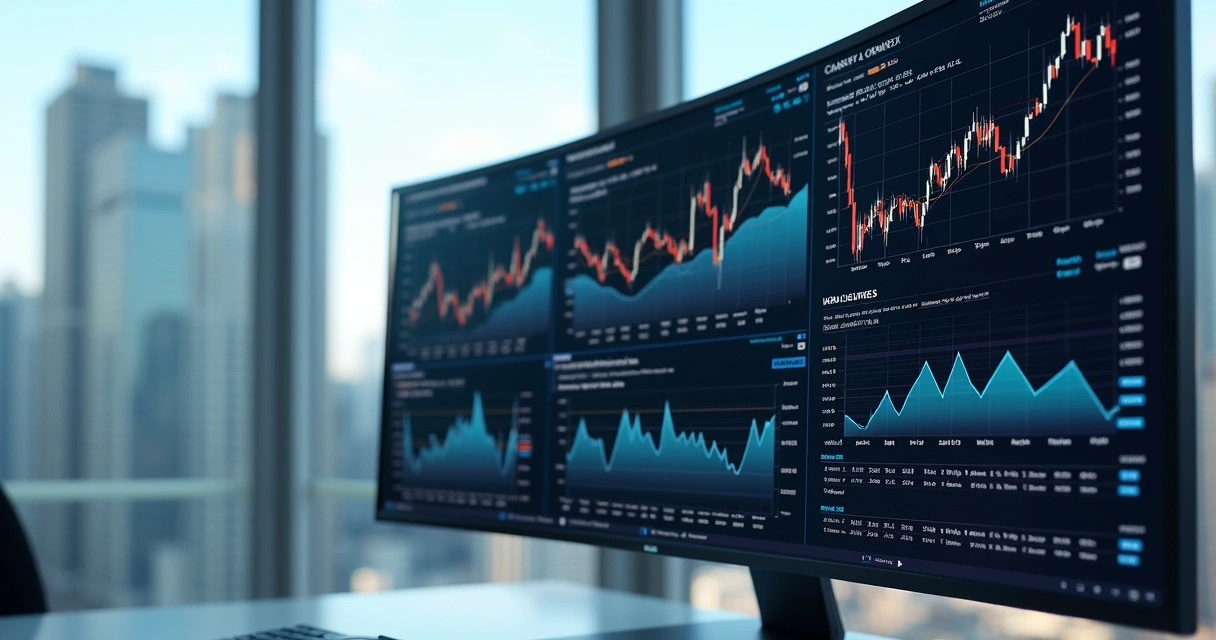
No OTC desk can function at scale or speed without robust technological infrastructure. Gone are the days of spreadsheets and fragmented systems. Uhedge, for example, brings together pricing, risk analysis, documentation management, and real-time reporting:
- Unifies physical and financial exposures in one auditable environment
- Automates mark-to-market, scenario and stress testing, parametric VaR, and reporting for audit trails
- Enables instantaneous monitoring of value at market, open positions, and real-time margin utilization
- Supports compliance with IFRS 9 and CPC 38 for hedge accounting, with embedded effectiveness testing and designation reports
Instant transparency and discipline transform risk management from a cost center into a value creator.
How commodity hedging protects margins and enables forecasting.Getting comfortable with risk: Margining, clearing, and regulatory change
Global OTC markets have moved decisively toward central clearing and margining, especially in rates and FX (as highlighted by BIS research showing interest-rate derivatives central clearing shifting from about 20% in 2009 to two-thirds recently). While many commodity OTC contracts remain bilateral, the pressure to move toward market standards and robust margin practice continues to rise.
- Portfolio margining: Net exposures across commodities, FX, and rates can be managed for efficient margin calls—key for diversified portfolios.
- Risk modeling: Real-time risk maps, scenario analysis, and independent valuation help keep margin and credit risks consistent with business tolerances.
- Legal documentation: Strong contracts, ISDA agreements, and regulatory frameworks (EMIR, Dodd-Frank, local CVM rules) support counterparty consistency and auditability.
Platforms such as Uhedge serve as “treasury extensions,” combining AI, econometrics, and market intelligence so clients are never left exposed to a single risk factor or regulation blind spot.
Case studies: How clients use OTC desks for real advantage
Imagine a cooperative needing to hedge both FX and sugar prices for exports, or a fuel distributor managing the spread between local ethanol prices and global oil. In each case, the OTC desk offers granular instruments, real-time analytics, and the decision support needed to maximize transaction value.
- A managed coffee hedge program designed with moderate risk, setting benchmarks to outperform standard exchange equivalents.
- Dynamic overlays using AI models to shift risk hedges in response to macro signals—delivering improved consistency in volatile times.
- Active management of margin and liquidity, optimizing calls and cash flows for smoother business operations.
- Granular risk mapping and audit reporting for oversight by finance and compliance—a solution that stands up to internal and external scrutiny.
For more about adapting to constant change, practical risk cases, and avoiding common errors, see the deep dive into hedging mistakes and strategies.

Conclusion
In the shifting landscape of commodity markets, the true value of an OTC commodities desk lies in empowering clients to make informed, customized, and timely decisions. When volatility and complexity rise, it takes more than standardization and spreadsheets to protect margin and encourage investment.
With Uhedge, businesses gain a platform that combines quantitative discipline, AI-driven analytics, and transparent alignment—enabling a transformation of risk management from a reactive necessity into a proactive source of value. Whether navigating global macro tension, climate risk, or evolving financial reporting requirements, the extension of a robust OTC desk is the strategic advantage every commodity chain operator needs.
To see how Uhedge can connect your exposure, margin protection, and decision-making process into a single auditable environment, schedule a diagnostics session and experience a new standard of risk management.
Frequently asked questions
What is a commodities OTC desk?
A commodities OTC desk is a specialized trading and risk management unit that structures, prices, and manages customized derivative contracts for commodity clients outside standardized exchanges. This allows clients to hedge unique exposures with bespoke terms, enhancing flexibility and precision in managing market risk.
How does OTC trading reduce risk?
With OTC trading, clients can tailor hedging solutions to exactly match their physical or financial exposures, addressing nuances like non-standard harvest dates, local basis differences, or multi-commodity risk factors. Strong counterparty assessment, transparent pricing, and technological documentation reduce operational and financial risk compared to fragmented, spreadsheet-based approaches.
Who can use an OTC commodities desk?
OTC commodity desks serve grain and biofuel producers, coffee and sugar cooperatives, asset managers, exporters, distributors, and family offices. Any business exposed to volatile commodity, FX, or rates risk can benefit from customized risk management and increased audit transparency.
What are the benefits of OTC trading?
OTC trading provides flexibility over contract terms, the ability to hedge more closely to physical pricing, better management of basis risk, and access to a broader array of derivative types. The result is more efficient risk allocation, potential margin improvements, and structures that can adapt to complex or changing circumstances.
How are prices set in OTC deals?
OTC prices are set by negotiation between counterparties, typically using market benchmarks, quantitative pricing models, and current volatility parameters as references. Transparent systems, independent valuation, and real-time analytics—included in platforms like Uhedge—support trustworthy and audit-proof price discovery for all participants.