Across global markets, agribusiness, energy, and industrial firms stand at a pivotal crossroads. The volatility of commodity prices, fluctuating currencies, and shifting interest rates exerts relentless pressure. For decision-makers, traditional approaches split crucial data across multiple tools, obscuring true risk, slowing action, and all too often, costing dearly.
Markets move fast—managers need to move faster.
Enter commodity software: intelligent, unified, and adaptive platforms that turn sprawling operational fragmentation into a single, clear pane of insight and action. By blending quantitative science, predictive analytics, and streamlined process, these systems place control back in the hands of those exposed to the pulse of global markets. UHEDGE, merging technological rigor with almost two decades of market expertise, exemplifies this transformative approach in action.
What is commodity software for risk and trading management?
Commodity management platforms, also known as CTRM (Commodity Trading and Risk Management) systems, are specialized digital tools designed to handle everything from procurement and sales through to risk, finance, and compliance tracking. In industries where market exposure is high—grain producers, fuel distributors, manufacturers, and many more—these platforms centralize workflows that once required armies of analysts and countless spreadsheets.
At its core, commodity software aggregates real-time price data, manages physical inventory, keeps a pulse on derivative trades, automates reporting, and continuously quantifies risk. With AI-driven analytics and advanced econometrics, robust solutions like UHEDGE empower organizations to proactively manage margins, seize opportunities, and withstand turbulence.
The cost of fragmentation: why traditional systems fall short
Historically, most commodity-exposed businesses ran risk and trading operations through a patchwork of separate systems. Finance, operations, logistics, and trading desks each managed their data in isolation. Risk models, if present, relied on manual input or basic templates. Markets changed, but the system response lagged behind—or, worse, multiple teams made decisions from conflicting versions of reality.
- Disparate spreadsheets and legacy apps led to data duplication and errors.
- Management lacked a unified, real-time view of exposures and portfolio evolution.
- Compliance checks and strategic reports became tedious, reactive, and incomplete.
- Overreliance on slow processes resulted in missed opportunities and amplified shocks.
This lack of centralization forced companies to operate reactively, leaving them vulnerable to volatile spikes and exposing gaps in inventory tracking, risk control, and regulatory compliance. Decisions made in fragmented environments often prove costlier than inaction itself.
Why centralized, AI-powered platforms change the game
Modern commodity software goes far beyond basic tracking and reporting. Platforms like UHEDGE act as digital treasuries—a single source of truth and action for all activities and exposures. Here, the power lies in real-time visibility, advanced analytics, and recommendation engines that account for every nuance shaping risk and opportunity.
Some of the most compelling advantages include:
- Centralized data. All physical and “paper” (derivatives) trades, from FX and interest rates to spot and forward commodity contracts, are tracked in a single, unified environment.
- Automated workflows. The platform replaces dozens of manual tasks—such as deal capture, pricing validation, and daily reconciliations—reducing errors and freeing up specialist time.
- Real-time analytics. Advanced models visualize volatility surfaces, forward curves, exposure heatmaps, and options scenarios instantly.
- Governance and compliance. Every move is logged and auditable, easing regulatory reporting and internal controls.
- Continuous position monitoring. Mark-to-market calculations, margin requirements, and portfolio risk are always current.
- Integrated inventory management. From silo to shipment, physical and logistics data flows with finance and risk insights.
- Personalized risk strategy. Algorithms recommend optimal protection for each exposure profile—reacting dynamically as markets evolve.
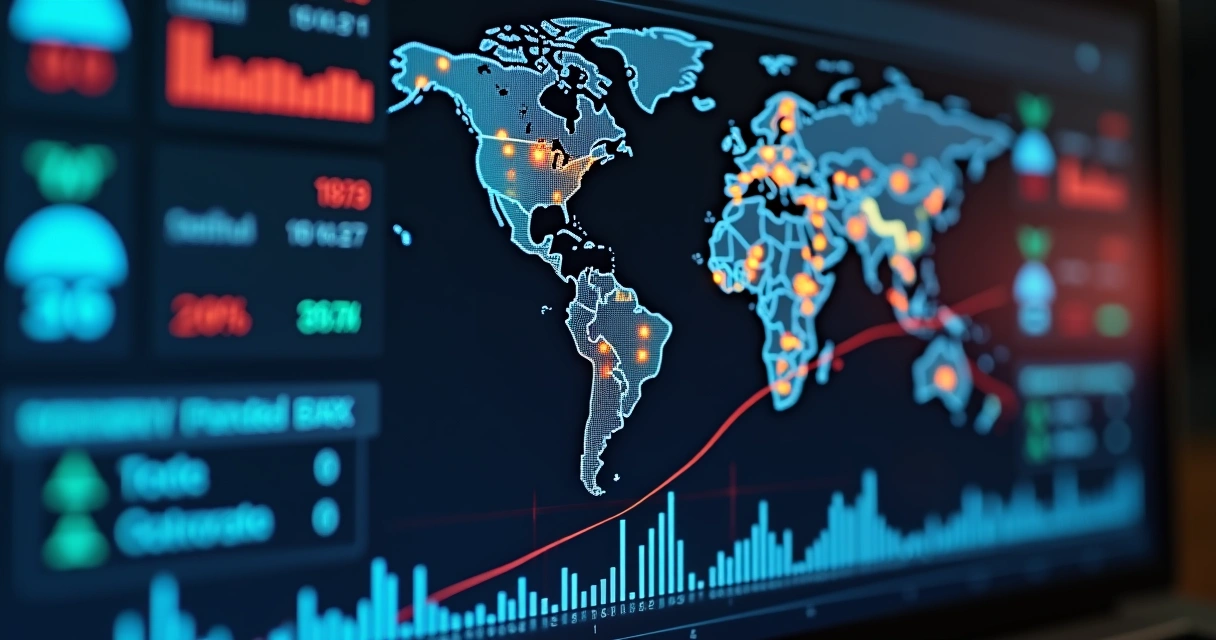
Key functionalities: how today’s platforms empower decision-makers
Trading-oriented calculator
Among UHEDGE’s standout offerings is an advanced calculator engine that handles instant design, simulation, and pricing for multiple types of derivative structures. Users can configure vanilla, swap, or option contracts, create fences or accumulators, layer in barriers, and test outcomes across scenarios in seconds.
This means that even the most complex hedging strategies are not only within reach but delivered with quantitative confidence, regardless of transaction size or market volatility.
Algorithmic access to advanced instruments
Previously, access to bespoke contracts like OTC derivatives or exotics required negotiation and approval with counterparties, adding delay and often conflict of interest. In platforms such as UHEDGE, users gain direct, algorithmic access—replicating complex market positions without leaving the platform. This democratizes sophistication and reduces unnecessary intermediation.
Market analytics, visualized
Live dashboards bring transparency to risk. UHEDGE’s visualization tools decode the so-called “vol surface”, volatility smiles, and futures curves, turning mathematical abstraction into intuitive, actionable displays. For managers, seeing potential shocks before they happen becomes a routine reality, not guesswork.
Position monitoring in real-time
As portfolios evolve, real-time mark-to-market (MTM) valuations, stress tests, and volume-of-origin analytics update continuously. Automated EOD (end-of-day) reporting, coupled with rich performance breakdowns, support compliance and financial planning—without adding to administrative burden.
Addressing sector challenges: agribusiness, energy, and industry
No two commodity operations are precisely alike, yet the challenges they face share three major themes:
- Price volatility, intensified by global shocks, supply disruptions, or policy shifts.
- Multi-location, multi-asset, multi-currency complexity—operations often span continents.
- Operational risk, arising from both physical logistics and financial exposures.
Strong platforms offer more than just mathematical models. They encode twenty years of front-line experience, industry best practices, and learning from thousands of market crises.
Agribusinesses may face weather-driven swings in crop prices; energy players contend with supply chain shocks; industrial firms must budget amid fluctuating input costs. With commodity software integrating operational, procurement, and trading processes, siloes come down, enabling coordinated, strategic decisions with the full picture in hand.
Indispensable reading for those navigating these pressures can be found in deep-dive articles such as how to protect margin in unpredictable commodity markets and sector context at the commodities blog section.
Direct impacts: improved results and resilience
- Faster and better market timing: Action triggers and price alerts reduce delay, maximizing the benefit of each opportunity.
- Lower costs and tighter margins: Automated hedging and reduced need for intermediaries mean savings that fall straight to the bottom line.
- Consistency and discipline: Algorithmic models apply controls at all times, enforcing policy and governance to prevent unmonitored exposures.
- Improved liquidity management: By synchronizing cash flow, margin requirements, and expected exposures, cash surprises become rare rather than routine.
- Clarity in compliance: Integrated governance workflows mean audit trails are always complete and up-to-date.
Real results: a snapshot from UHEDGE
By applying model-based strategies and real-time tracking, companies have outperformed legacy derivatives methods and survived global turbulence. In the coffee sector, UHEDGE systems helped managers structure hedges that consistently beat typical leveraged derivatives in equivalent value over time. In a more volatile year, such tools helped hedge energy, metals, and agriculture dynamically, providing a buffer against wild price swings and ensuring clear, confident reporting to boards and regulators.
Specific use cases: from physical to derivative markets
Commodity software’s strength lies in its versatility across the spectrum:
- For physical traders, it synchronizes contract management, logistics, and quality tracking with financial exposure and invoice flow on a single platform.
- For derivative users, it provides simulation, customized hedging, and risk rebalancing with one-click access to advanced instruments and scenario testing.
- Hybrid portfolios benefit from automated reconciliation—every shipment, payment, and price risk aligns with real-time analytics, revealing unintended exposures before they become expensive mistakes.
In every context, the result is better-informed, quicker, and more consistent decision-making—regardless of the complexity or scale of the operation.
The future: AI, continuous learning, and market leadership
The impact of artificial intelligence in commodity risk and trading is only set to grow. By automating the recognition of market signals, learning from historical events, and rapidly recalibrating strategies, tomorrow’s platforms will reduce human error and create adaptive organizations.
Industry opinion is gradually shifting. Ten years ago, predictive modeling and AI recommendations were seen as luxuries; today, they are indispensable in many boardrooms. As regulations grow tighter and expectations for governance increase, systems like UHEDGE offer every client a competitive edge that is hard to match through manual means alone.
Tomorrow’s market winners are built on today’s intelligent systems.
Uhedge: delivering real, measurable benefits
UHEDGE, together with STATERRA, is not just building tools but reshaping how commodity-driven enterprises perceive and respond to risk. Their “digital treasury” model provides:
- Complete aggregation of all financial and physical operations
- Real-time market intelligence and tactical recommendations based on proprietary AI
- Dynamic modeling and simulation for all major exposures
- Customization to each client’s risk profile, financial objectives, and liquidity constraints
- Unified end-to-end visibility: from the moment a deal is struck until the last shipment is settled
These advantages translate directly into higher margins, fewer surprises, and a steadier path for growth—backed by expertise in complex markets, from coffee to fuel oil to industrial metals. For those interested in practical breakdowns, a step-by-step guide to hedging strategies is available in the practical hedge guide.
Conclusion: take control with next-generation commodity management
Centralizing risk and trading through advanced software is not a futuristic vision—it is available, accessible, and already delivering results across some of the world’s most complex supply chains. The era of fragmented, slow, and reactive trading is ending. Those who embrace real-time analytics, deep integration, and agile risk management set themselves apart in resilience, compliance, and profitability.
The UHEDGE ecosystem stands ready to guide you from first insight to confident execution. To see how AI-driven digital treasury systems could transform your own operations, book a diagnostic with the UHEDGE team. Why wait for volatility to dictate your results, when technology and expertise can tilt the odds in your favor?
For additional reading on frequent errors in commodity hedging and how to avoid them, see the post on common mistakes and their solutions. Discover more at UHEDGE, and take the future of risk into your hands.
Frequently asked questions
What is commodity trading software?
Commodity trading software is a specialized digital platform designed to help businesses manage, track, and analyze physical and derivative commodity contracts, risks, and financial exposures. It centralizes real-time price data, inventory information, and trading position details, empowering users with automated workflows, analytics, and advanced reporting for better decision-making.
How does commodity software centralize operations?
By integrating all market data, contract details, physical shipments, and financial exposures into a single, live system, commodity management platforms provide a unified workspace. This means users no longer have to switch between disconnected spreadsheets, emails, and legacy systems—instead, every operation, update, and analysis is available instantly and is always synchronized across teams.
Is commodity management software worth it?
For organizations exposed to commodity price risks, scalable management platforms typically offer measurable returns, including higher margin retention, lower operational costs, and tighter risk controls. By automating repetitive tasks and providing real-time analytics, these platforms not only pay for themselves but can boost profit and protect against sudden market shocks.
What are the top features to look for?
When evaluating a solution, prioritize: unified data aggregation, real-time analytics dashboards, customizable hedging tools, algorithmic access to derivatives, inventory and logistics tracking, automated compliance reporting, and AI-driven risk recommendations. The ability to personalize risk strategies and monitor positions continuously is especially valuable.
How much does commodity software cost?
Pricing can vary widely based on organization size, required features, and implementation complexity. Some solutions operate as cloud subscriptions, while others may require more customized installations. The most meaningful cost comparison is not just licensing, but also the operational savings and risk reduction achieved—eg., the ability to capture market opportunities faster, reduce hedging costs, and avoid compliance fines.
Start your transformation today with UHEDGE: centralize risk, maximize margins, and let expertise work for you.