The world of commodities is never quiet, but what’s expected for 2026 stands out even by recent standards. Energy, softs, and metals alike are entering a whirlwind of price fluctuations, shaped by global events and rapid market evolution. Financial professionals in agribusiness, energy, and industry are bracing for change, some with concern, others driven by the search for tactical advantage. How can sophisticated technology help companies turn volatility into a strategic opportunity?
Global uncertainty is the new constant
Recent releases from the World Bank highlight a key paradox: while average commodity prices are projected to decline through 2025 and 2026, with energy dropping by up to 6% in 2026 and food down another percent, the background is anything but calm. Volatility is expected to persist, stemming from geopolitical shocks, shifts in macroeconomic policy, and the limitations of supply chains recovering from global disruptions. Price drops on average do not mean stability for all participants—individual peaks and troughs are likely to be more extreme.
The energy transition adds new dimensions. As producers and consumers shift quickly toward renewables, traditional benchmarks like Brent crude are forecast to fall to $60/barrel. However, these “headline” numbers mask the turbulence that comes from rapid changes in demand patterns and regional dynamics across fuels, grains, and metals alike. The result? Commodity risk exposures are harder than ever to quantify and mitigate.
Why traditional risk tools fall short in 2026
Many companies default to legacy processes: fragmented spreadsheets, delayed manual updates, or the uneven discipline of periodic check-ins. In the age of the commodity volatility surge of 2026, these methods can’t absorb the sheer speed and complexity of market changes. Internal teams alone are unable to efficiently track all the factors shaping market prices, from short-term weather shocks to global monetary policy pivots.
Even when companies invest in OTC derivatives through conventional brokers, two limitations persist: high costs erode margins, and recommendations may lack quantitative depth, often favoring the counterparty over the client. As noted in sector analysis, what’s missing is a centralized, data-driven environment for disciplined, real-time risk management, not just a patchwork of separate operations across FX, interest rates, and commodities.
For a specialized look at the inefficiencies and risk fragmentation in commodity price management, the article on protecting against commodity volatility makes clear how advanced technological solutions can transform these challenges into structured opportunities.
AI and quantitative modeling: Foundations for the digital treasury
Within this turbulent environment, UHEDGE and its ecosystem partner STATERRA are responding with an integrated, AI-driven digital treasury platform. This solution is specifically designed to manage multiple market exposures, reduce operational complexity, and provide a single dashboard view of risk. Centralized software equipped with artificial intelligence and modern statistics empowers companies to both monitor and act rapidly on evolving market data.
- Automated pricing and construction of complex hedging structures, including accumulators, fences, and customized options, all suited to prevailing market conditions and individual risk profiles.
- Instant access to OTC derivatives through replicating algorithms, eliminating the opacity that so often defines broker-driven deals.
- Deep analytics: visualization of volatility surfaces, futures curves, and volatility smiles, all derived from rigorous quantitative models.
- Unified monitoring: tracking the real-time mark-to-market (MTM) for every position, alongside performance and underlying risk metrics across physical trades and financial contracts.
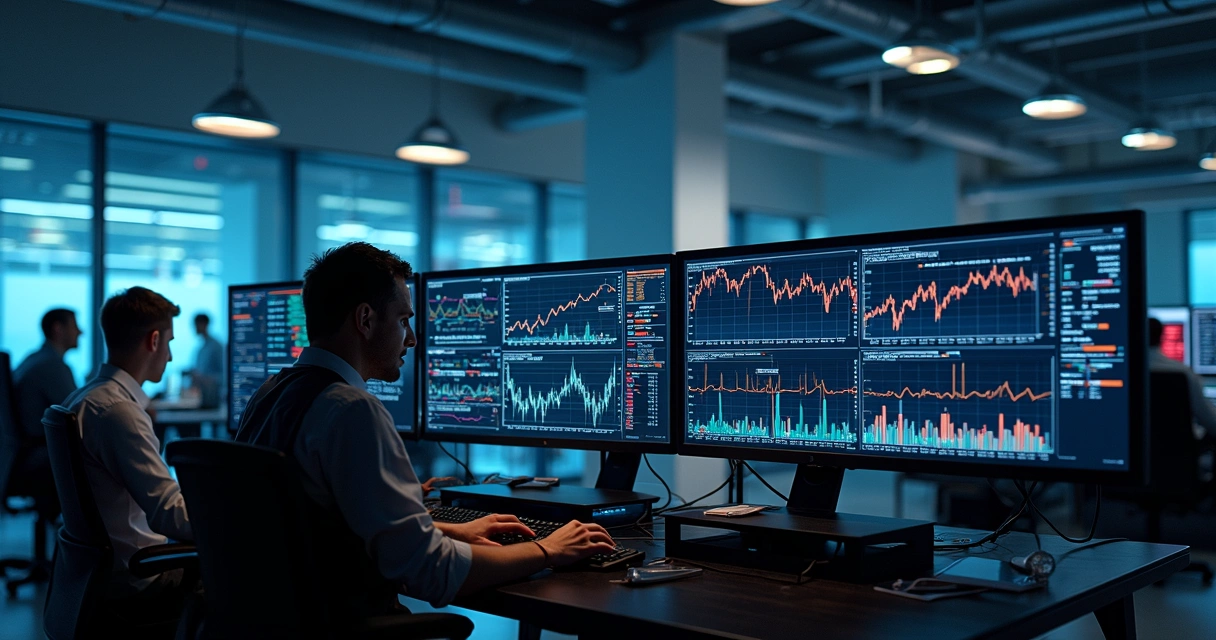
Through combining these features, the platform transforms risk responsibility from a source of anxiety into a springboard for better decision-making and margin improvement.
Real-world AI use cases in volatile commodity markets
How does this work day to day, particularly in the face of heightened volatility?
Predictive analytics for price shifts
AI models can process vast sets of market data, from macroeconomic releases to localized weather events and transportation bottlenecks. By simulating multiple scenarios, companies receive signals about likely price moves, enabling tactical adjustments before detrimental swings occur. This is especially relevant for commodities like coffee or grain, where past UHEDGE implementations have shown AI-driven hedging outperforms typical risk strategies, even during disruptive global episodes.
The monitoring functions stretch beyond predictions. Complete, real-time position tracking, for both physical shipments and derivative contracts, means exposure models update instantly, helping leaders avoid risky blind spots.
Visibility everywhere, all at once.
The unified view provided is not just a convenience. It is the difference between catching an opportunity and reacting too late.
Data-driven automation for hedging strategy
Traditional hedging often means slow approval cycles and missed timing. With a digital treasury architecture, automated rules and AI-powered recommendations select optimal structures in real time, considering market shocks and each company’s tailored risk profile. This automation prevents the “human bottleneck” in risk response, and with ongoing data feeds, recommendations improve as market conditions shift.
This is reflected in case studies published at commodities: risks and opportunities in Brazil, which show how integrated monitoring combined with algorithmic trading has supported both stability and upside across agri and energy portfolios.
The power of scenario planning and unified data streams
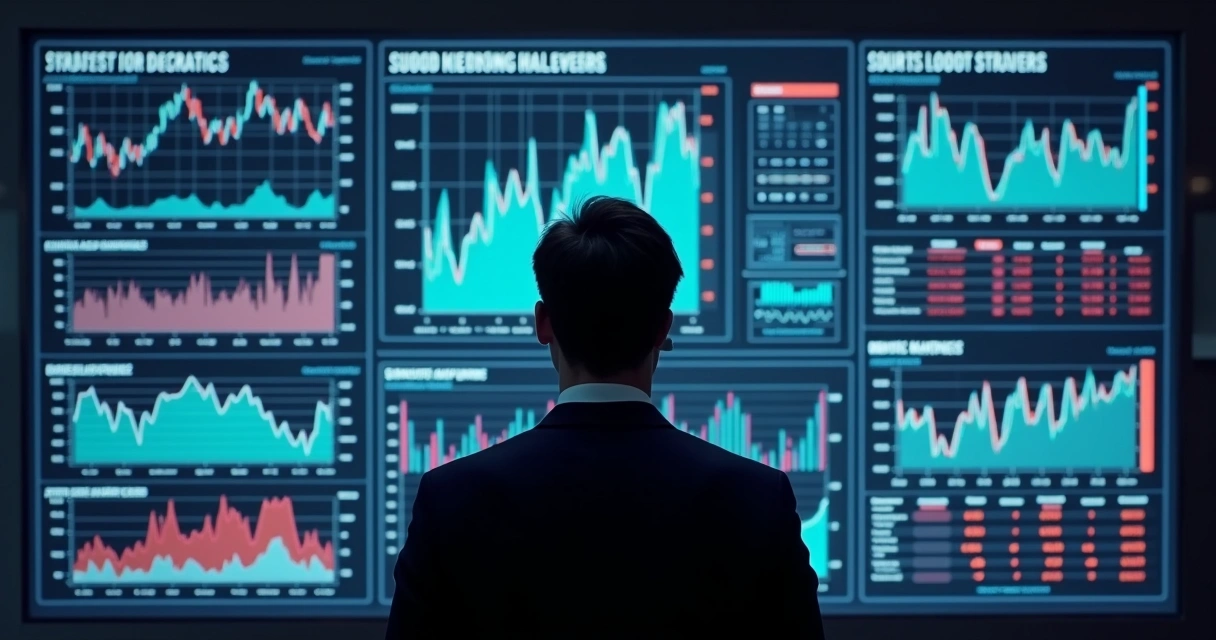
One of the breakthroughs of digital treasury systems is the consolidation of multiple data sources, spot prices, futures, physical flow, fundamentals, and even regulatory changes, into a single analytics matrix. Scenario tools let users model the impact of different shocks, from geopolitical tensions to rapid climate changes affecting harvests or mine operations. By planning for a spectrum of possible futures, finance teams develop responses in advance rather than improvising amidst crisis.
Such scenario planning also strengthens governance. With end-of-day (EOD) and automated performance reports, businesses can prove compliance, validate hedge effectiveness, and satisfy audit requirements without a patchwork of disconnected records. These features are detailed in the risk management best practices section of the UHEDGE resources.
The bottom line: Insights for 2026’s market turbulence
By uniting data, analytics, and automation in a central environment, companies future-proof themselves against the specific challenges of 2026. Highly volatile environments offer both risk and rare opportunity, and the gap between success and failure is measured in strategic speed and discipline. UHEDGE’s digital treasury exemplifies this new order: scientific rigor applied immediately, at scale, and customized to each sector’s needs.
In 2026, market agility will define financial resilience.
Ready to take the next step in commodity risk discipline? Initiate a personalized diagnostic with the UHEDGE team and experience first-hand how digital treasury technology helps you gain clarity, speed, and strategic control. Visit the commodity insights archive or reach out for a tailored demonstration, transform potential volatility into measurable value.
Frequently asked questions
What causes commodity volatility spikes in 2026?
A mix of global geopolitics, macroeconomic realignment, surprises in supply and demand, and the acceleration of energy transition are driving profound swings in commodity prices for 2026. Even though average prices are projected to trend lower, the underlying data suggests wild fluctuations for sectors sensitive to disrupted logistics, region-specific weather, or investment trends, as documented by recent World Bank analysis.
How can AI help manage commodity risk?
Artificial intelligence enables companies to automate in-depth market scenario simulation, forecast price trends, and analyze massive data sets beyond human limits. Integrated platforms make real-time suggestions on optimal hedging tactics and provide continuous portfolio and risk monitoring. As seen in UHEDGE’s implementations, AI delivers both advanced analytics (like volatility surface mapping) and actionable recommendations tailored to each company’s risk appetite and timing needs.
Is investing in volatile commodities risky?
Investing in commodities with high price swings always involves risk, especially for those with unhedged exposures. That said, organizations using strong statistical modeling, automated AI risk controls, and rigorous scenario planning can manage, and often mitigate, the negative impacts, sometimes even turning volatility into an advantage with well-timed, data-driven actions.
Which commodities will be most affected in 2026?
According to the World Bank’s commodity markets outlook, energy (particularly fossil fuels), some agricultural products, and certain metals will experience continued pressure and unpredictable shifts as demand evolves and supply chains adapt post-pandemic and into the energy transition era. Gold, while stabilizing, is expected to remain elevated above pre-pandemic levels due to persistent financial uncertainty.
What are the best AI tools for risk management?
The most effective AI solutions include unified digital treasury platforms that integrate predictive analytics, trading-oriented calculators, real-time scenario planners, and end-to-end position monitoring. The UHEDGE system exemplifies these principles, combining quant discipline with AI-driven automation to empower finance leaders throughout commodities, energy, and industrial sectors. More on practical AI adoption and risk discipline can be found in the section on proactive margin protection.