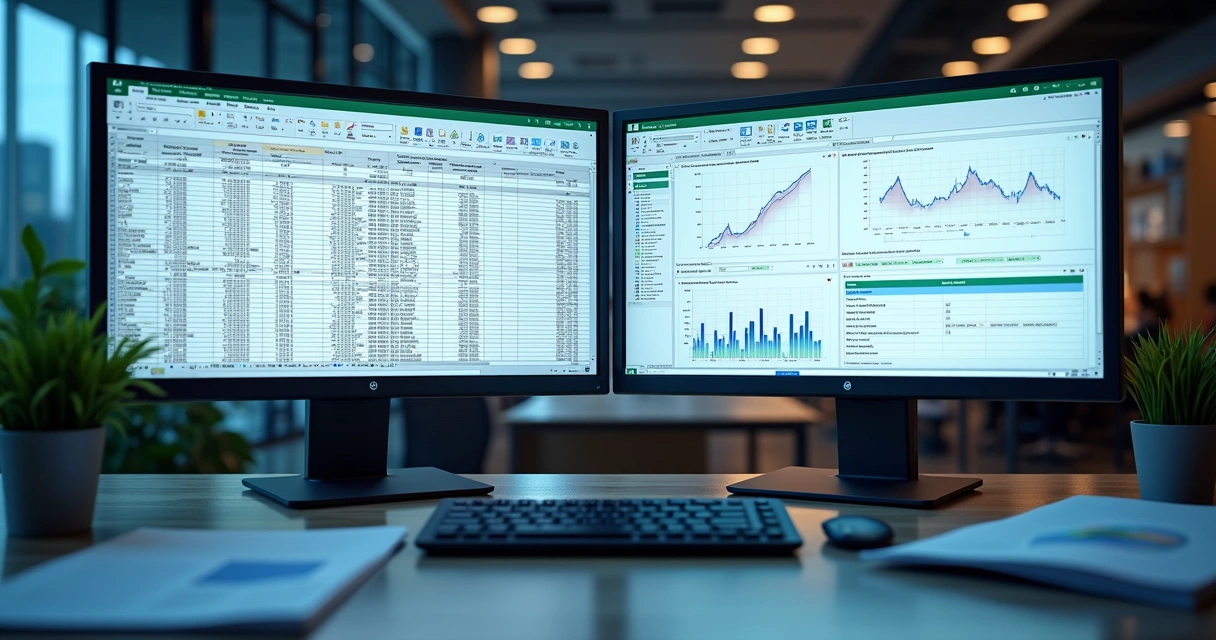
When the market whipsaws, a CFO’s pulse rises. Across agribusiness, energy, and heavy industry, finance leaders face one relentless question: how to keep uncertainty from escalating into loss? Some still trust their fate to the humble spreadsheet. Others look to intelligent digital treasury platforms. The stakes are real, the tools divergent, and the answer is not as obvious as it first seems.
The traditional spreadsheet comfort zone
For decades, Excel has been the backbone of corporate finance. It’s flexible, instantly available, and familiar. Many teams build intricate models for pricing, foreign exchange exposure, and commodity hedging. CFOs often recall years when spreadsheet-driven risk management felt manageable—until it wasn’t.
One faulty cell, and the numbers dissolve.
In theory, spreadsheets enable tailored controls. In practice, however, cracks appear when complexity grows. Changes in market volatility, global economic shocks, and automation demands all push spreadsheets to their limits, especially as companies grow beyond a handful of deals or currencies.
Where spreadsheets fall short in risk oversight
The vulnerabilities of Excel are no secret to teams who have experienced sudden losses or compliance headaches. These are not just minor inconveniences—they are risk exposures hidden in plain sight.
Manual errors: tiny mistakes, costly consequences
Spreadsheet literacy varies across organizations. Even one missed minus sign or accidental overwrite can produce incorrect exposure calculations, misvalued options, or misreported cash positions. Audit trails are thin at best. When multiple people share files, the likelihood of conflicting changes increases, while the ability to reconstruct decisions evaporates.
Consider the agribusiness manager who uncovered missing line items in a crucial FX hedge report, only after a quarter-close. The financial hit, and the scramble to explain, were not soon forgotten.
Version control: chaos with every copy
Each emailed spreadsheet is a new branch of reality. Files accumulate with suffixes like “final_version2” and “reviewed_Joe,” causing confusion over which number is correct. In fast-changing markets, basing a decision on an out-of-date model can expose an organization to serious surprises.
Dispersed data: a scattered puzzle
Spreadsheets rarely stay in one place. Data feeds, deal details, and counterparty information often live in different files, folders, or even departments. Aggregating the full picture for commodity pricing, FX, or interest rate hedges becomes a scavenger hunt, not a process. This fractured landscape blinds teams to the actual risk on the books.

Compliance and audit: fragile transparency
Regulators and auditors increasingly request detailed documentation on pricing models, risk practices, and transaction histories. Spreadsheets, by nature, leave weak audit trails and lack the robust permission controls needed to prevent unauthorized changes. Piecing together a historical record from a sequence of files is frustrating, if not impossible.
The digital treasury advantage in modern risk management
Advanced digital treasury solutions aren’t just a trend—they’re a direct answer to the issues that plague spreadsheet controls. Projects like UHEDGE demonstrate how technology can bring tangible improvement to risk supervision through artificial intelligence and scientific rigor.
UHEDGE Trading Solutions and STATERRA Asset Management have built an ecosystem that connects pricing models, exposures, and strategic decisions within a single, AI-driven platform. This is no small thing for CFOs under pressure to ensure swift adaptation and reliability amid market swings. Their quantitative analytics and trading-oriented calculators provide real-time clarity that spreadsheets cannot.
Centralized data: one version of the truth
Digital treasury systems connect physical and paper-based operations in a unified database, providing full visibility into all exposures. With real-time synchronization, CFOs monitor the entire organization’s positions—currencies, interest rates, commodities—with confidence.
Suddenly, manual data hunts and mismatched reports become relics of the past.
Algorithmic processing and replication
The ability to replicate OTC derivatives or analyze complex hedge structures happens within seconds, not hours or days. Digital treasury engines apply quantitative models that update exposures, simulate scenarios, and alert decision-makers far faster than any spreadsheet refresh or recalculation.
Audit trails and compliance made easy
Every user interaction in a digital treasury leaves a clear trace. From initial trade entry to final report output, permission-based tracking and version history make oversight easy. Compliance teams can query old positions, reveal user changes, and reconstruct rationales behind financial decisions. This level of transparency answers modern audit demands directly.
The UHEDGE Risk Management Knowledge Base brings further insights about robust audit practices in contemporary treasury setups.
Fast response in turbulent markets
With real-time monitoring and AI-driven alerts, CFOs gain time to assess exposures and adjust strategies as markets move—not after the fact. The system’s speed and intelligence bring a level of proactivity that spreadsheets are simply not built to support.
Real-world stories: lessons from the front line
Industry professionals remember the pain of spreadsheet slip-ups. An energy company’s financial director once shared that a single broken reference in a complex commodity hedge model went unnoticed for weeks, masking millions in exposure. Only when a competitor’s price jump triggered extreme market volatility did the error become visible—and by then, the window for a smart hedge had closed.
Digital treasury systems, such as those in the UHEDGE ecosystem, catch such issues in real-time. Automated dashboards flash anomalies. Mark-to-market changes arrive instantly. Finance teams respond to shifts with confidence, instead of rushing to reconstruct history after the event.
Impact for CFOs and decision makers
For senior leaders, the risks are personal. Accountability for mistakes, slow reactions, or compliance failures often rests at the top. Today’s digital risk control tools offer more than automation. They deliver measurable gains in control speed, auditability, and decision quality.
One version, one story, zero guesswork.
- Better visibility into all positions
- Instant detection of errors or gaps
- Systematic documentation for easier audits
- Stronger internal controls through automation
- Ability to explain and defend decisions even in high-pressure scenarios
The impact compounds over time, especially as business volume grows and new regulations emerge. Those who move past spreadsheets find themselves prepared, not just compliant.
The future: why digital treasury is setting the standard
As commodity pricing, FX, and interest rate markets become more volatile, the structural limitations of spreadsheets only become more obvious. Meanwhile, digital treasury systems constantly improve with new data science, AI models, and integrations with broader financial ecosystems. Transitioning is not about keeping up with trends—it’s about building a foundation for the stability and growth of the business.
Making the shift in practice
Migration from Excel to digital treasury software requires planning, training, and a willingness to rethink legacy processes. But once the switch is made, organizations quickly see how streamlined controls, automation, and integrated analytics produce quicker, safer decisions. They also enjoy less time spent firefighting, and more time spent on forward-thinking strategy.

Those interested in learning more can read about efficient currency hedge strategies at this resource and view practical hedge protection approaches at the UHEDGE practical guide.
Conclusion: making risk control safer, smarter, and faster
In the battle between Excel and digital treasury, the winner is clear when looked at through the lens of modern risk oversight. Spreadsheets, while flexible, bring vulnerabilities: manual error, scattered data, fragile compliance trails, and slow response times. Today’s AI-driven platforms like UHEDGE, by contrast, enable unified control, auditability, and strategy at a new level. CFOs now have the opportunity to sleep more soundly, knowing that their organizations are equipped for both the expected and the unexpected.
For leaders ready to step beyond spreadsheets, reaching out to UHEDGE and exploring further insights at this article is a practical next step. For those curious about fintech innovations in this space, the UHEDGE fintech transformation piece is an excellent place to start. Discover how a safer, smarter approach to risk is within reach.
Frequently asked questions
What is risk control in treasury management?
Risk control in treasury management refers to the systematic approach companies use to identify, measure, monitor, and manage exposures to market variables such as interest rates, foreign exchange, and commodities. The process combines finance tools, policies, and technology to reduce uncertainty and help ensure that market fluctuations do not threaten business goals.
Are digital treasury tools safer than Excel?
Digital treasury tools are generally much safer than Excel spreadsheets for managing risk because they enforce stronger data security, streamline user permissions, provide centralized data, and generate audit trails automatically. This reduces the chance of manual errors, version mix-ups, and unauthorized changes—strengthening financial oversight and compliance.
How do spreadsheets compare for managing risks?
Spreadsheets can still be useful for simple calculations or one-off reports, but for ongoing supervision of exposures, they carry high risk of manual mistakes, scattered data, and poor visibility. Digital treasury platforms bring advantages like real-time data, integrated analytics, and better control, all of which add up to deeper and more reliable risk supervision.
Is it worth switching to digital treasury?
For companies with significant market exposure—such as those in agribusiness, energy, or complex manufacturing—switching to a digital treasury system is often worth the investment. The gains include improved transparency, faster response to market changes, and easier compliance, which together help protect profits and reputation.
What are common risks of using Excel?
Common risks of using Excel for risk management include accidental errors, lost data, conflicting versions, limited auditability, and inability to handle complex scenarios. These factors can result in unreliable reporting, surprise exposures, and compliance problems—especially as the volume and complexity of business grow.