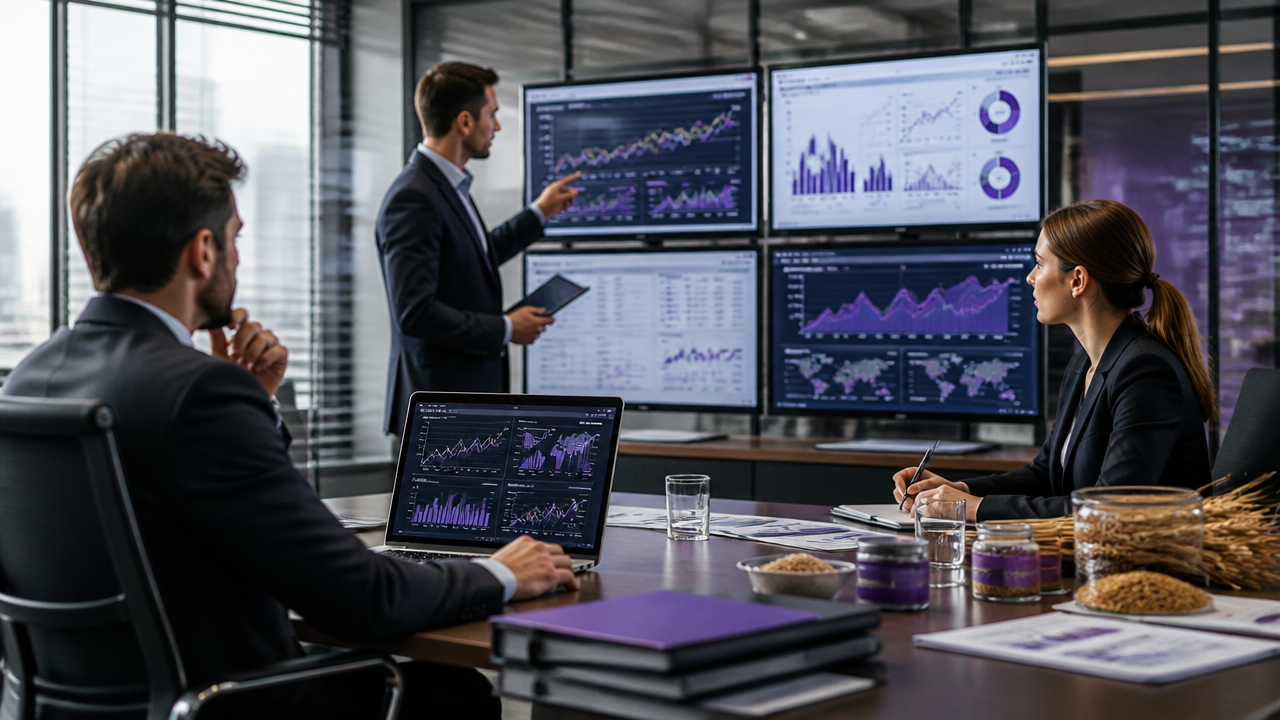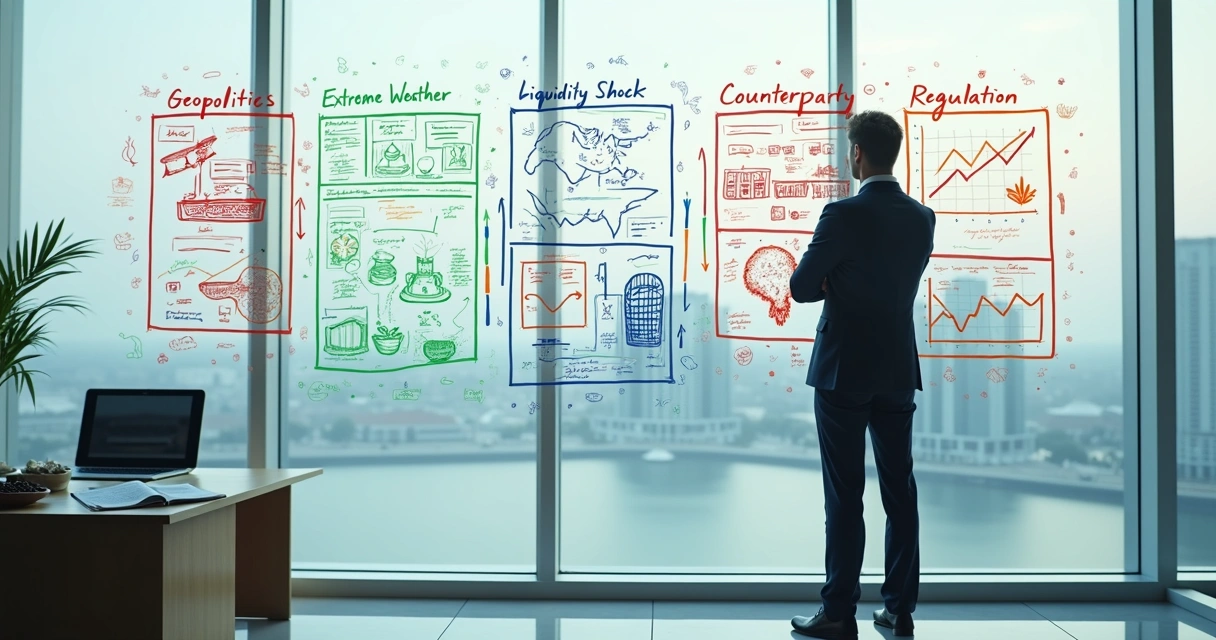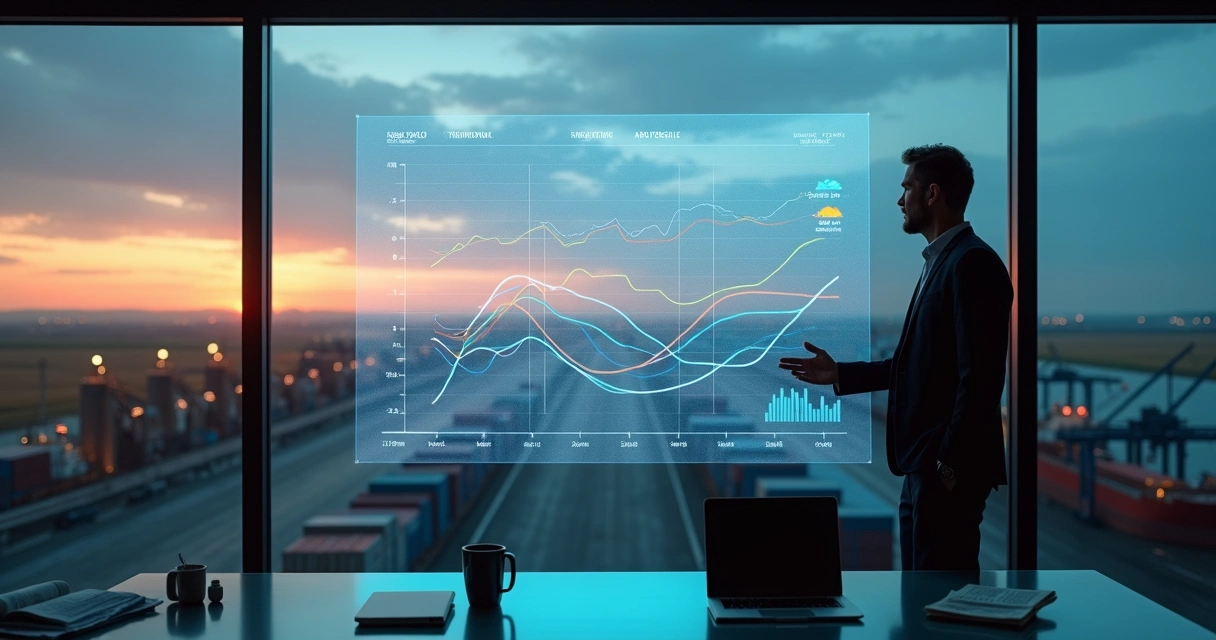
The landscape of agribusiness is defined by volatility. Every season, CFOs face a whirlwind of uncertainties: shifting commodity prices, swinging exchange rates, unpredictable weather, and international policy changes. It is in this challenging terrain that scenario planning has evolved into one of the most effective tools for guiding harvest revenue assessments and ensuring price protection.
Understanding future risks in advance changes everything. It invites clarity, so decision-makers act with knowledge rather than react to chaos.
UHEDGE, together with STATERRA, stands at the forefront of this transformation, delivering rigor and digital intelligence to forecast results and empower agribusiness CFOs with foresight that once seemed out of reach. For those interested in deepening their understanding of hedging in agribusiness, UHEDGE’s blog on derivatives for predictability is a valuable resource.
The basics of scenario modeling in agriculture
Scenario analysis, sometimes called downside or upside simulation, is a technique that calculates likely financial results based on a range of possible future conditions. In farming, these future conditions might include:
- Market price moves for key crops like soybeans or corn
- Currency exchange rate shocks that impact export or import margins
- Weather events, ranging from minor droughts to catastrophic storms
- Shifts in input costs or logistical access
The practice goes beyond just numbers. The key is integrating these variations into structured, testable models. With the right tools, CFOs “see ahead”, understanding how harvest revenue could shift if prices fall by 15%, or if rainfall drops by 20% at a critical time.
Seeing is acting. Guessing is hoping.
UHEDGE’s proprietary system provides this modeling power. The alliance applies quantitative models and AI to simulate impacts for each variable, eliminating guesswork and supporting robust managerial strategies.
Step-by-step: How scenario simulation supports predictability
The process begins with defining the main exposures. For CFOs in agribusiness, these often relate to:
- Commodity price risk (as revenue is directly tied to market prices)
- Currency fluctuations (especially for exporters and importers)
- Interest rates and credit access
UHEDGE, through its Digital Treasury environment, allows enterprises to bring all physical and derivative exposures into one clear space. This aggregation is the foundation of disciplined scenario analysis:
- Identify key risk factors
These are variables most likely to affect the bottom line, such as the dollar price for soybeans or ethanol demand in foreign markets.
- Gather historical and forecast data
Drawing from both internal records and external market forecasts grants scale and structure to the simulated scenarios.
- Define possible outcomes
Choose a range of positive, moderate, and negative changes for each risk. For example, grain prices increasing by 10%, staying flat, or falling by 20%.
- Model revenue and cost impacts
Applying quantitative rigor, run these new inputs through the UHEDGE system. See how every shift would affect cash flow, balance sheet, and credit requirements.
- Review the results visually
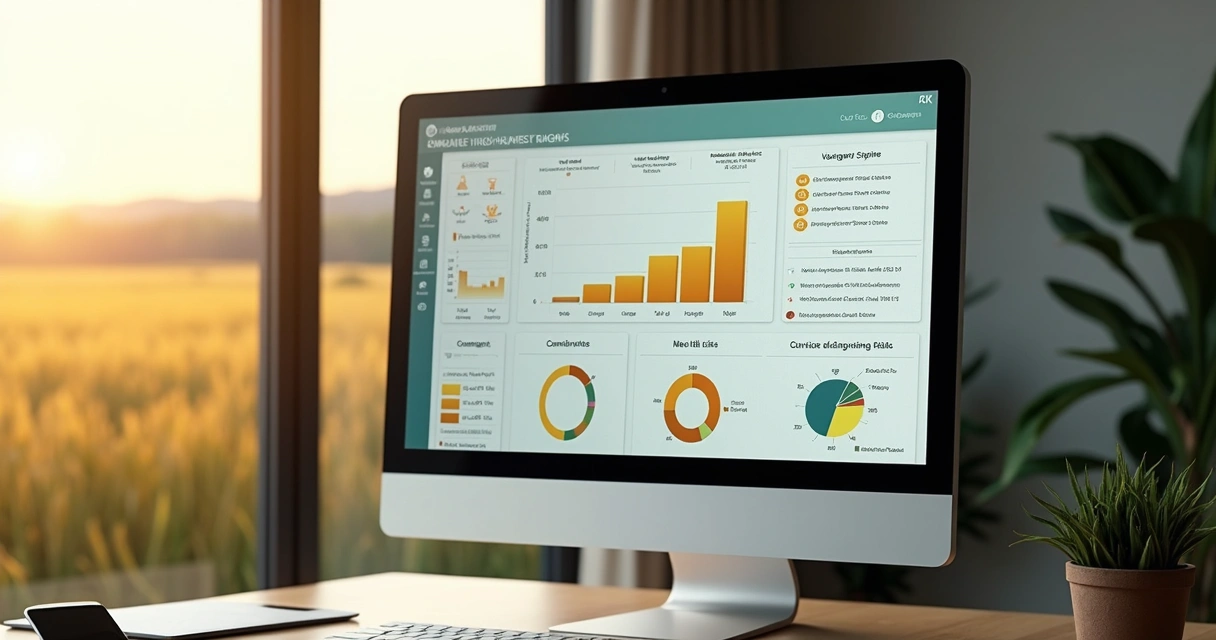
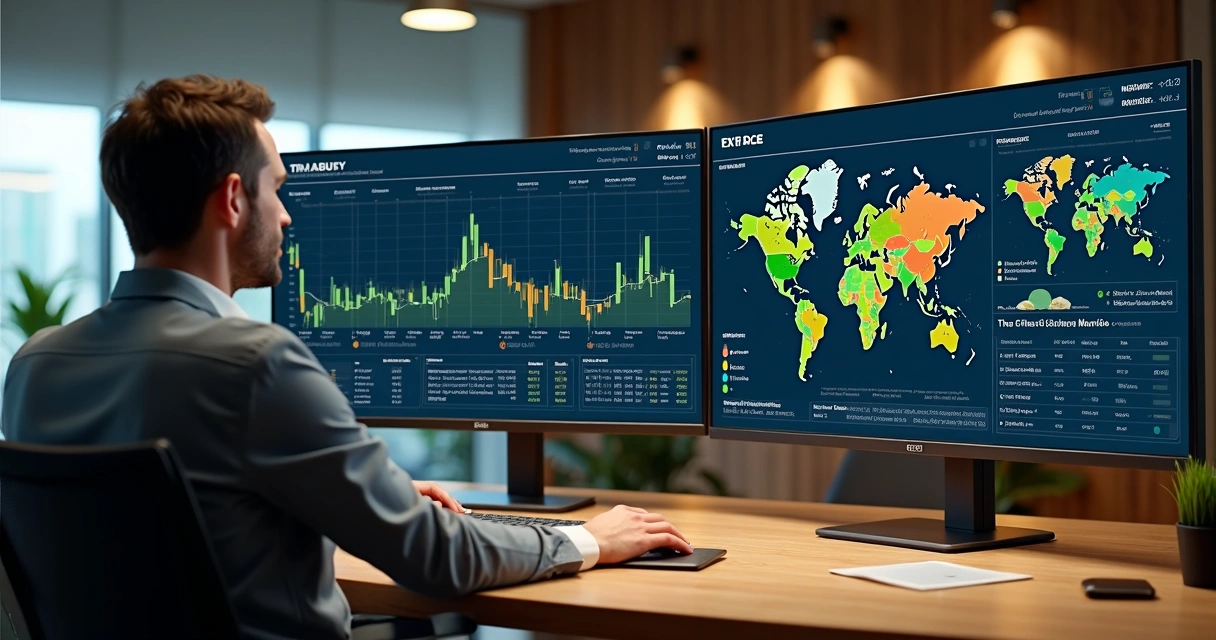
The platform delivers visualizations of the volatility surface, futures curves, and other analytics for clear, immediate comprehension.
- Adapt strategies before risk materializes
This step empowers CFOs to design pre-emptive actions. For instance, placing hedges or renegotiating contracts when a negative scenario seems more likely.
Market, climate, and currency: The dynamic trio in scenario modeling
No scenario plan for a farming business can ignore the intertwined effects of market prices, weather, and currencies. Sometimes, all three move together, compounding the challenge—or the opportunity.
Let’s examine a practical example inspired by real UHEDGE case studies:
Grain prices fall 12% due to a global supply surge. The local currency, however, depreciates 18% versus the dollar, partially offsetting the revenue drop for exporters. Meanwhile, local input prices climb because fertilizers—priced in hard currency—become costlier.
This tangle of changes quickly overwhelms manual or siloed approaches. UHEDGE’s integrated model responds by running hundreds of combinations instantly, highlighting where revenue would land and what price protection steps are most effective.
For CFOs and treasurers, scenario modeling answers tough questions, such as:
- What if international prices collapse, but the real weakens?
- How does a drought impact cash flow, and can insurance or financial hedges fill the gap?
- Is now the time to lock in prices, or wait?
Readers seeking more about commodity price risk can find deeper exploration at UHEDGE's blog on protecting against commodity volatility.
How scenario simulation shapes active strategy
Scenario analysis isn't just about predicting bad news. It is about giving managers the ability to act with speed and confidence, no matter what the market brings.
At UHEDGE, simulations aren’t performed once and left aside. Continuous re-assessment is vital. The system tracks real-time information—market moves, weather reports, policy news—and recalibrates outcomes as new data arrives. This agility ensures that protective strategies, such as hedges or contract renegotiation, stay aligned with the actual risk landscape.
- Daily or weekly scenario runs adapt to fresh data
- Automated dashboards update all exposures at once
- Active monitoring flags risks that move outside acceptable bands—before they harm the profit
Success cases with UHEDGE and STATERRA prove the impact. For example, when managing coffee price exposure, the system was configured with maximum leverage constraints and price targets for a set volume. It consistently outperformed traditional hedge pricing, maximizing gains while keeping risk in check. Insights from artificial intelligence within the system mark out precise entry and exit points—no guesswork, only guided action.
For those in bioenergy or industrial supply chains, the connection is just as clear. Fluctuating sugar prices, ethanol demand, or even indirect exposures (like steel for machinery) are all brought together, correlated, and instantly projected into the company's financial plans. The outcome? Smooth cash flows, easier loan negotiations, and the confidence to invest further. More on this process can be found at UHEDGE's post on financial planning for commodity plants.
Turning insight into action: What does this mean for the CFO?
In summary, any agribusiness CFO wanting more control can rely on advanced scenario simulation as delivered by UHEDGE. The steps are clear: centralize data, simulate major risks, review impacts, and take disciplined pre-emptive measures. This process moves cash flow management away from reactive firefighting toward clear, data-driven planning.
The value is not just in prediction—but in strategy and action. A farm that plans for rainfall shocks, currency swings, and market surprises does not just survive. It thrives.
Readers interested in specific sector challenges, such as mining or cyclical industries, may want to review the internal perspective at UHEDGE on risk management for cyclical sectors.
Conclusion: The next step with UHEDGE and STATERRA
For business leaders ready to leave uncertainty behind, the next move is proactive and consultative. UHEDGE and STATERRA invite companies to a strategic risk diagnosis, identifying the perfect scenario planning approach for each unique exposure set. Through this process, clients access almost two decades of elite financial and quantitative intelligence, now directly applied to their harvests, plants, and trading desks.
To discover how digital scenario simulation can transform your price protection, cash flow visibility, and revenue forecasting, schedule a risk and strategy diagnosis with UHEDGE or request a demonstration of their Digital Treasury in action. When the future is clearer, the results are consistently better.
Frequently asked questions
What is scenario analysis in farming?
Scenario analysis in agriculture means using structured simulations to forecast how changes in market prices, weather, and exchange rates will impact expected harvest revenue and business decisions. It transforms raw data into clear, actionable projections so CFOs can make informed choices about risk protection.
How does scenario analysis improve predictions?
By using advanced statistical models and real-time data, scenario analysis tests many different “what-if” possibilities, rather than relying on a single forecast. This means revenue projections capture a more realistic range of results, guiding flexible, data-driven planning for best and worst cases.
Is scenario analysis worth using for harvests?
Yes, scenario planning provides critical visibility, helping farms and companies anticipate and manage volatility before it impacts their finances. It supports better timing for price protection, financing, and operational planning, giving a level of certainty rarely found by traditional methods.
How do I start scenario modeling?
Begin by listing your biggest risks—like commodities sold, currencies used, and key weather variables. Gather historic and forecast data for each, then use a system like UHEDGE’s Digital Treasury to create, model, and visualize the range of possible outcomes, checking regularly as new data comes in.
What data is needed for scenario analysis?
Relevant data includes historical price series, current futures/optons curves, export/import exchange rates, production cost breakdowns, weather patterns, and insurance contracts. The more detailed the data, the more precise the model—and the more trustworthy the planning becomes.