The global sugar market is unforgiving. Prices swing on whispers of drought, distant weather reports, or sudden policy changes on the other side of the earth. Large agricultural producers, food and beverage manufacturers, and traders know all too well: price risk can turn a winning season into a loss overnight. A robust sugar price risk management strategy isn’t merely an option; for companies with significant market exposure, it is a necessity.
But the challenge is not just volatility. It is complexity. From supply chain shocks to unexpected demand surges, sugar market participants must maneuver through a fog of fundamental, geopolitical, and financial variables. For many, an answer has emerged in the form of sugar price risk management tools and strategies—collectively known as a sugar hedge. These strategies align companies’ financial outcomes with their commercial goals, providing both stability and opportunities for gain.
In this article, the process, purpose, and practical application of sugar hedging will be explored, including how innovative digital treasury solutions like those from UHEDGE create new possibilities for instant, data-driven decisions.
What is sugar hedging?
A sugar hedge is a financial strategy used by producers, traders, and buyers to reduce the impact of price swings on their operations. Whether a sugar mill concerned about falling prices or a food company worried about a sudden rally, hedging tools such as futures, options, and forwards lock in prices, protect margins, and stabilize the balance sheet.
Protection for today. Predictability for tomorrow.
Price uncertainty in the sugar market can be driven by weather patterns, disease outbreaks, international trade flows, currency fluctuations, and governmental policies. Regulation or subsidies in large sugar-producing nations, for instance, can disrupt global prices overnight. Without protection, a single adverse movement can have outsized financial consequences.
Sugar hedging allows producers and buyers to set future prices for their physical transactions, effectively “insuring” their businesses against dramatic changes in the market.
Understanding sugar futures, options, and forwards
The arsenal of risk management available to sugar market participants is broad but can be distilled into three primary financial instruments: futures, options, and forward contracts.
Futures contracts
Sugar futures are standard, exchange-traded contracts obligating the delivery or acceptance of a specified amount of sugar (usually in tons) at a set price and date. Globally, the New York Intercontinental Exchange (ICE) and London's ICE Futures Europe are benchmarks for sugar trading.
Because these contracts are liquid, transparent, and centrally cleared, they offer advantages for both risk management and price discovery. If a cane mill expects a strong harvest and worries about falling prices, it can sell sugar futures now, locking in today’s price for sugar that will be produced months down the line.

Options contracts
Sugar options give the buyer the right (but not the obligation) to buy or sell sugar futures at a predetermined price, within a set period. This flexibility appeals to those who want downside protection without giving up the possibility of benefiting from favorable price moves. For instance, a confectionary company might buy a call option to lock in maximum sugar prices but retain upside potential if prices drop unexpectedly.
Forward contracts
These are private, tailor-made agreements between buyers and sellers to exchange sugar at a set price and future date. While forwards offer customization and can be structured to specific needs, they carry counterparty risk because they are not standardized or centrally cleared.
Used strategically, futures, options, and forwards enable producers and consumers to budget, forecast, and avoid price shocks.
What drives the decision to hedge?
Not every company hedges in the same way, nor should they. The depth and scope of a sugar price risk management program depend on several factors, including risk tolerance, market outlook, trading volume, and operational flexibility.
- Market volatility: Greater volatility increases price risk and usually encourages a stronger hedging program.
- Liquidity: Active markets with plenty of trading make it easier and less expensive to open and close hedges.
- Credit and counterparty risk: Exchange-traded futures eliminate most counterparty risk, while forwards require more diligent credit assessment.
- Cost: Each instrument comes with different financial and operational costs, such as margin requirements (for futures), premium payments (for options), or bespoke negotiations (for forwards).
- Market timing: The ability to act quickly in response to changing fundamentals is critical.
For a detailed view on the rationale of constructing a hedging strategy, readers may benefit from this practical guide on protecting margins in unpredictable markets.
Step-by-step: How to implement a sugar hedge strategy
Deploying a winning sugar hedge strategy involves careful preparation, market awareness, and constant evaluation. Here’s a methodical approach:
1. Risk assessment
Begin with a qualitative and quantitative assessment of exposures. What percentage of total costs does sugar represent? How vulnerable is the business to price fluctuations? These factors will define the scale and scope of the hedge.
2. Define objectives
Set clear goals. Some participants want to eliminate risk entirely, locking in budget certainty. Others might seek partial protection, balancing the trade-off between risk and the opportunity to profit from favorable market moves. Matching the hedge ratio with business priorities is key.
3. Select appropriate instruments
Choose between futures, options, and forwards. Decisions must balance cost, flexibility, and operational practicality. For standardized needs and liquidity, futures or options are typical. For more tailored needs, particularly in cross-border or physical delivery transactions, forwards might be preferable.
4. Monitor market indicators
Price risk never stands still. Monitoring supply-and-demand factors—such as weather developments in top exporting countries, regulatory changes, macroeconomic cues, and shipping disruptions—can provide the necessary signals for adjusting hedge coverage.

5. Monitor and adapt continuously
Markets change. Currency rates shift, weather surprises appear, and policy shifts emerge. Continuous monitoring of positions and adjusting coverage levels is required. This is where integrated digital treasury systems become especially valuable.
As outlined in the article on common mistakes in commodity hedges, failing to monitor and adjust a hedge can erode the benefits of the strategy.
The trade-offs of different hedging tools
Every hedging tool has its own set of costs and trade-offs:
- Futures: Low cost, high liquidity, but require margin postings and may expose participants to mark-to-market (MTM) swings and daily settlement cash flow volatility.
- Options: Flexible (right but not obligation to exercise), but the premium can be expensive if volatility is high.
- Forwards: Fully customizable, but carry counterparty risk and less transparency than exchange-traded instruments.
It is recommended to align contract structure with business needs, available credit, and sensitivity to operational costs.
Scenarios: How sugar hedges work in practice
To clarify, consider a few simplified sugar market scenarios:
Case 1: Sugar producer protecting against price drops
A sugar mill expects to harvest and deliver sugar in three months. Concerned that market prices may fall, it sells sugar futures for that period. If prices drop, the loss in physical sales income is offset by a profit in the futures position. If prices rise, the mill receives more for its sugar but loses on the futures position—locking in a predictable net margin.
No more sleepless nights waiting for market reports.
Case 2: Food company securing purchase price
A large beverage maker with heavy exposure to sugar costs buys call options. If prices spike, the company exercises the option and buys sugar at the agreed-upon price, limiting total spend. If prices fall, the premium is lost but lower-cost sugar can be purchased in the spot market.
Case 3: Trader dealing with multi-origin supply chain
A trading house active in several origins might combine forwards with options, tailoring contracts to each origin’s unique risk and delivery profile. During periods of severe volatility, additional layers of option strategies can efficiently manage unexpected price moves.
Readers may consult the article on protecting prices and reducing risks in the sugar market for additional scenarios.
The emergence of digital treasury and AI in sugar price risk management
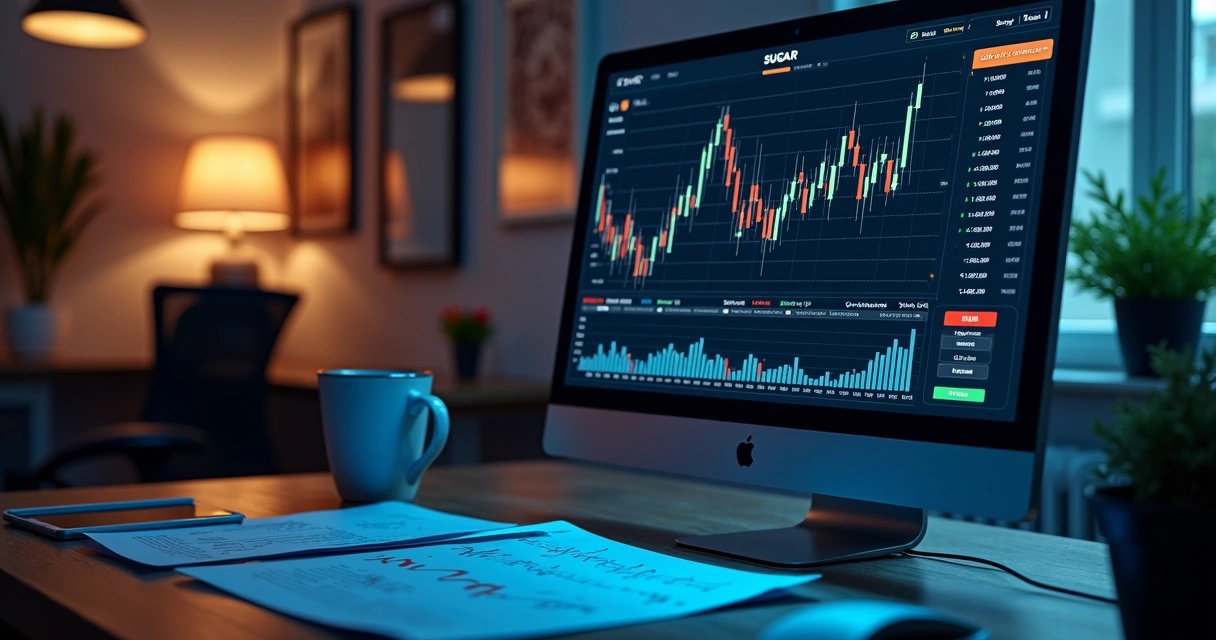
Traditional manual tracking and spreadsheet-based oversight no longer suffice. Human limitations mean vital data and subtle correlations often go unnoticed—a frequent cause of reactivity rather than preparedness.
Uhedge bridges the gap by centralizing and automating the entire hedging process, using scientific modeling and AI to bring structure, visibility, and speed.
- Trading-oriented calculator: Allows instant creation and pricing of structures like accumulators (with or without barriers) and fences.
- Algorithmic access: Makes even OTC derivatives accessible using replicating algorithms.
- Quantitative analytics: Visualizes market phenomena, including volatility surfaces, futures curves, and vol smile charts.
- Position monitoring: Gives real-time portfolio evolution, including MTM and volume of origin.
- Integrated control: Centralizes all physical and paper positions for complete oversight and compliance.
A recent case highlighted by UHEDGE shows AI-driven strategies as especially powerful: their system tracked and suggested tactical trading moments for a portfolio over several months, indicating when to buy, hold, or sell based on live market signals. Such decisions, impossible for a single human to monitor accurately and unemotionally at scale, result in tangible profit and protection gains.
Advantages of a unified digital treasury platform
Several pain points are eliminated with a robust system like UHEDGE:
- All positions (FX, interest, sugar futures, options, forwards) visible in a single real-time environment
- Automated recommendations for ideal risk management structures
- Cost reduction (up to 70% lower than classic bank or broker solutions)
- No conflicts of interest—profitability is aligned with the client’s outcome
- Personalized hedging, based on a detailed assessment of company goals, risk tolerance, and liquidity
- Integrated governance controls and end-of-day automated reporting
Integrated platforms provide transparent visibility, strategic agility, and allow for disciplined execution—three elements perhaps even more critical than the specific hedging instrument selected.
As seen in the UHEDGE system, advanced analytics and predictive modeling ensure companies can act on signals before market shocks occur, not after. With detailed quantitative reporting, the results are robust: greater profit consistency and protection when volatility returns.
Key takeaways: What makes a sugar hedge work?
A successful sugar hedge is marked not by the absence of risk, but by the transformation of risk from a source of anxiety into structured opportunity. That requires:
- A clear understanding of exposures and acceptable levels of risk
- Selection of the most suitable instruments and structures
- Constant monitoring of changing market drivers
- Ongoing adaptation, preferably in an integrated digital treasury framework powered by AI and data analytics
The next era of sugar risk management belongs to those who pair market intelligence with technological discipline. For additional practical tips, check the practical hedging guide with common strategies.
Conclusion
In today's volatile sugar market landscape, thoughtful price risk management is not just a tactical shield—it is a foundation for long-term profitability and resilience. Futures, options, and forwards remain at the heart of hedging tactics, but true strategic advantage comes from their intelligent, disciplined application within a unified, AI-driven platform.
The UHEDGE ecosystem brings a rigorous, scientific approach and combines over two decades of global expertise to deliver smart, automated, and cost-effective hedging solutions tailored to the needs of sugar producers, traders, and industrial buyers.
Ready to transform how your company approaches price risk? Begin by requesting a strategic diagnostic or exploring a demonstration of UHEDGE’s Digital Treasury. Take proactive control: bring transparency, agility, and consistency to your sugar price risk management—and turn volatility into opportunity.
Frequently asked questions about sugar hedge strategies
What is a sugar hedging strategy?
A sugar hedging strategy is a series of financial and operational steps that allow producers, buyers, or traders to protect themselves against negative price movements in the sugar market. This usually involves using contracts like futures, options, or forwards to secure buying or selling prices in advance, ensuring more predictable financial outcomes regardless of how the market evolves.
How can I hedge against sugar price risk?
Sugar price risk can be managed by identifying your price exposure, choosing suitable hedging contracts (like futures, options, or customized forwards), and continuously monitoring both market factors and position changes. Many companies rely on advanced digital platforms to automate these assessments and actions, such as the solutions provided by UHEDGE, which deliver real-time, AI-supported insights and automation for sugar market participants.
Is sugar hedging worth the cost?
Sugar hedging often produces significant financial benefits by removing unpredictable losses and allowing companies to plan with greater certainty. While there are costs associated—such as contract premiums or margin requirements—these generally pale in comparison to the potential damage from unmitigated price volatility, especially for companies with substantial sugar exposure.
What are the best tools for sugar hedging?
The best sugar hedging tools are those that fit your business model and risk profile. This could include exchange-traded futures for liquidity, options for flexibility, or bespoke forward contracts for tailored needs. For optimal decision-making and execution, digital treasury systems like UHEDGE’s integrate market monitoring, contract pricing, analytics, and automated reporting all in one place, ensuring consistent discipline in risk management.
Where to find reliable sugar hedge providers?
Reliable sugar hedge solutions come from partners with a proven track record, technological prowess, and a transparent alignment of interests. UHEDGE, for example, provides advanced, conflict-free solutions and serves as an extension of clients’ operational teams, offering both consultancy and a comprehensive digital treasury platform. To learn more, visit UHEDGE’s resources and engage directly for a strategic assessment or demonstration.