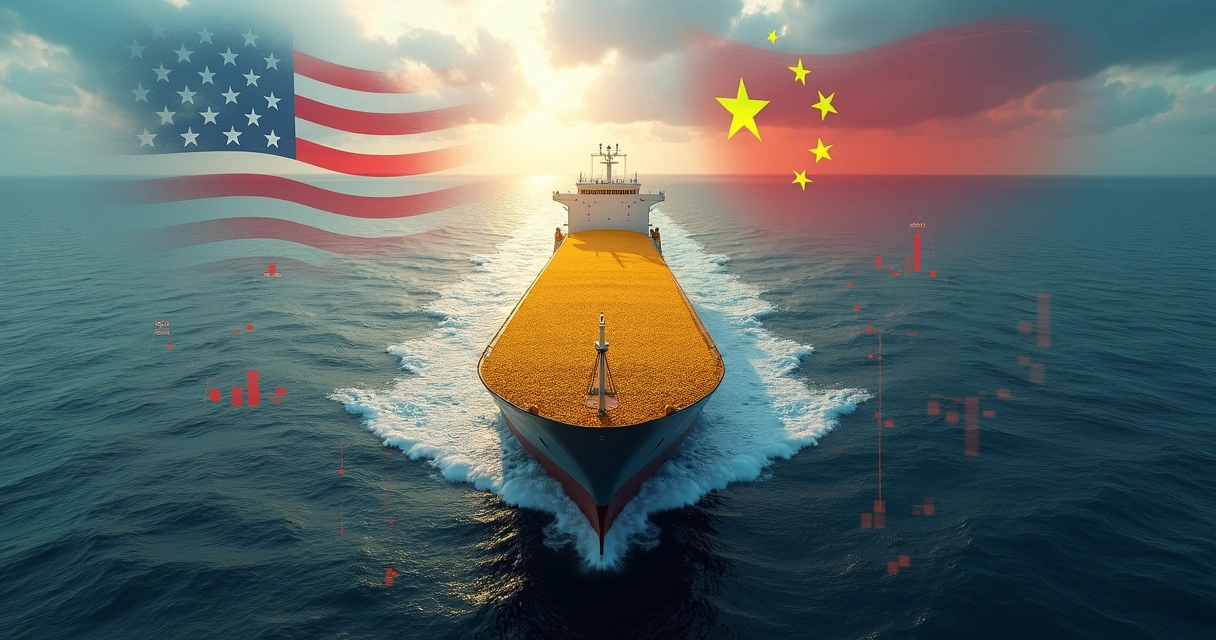
Global agricultural trade changed dramatically from April 2025. The world did not need a history book this time; it watched, in real time, as intensified political friction forged new commodity pathways and new commercial anxieties.
The escalation of confrontation
The world’s largest economies have always influenced agricultural commerce, yet the latest round of tariff escalation—often referred to as “trade war 2.0”—underlined just how quickly conditions can sway. The administration led by Donald Trump in the United States did not just revive a familiar playbook with renewed tariffs on China. This time, the reach extended to new countries, but China remained firmly in the crosshairs.
Beijing wasted no time responding. In stepped Chinese authorities with countermeasures that carved deep into U.S. agricultural exports. At the center of this exchange stood soybeans, historically one of America’s most exported crops to Asia.
Sanctions are blunt tools. Soybeans are subtle barometers.
When China slapped tariffs on American soybeans and virtually closed the doors to its importers, overnight a key artery for millions of tons of beans was choked off. The effects cascaded instantly through the pricing in Chicago, the world’s leading hub for agricultural commodities, where traders saw futures plunge.
How soybean flows changed during 2025
Before April, U.S. soybean farmers and exporters enjoyed reliable access to China—the world’s biggest buyer. That changed. The exclusion of American crops from China, replaced with imports from South America, especially Brazil, upended settled flows and sent prices trembling.
As U.S. soybeans lost their most lucrative destination, a scramble began:
- Stockpiles built up at American ports.
- Farmers weighed planting decisions with visible frustration.
- U.S. exporters sought to open alternative markets, but volume and pricing could not match the scale of China.
- Brazil and Argentina became preferred suppliers, filling much of the gap at competitive rates.
AI image here:
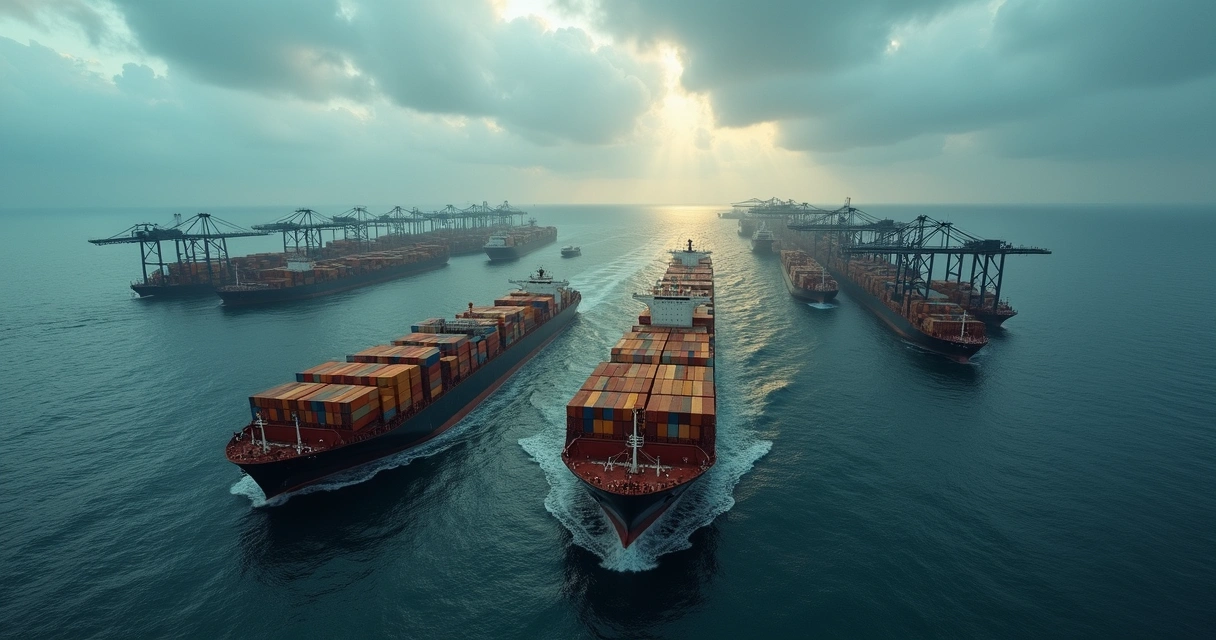
Industry specialists observed that Brazil’s new marketing year started strong, with a deluge of orders from China. Meanwhile, American producers contended with surplus, margin compression, and confusion about where the floor might be for prices. At a time when rapid decision-making was needed, the lack of up-to-the-minute analytic tools exposed just how quickly old habits became a risk.
Pivotal moments: The October truce and a new soybean pact
Despite tension running high for months, a breakthrough came in late October. The U.S. and China presidents met in South Korea and announced a “trade truce.” Immediate tariff reductions were promised. Central to the agreement: China would purchase 12 million tons of U.S. soybeans before the end of February, followed by a new annual minimum of 25 million tons for 2026 through 2028.
This announcement sent relief through U.S. grain markets, helping Chicago soybean futures bounce off their lows.
Yet the details were tangled. Analyst skepticism was obvious and widespread. The deal’s terms were described by U.S. officials, but Chinese sources avoided public confirmation of volumes and deadlines. USDA export data delivered a stark picture:
- By November 27, Chinese buyers had purchased only 3.015 million tons for the 2025/26 season (compared to 16.483 million tons at the same time in 2024).
- “Unknown destinations”—often code for pending or undisclosed Chinese sales—accounted for 2.689 million tons, down from 6.226 million tons last year.
- Together, committed sales to China/unknowns stood at just 5.704 million tons, compared with 22.708 million tons previously.
- Adding daily “flash sales” through December 19 lifted the total: 1.906 million tons sold to China and 796,000 tons more to unknown destinations. That took the combined sum to 8.406 million tons, about 70% of the February target.
Skeptics and market participants kept asking: is this truce merely a stopgap? Without confirmed buying interest from China and with the Brazilian harvest approaching, would these numbers hold up?
Soybean prices and Chicago’s reaction
When the purchase truce was published, it breathed life into prices. The Chicago Board of Trade saw soybeans recover some of their heavy losses. Yet the bounce was guarded; market players remained wary of relying on promises that, so far, had not translated into hard cargoes. In grain markets, sentiment can swing rapidly: from despair to relief and back again.
USDA data showed that sales commitments, including “unknown destinations,” were less than a quarter of what they’d been a year before.The message felt clear: real shipments, not headlines, make the difference in exporting soybeans. With Brazil’s coming harvest—expected to be large, potentially cheaper, and closer logistically to major Asian markets—it was unlikely the U.S. would regain pre-war market share without clear, enforceable agreements.
Will China hit its new buying targets?
The “trade truce” has not visibly shifted Chinese position statements. Official sources in Beijing have not confirmed deadlines or exact tonnages. Industry watchers knew from earlier episodes that commitments alone are not guarantees. Some held out hope for a surge of late-winter cargoes, but the trend was unmistakable: China’s commitment was, for now, mostly on paper, and the world’s largest bean traders were hedging their bets.
As the February deadline approached, more sales were registered—but with mounting South American competition, doubts only grew.
- Logistics and freight availability were challenged as Brazil’s beans moved promptly toward Asia.
- Forward U.S. sales stalled or slowed when faced with more attractively priced alternatives.
- Many buyers preferred to hold off, waiting to see how prices and policies would evolve.
Promises alone do not float ships.
The main unresolved question was simple but weighty: How much U.S. soybeans will China really buy in 2026 and beyond?
Managing risk in an age of volatility
In this shifting landscape, companies and cooperatives realized that “more information” was no longer enough. What mattered was the ability to aggregate, analyze, and act upon a flood of real-time data. Projects like the UHEDGE ecosystem emerged to serve this need, providing advanced digital treasury and quantitative tools that allow for the monitoring of price exposures and instant scenario modeling in commodities like soybeans.
Understanding global flows is no longer just a matter of tracking exports. Analytical rigor is needed. For those who needed to manage soybean or other commodity risks, market intelligence tools—combined with smart hedging practices—became a requirement for confidence, not a luxury.
Readers seeking practical applications in hedging for soybeans and other farm commodities will find detailed considerations at hedging for agribusiness using derivatives, protecting soybean prices and revenues, and insights for cooperatives managing margin threats or coping with commodity volatility through financial protection.
The role of technology and strategic advice
UHEDGE’s digital treasury platforms demonstrate how sector-specific technology can add clarity and tactical agility when the market grows more complex. The ability to track positions in real time, simulate exposure, and automate complicated structures like accumulators or fences elevates decision-making capacity, which is especially pivotal in moments of global reconfiguration.

From 2025 onward, data-driven decision support and hedging tools have proven their value. Acting without them exposes exporters and consumers alike to heightened risk. The UHEDGE/STATERRA methodology, rooted in scientific quantitative rigor and artificial intelligence, offers the transparency and speedy scenario-building essential to modern agrifood business. Companies that failed to adapt found themselves reactive, unable to anticipate shocks or profit from fleeting market windows.
Trading in volatile conditions brings exposure to loss, and every commercial decision demands due diligence. Past performance never guarantees future outcomes.
Legal information and cautions
This article is meant for information only, not as direct investment advice. The fast-changing landscape of trade and commodities introduces risks and requires careful verification of contacts and domains to avoid fraud. All legal, regulatory, and organizational disclaimers from Hedgepoint and its affiliates apply. Strategic decisions must always take individual needs, market realities, and regulatory constraints into account.
UHEDGE encourages those in agribusiness, industry, and traded sectors to seek a tailored risk diagnosis—combining proprietary technology, artificial intelligence, and market expertise—to secure success in the world that lies beyond “trade war 2.0.”
Conclusion: Act on insight, not headlines
For every market participant affected by the cycles of confrontation and détente in 2025, the lesson is this: reality changes faster than forecasts. Digital tools and expert guidance, as provided by the UHEDGE ecosystem, offer a path to resilience and performance even in the shadow of unpredictable policy shocks.
If you want to transform how your company manages commercial risk amid volatility, seek a customized evaluation and see how high-caliber digital treasury solutions and data-driven trading strategies can change your results. The next step: get to know UHEDGE better and open new doors for certainty in risk.
Frequently asked questions
What is a trade war?
A trade war is when countries impose tariffs or other barriers on each other’s goods and services in an effort to protect domestic industries or respond to perceived unfair practices. This usually leads to higher costs, reduced trade flows, and shifts in global supply chains. In recent years, this has mostly been seen between economic powers like the United States and China.
How did tariffs affect soybean exports?
Tariffs imposed during recent trade disputes restricted U.S. access to China, the main global market for soybeans. This caused a significant reduction in American soybean exports to China, lowered prices, and forced U.S. producers to seek alternative markets, often at lower prices and higher risk.
Why did China target U.S. soybeans?
China targeted U.S. soybeans because they are a major American export and crucial for many Chinese industries. By targeting this crop, Chinese officials aimed to pressure U.S. farmers and political leaders by hurting an important part of the American economy, trying to influence trade policy outcomes.
What are the main impacts on farmers?
Farmers faced reduced sales, lower prices, and uncertainty about future contract terms. Many struggled to find replacement markets, leading to excess stock and squeezed margins. The unpredictability in pricing also made planning and hedging more difficult, underscoring the need for advanced trading tools and strategies.
How have global soybean flows changed?
Global flows shifted away from the United States and toward South America, especially Brazil and Argentina, as China sought alternative suppliers. This re-routing of trade not only reshaped logistics and pricing but also highlighted the fragility and adaptability of global agricultural supply chains in times of political tension.