Agribusiness operators know this feeling well: markets sway, headlines hit, and suddenly the value of an entire season’s wheat sits on a knife’s edge. Despite experience, data, and intuition, nobody can predict every factor. In this climate, protecting revenues and ensuring stable cash flow demand more than traditional approaches. This is where scientific risk management sets apart today’s leaders.
Understanding wheat hedging and its need
Wheat hedging is a defensive financial practice employed by producers, traders, and end users. Its core goal is to manage price volatility risk. By entering specific financial positions, businesses can lock in price levels for future transactions, thus defending profitability from adverse market moves.
Imagine a large wheat producer facing unpredictable global factors—drought in one region, bumper crops in another, currency swings, sudden tariffs. Prices can leap or plunge. The wheat grower’s livelihood, or a miller’s costs, hinge on effective risk management.
Wheat price risk is never entirely avoidable, but it is manageable.
Why hedge? Because market uncertainty is a constant. Stable operations mean being proactive, not reactive, to price swings. And in the world of agribusiness, even a modest risk managed well can mean the difference between sustainable growth and financial distress.
Core concepts: The foundation of effective wheat hedging
Those new to financial risk management often find the lingo daunting. The basic building blocks of a solid wheat price protection strategy include:
- Futures contracts: Agreements traded on exchanges to buy or sell a certain amount of wheat at a specified price and date. Used to guarantee selling (by producers) or buying (by processors, exporters) at known rates.
- Options contracts: Rights, but not obligations, to buy (call) or sell (put) wheat futures at a pre-set price before a certain date. Offers flexibility—if prices move favorably, the option may be left unused.
- Long and short positions: Going “long” typically means benefiting from price increases, while “short” gains from declines. A wheat grower may “short” futures to fix a sale price; a bread manufacturer may “go long” to lock in future costs.
- Basis risk: This is the risk that the difference between the local cash price and the futures price (the “basis”) won’t behave as expected. While hedging stabilizes some price risk, the basis can shift unpredictably.
Each concept plays a unique role, but together they are the toolkit for modern agribusiness to face uncertainty with discipline.
Real-world examples in the wheat trade
Consider a wheat farmer in Mato Grosso. To guard against a sudden drop in world wheat prices at harvest, she enters a short futures position. If prices fall, losses on the physical crop are offset by gains on the futures contract.
Alternatively, a large wheat buyer—say, a local flour mill—needs cost certainty for forward planning. It may go long with wheat futures or purchase call options to ensure supply costs are capped.

Another technique is the “fence”. This structure uses both put and call options to set both a minimum and maximum price band, giving some flexibility for favorable moves while protecting against severe drops.
Strong discipline, supported by precise quantitative models, helps make these hedges effective. But complexity lurks beneath: understanding timing, contract specifications, and exposure size all matter.
Beyond basics: The digital treasury and smart risk management
While the futures and options mentioned above are industry standards, today’s markets demand more. Enter the role of technology-driven risk systems. Sophisticated platforms like those in the UHEDGE ecosystem give wheat sector participants an entirely new level of visibility and agility.
Advanced solutions use modeling techniques from statistics, econometrics, and AI to analyze market risk in real-time. This means the old limitations—fragmented data, separate spreadsheets, delayed reactions—vanish. All exposures, from physical wheat holdings to financial contracts, are monitored with instant analytics. UHEDGE stands at the forefront, converging risk management disciplines once reserved for global banking houses with intuitive digital interfaces for the modern commercial user.
- A trading-oriented calculator for instant pricing of structures like accumulators and fences
- Algorithmic access to OTC derivatives, previously hard to reach for many producers
- Dynamic visualization tools: volatility surfaces, futures curves, and risk maps
- Real-time position tracking: mark-to-market (MTM) values, performance, and risk breakdowns
Critical decisions, such as “Should a wheat hedge be rolled, closed out, or restructured?” are supported by automatic recommendations derived from advanced quantitative analysis.
Comparing wheat risk hedging to other commodities
Some wonder: how does protecting wheat prices differ from, for instance, similar approaches in corn or soy? The nature of wheat markets makes its volatility unique—local weather, global politics, and even shifting export bans play a role. Still, many concepts overlap. Those interested in expanding understanding might compare practices for corn through articles discussing hedging for corn.
Strategies in wheat often have to adapt faster to abrupt international developments than is typically seen with other grains. This dynamic emphasizes the benefit of agile systems like central digital treasuries that can react faster than manual processes.
For more details on the panorama of commodity hedging, UHEDGE’s resource on protecting margins in unpredictable markets is a recommended read.
Geopolitical shocks: How world events reshape wheat protection
Events far outside the farming regions can shake the wheat market to its roots. Think sudden international sanctions, tariffs, or even the hint of drought in a key producing country. These all feed directly into pricing, shifting both spot and forward markets.
Wheat stands as both a risk-management tool and a portfolio diversifier during geopolitical turbulence. For some, wheat hedge instruments may be the buffer that allows survival—and even relative benefit—while competitors scramble to respond. AI-powered strategies, such as those championed by UHEDGE, translate macro signals rapidly into tactical actions.
This versatility makes wheat not only a commodity but a crucial anchor for strategic portfolio positioning, especially when broader instability strikes.
The edge of a unified platform: UHEDGE in practice
The value of a single, consolidated digital treasury is rarely more obvious than during periods of high market stress. Companies still operating with scattered records, divided room operations, or outdated spreadsheets are forced to react to change, but those using a unified platform gain real-time insight, discipline, and control.
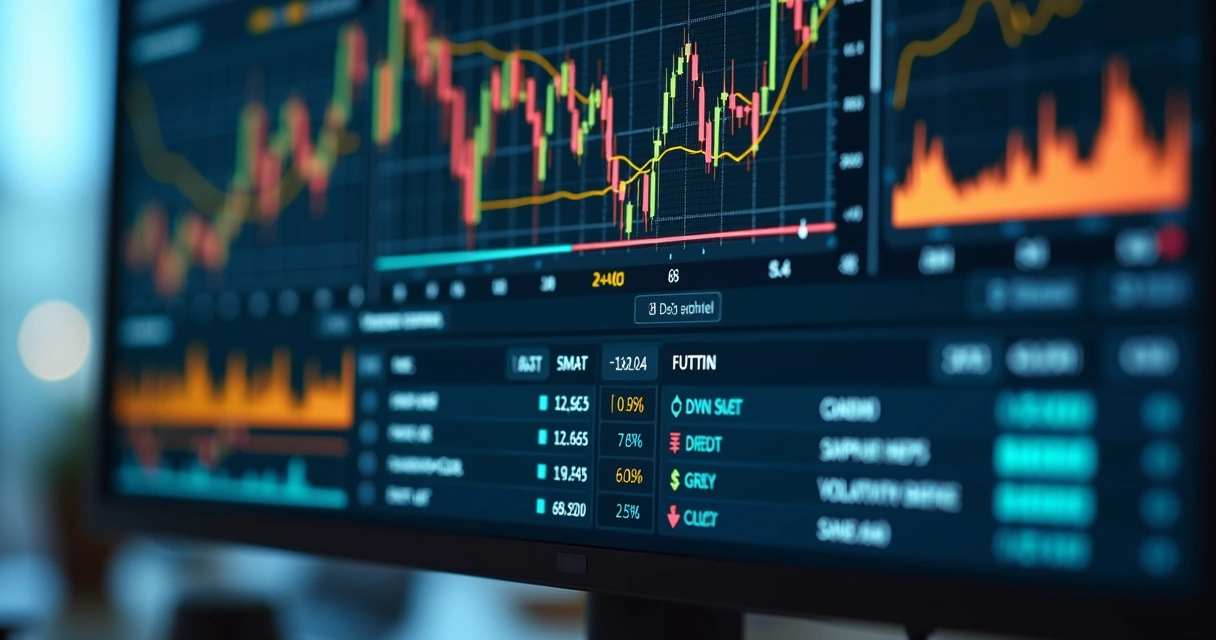
Features of UHEDGE’s system include centralized monitoring and risk control, instant performance analytics across exposures (cash, futures, options), and comprehensive end-of-day reporting. Everything is designed for transparency and action—whenever needed, wherever needed.
One key benefit: the system makes complex OTC derivatives available instantly through intelligent algorithms. These products, like accumulators or average price/strike swaps, are typically out of reach for all but large market players, but UHEDGE changes that. The result: greater reach, more choice.
With a digital treasury solution, agribusinesses move from fragmented, reactive management to guided, data-driven strategy.
Beyond the wheat market, those with exposure to other commodities or to FX and interest rate movements find a unified approach especially potent. An overview of risk management’s benefits in the sector appears in UHEDGE’s insights on predictability through derivatives.
Shaping strategy for tomorrow
For any business with wheat exposure, the move from ad-hoc, siloed methods to scientific, technology-supported discipline is more than an upgrade—it’s a transformative leap. UHEDGE brings nearly two decades of commodity experience, but more essentially, the tools for transparent, informed, and confident operations in constantly moving global markets.
Ready to take the next step? Discover how your company can move past unpredictable costs and seize opportunities by experiencing UHEDGE’s digital risk management firsthand. Innovation is just one conversation away—reach out for a strategic risk and hedging diagnosis, and see what tailored, scientific risk management looks like in action.
Frequently asked questions
What is a wheat hedge strategy?
A wheat hedge strategy is a set of financial actions taken by producers, traders, or buyers to protect against unexpected movements in wheat prices. Commonly, this means using futures or options contracts to lock in sales or purchase prices for a defined period, minimizing downside risk while sometimes allowing for upside participation.
How does wheat hedging reduce risk?
By taking offsetting positions in financial markets through futures or options, wheat hedging helps balance out the risk of price falls (for producers) or hikes (for buyers). If market prices move in an unfavorable direction, the financial gains from the hedge counteract losses from the underlying physical wheat, leading to more predictable cash flows and easier long-term planning.
What are the main types of wheat hedges?
The core types include using futures contracts (locking in a future selling or purchase price), options contracts (buying the right to sell or buy at a specific price), and structured positions like fences or accumulators. Each has different benefits, flexibility, and costs, tailored to the risk profile and needs of the business.
Is it worth it to hedge wheat prices?
For most businesses with significant exposure, hedging wheat prices is considered worthwhile. It transforms unpredictable price swings into steady, known cash flows, which supports stable operations and improves financial confidence. The best results come from informed, disciplined strategies often supported by technology platforms such as those offered by UHEDGE.
How do I start hedging my wheat?
Start by assessing your exposure, objectives, and risk tolerance. Consulting with quantitative risk experts or using digital solutions like UHEDGE’s treasury platform can help define the optimal strategy. The next step involves selecting the appropriate instruments—futures, options, or structured products—and enacting positions aligned with your operational needs. A strong first move is to request a strategic risk diagnosis from professionals who combine deep commodity experience with scientific, data-driven tools.
For ongoing insights and up-to-date articles on commodity risk management, the commodities section and the wider risk management resources on the UHEDGE blog provide valuable context and strategies.