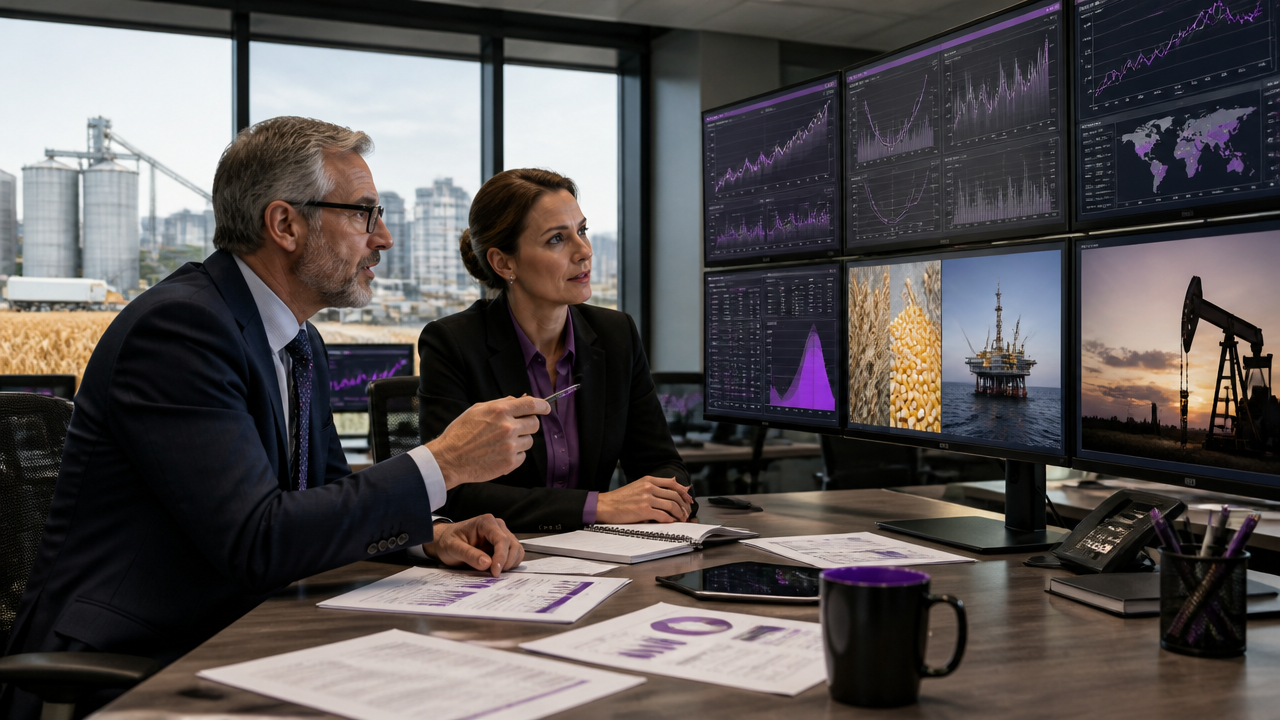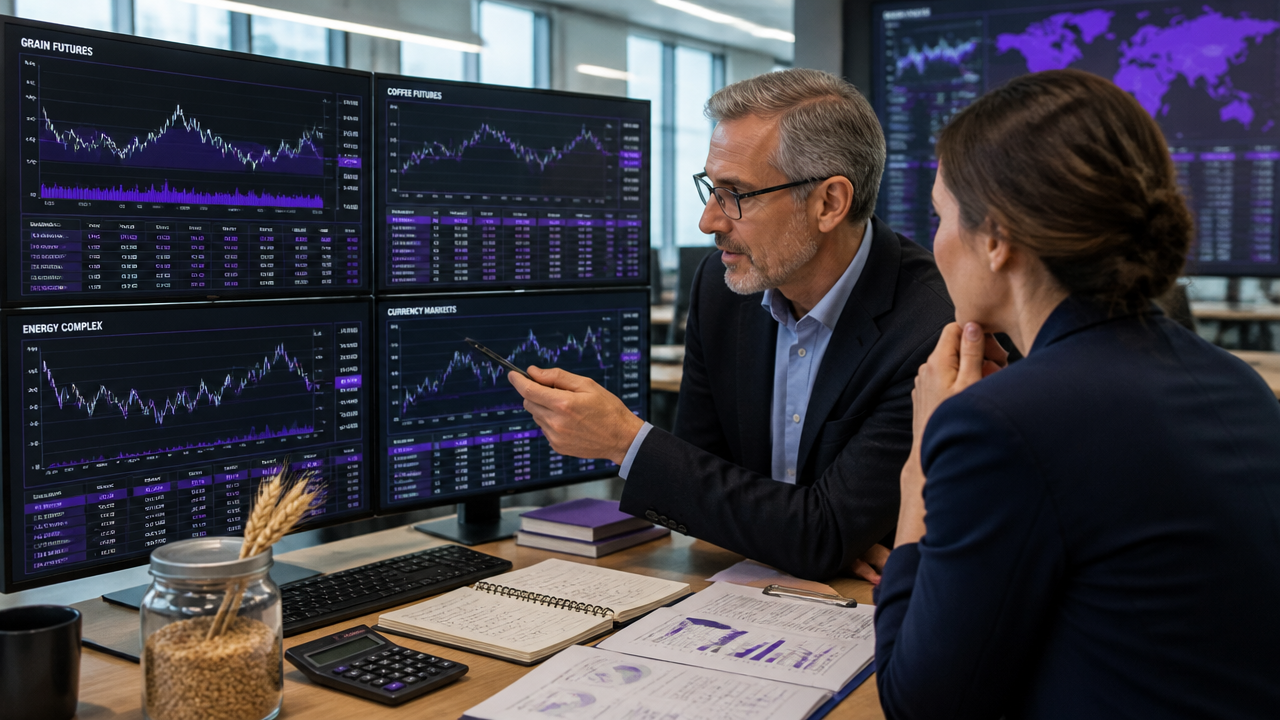
A commodity trading advisor, usually called a CTA, is a professional or firm that advises on or manages strategies in futures-oriented markets. That may include commodities, currencies, interest rates, and equity index derivatives, not just barrels of oil or truckloads of soybeans. For investors, CTAs are often associated with managed futures. For producers, cooperatives, mills, and industrial buyers, the more useful question is whether a CTA helps protect operating margin, basis exposure, liquidity, and governance.
That distinction matters. Many articles stop at the legal label. In the agro-financial chain, the practical issue is different: who can connect market strategy to physical exposure, accounting, and daily decision-making. This is where Uhedge takes a broader approach, combining a CTRM platform with regulated asset management expertise so risk is managed in one auditable environment.
Key takeaways
- A CTA is usually a futures-market advisor or manager, often linked to managed futures and systematic trading.
- Not every CTA is built for commercial hedging. Many are designed for investor returns, not for procurement, origination, or export risk.
- Commercial firms need more than trade signals: they need basis logic, mark-to-market, margin control, and accounting support.
- Physical and financial positions should be viewed together, especially in grains, coffee, sugar, energy, and FX-linked commodity flows.
- Uhedge extends the classic CTA idea by integrating exposure planning, derivatives pricing, risk analytics, and hedge accounting support.
A commodity trading advisor is a market specialist, not necessarily a physical commodity operator
In plain English, a CTA advises on or manages derivatives strategies linked to futures markets. That can mean discretionary calls, systematic models, options structures, or managed accounts. The key point is that the role sits in the decision layer of market exposure.
What a CTA does not automatically do is manage the full commercial reality behind the position. A soybean crusher, sugar mill, coffee cooperative, or fuel distributor needs to connect futures hedges to inventory, contracts, freight, basis, FX, and accounting. That is why a pure trading advisor may be useful, but still incomplete for an operating company.
For businesses that need this broader view, a commodity trading and risk management framework is often more relevant than a narrow advisory mandate.
What do commodity trading advisors actually do?
Most CTAs do one of three things: advise, execute, or manage. The mix depends on whether they serve funds, institutions, or commercial clients. Their work usually starts with market views and position construction, then expands into controls and reporting.
Core CTA activities
- Build trading or hedging strategies in futures and options markets
- Define entry, exit, and risk limits
- Monitor mark-to-market and portfolio behavior
- Use discretionary judgment, quantitative models, or both
- Report performance, drawdowns, and exposure changes
In investor portfolios, CTAs are commonly tied to managed futures programs. In commercial environments, the useful version of this role is closer to outsourced market intelligence plus disciplined risk execution. That is why many firms now combine advisor expertise with tools for hedge governance and compliance, rather than relying on spreadsheets and broker statements alone.
Are CTAs only about commodities? No, the scope is usually broader
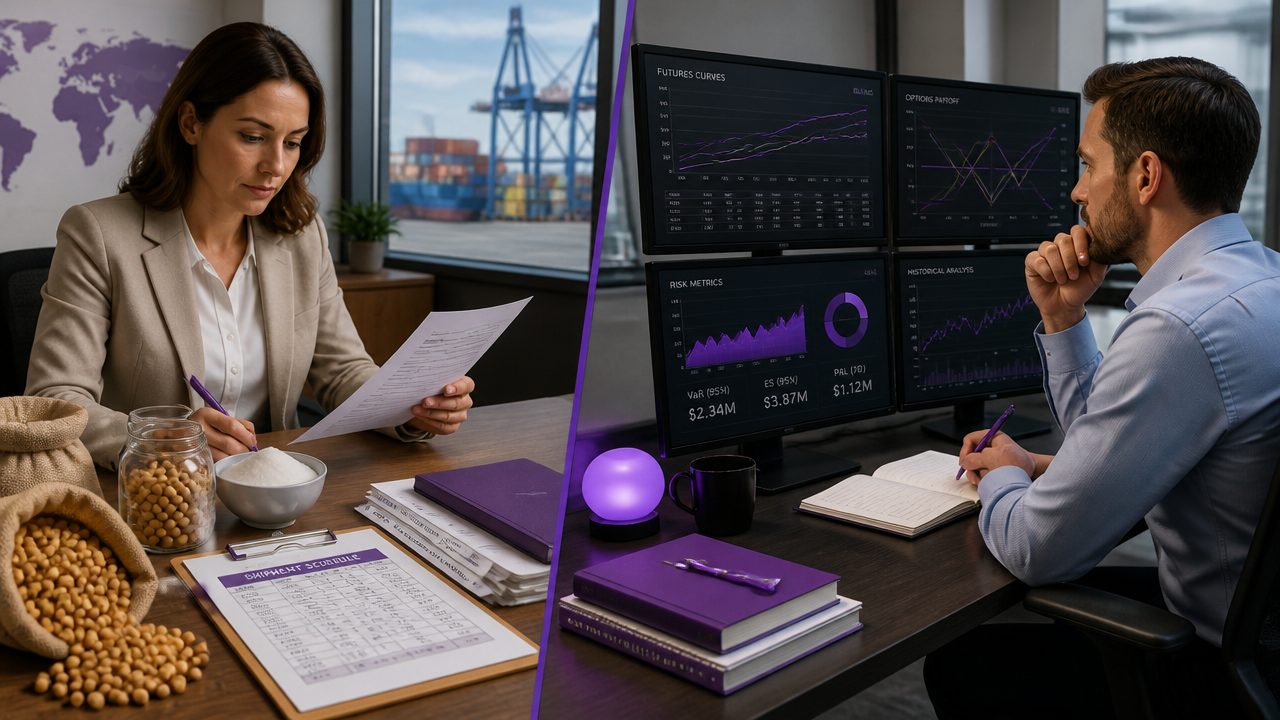
The name is misleading. Many CTAs operate across rates, FX, equity indexes, and volatility-linked structures in addition to agricultural or energy contracts. That broad mandate is useful for diversified investors, but it also explains why a generic CTA may miss the details that matter in real supply chains.
A sugar and ethanol mill, for example, does not only care about the futures curve. It cares about basis, seasonality, storage economics, local differentials, working capital, and the interaction between hedging and physical delivery. A standard managed futures program might treat that exposure as one more signal. A commercial treasury cannot afford that simplification.
This is also why firms with recurring procurement or export exposure benefit from centralizing risk data across operations, so financial hedges are measured against the underlying business rather than against a model in isolation.
How is a CTA different from a hedger, merchant, or CTRM partner?
The difference is purpose. A CTA is generally hired to advise on or manage positions. A hedger uses positions to protect an operating margin. A merchant monetizes flows, logistics, and market relationships. A CTRM partner gives the company the infrastructure to connect all of that.
| Role | Main goal | Typical focus |
|---|---|---|
| CTA | Advise or manage derivatives exposure | Signals, positions, risk limits, performance |
| Commercial hedger | Protect margin and cash flow | Inventory, sales, procurement, FX, basis |
| Commodity merchant | Originate and move physical product | Flow, logistics, pricing relationships |
| CTRM platform partner | Unify risk, controls, and reporting | Exposure planning, MTM, VaR, audit trail |
Uhedge sits in that fourth category, with overlap into the second and third. According to the company’s reference materials, its platform is a pre-trade and post-trade CTRM environment that integrates physical and financial positions, supports mark-to-market and risk reporting, and helps with accounting documentation for audit. The company also operates a CVM-regulated asset management practice and follows an alignment model centered on client results, without hidden spreads or opaque commissions.
What should commercial firms look for instead of a generic CTA pitch?
Commercial users should prioritize operating fit over labels. The real test is whether the advisor or platform can help the company make better decisions under volatility, not whether it can present an elegant strategy deck.
The checklist that matters
- Physical plus financial integration: futures positions must map to origin, inventory, sales, and procurement.
- Basis intelligence: local price behavior rarely moves one-for-one with the benchmark future.
- Margin and liquidity control: good strategy can still fail if collateral calls disrupt cash flow.
- Option pricing depth: many firms need structures beyond plain vanilla futures hedges.
- Auditability: risk decisions need documentation, timestamps, and governance.
Uhedge’s materials emphasize these points directly. The platform covers integrated physical and financial monitoring, multi-source price feeders, OTC replication logic, parametric VaR, stress testing, Greek sensitivities, and support for IFRS 9 and CPC 38 hedge accounting workflows. That makes it closer to an operating risk stack than to a standalone trading advisor.
If your team is comparing mandates, it helps to understand which hedge structures fit different commodity exposures before evaluating any manager or advisor.
What are the risks of hiring a CTA or managed futures manager?
The main risk is mismatch. A capable advisor can still be the wrong fit if their strategy, fee structure, or reporting logic does not match the client’s real exposure. For an investor, that may mean unexpected drawdowns. For a commercial firm, it may mean a hedge that looks good on paper but fails in procurement, liquidity, or accounting.
- Strategy risk: models can underperform when market regimes change
- Basis risk: benchmark futures may not offset local physical price movement
- Liquidity risk: margin calls can pressure working capital
- Governance risk: fragmented data can hide true exposure
- Incentive risk: opaque spreads and commissions can erode hedge efficiency
Uhedge’s positioning is built around reducing this mismatch. Its documents describe an extension-of-the-desk model for clients with relevant exposure, especially in agribusiness, food, energy, and commodity-linked finance. The emphasis is not on hype or black-box trading. It is on disciplined control, quantitative rigor, and an auditable process.
When does a business need more than a CTA?
A business needs more than a CTA when hedging decisions affect procurement cost, sales margin, debt service, inventory valuation, or audit outcomes. At that point, trade advice alone is not enough. The company needs risk architecture.
This is especially true for grain producers, coffee and sugar cooperatives, crushers, mills, biofuel plants, distributors, and exporters. These businesses carry exposure across commodity price, FX, rates, basis, and liquidity at the same time. A specialized setup, such as commodity risk governance with clear controls, is usually more valuable than a one-dimensional trading mandate.
In practice, that is the space Uhedge serves: companies that need institutional-grade market methodology with commercial usability. The result is not just better trade timing. It is tighter governance, clearer exposure visibility, and lower decision friction across the whole chain.
Frequently asked questions
What do commodity trading advisors do?
A commodity trading advisor typically designs, recommends, or manages derivatives strategies linked to futures markets. In practice, that can include trend following, spread trades, options overlays, risk limits, position monitoring, and reporting. Some advisors focus on speculative return, while others support hedging and exposure control for commercial firms.
What does it take to become a CTA?
It depends on the jurisdiction and business model. In broad terms, becoming a CTA requires market knowledge, a defined advisory or trading process, risk controls, compliance infrastructure, and the right registrations where applicable. For commercial commodity businesses, practical experience in hedging, margin, basis, and governance is just as important as market expertise.
Do commodity traders make a lot of money?
Sometimes, but the income range is wide and performance is uneven. A CTA can earn advisory fees, performance fees, or salary, depending on whether they run client money, work inside a firm, or advise institutions. Results depend on assets managed, strategy quality, drawdown control, and the ability to retain client trust through volatile periods.
What is CTA in trading?
In trading, CTA usually means commodity trading advisor. The term is associated with professionals or firms that advise on, or manage, derivatives strategies tied to futures-oriented markets, including commodities, currencies, rates, and indexes. It does not mean the advisor only trades physical commodities.
How is a CTA different from a hedger?
A hedger uses derivatives to protect a real commercial exposure, such as grain inventory, export receivables, or fuel input costs. A CTA usually advises or manages a trading strategy in those same markets. The first goal is margin protection and cash flow stability, while the second may be return generation, tactical allocation, or outsourced execution discipline.