Commodity indices are useful, but only when you know what they really measure. For treasury teams, producers, cooperatives, mills, exporters, and family offices, these benchmarks help frame the market, compare sectors, and spot regime shifts, yet they are rarely the exact instrument that should hedge a real exposure. The practical question is not which index looks strongest, but which benchmark best explains your price risk and what is still missing after that benchmark is chosen.
That is where the subject becomes operational. Uhedge works with companies exposed to grains, sugar, coffee, biofuels, FX, and rates, using a CTRM environment that connects physical positions, derivatives, mark to market, and hedge accounting in one auditable workflow. In that setting, an index is a starting point for discipline, not a substitute for pricing, basis analysis, and hedge design.
Key takeaways
- Commodity indices are baskets, not physical prices. They summarize a market segment, usually through futures contracts and a weighting methodology.
- Construction matters more than the label. Sector weights, roll rules, and contract selection can change performance materially.
- A broad benchmark is rarely a complete hedge. Local basis, freight, taxes, quality differentials, and FX still matter.
- Corporate risk teams should map index risk to cash flow risk. A good benchmark improves monitoring, but hedge execution still requires instrument level precision.
- Integrated risk systems create the real edge. When physical and financial exposures sit in the same environment, benchmark analysis becomes actionable.
What do commodity benchmarks actually measure?
A commodity benchmark measures the performance of a defined basket of raw material contracts under a specific rule set. In practice, that usually means futures exposure across sectors such as energy, agriculture, livestock, and metals, with weights that may reflect production, liquidity, or diversification constraints.
This sounds simple, but it is not. Two indices can both be called broad commodity benchmarks and still behave very differently. One may be dominated by energy, another may cap sector concentration, and another may rebalance on a different schedule. If you are comparing a food manufacturer’s input risk with a headline commodity gauge, you may be comparing unlike things.
For readers who want a broader grounding in the market itself, Uhedge has already covered commodity pricing and market dynamics and how benchmark moves filter into operating decisions.
Which major benchmarks should readers know?
The most useful way to think about commodity benchmarks is by purpose, not brand name. Broad indices are best for macro monitoring and diversified asset allocation. Sector indices are better when the exposure is concentrated in agriculture, energy, or metals. Single contract references are usually what hedgers need when protecting a specific margin.
| Benchmark type | Best use | Main limitation |
|---|---|---|
| Broad diversified index | Macro view, inflation context, portfolio comparison | Can dilute the risk that actually drives a company’s P&L |
| Sector index | Focused monitoring of agriculture, energy, or metals | Still may not match grade, location, or timing |
| Single commodity reference | Hedge design, exposure mapping, pricing governance | Requires deeper operational work and active management |
For an ethanol plant, soybean crusher, or coffee cooperative, a broad benchmark is often too generic. What matters is whether the chosen reference captures the economics of the business. That is why many firms eventually move from passive market watching to structured commodity risk governance with explicit hedge ratios and decision rules.
Why does index construction change the result?
Index construction drives return behavior. The same commodity complex can look attractive or weak depending on weighting, rebalancing frequency, and the way contracts are rolled from one maturity to the next.
In futures based benchmarks, you do not own a warehouse of physical goods. You own exposure to listed contracts that expire, so the index must replace near dated contracts with later ones. This rolling process can create gains or losses independent of the underlying spot story. If the curve is upward sloping, rolling can be a drag. If the curve is downward sloping, rolling can help.
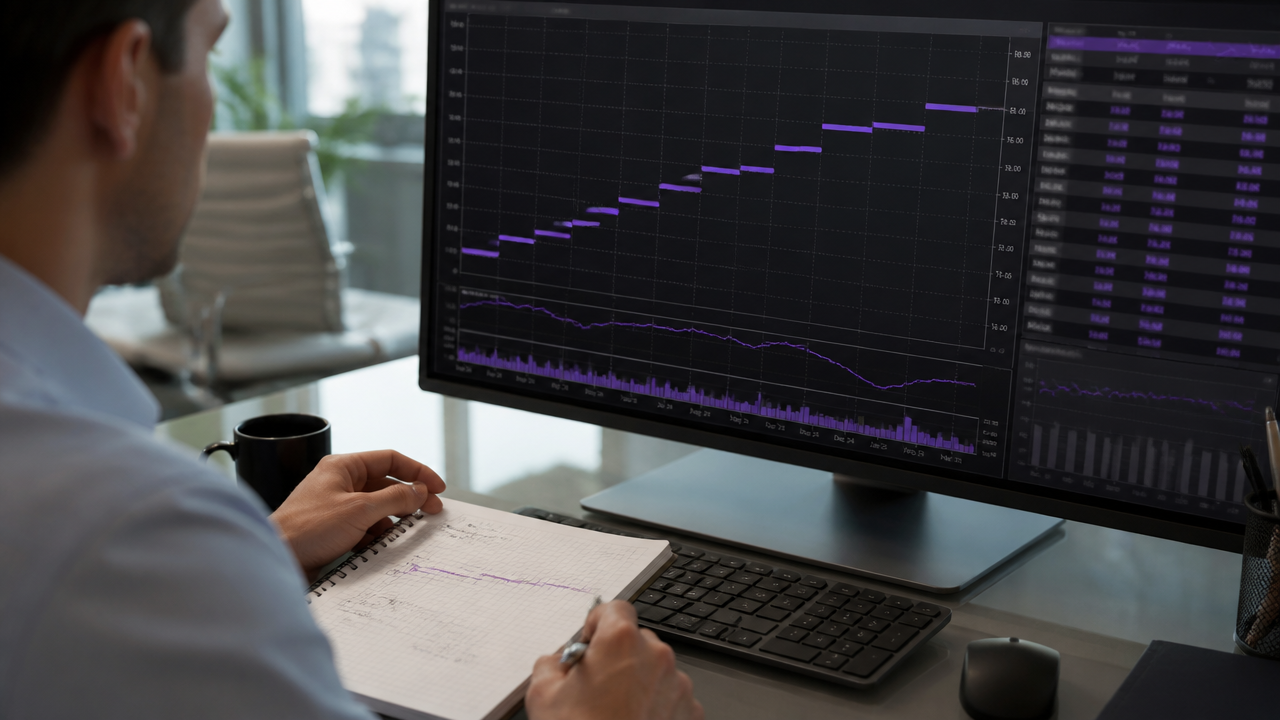
That is why treasury teams should not stop at the headline chart. Uhedge’s work in commodity derivative pricing and risk factors is relevant here because the benchmark result is always a mix of price level, volatility, maturity choice, and roll mechanics.
Can a commodity index hedge a real business exposure?
Usually, only partially. A benchmark can hedge direction, but operating exposures are shaped by many more variables than the benchmark itself.
Take an agribusiness buyer. Its real cost may depend on the reference futures contract, local basis, freight, taxes, quality differentials, storage constraints, and FX. A producer or exporter faces a similarly layered problem on the revenue side. If the hedge ignores those layers, the company may reduce headline price risk but still miss its margin objective.
This is exactly where Uhedge’s CTRM model becomes practical. The platform decomposes physical pricing into components such as futures reference, basis, freight, and taxes, then connects that view to hedge ratio calculation, mark to market, and reporting. It also supports vanilla and more complex structures, including Asian styles, fences, and accumulators, when those fit the risk profile better than a plain future.
If your main concern is the mismatch between listed references and local economics, the most relevant concept is basis risk in commodity hedging, not the benchmark level alone.
Why basis risk matters more than most index articles admit
Basis risk is often the hidden reason why a hedge feels right on paper and disappointing in practice. It appears when the local physical price does not move in line with the benchmark used to hedge it.
That mismatch can come from logistics, regional supply and demand, quality premiums, tax effects, or timing differences. A sugar mill, coffee cooperative, or grain processor may correctly identify the global reference contract and still carry meaningful local price risk. In those cases, the benchmark remains useful, but it is only one layer of the control system.

Uhedge addresses this with physical plus financial integration in one auditable environment. Instead of treating futures, OTC structures, and local physical books as separate silos, the platform keeps them in a single process from exposure planning to accounting documentation. That matters because a basis problem is not just a market issue, it is a governance issue.
How should companies use benchmarks in a real hedge process?
The best use of a commodity benchmark is to improve decision quality, not to replace judgment. In practice, companies should move from benchmark awareness to exposure specific execution.
1. Start with the cash flow that needs protection
Define whether the objective is defending gross margin, locking a purchase budget, protecting inventory value, or stabilizing export revenue. That choice determines the proper benchmark and tenor.
2. Map the exposure drivers
Separate futures reference risk from basis, freight, FX, and timing. For many firms, this step reveals that the benchmark explains only part of the problem.
3. Choose the right instrument set
Use futures, options, swaps, or OTC replications according to liquidity, convexity needs, and accounting constraints. This is where pricing complex commodity structures becomes more relevant than passive benchmark tracking.
4. Monitor the position continuously
A serious process includes mark to market, scenario analysis, Greeks when options are involved, and stress testing. Uhedge was built for that integrated workflow and can also support IFRS 9 and CPC 38 hedge accounting documentation with effectiveness testing.
For firms that want the risk view after execution, the most useful follow on topic is mark to market and stress testing for treasury teams.
Commodity indices versus direct trading exposure
Investors and operating companies often use the same market vocabulary for different goals. An investor may want broad exposure to the asset class. A manufacturer or exporter wants to defend an operating margin. Those are not the same mandate.
That difference explains why a broad benchmark may be acceptable for portfolio context, but insufficient for commercial risk. Uhedge’s asset management and software arms sit close to this distinction: one side supports specialized commodities portfolios, the other supports pre trade and post trade risk management inside companies. Across both, the principle is the same, measurement only becomes useful when it can be traced back to a real exposure.
That is also why Uhedge positions itself as a conflict free extension of the client’s treasury and operating desk. The goal is not to sell opaque spread loaded structures, but to convert market intelligence and quantitative discipline into better hedge outcomes. In the company’s own operating model, that has translated into reported hedge cost savings of up to 70 percent versus traditional bank intermediation in relevant cases.
Frequently asked questions
What are commodity indices?
Commodity indices are weighted baskets of commodity contracts designed to track a market segment or the asset class as a whole. Most are futures based, not spot based, so returns depend on contract selection, sector weights, and the way the index rolls from one maturity to the next.
What are the current commodity indices?
The main families investors and hedgers usually monitor are broad benchmarks, sector indices, and single commodity references. In practice, the relevant benchmark depends on the exposure: an energy heavy manufacturer may watch a different index than a coffee cooperative, soybean crusher, or fuel distributor.
Can a commodity index be used directly as a hedge?
Not exactly. A commodity index is useful for top down monitoring, inflation context, and portfolio comparison, but operating hedges are normally built with specific futures, options, swaps, or OTC structures tied to the company’s physical exposure. The index is the map, not the hedge itself.
What are the 7 C commodities?
The seven C commodities usually refer to heavily traded global agricultural crops such as coffee, cocoa, cotton, corn, crude palm or canola related oils in some contexts, plus sugar. The label is informal, so treasury teams should avoid using it as a risk classification framework.
What is the best commodity to buy now?
The best approach depends on the objective. If the goal is broad inflation exposure, a diversified benchmark can help. If the goal is protecting operating margin, a company should focus on the specific commodity, currency, basis, freight, and tenor that drive its cash flow, then structure the hedge accordingly.