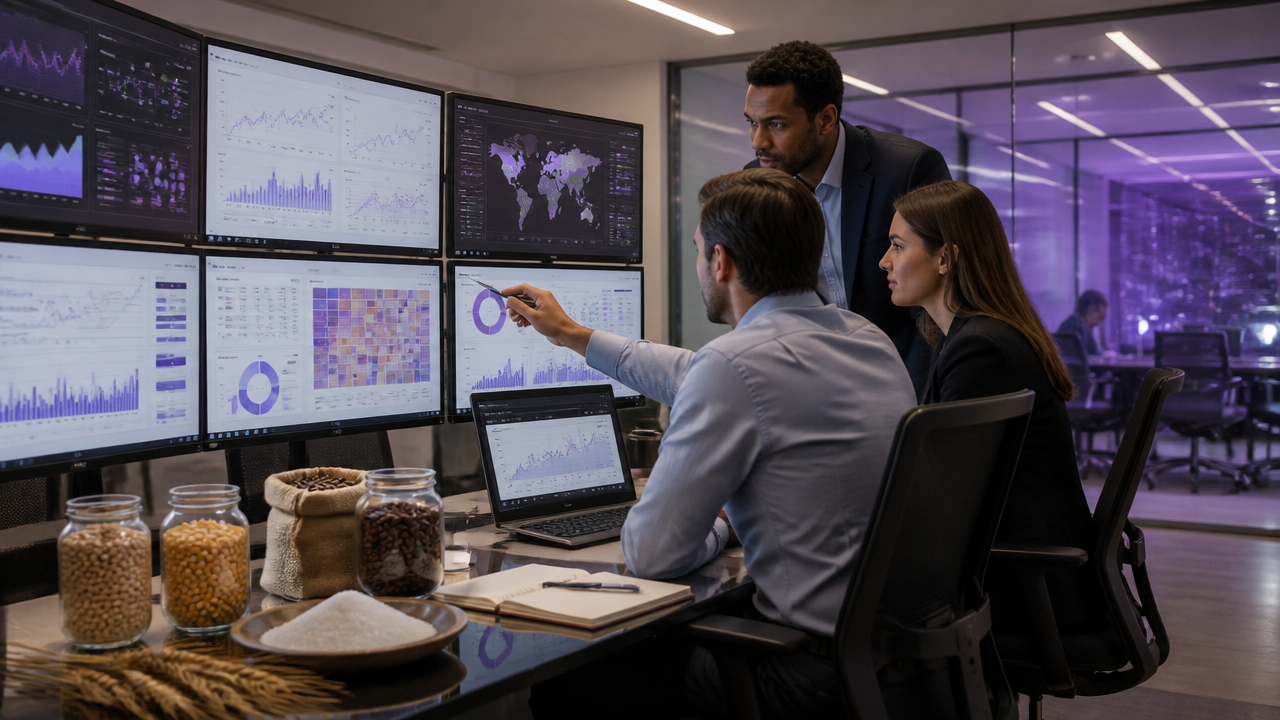
A strong commodity trading stack does more than record deals. It gives the desk one auditable place to plan exposure, capture physical and financial trades, mark positions to market, monitor basis and FX, manage margin, and support hedge accounting. For firms in grains, coffee, sugar, ethanol, oils, and related supply chains, that is the difference between informed hedging and expensive guesswork.
That is why modern CTRM software matters most when the desk sits between operations and finance. It must connect procurement, trading, treasury, risk, and accounting without forcing teams back into spreadsheets, email chains, and disconnected broker statements.
Key takeaways for a commodities desk
- A useful platform covers the full trade lifecycle, not only deal capture.
- The real value comes from unifying physical exposure, derivatives, basis, and FX in one view.
- Mark to market, VaR, stress tests, and Greeks should be available at book and portfolio level.
- Basis intelligence matters as much as futures pricing in agricultural commodities.
- Cash, collateral, and margin controls are part of risk management, not a back-office afterthought.
- Auditability and hedge accounting support are critical for firms that report under IFRS 9 or CPC 38.
What should a modern commodities platform actually do?
At minimum, it should mirror how the desk works in real life. That means a pre-trade and post-trade environment where exposure is planned first, positions are recorded once, and every later report uses the same source of truth.
Instead of treating risk as a separate spreadsheet exercise, the system should connect open physical needs, supplier offers, derivatives, FX forwards, and realized execution. A good starting point is understanding the full CTRM operating model and how each workflow feeds the next one.
Which workflows does a trading desk need in one place?
The desk needs a platform that supports planning, execution, monitoring, and accounting continuity. If one of those layers is missing, teams end up rebuilding context manually every day.
Exposure planning before the first hedge
The process starts before a trade exists. Buyers, producers, and exporters need to register expected purchases or sales as open exposure, net that amount against contracted inventory, and translate the remaining risk into measurable market terms.
For Uhedge, this is core to the platform design. Its CTRM environment is built to integrate physical and financial risk in one auditable system, from exposure planning through accounting documentation. That makes the desk less reactive and more deliberate about timing, hedge ratio, and contract choice.
Trade capture that covers both physical and derivatives books
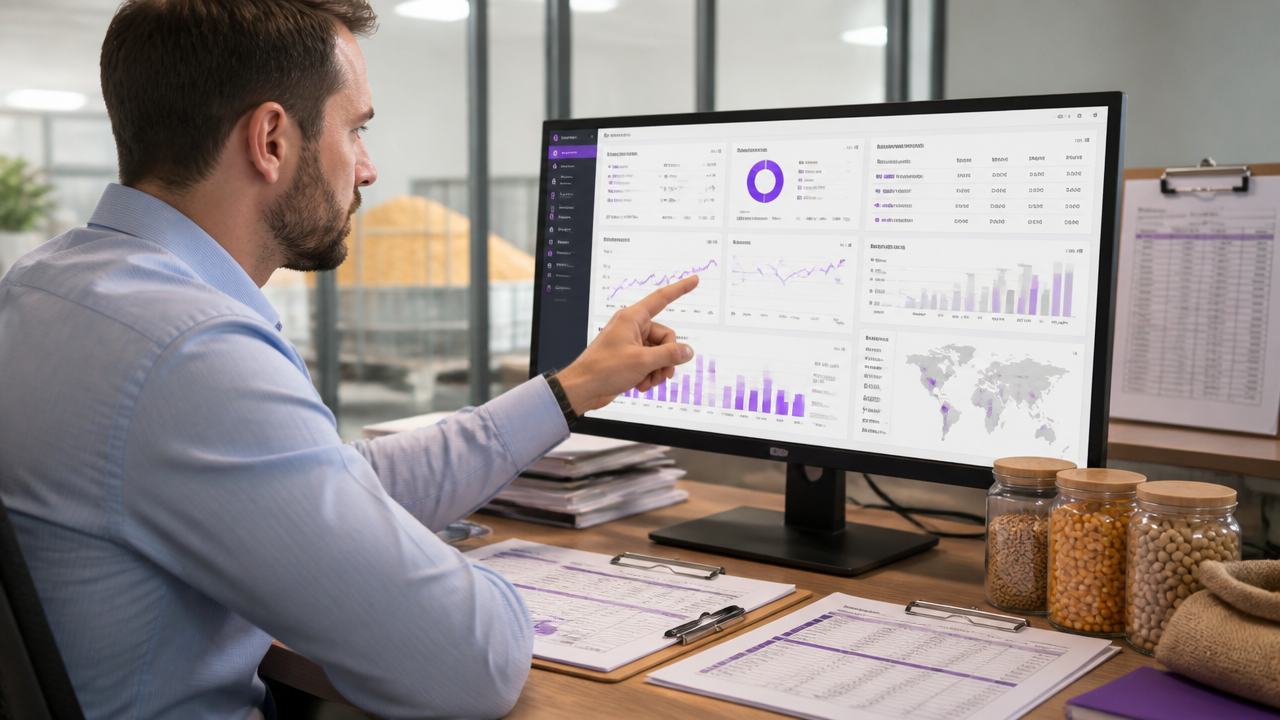
Commodity desks do not live inside a single instrument type. They work across physical contracts, futures, options, swaps, and FX. The platform should record each leg in its own book while preserving a consolidated portfolio view.
That is especially important when the hedge has three dimensions: commodity futures, a local physical position with basis, and currency exposure. Teams comparing tools often find the biggest operational gains in trade capture and derivative workflow controls, because those are the areas where manual handoffs usually create errors.
Why is physical plus financial integration the real test?
This is where many systems fail. A desk can price a futures hedge correctly and still lose money if local basis, freight, taxes, quality differentials, or FX are managed elsewhere.
For agricultural and agro-industrial firms, the physical book is not a side note. It is the economic reason the hedge exists. Uhedge positions its software around that reality, with physical price curves that can incorporate basis, freight, and tax components, and with multi-source price feeders already used by clients. That is much closer to the daily needs of a crusher, mill, cooperative, or exporter than a generic ERP setup.
If your current process still splits procurement in one system, hedge tickets in another, and valuation in spreadsheets, the problem is not only inefficiency. It is incomplete risk visibility. The case for centralizing risk data across functions becomes obvious once volatility rises.
What analytics separate a basic system from a real CTRM?
A real platform does not stop at position lists. It converts positions into decision-ready risk metrics that the desk can use every day.
| Capability | Why the desk needs it |
|---|---|
| Mark to market | Shows daily P&L, open exposure, and valuation changes by book and portfolio. |
| VaR by risk factor | Measures potential loss and separates futures, FX, and basis effects. |
| Stress testing | Tests portfolio behavior under price and volatility shocks. |
| Greeks | Explains option sensitivity through delta, gamma, vega, and theta. |
| Volatility surface analysis | Improves structuring and pricing of vanilla and exotic options. |
| Basis intelligence | Tracks divergence between local physical prices and reference futures. |
Uhedge highlights these as native capabilities, including OTC replication for structures such as accumulators, fences, and Asian features. For desks that need both price protection and cost control, that matters because many supposedly advanced tools still leave structuring logic outside the platform. Related reading on mark to market and stress testing workflows shows how these analytics should support actual decisions, not just reporting.
How important is basis risk in agricultural commodities?
It is essential. A futures hedge may protect the exchange-traded leg while leaving the desk exposed to local price behavior. In soybeans, coffee, sugar, oils, and ethanol chains, basis can materially shape realized margin.
That is why a useful system must track regional basis alongside futures and FX, not after the fact. Uhedge treats basis as a distinct layer of intelligence, with side-by-side coverage indicators that help the desk compare physical coverage, hedge coverage, and current basis conditions. Firms refining their methodology often benefit from a deeper look at basis risk management in commodity hedging.
What about cash, collateral, and margin calls?
They belong inside the risk workflow. A profitable hedge can still create short-term stress if margin requirements and broker cash balances are not monitored closely.
For that reason, the platform should show FCM cash composition, required margin, available balance, and automatic alerts for margin calls. This is not a niche feature. It is part of keeping liquidity aligned with market risk, especially when volatility spikes or several books move against the firm at once.
How does hedge accounting change software requirements?
It raises the bar significantly. Once a company wants formal hedge accounting, the system must preserve designation logic, effectiveness testing, timestamps, and an audit trail that can survive external review.
Uhedge includes IFRS 9 and CPC 38 support with effectiveness testing based on the Dollar-Offset Ratio and formal designation reports. Just as important, the company is explicit that the final validation belongs to the client’s qualified auditor or accountant. That is the right posture for software in a high-control environment, and it aligns with what finance teams usually need from a hedge management system with compliance controls.
Who benefits most from this type of platform?
The clearest fit is a company with recurring exposure and enough complexity that spreadsheet coordination is already slowing decisions. Uhedge serves the agro-financial chain broadly, including grain producers, coffee and sugar cooperatives, crushers, sugar and ethanol mills, biofuel plants, fuel distributors, food manufacturers, exporters, mid-market banks, and family offices.
The strongest use case appears when the firm has meaningful open market exposure, multiple counterparties, and a need to connect treasury decisions to operational reality. Uhedge also positions itself as a conflict-free partner, with a model summarized as “we earn when the client earns,” and says this can translate into savings of up to 70% in hedge costs versus spread-heavy intermediation.
CTRM versus ERP and spreadsheets: what is the practical difference?
The difference is not cosmetic. An ERP is excellent at recording business transactions, but it is usually not built for volatility, hedge structures, daily valuation, or basis-aware risk decomposition.
Spreadsheets are flexible, but they break under scale, versioning, and audit pressure. A CTRM platform exists to make market exposure measurable, governed, and actionable. The practical comparison becomes clear when you examine why digital treasury platforms replace spreadsheet-driven control in volatile commodity environments.
What should buyers look for when evaluating vendors?
Choose the system that matches your operating complexity, not just your reporting wishlist. The best fit usually comes from workflow depth and audit discipline, not the longest feature sheet.
- Can it model physical and financial exposure in one environment?
- Does it handle futures, options, swaps, FX, and physical books together?
- Are MTM, VaR, stress tests, and Greeks native, not bolt-ons?
- Can it decompose basis separately from exchange price risk?
- Does it support end of day controls, counterparties, margin, and collateral?
- Is hedge accounting documentation built into the workflow?
- Can the tool serve your specific commodity chain, not just a generic template?
If the answer is yes across those points, the platform is likely serving the desk instead of forcing the desk to adapt to the software.
Frequently asked questions
What is CTRM software?
CTRM software is a specialized platform for companies that buy, sell, process, hedge, or finance commodities. It captures physical and financial positions, values them daily, measures exposure, supports logistics and settlement, and creates a single operating record for traders, treasury, risk, and accounting teams.
Who uses CTRM software?
It is used by commodity producers, cooperatives, crushers, mills, exporters, importers, food manufacturers, fuel distributors, trading houses, and financial firms with commodity exposure. In practice, it is most valuable when a company must manage price risk, basis, FX, liquidity, and accounting treatment together.
What does CTRM stand for?
CTRM stands for Commodity Trading and Risk Management. The term refers to software built for physical commodity workflows and the market risks around them, including contracts, hedges, mark to market, exposure analytics, and settlement controls.
What is an ETRM platform?
An ETRM platform is an Energy Trading and Risk Management system. It serves many of the same functions as CTRM software, but is usually tailored to energy markets such as power, gas, refined products, and related operational workflows. Some vendors cover both areas under one architecture.
How is CTRM software different from an ERP?
A general ERP can record purchases, inventory, and invoices, but it usually does not handle futures curves, basis decomposition, options structures, Greeks, hedge effectiveness, or daily mark to market in a native way. A CTRM platform is built around volatility, exposure, and auditable risk decisions.